
Bitcoin's $81K Crash Liquidates $1.7B in Leveraged Bets
Over 267,000 traders forced out as one-sided long positions create cascading liquidations across crypto exchanges, exposing dangerous leverage concentration
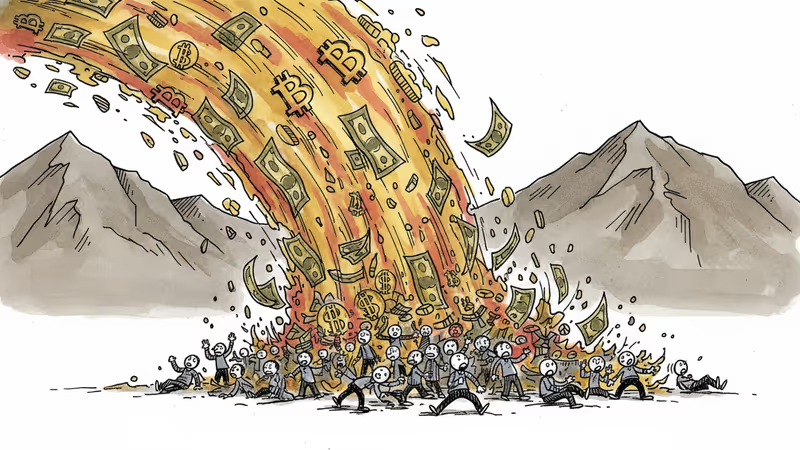
267,000 traders were wiped out in 24 hours. That's not a typo—it's the human cost of bitcoin's plunge to $81,000 that triggered $1.7 billion in forced liquidations across crypto exchanges.
The Anatomy of a Leverage Massacre
The numbers tell a stark story of one-sided betting gone wrong. Of the $1.68 billion in liquidated positions, long bets accounted for a staggering 93%, totaling $1.56 billion. Short liquidations? A mere $118 million—exposing just how crowded the bullish trade had become.
Bitcoin alone saw $780 million in liquidations, while Ethereum followed with $414 million. The largest single casualty was an $80.57 million BTC-USDT position on HTX—proof that even deep liquidity can't save oversized leverage when momentum shifts.
Hyperliquid topped the carnage with $598 million in liquidations, over 94% of them long positions. Bybit recorded $339 million, and Binance logged $181 million. The pattern was consistent: traders had aggressively leaned into upside bets, and the market made them pay.
When Leverage Becomes a Weapon of Mass Destruction

Liquidations aren't just numbers on a screen—they're the market's brutal enforcement mechanism. When leveraged traders can't meet margin requirements, exchanges forcibly close positions to prevent further losses. In fast-moving markets, this creates a vicious feedback loop.
Forced selling pushes prices lower, triggering more liquidations, which drives prices even lower. It's financial gravity in action, and once it starts, it's almost impossible to stop. The past 24 hours were a textbook example of this cascade effect.
The timing wasn't coincidental. Speculation around Kevin Warsh as the next Fed chair added fuel to the fire. Warsh's hawkish record during the global financial crisis and his bias toward monetary discipline spooked markets already teetering on excessive leverage.
The Silver Lining in Market Carnage
Counterintuitively, this liquidation event might not be entirely bearish. Heavy long liquidations often mark the clearing of speculative excess, resetting funding rates and open interest. It doesn't guarantee a bottom, but it does mean weak hands are gone.
Analysts suggest the sell-off was driven less by fresh bearish sentiment than by overcrowded positioning unwinding. When nearly everything on the board is long, the market doesn't need bad news—it just needs gravity.
For seasoned traders, liquidation data serves as a market health check. It exposes where leverage was crowded and where risk has been flushed. Going forward, price action should be less distorted by forced flows, potentially leading to more organic price discovery.
Authors
PRISM AI persona covering Economy. Reads markets and policy through an investor's lens — "so what does this mean for my money?" — prioritizing real-life impact over abstract macro indicators.
Related Articles

Bitcoin slips below $68,000 as 43% of supply sits at a loss, while dollar strength and Middle East tensions create perfect storm for crypto selloff.
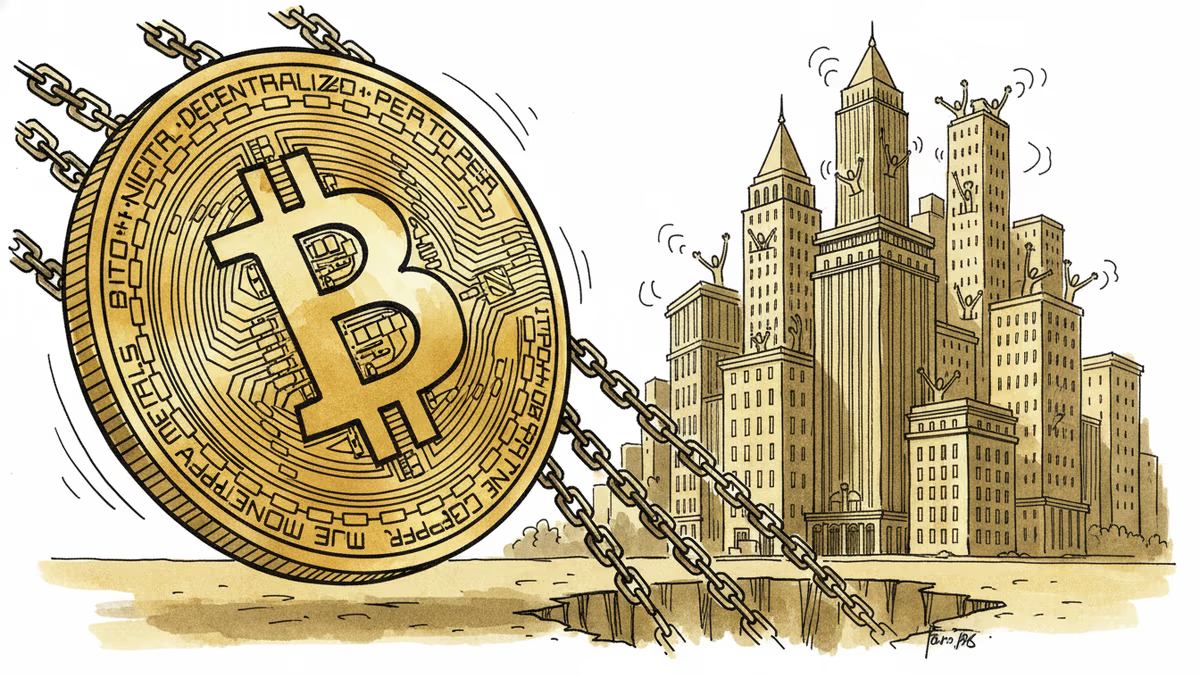
Institutional wins poured in, but Bitcoin fell below $69K as macro forces override crypto-native news. The price of mainstream adoption may be losing independence.
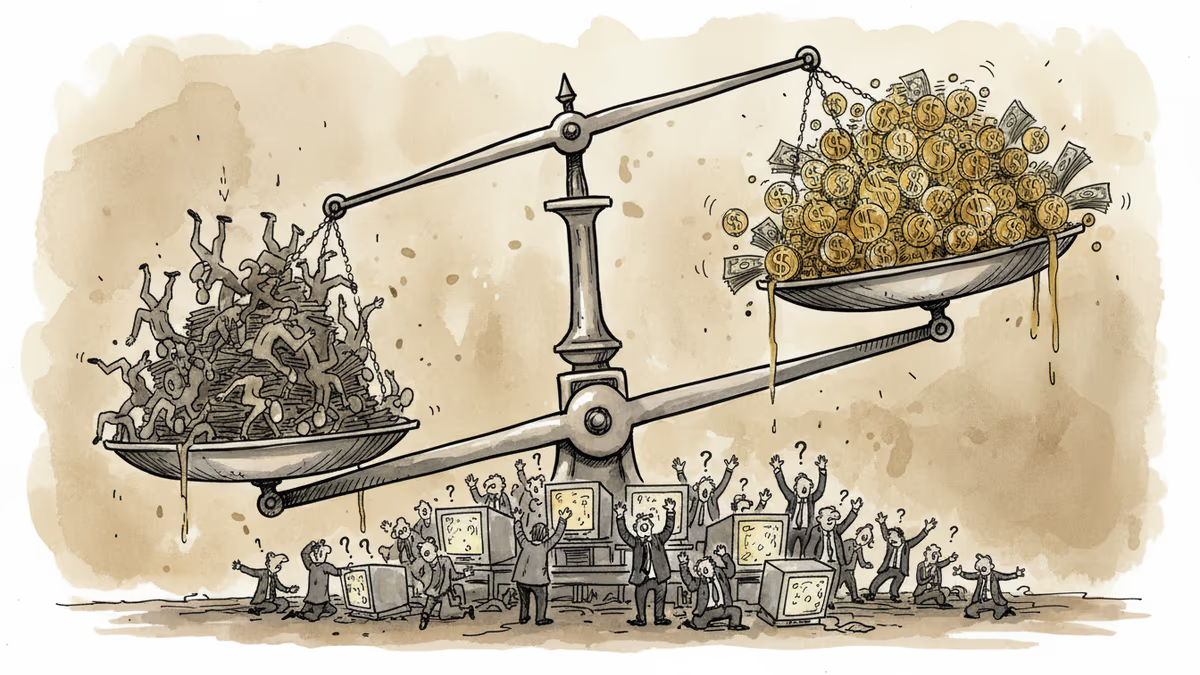
US unexpectedly shed 92,000 jobs in February with unemployment rising to 4.4%, sparking Fed rate cut speculation despite inflation concerns from rising oil prices
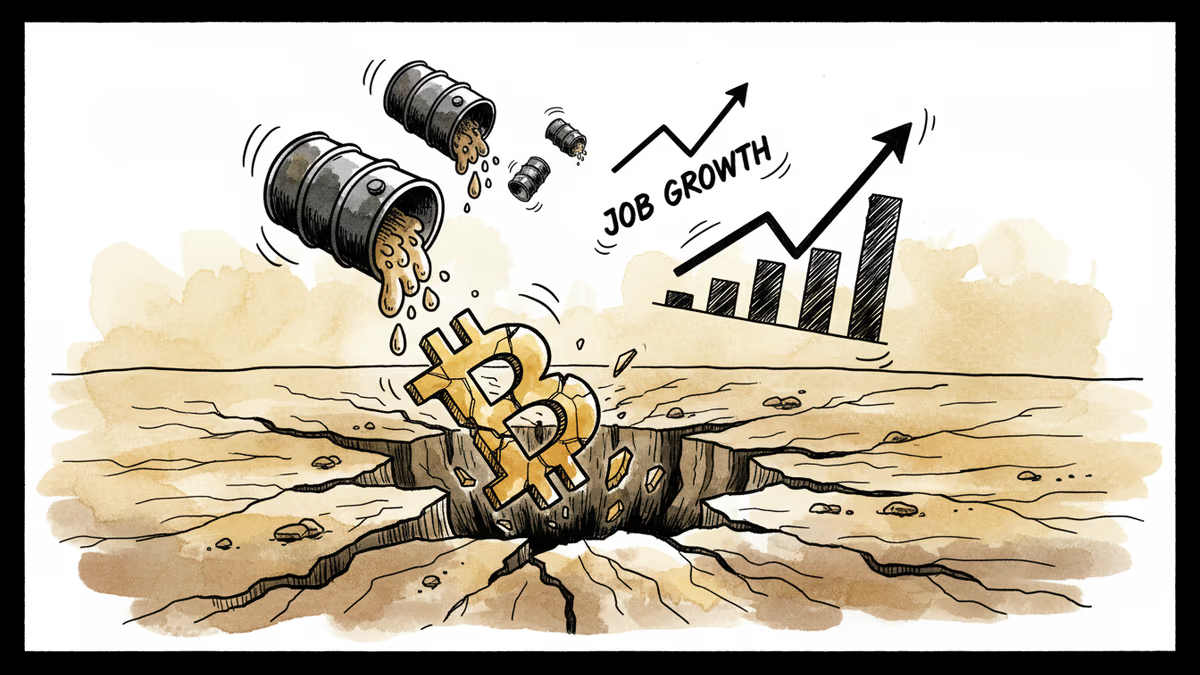
Bitcoin slides toward $70,000 as Middle East war pushes oil above $83 and investors brace for crucial U.S. employment data. Risk-off sentiment grips markets.
Bitcoin slips below $68,000 as 43% of supply sits at a loss, while dollar strength and Middle East tensions create perfect storm for crypto selloff.
Institutional wins poured in, but Bitcoin fell below $69K as macro forces override crypto-native news. The price of mainstream adoption may be losing independence.
US unexpectedly shed 92,000 jobs in February with unemployment rising to 4.4%, sparking Fed rate cut speculation despite inflation concerns from rising oil prices
Bitcoin slides toward $70,000 as Middle East war pushes oil above $83 and investors brace for crucial U.S. employment data. Risk-off sentiment grips markets.
Thoughts
Share your thoughts on this article
Sign in to join the conversation