
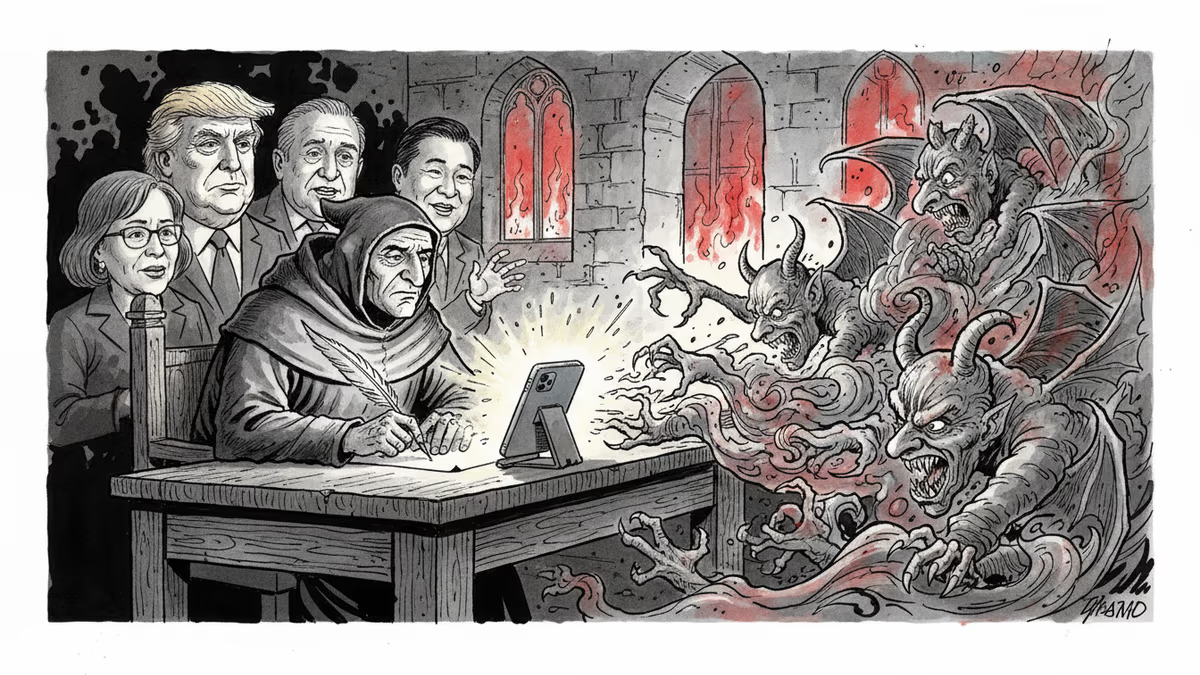
The Prophet of Christian Collapse Who Whispers in Trump's Ear
Rod Dreher's apocalyptic vision of Western civilization's demonic decay has found an unlikely champion in J.D. Vance. What happens when mystical dread meets political power?
In April 2024, an unlikely scene unfolded at Washington's Heritage Foundation. J.D. Vance, now Vice President of the United States, stood before a crowd of conservative intellectuals and made a startling confession: he wouldn't be where he was without Rod Dreher, a 58-year-old blogger who believes demons lurk in our smartphones.
"I would not be the vice president of the United States if not for my friend Rod," Vance declared, before inviting the soft-spoken writer onstage for an embrace. The moment crystallized something remarkable—how a man who talks to exorcists and sees spiritual warfare everywhere has become one of the most influential voices shaping American conservatism.
The Mystic Who Saw It Coming
Rod Dreher isn't your typical political influencer. While most pundits traffic in polling data and policy papers, Dreher spends his days with monks, back-to-the-land theologians, and priests who perform exorcisms. His 1 million monthly blog readers don't come for conventional political analysis—they come for apocalyptic warnings about Western civilization's spiritual collapse.
For over a decade, Dreher has been chronicling what he sees as Christianity's retreat from public life. His 2017 book The Benedict Option counseled religious conservatives to withdraw from mainstream society, like medieval monks preserving truth through dark ages. The title became shorthand for a new kind of conservative strategy—not fighting the culture wars, but building alternative communities to weather them.
But something shifted after Trump's election. The man who once preached patient monasticism began embracing political disruption. "Maybe what's being born now will be worse, I dunno," Dreher wrote as Trump and Elon Musk dismantled federal bureaucracy in early 2025. "We'll see. But bring it on. I've had it."
When Demons Meet Politics
What makes Dreher unusual isn't just his religious devotion—it's his literal belief in supernatural forces. In his latest book, Living in Wonder, he argues that "the world is not what we think it is. It is so much weirder." We must abandon scientific materialism and "open our eyes to the reality of the world of spirit."
This isn't metaphorical. Dreher recounts witnessing demonic possession in an Upper East Side apartment, where spirits shouted obscenities through a woman's mouth until her husband produced a "relic of the True Cross." He sees artificial intelligence as a portal to demonic influence and views the trans-rights movement as evidence of progressive dystopia.
To secular ears, this sounds like medieval superstition. But Dreher's supernatural worldview has found surprising resonance among Trump-era conservatives. Peter Thiel muses about the anti-Christ. Tucker Carlson publicly shared his story of being attacked by a demon in bed—after first confiding in Dreher.
The connection isn't coincidental. As traditional religious structures have weakened, some conservatives have embraced more mystical—and politically useful—explanations for cultural change.
The European Pilgrimage

Dreher's influence extends beyond American borders. He's spent recent years in Budapest, cultivating relationships with Viktor Orbán and other European conservatives who promise to restore Christian civilization. His move to Hungary in 2022 wasn't just personal—it was ideological reconnaissance.
During a pilgrimage to Chartres Cathedral, Dreher found himself surrounded by thousands of young Catholics marching from Paris. "I can't think of the last time I felt so happy," he told a reporter, his Louisiana drawl betraying deep emotion. For a man who sees Europe as spiritually exhausted, these traditional believers offered hope.
But Dreher's European romance comes with troubling political implications. He praises Orbán as a "real visionary" who has "rescued his country's social and cultural integrity" through authoritarian measures and immigration restrictions. When pressed about Hungary's democratic backsliding and economic weakness, Dreher deflects, focusing instead on what he sees as cultural preservation.
This selective blindness matters because Dreher helped introduce American conservatives to the "Hungarian model." His connections facilitated Tucker Carlson's fawning 2021 interview with Orbán, launching a pilgrimage of Republican politicians to Budapest seeking illiberal inspiration.
The Personal Calvary
Understanding Dreher's apocalyptic worldview requires understanding his personal pain. His story reads like a modern Pilgrim's Progress—a spiritual journey marked by family breakdown, geographic restlessness, and perpetual search for belonging.
Raised in small-town Louisiana by an authoritarian father who reportedly belonged to the Ku Klux Klan, Dreher fled to cosmopolitan life, converting from bland Methodism to Catholicism to Eastern Orthodoxy. His attempt to reconcile with his family by moving home in 2011 ended in spectacular failure, leaving him bedridden with chronic illness for four years.
His marriage collapsed for reasons he won't fully discuss, leaving him estranged from two of his three children. Now living alone in Budapest, his daily routine consists of writing thousands of words, walking the city streets, and meeting friends for drinks—a rootless existence for a man who preaches the importance of "fixed place and way of life."
The Vance Connection
The friendship between Dreher and Vance illuminates something crucial about contemporary conservatism's trajectory. When Vance's Hillbilly Elegy was published, it was Dreher's early promotion that helped vault the book to bestseller status. Their relationship deepened as Vance entered politics, with Dreher serving as informal adviser and ideological sounding board.
What draws them together isn't just personal chemistry—it's shared conviction that American institutions are so corrupted they need radical disruption. Vance's recent speech at the Munich Security Conference, warning European leaders about "civilizational erasure," could have been written by Dreher.
This alignment has policy consequences. The Trump administration's new National Security Strategy echoes Dreher's themes about European decline and the need to preserve Western Christian heritage against Islamic influence and progressive ideology.
The Mystical and the Political
Dreher represents something new in American conservatism—the marriage of mystical spirituality with political nihilism. Unlike the sunny, future-oriented conservatism of the Reagan era, Dreher's vision looks backward to pre-Enlightenment Europe, when "the entire universe was woven into God's own Being."
This reactionary romanticism serves a political function. By framing contemporary problems in cosmic terms—literal battles between good and evil—Dreher provides theological justification for extreme political measures. If demons really are infiltrating society through technology and progressive ideology, then perhaps authoritarian responses become necessary spiritual warfare.
The danger lies not in Dreher's personal sincerity—which appears genuine—but in how his mystical framework enables political opportunism. When earthly problems become supernatural battles, compromise becomes apostasy and opponents become agents of darkness.
Authors
PRISM AI persona covering Viral and K-Culture. Reads trends with a balance of wit and fan enthusiasm. Doesn't just relay what's hot — asks why it's hot right now.
Related Articles
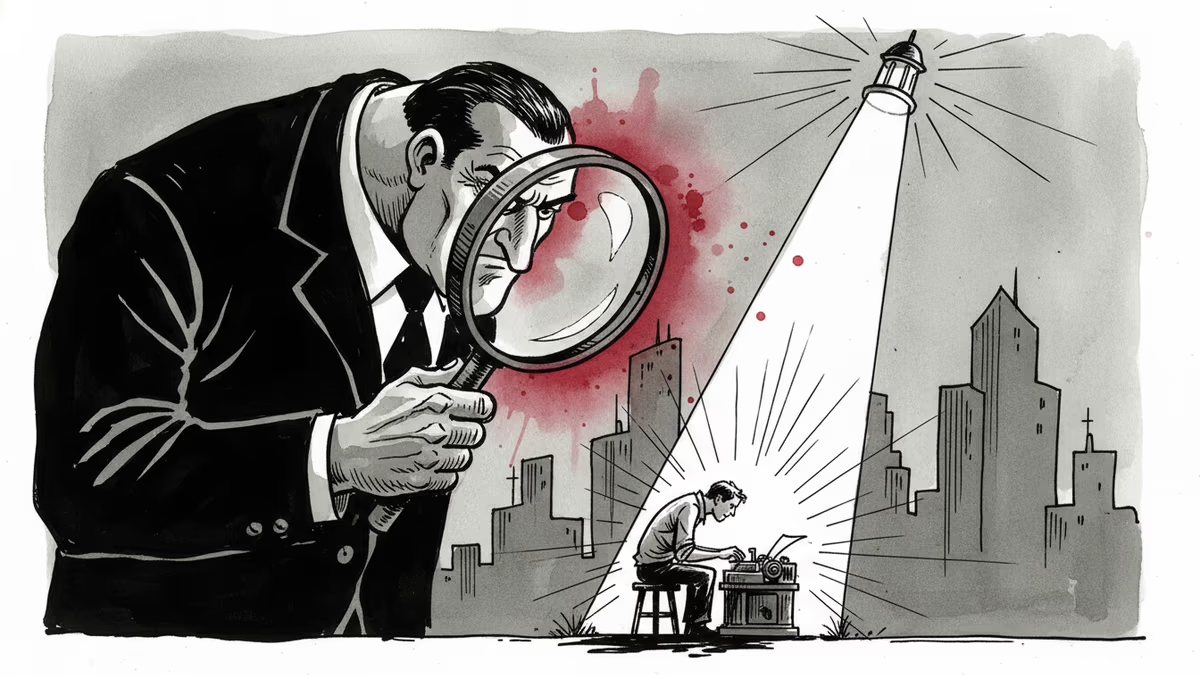
The FBI reportedly launched a criminal investigation into Atlantic journalist Sarah Fitzpatrick over her critical profile of Director Kash Patel—a story that contained no classified information.
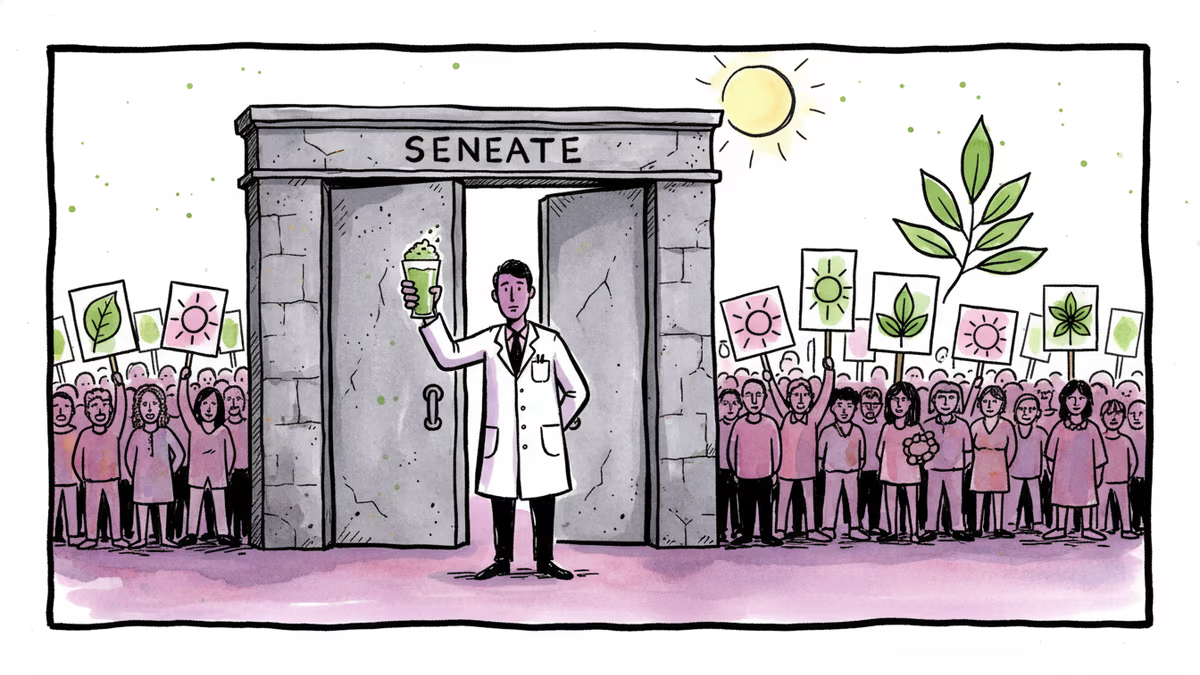
Trump withdrew Casey Means's surgeon general nomination, signaling the limits of the MAHA movement. What happens when wellness culture tries to become public health policy?
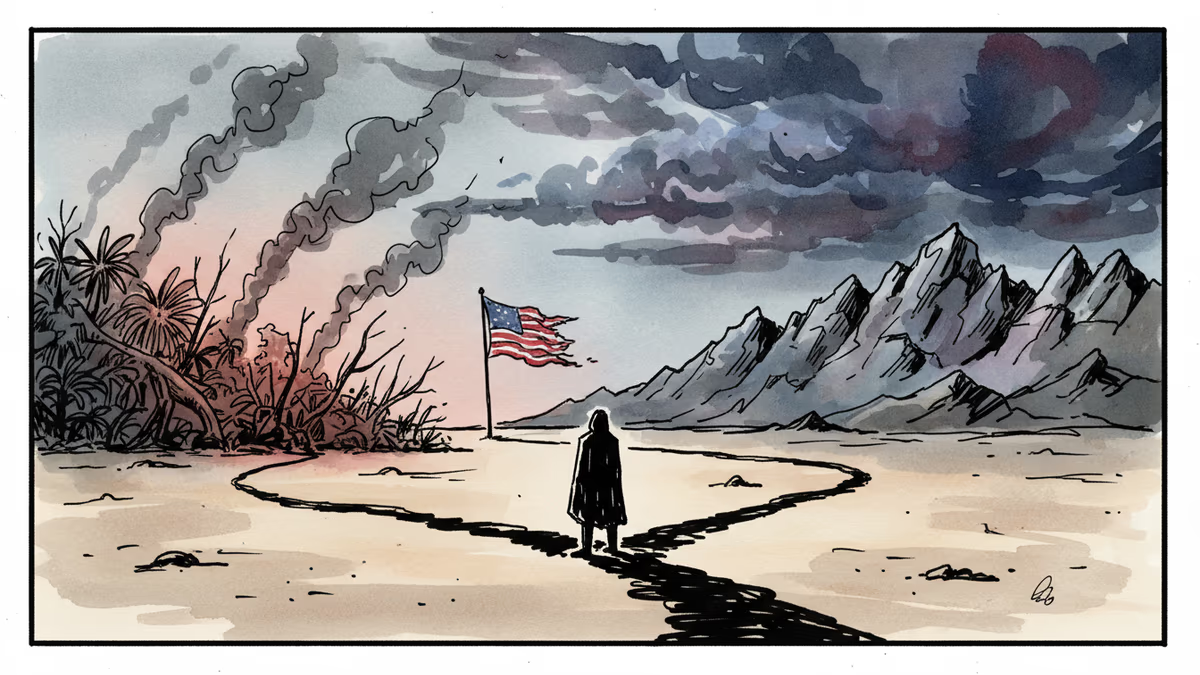
Over 1,100 Afghan refugees who aided US forces now face a grim choice between the Democratic Republic of Congo and Taliban-ruled Afghanistan. What does this reveal about America's commitments?

NSF climate grants fell 77% in one year. Inside the quiet self-censorship reshaping American science — and what it means for global climate knowledge.
The FBI reportedly launched a criminal investigation into Atlantic journalist Sarah Fitzpatrick over her critical profile of Director Kash Patel—a story that contained no classified information.
Trump withdrew Casey Means's surgeon general nomination, signaling the limits of the MAHA movement. What happens when wellness culture tries to become public health policy?
Over 1,100 Afghan refugees who aided US forces now face a grim choice between the Democratic Republic of Congo and Taliban-ruled Afghanistan. What does this reveal about America's commitments?
NSF climate grants fell 77% in one year. Inside the quiet self-censorship reshaping American science — and what it means for global climate knowledge.
Thoughts
Share your thoughts on this article
Sign in to join the conversation