
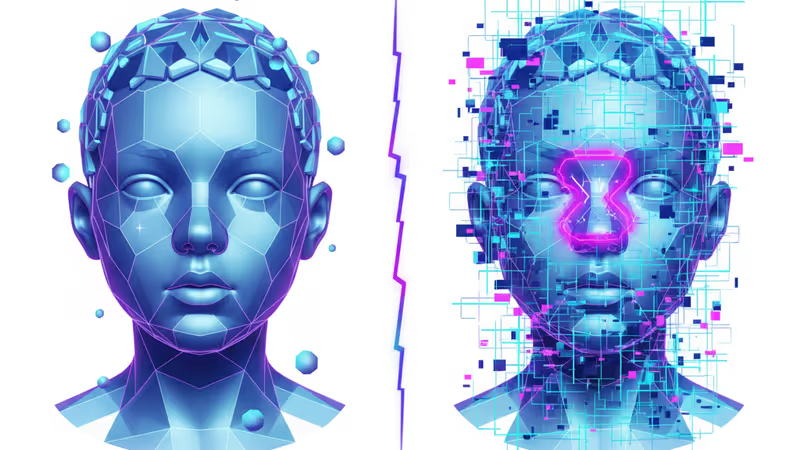
Roblox AI Age Verification Failure 2026: A Glitchy Mess Threatening 150M Users
Roblox's new AI age verification system is a mess, misidentifying children as adults and vice versa. Learn about the 'ghost town' effect and the safety risks involved.
Can a drawing of a beard turn a child into a 21-year-old adult? For Roblox's new AI, the answer is a resounding yes. Just days after its global rollout, the platform's much-hyped age verification system is facing intense scrutiny for failing to accurately distinguish between children and adults, leaving its 150 million daily active users in a state of digital chaos.
The Roblox AI Age Verification Failure in Practice
According to reports from WIRED, the face-scanning system—powered by third-party firm Persona—has been consistently mis-aging players. While the system was designed to create age-appropriate chat environments, users have shared videos of themselves tricking the AI using photos of celebrities like Kurt Cobain or simply drawing facial hair with a marker. In one alarming instance, WIRED found verified accounts for kids as young as 9 years old being sold on eBay for as little as $4.
Impact on User Safety and Platform Socialization

The fallout isn't just about technical glitches; it's affecting the platform's soul. Developers report that chat activity has fallen off a cliff. One creator noted that text chat usage dropped from an average of 85% to just 36% since the update. Users are describing the experience as a "ghost town," with many legitimate adult players being incorrectly funneled into chats with children due to mis-aging errors.
You can’t flip a switch while building something that hasn’t existed before. Expecting the system to be flawless overnight is ignoring the scale of this undertaking.
Roblox maintains that tens of millions have already verified their age, proving the community values a safer environment. However, with attorneys general from Louisiana, Texas, and Kentucky already filing lawsuits over child safety, this botched rollout adds more fuel to the fire regarding the platform's ability to protect its youngest users.
Authors
Related Articles
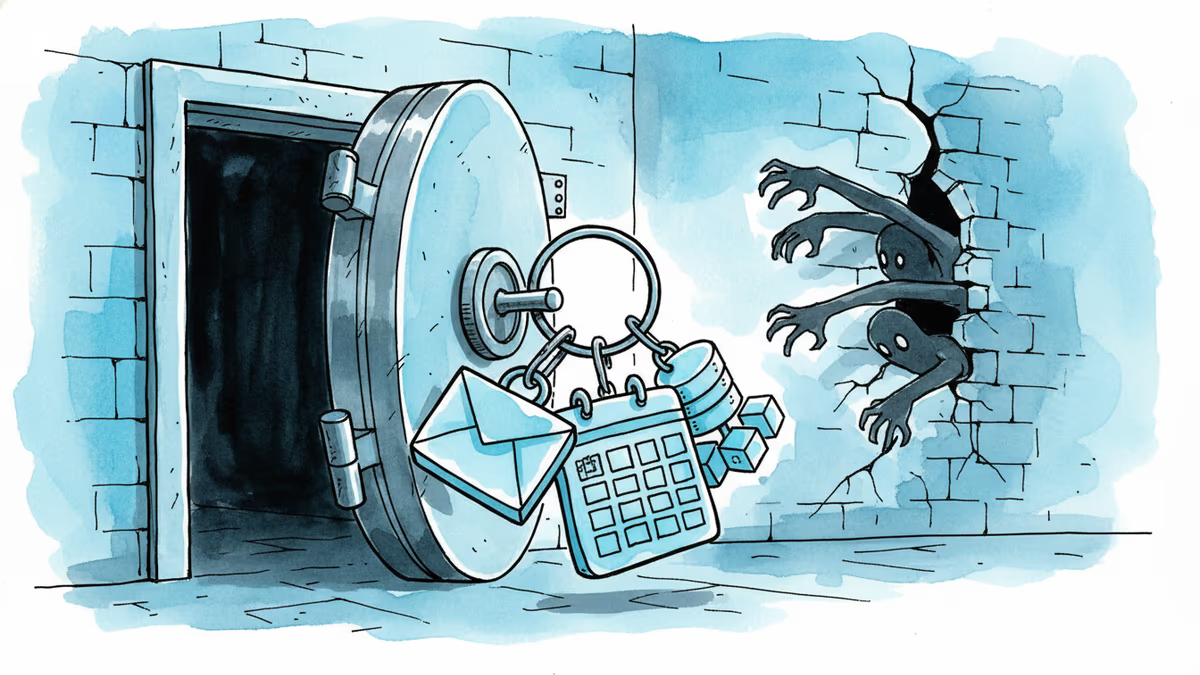
A critical vulnerability in Starlette—downloaded 325 million times per week—puts millions of AI agent servers at risk, exposing stored credentials for email, databases, and third-party services.
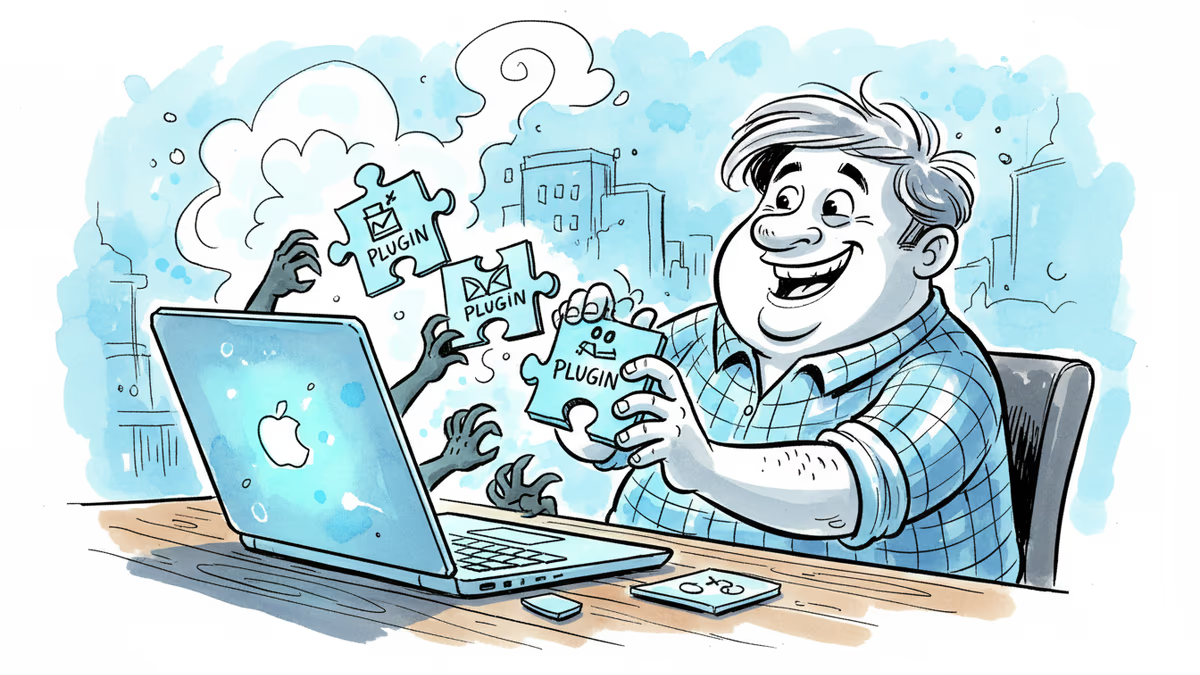
GitHub confirmed hackers stole data from 3,800 internal repositories via a poisoned VS Code extension. Here's why developer tools are now the most dangerous attack surface in tech.
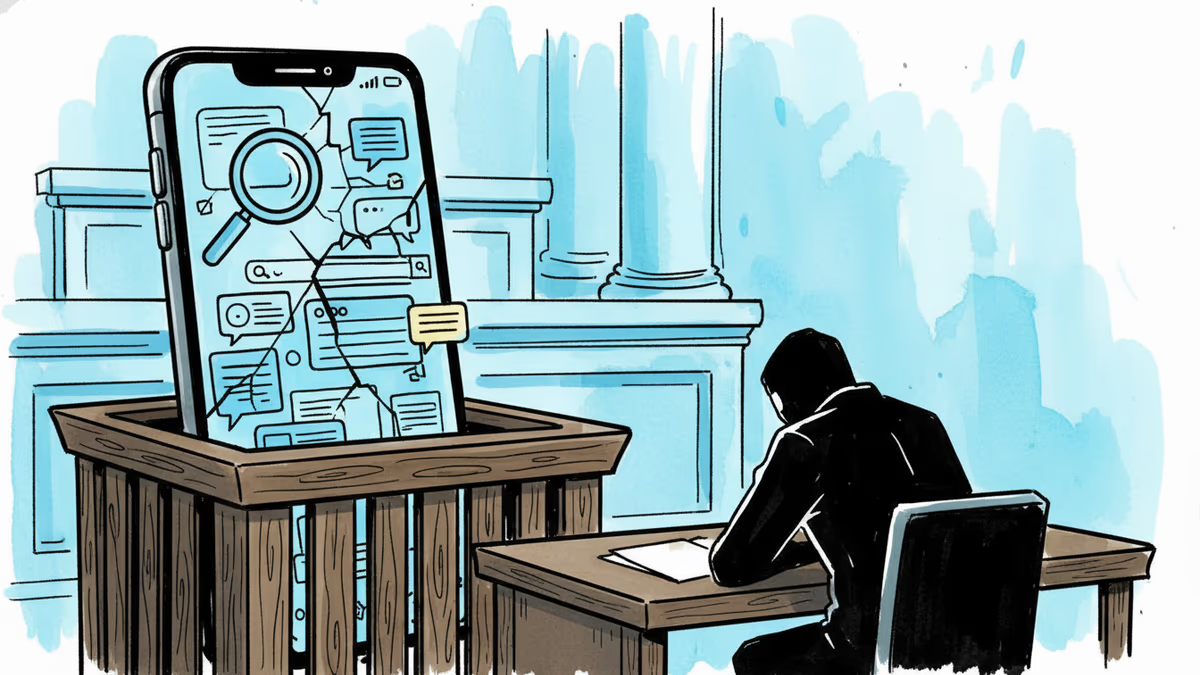
A Utah woman was sentenced to life in prison partly because of her Google searches and deleted texts. The Kouri Richins case reveals how digital footprints have become the courtroom's most reliable witness.
Sam Nelson, 19, died after following ChatGPT's advice to mix Kratom and Xanax. His parents are suing OpenAI for wrongful death, raising urgent questions about AI trust, liability, and design.
A critical vulnerability in Starlette—downloaded 325 million times per week—puts millions of AI agent servers at risk, exposing stored credentials for email, databases, and third-party services.
GitHub confirmed hackers stole data from 3,800 internal repositories via a poisoned VS Code extension. Here's why developer tools are now the most dangerous attack surface in tech.
A Utah woman was sentenced to life in prison partly because of her Google searches and deleted texts. The Kouri Richins case reveals how digital footprints have become the courtroom's most reliable witness.
Sam Nelson, 19, died after following ChatGPT's advice to mix Kratom and Xanax. His parents are suing OpenAI for wrongful death, raising urgent questions about AI trust, liability, and design.
Thoughts
Share your thoughts on this article
Sign in to join the conversation