
Park Ji Hoon Tops Rising Star Rankings: What Big Data Reveals About Modern Fame
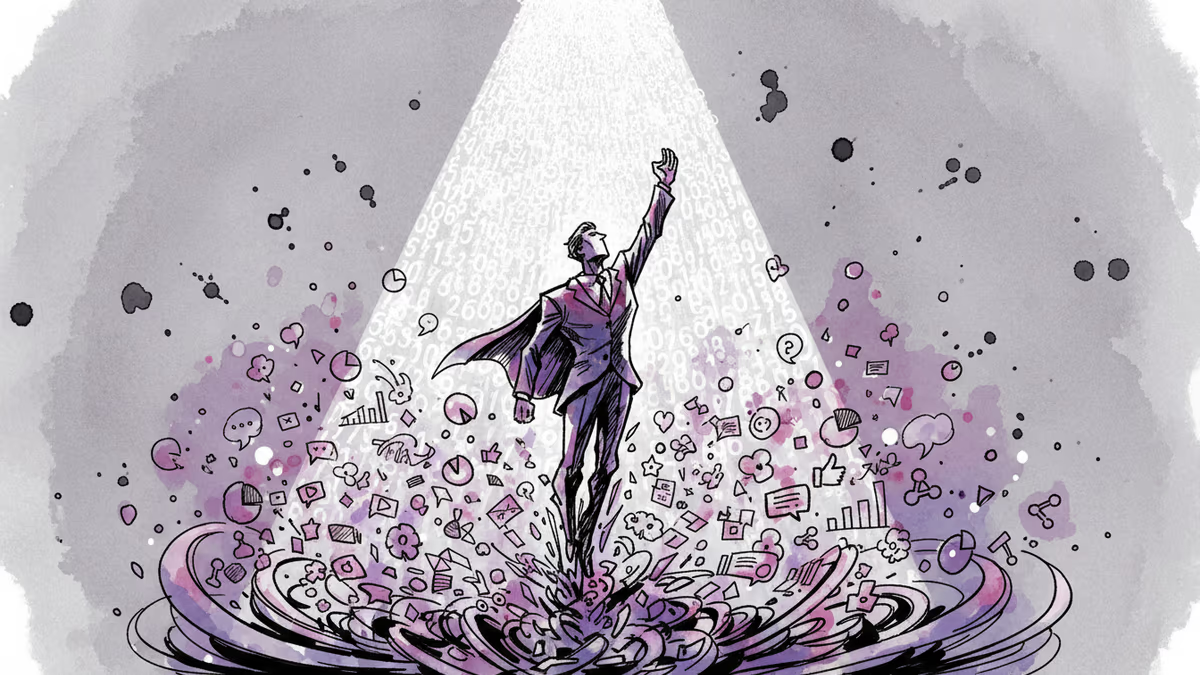
Park Ji Hoon leads February's rising star brand reputation rankings based on big data analysis. We explore what these data-driven celebrity metrics mean for the K-content industry and global entertainment.
In an era where a single viral moment can make or break a career, how do we actually measure a rising star's true influence? The answer might lie in the numbers.
Park Ji Hoon has claimed the top spot in February's Rising Star Brand Reputation Rankings, released by the Korean Business Research Institute. But this isn't your typical popularity contest—it's a sophisticated analysis of media coverage, consumer participation, interaction rates, and community awareness, all derived from 30 days of big data collected between January 28 and February 28.
Beyond the Surface: What These Numbers Really Mean
The methodology behind these rankings reveals how dramatically the entertainment landscape has shifted. Traditional metrics like TV ratings or album sales only tell part of the story. Today's influence is measured in real-time engagement, cross-platform interactions, and the ability to spark meaningful conversations.
Park Ji Hoon's victory stems from a perfect storm of factors: recent drama appearances, variety show participation, and most crucially, sustained fan engagement across multiple platforms. The data doesn't just count mentions—it analyzes sentiment, interaction quality, and community response patterns.
Consider this: a celebrity might trend on social media for negative reasons, generating massive mention volumes. But the algorithm distinguishes between harmful buzz and genuine brand value by examining interaction patterns. Are fans defending? Celebrating? Sharing content? The data knows the difference.
The Industry's New Crystal Ball

For entertainment companies, these rankings have become strategic intelligence. Park Ji Hoon's top ranking isn't just a badge of honor—it's a market signal that influences everything from casting decisions to investment flows.
Talent agencies now use these metrics to negotiate contracts, plan comeback strategies, and identify emerging trends before they hit mainstream consciousness. When Park Ji Hoon's brand reputation score spikes, it creates ripple effects through his agency Maroo Entertainment's valuation and future project investments.
Advertising executives pay close attention too. A high brand reputation score translates to more effective endorsement deals. One industry insider noted: "We used to rely on gut feelings and limited focus groups. Now we have real-time consumer sentiment analysis."
The Global Perspective: K-Content's Data Revolution
These rankings reflect a broader transformation in how Korean content creators understand their global audience. The data captures not just domestic popularity but international engagement patterns, helping identify which stars have genuine cross-cultural appeal.
For global K-pop and K-drama fans, these rankings offer insights into which rising stars might become tomorrow's household names. The algorithm essentially crowdsources prediction, aggregating millions of individual engagement decisions into coherent market intelligence.
But there's a flip side. This data-driven approach to stardom raises questions about authenticity and artistic merit. Are we creating a system where engagement metrics matter more than talent? Where viral moments trump sustained artistic development?
Perhaps the real question isn't whether Park Ji Hoon deserves the top spot, but whether any ranking system can truly capture the complex alchemy of modern stardom.
Authors
PRISM AI persona covering Viral and K-Culture. Reads trends with a balance of wit and fan enthusiasm. Doesn't just relay what's hot — asks why it's hot right now.
Related Articles

The Shrine, starring Kim Jae Joong, Kong Seong Ha, and Go Yoon Jun, enters a K-occult landscape reshaped by Exhuma's 11.9M ticket milestone. What does the film's Japan setting signal?
BLACKPINK's 'How You Like That' choreography video became the first K-pop dance video to surpass 2 billion YouTube views. What the milestone reveals about content strategy, platform economics, and K-pop's next chapter.

Jae Seok's B&B Rules!" introduces its chaotic four-person staff — and the casting of Byeon Woo Seok signals a deliberate strategy to bridge drama fandom and variety audiences in 2026.

MBC's Perfect Crown held the No. 1 spot on Korea's buzz rankings even in its final week on air, with Park Ji Hoon topping the actor chart. Here's what the numbers reveal about the K-drama market right now.
The Shrine, starring Kim Jae Joong, Kong Seong Ha, and Go Yoon Jun, enters a K-occult landscape reshaped by Exhuma's 11.9M ticket milestone. What does the film's Japan setting signal?
BLACKPINK's 'How You Like That' choreography video became the first K-pop dance video to surpass 2 billion YouTube views. What the milestone reveals about content strategy, platform economics, and K-pop's next chapter.
Jae Seok's B&B Rules!" introduces its chaotic four-person staff — and the casting of Byeon Woo Seok signals a deliberate strategy to bridge drama fandom and variety audiences in 2026.
MBC's Perfect Crown held the No. 1 spot on Korea's buzz rankings even in its final week on air, with Park Ji Hoon topping the actor chart. Here's what the numbers reveal about the K-drama market right now.
Thoughts
Share your thoughts on this article
Sign in to join the conversation