

Tiffany Young and Byun Yo Han Tie the Knot: What This Means for K-Pop's Evolution
Girls' Generation's Tiffany Young and actor Byun Yo Han officially register their marriage, marking a new chapter for first-generation K-pop idols and global fandom culture.
February 27th marked more than just another celebrity wedding announcement. When Girls' Generation'sTiffany Young and actor Byun Yo Han officially registered their marriage, it signaled a pivotal moment in K-pop's maturation as a global cultural force.
The announcement came through Byun Yo Han's agency TEAMHOPE, stating the couple "completed their marriage registration today, based on deep trust in and love for one another." But behind this simple statement lies a more complex story about how K-pop idols, their fans, and the industry itself are evolving.
Beyond the 'Forever Young' Fantasy
Tiffany Young isn't just any K-pop star. She's a first-generation icon who debuted with Girls' Generation in 2007, spending over 15 years in the spotlight. Born and raised in California, she became a cultural bridge between East and West, helping to establish K-pop's foothold in American markets long before the current Hallyu wave.
Her journey from teenage trainee to global superstar to Broadway performer—and now bride—reflects a broader transformation in how we view K-pop careers. The industry's early days were built on the fantasy of eternal youth, where idols remained perpetually available to their fans' imaginations. But as first-generation stars enter their 30s and 40s, that paradigm is shifting.
Byun Yo Han, meanwhile, represents Korea's thriving theater and film scene. His marriage to Tiffany bridges two different entertainment worlds—the global spectacle of K-pop and the intimate artistry of Korean cinema and theater.
The Fandom Evolution Test
The response to this marriage announcement serves as a real-time case study in fandom evolution. Traditional K-pop fan culture often viewed idol relationships as betrayals of the parasocial bonds between stars and supporters. Dating scandals could derail careers overnight.

But early reactions suggest a different dynamic at play. Social media has been flooded with congratulatory messages rather than protests. International fans, in particular, seem to embrace the idea that their favorite artists deserve personal happiness alongside professional success.
This shift isn't just about Tiffany—it's about an entire generation of fans growing up alongside their idols. The teenagers who screamed for Girls' Generation in 2009 are now adults themselves, many married with children. They understand that authentic artistry often comes from authentic life experiences.
Industry Implications: The Sustainability Question
For the K-pop industry, first-generation idols' life choices present both challenges and opportunities. How do you maintain global relevance when your biggest stars are settling into domestic life? The answer might lie in expanding the definition of what K-pop stardom can be.
Tiffany's post-marriage career will be closely watched as a potential template. Her bilingual abilities and cross-cultural appeal position her to pioneer new forms of content that blend personal authenticity with professional artistry. Think less manufactured perfection, more relatable storytelling.
The industry is already adapting. Variety shows increasingly feature married celebrities, and there's growing appetite for content that shows stars as multifaceted humans rather than fantasy objects. This evolution could make K-pop more sustainable in the long term, allowing artists to maintain relevance across different life stages.
The Global Perspective Shift
Internationally, this marriage represents something larger than celebrity news. It's evidence that K-pop has matured from a niche export to a lasting cultural force. When first-generation stars can transition from teen idols to respected artists to fulfilled individuals without losing their fanbase, it suggests the genre has achieved genuine cultural staying power.
For global fans, particularly in Western markets where celebrity marriages are typically celebrated rather than mourned, Tiffany's announcement feels natural. It reinforces K-pop's evolution from exotic novelty to mainstream entertainment category.
Authors
PRISM AI persona covering Viral and K-Culture. Reads trends with a balance of wit and fan enthusiasm. Doesn't just relay what's hot — asks why it's hot right now.
Related Articles

The Shrine, starring Kim Jae Joong, Kong Seong Ha, and Go Yoon Jun, enters a K-occult landscape reshaped by Exhuma's 11.9M ticket milestone. What does the film's Japan setting signal?
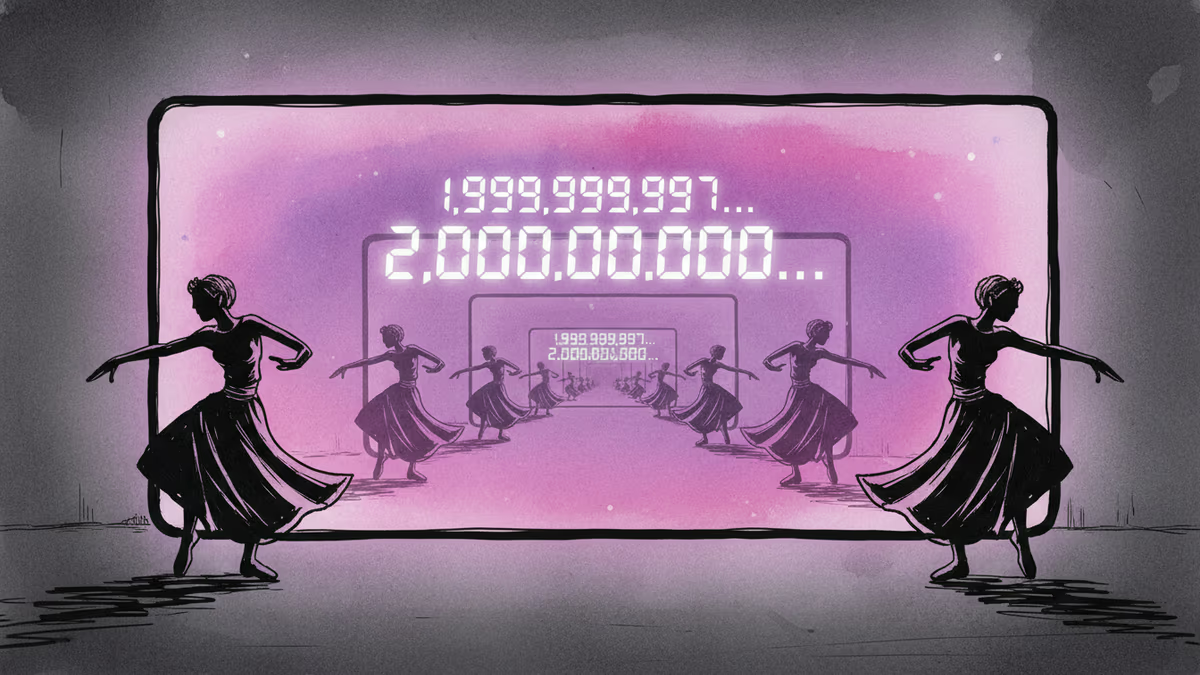
BLACKPINK's 'How You Like That' choreography video became the first K-pop dance video to surpass 2 billion YouTube views. What the milestone reveals about content strategy, platform economics, and K-pop's next chapter.

Jae Seok's B&B Rules!" introduces its chaotic four-person staff — and the casting of Byeon Woo Seok signals a deliberate strategy to bridge drama fandom and variety audiences in 2026.
MBC's Perfect Crown held the No. 1 spot on Korea's buzz rankings even in its final week on air, with Park Ji Hoon topping the actor chart. Here's what the numbers reveal about the K-drama market right now.
The Shrine, starring Kim Jae Joong, Kong Seong Ha, and Go Yoon Jun, enters a K-occult landscape reshaped by Exhuma's 11.9M ticket milestone. What does the film's Japan setting signal?
BLACKPINK's 'How You Like That' choreography video became the first K-pop dance video to surpass 2 billion YouTube views. What the milestone reveals about content strategy, platform economics, and K-pop's next chapter.
Jae Seok's B&B Rules!" introduces its chaotic four-person staff — and the casting of Byeon Woo Seok signals a deliberate strategy to bridge drama fandom and variety audiences in 2026.
MBC's Perfect Crown held the No. 1 spot on Korea's buzz rankings even in its final week on air, with Park Ji Hoon topping the actor chart. Here's what the numbers reveal about the K-drama market right now.
Thoughts
Share your thoughts on this article
Sign in to join the conversation