
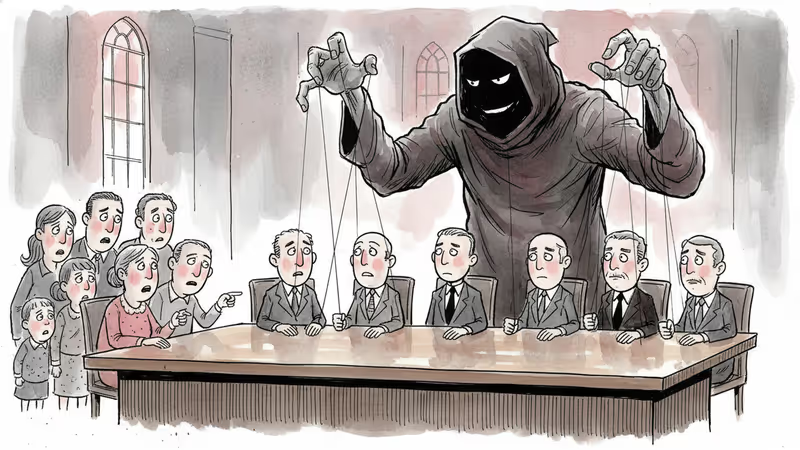
RFK Jr. Stacks Autism Panel with Vaccine Skeptics
Health Secretary Kennedy fills autism research committee with anti-vaccine advocates, raising concerns about dangerous pseudoscientific treatments going mainstream.
21 new appointees. Zero previous members. One controversial agenda.
US Health Secretary Robert F. Kennedy Jr. has completely overhauled the Interagency Autism Coordinating Committee (IACC), replacing all existing members with individuals who share his belief that vaccines cause autism—a claim thoroughly debunked by decades of scientific research.
When Ideology Meets Public Health Policy
The IACC typically guides federal autism research funding and policy recommendations. Under Kennedy's restructuring, the committee now includes figures like Daniel Rossignol, a doctor previously sued for allegedly subjecting a 7-year-old autistic child to 37 rounds of dangerous chelation therapy, and Tracy Slepcevic, who Kennedy calls a "dear friend" and who promotes bogus autism "cures" including animal stem cell injections for children.
Toby Rogers, another appointee, has declared that "no thinking person vaccinates" and called vaccines "one of the greatest crimes in human history." He's a fellow at the Brownstone Institute and has written for Kennedy's own Children's Health Defense, an anti-vaccine organization.
The pattern continues across the 21-member panel: John Gilmore founded the Autism Action Network and claims his autistic son is "vaccine injured." Ginger Taylor has publicly linked autism cases to "vaccine causation." Elizabeth Mumper has promoted ivermectin as a COVID treatment and written for Kennedy's anti-vaccine publications.
The Science vs. The Narrative
Here's what the evidence actually shows: multiple large-scale studies involving millions of children have found no link between vaccines and autism. The original 1998 study suggesting such a connection was retracted for fraud, and its lead author lost his medical license.

Yet Kennedy's appointments suggest a different priority. As Sylvia Fogel, the new committee chair, admitted to The New York Times: "I don't know how I was selected to be chair, to be perfectly honest."
The Department of Health and Human Services defended the appointments, stating that "families deserve more than reports and meetings, they deserve measurable progress." But autism advocates see something far more sinister at work.
When Advocacy Becomes Experimentation
The real-world implications extend beyond research funding. Several appointees have promoted treatments that the National Institutes of Health explicitly warns against. Chelation therapy, designed to remove heavy metals from the body, has no proven benefit for autism and carries significant risks. Stem cell injections from animals represent an even more extreme—and dangerous—frontier.
Fiona O'Leary, an autism activist and mother of autistic children, captures the community's fears: "We've fought so hard to protect our community, but they want to experiment on us. We are guinea pigs."
The Autistic Self Advocacy Network condemned the appointments as creating a committee "overwhelmingly made up of anti-vaccine advocates and peddlers of dangerous quack autism 'treatments.'"
The Broader Pattern
This restructuring doesn't exist in isolation. Kennedy has similarly overhauled the Advisory Committee on Immunization Practices (ACIP), which advises the CDC on vaccine usage, stacking it with vaccine skeptics. The combined effect creates what public health experts call an "ideological echo chamber" at the highest levels of American health policy.
Gavin Yamey, professor of global health at Duke University, warns that Kennedy "has spent the past year doing all he can to dismantle public health and roll back vaccination, and this new committee is more of the same."
The timing matters. Autism rates have indeed risen over recent decades—from 1 in 150 children in 2000 to 1 in 36 today. But researchers attribute this increase to better diagnostic criteria, increased awareness, and expanded definitions of autism spectrum disorders, not vaccines.
Authors
Related Articles
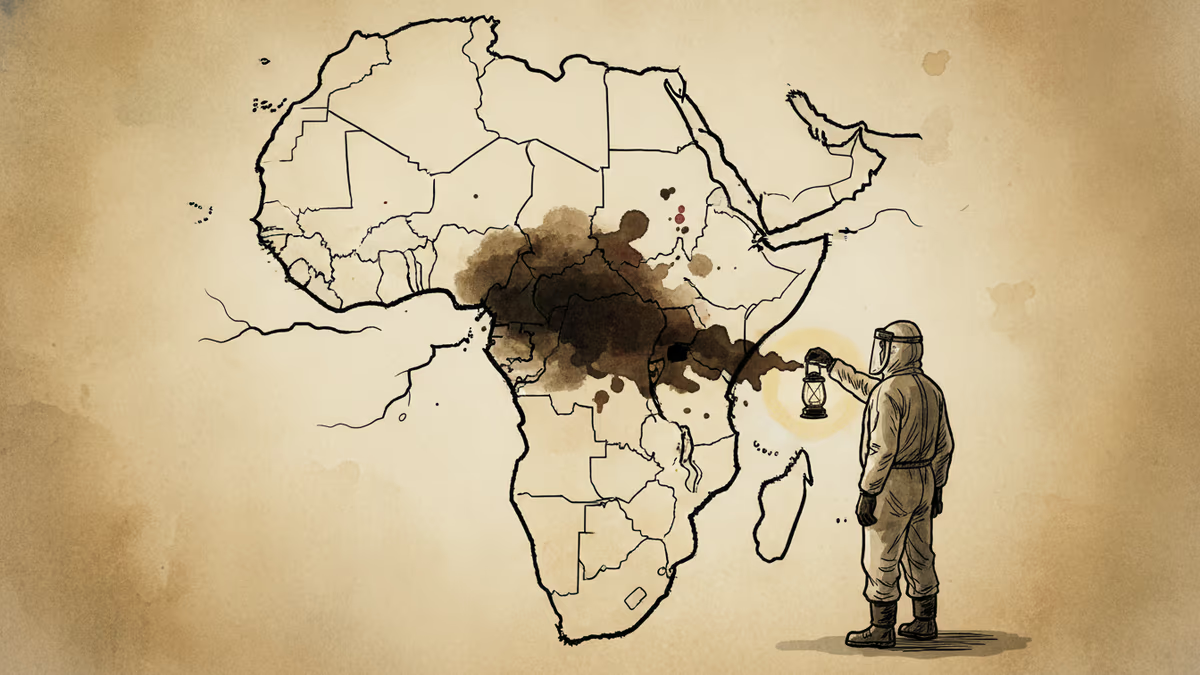
The DRC Ebola outbreak has already crossed into Uganda and earned a WHO emergency declaration. The case count isn't the alarming part—the gaps in detection are.
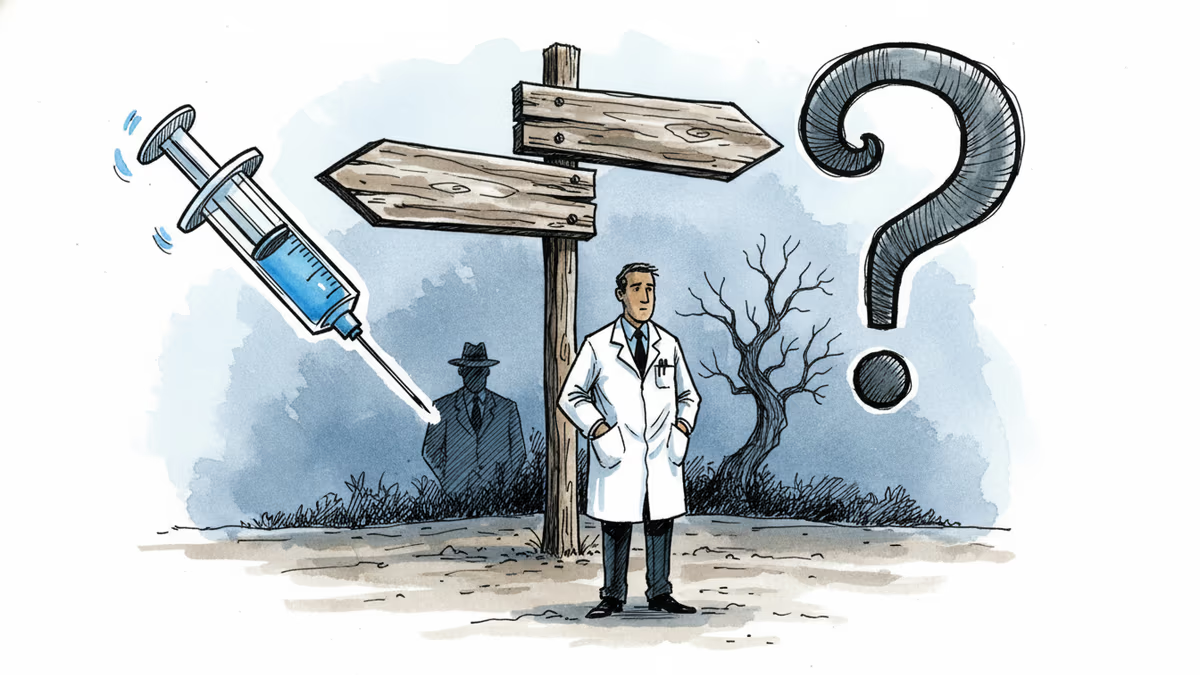
Dr. Erica Schwartz, a pro-vaccine physician with an unimpeachable public health résumé, is Trump's third CDC director nominee—a quiet but pointed rebuke of RFK Jr.'s agenda.
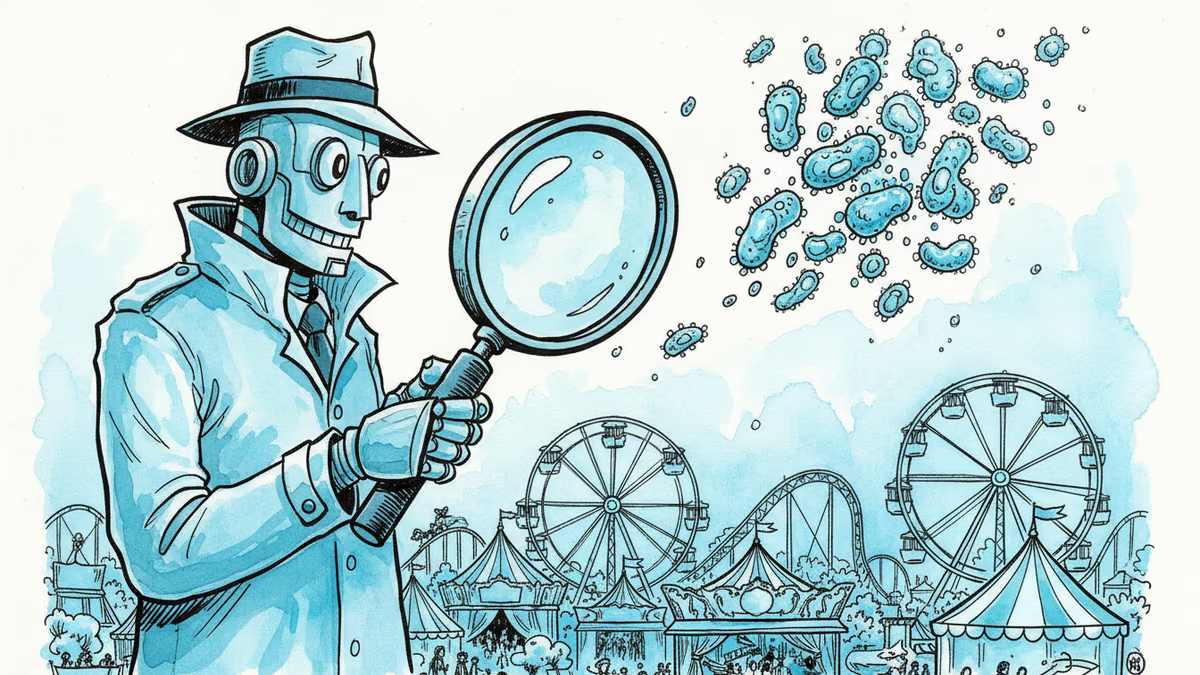
Illinois health officials deployed an AI chatbot to investigate a salmonella outbreak linked to a county fair. But questions remain about whether artificial intelligence can truly revolutionize epidemic tracking.
Growing research suggests shingles vaccines may prevent dementia and slow biological aging, opening new frontiers in preventive medicine beyond infectious disease.
The DRC Ebola outbreak has already crossed into Uganda and earned a WHO emergency declaration. The case count isn't the alarming part—the gaps in detection are.
Dr. Erica Schwartz, a pro-vaccine physician with an unimpeachable public health résumé, is Trump's third CDC director nominee—a quiet but pointed rebuke of RFK Jr.'s agenda.
Illinois health officials deployed an AI chatbot to investigate a salmonella outbreak linked to a county fair. But questions remain about whether artificial intelligence can truly revolutionize epidemic tracking.
Growing research suggests shingles vaccines may prevent dementia and slow biological aging, opening new frontiers in preventive medicine beyond infectious disease.
Thoughts
Share your thoughts on this article
Sign in to join the conversation