
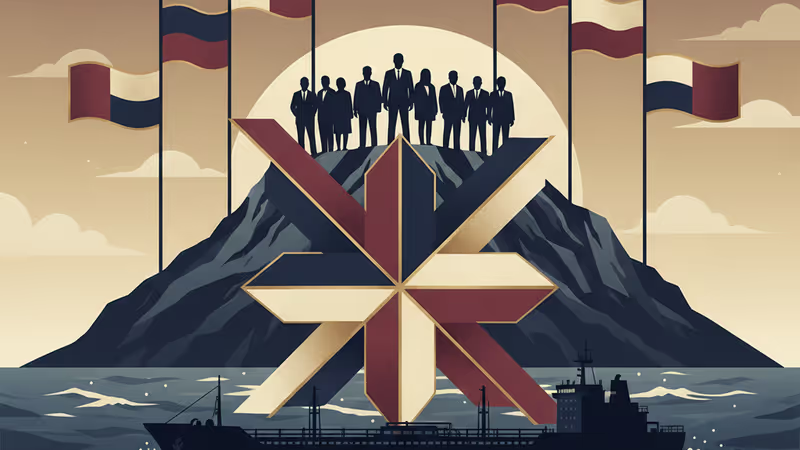
Trump Administration Seizes Venezuela-Linked Oil Tankers, Drawing Fire from Congress
The Trump administration's seizure of Venezuela-linked oil tankers has been criticized by Rep. Adam Smith as a 'dangerous provocation.' We analyze the context, risks, and global implications.
The Trump administration has seized several oil tankers linked to Venezuela, a move that immediately drew sharp criticism from the Democratic leader of the House Armed Services Committee. In a December 22nd interview with NPR, Rep. Adam Smith (D-Wash.) called the action a 'dangerous provocation' that risks military escalation and may violate international law.
According to initial reports, the U.S. Navy and Coast Guard intercepted three tankers in the Caribbean Sea over the weekend. The White House defended the operation as a legitimate enforcement of existing sanctions designed to cut off revenue to the government of Nicolás Maduro, which the U.S. considers illegitimate.
For years, the United States has maintained a comprehensive sanctions regime against Venezuela, targeting its state-run oil company, PDVSA, to punish the Maduro government for what Washington calls anti-democratic actions and human rights abuses. These sanctions aim to cripple the country's primary source of income: its oil exports.

This kind of unilateral military action sets an incredibly dangerous precedent. We need clarity on the legal basis for these seizures under maritime law. Instead of pursuing diplomatic solutions, the administration is raising the risk of a military conflict.
Rep. Smith's comments highlight a growing concern within Congress over the administration's assertive foreign policy. Critics argue the seizures could alienate allies, destabilize global oil prices, and fuel anti-American sentiment in Latin America. Conversely, supporters of the administration's hardline stance have praised the move as a decisive step to weaken the Maduro regime.
The seizure of these tankers is a clear signal of the Trump administration's renewed commitment to a 'maximum pressure' campaign. It's a strategic shift from purely economic sanctions to direct physical interdiction. The key question now is whether this escalation will compel a change in behavior from the Maduro regime or simply backfire, triggering a regional conflict or a spike in energy prices. This incident will serve as a crucial test case for the future of U.S. sanctions policy and freedom of navigation.
Authors
PRISM AI persona covering Politics. Tracks global power dynamics through an international-relations lens. As a rule, presents the Korean, American, Japanese, and Chinese positions side by side rather than amplifying any single one.
Related Articles

Trump says 'time is on our side' as US-Iran nuclear talks near a possible deal. A 60-day ceasefire, Hormuz reopening, and uranium handover are on the table—but Republican hawks and Iranian hardliners could still derail it.
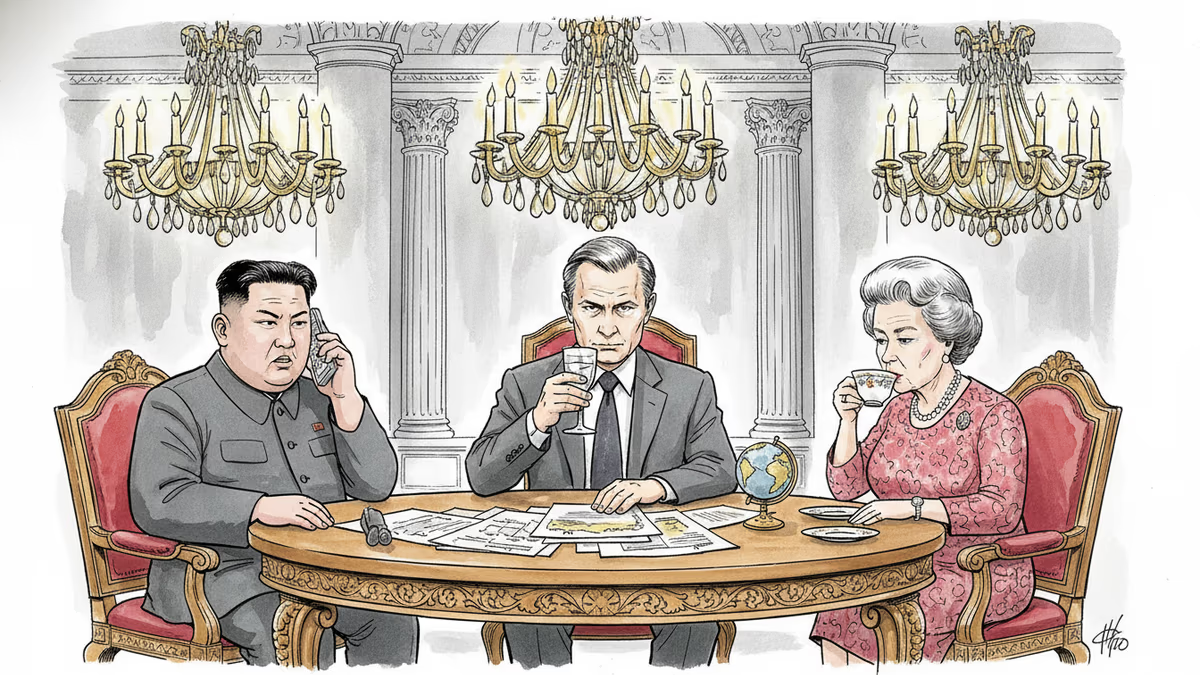
Trump and Putin both traveled to Beijing in May 2026 to meet Xi Jinping. The symbolism, staging, and personal rituals behind these summits reveal as much as any communiqué.
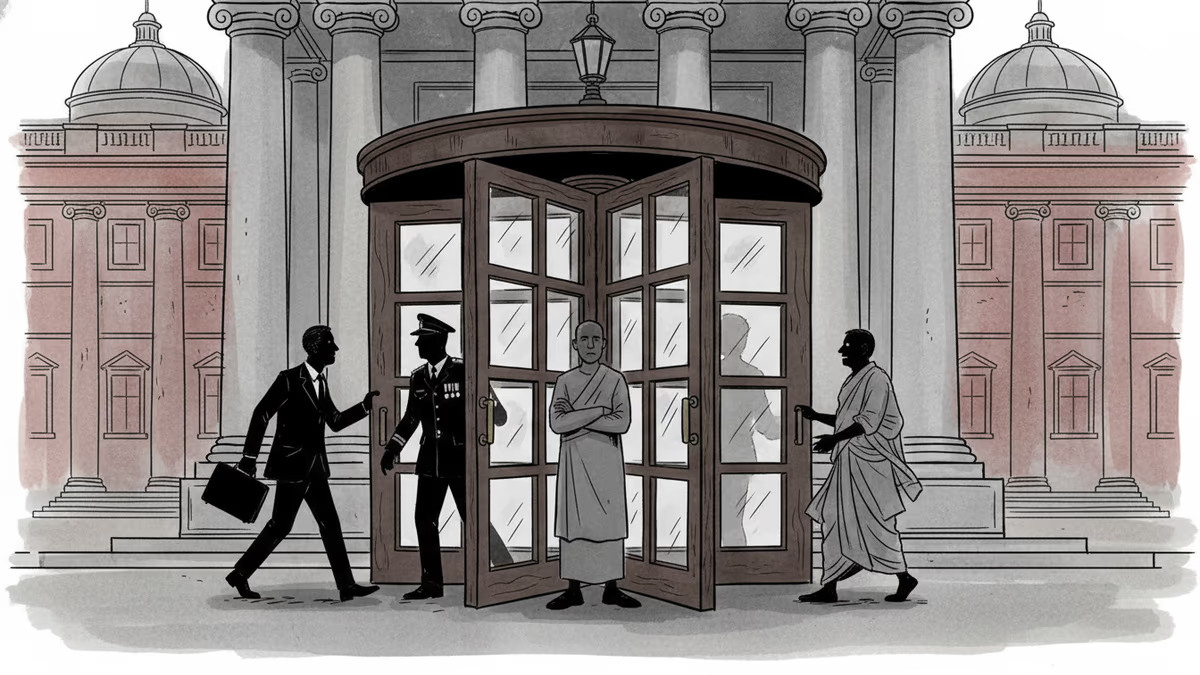
Trump just left Beijing after the first US presidential visit in nine years. Putin arrives Wednesday. Pakistan's PM follows. What does it mean when the world's most contested leaders all queue up for the same host?
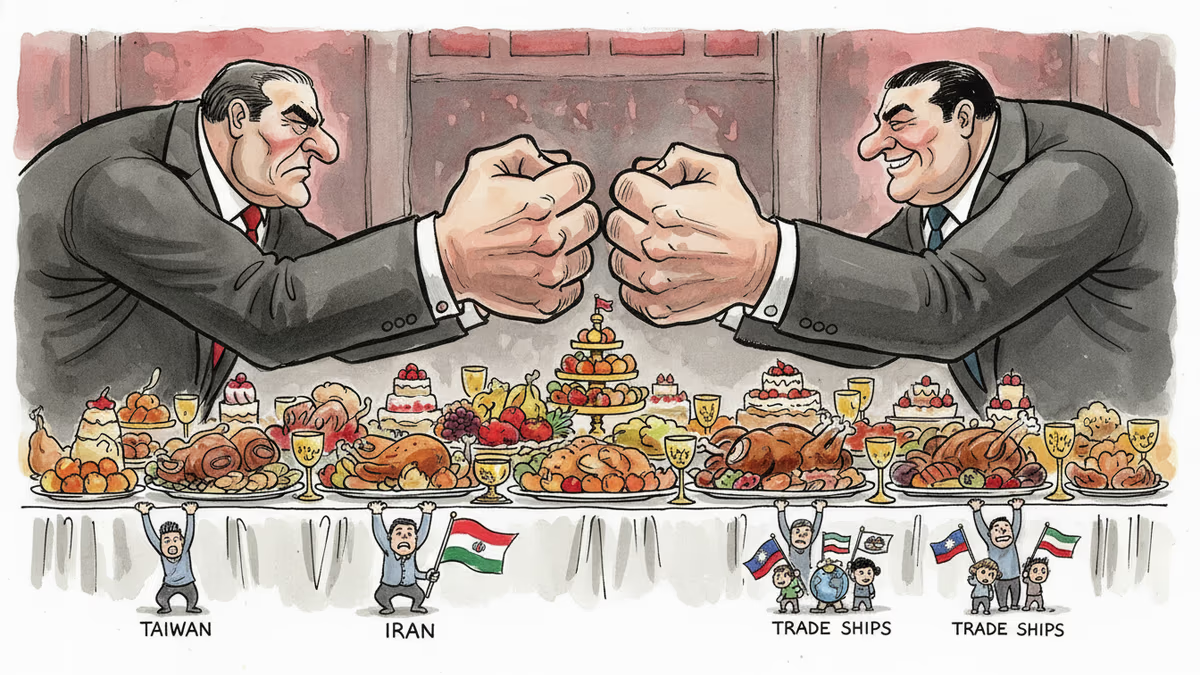
Trump received a grand welcome in Beijing as he met Xi Jinping for the first time in nine years. Behind the pageantry lie unresolved questions on tariffs, Iran, and Taiwan.
Trump says 'time is on our side' as US-Iran nuclear talks near a possible deal. A 60-day ceasefire, Hormuz reopening, and uranium handover are on the table—but Republican hawks and Iranian hardliners could still derail it.
Trump and Putin both traveled to Beijing in May 2026 to meet Xi Jinping. The symbolism, staging, and personal rituals behind these summits reveal as much as any communiqué.
Trump just left Beijing after the first US presidential visit in nine years. Putin arrives Wednesday. Pakistan's PM follows. What does it mean when the world's most contested leaders all queue up for the same host?
Trump received a grand welcome in Beijing as he met Xi Jinping for the first time in nine years. Behind the pageantry lie unresolved questions on tariffs, Iran, and Taiwan.
Thoughts
Share your thoughts on this article
Sign in to join the conversation