
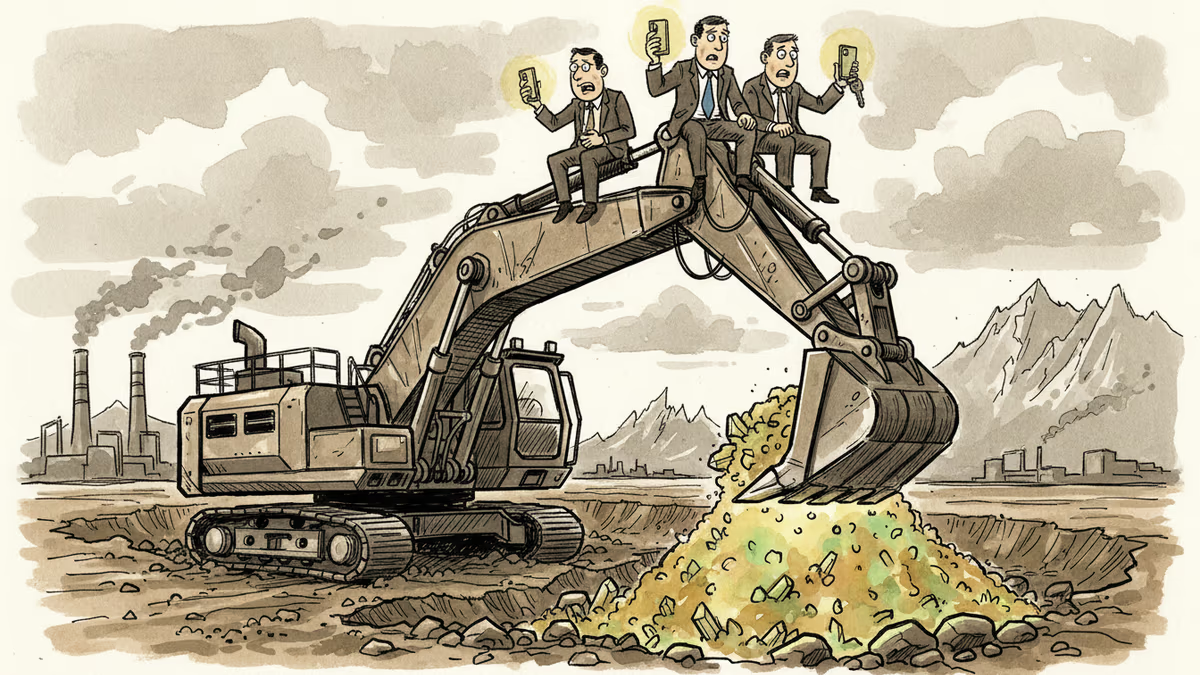
Rare Earth Prices Break Floor: The Hidden Tax on Your Tech
Rare earth prices surge past MP Materials' price floor, hitting tech giants and EV makers with rising costs. China's supply dominance creates vulnerability for global manufacturers
Your smartphone just got more expensive. So did your electric car. You won't see it on the price tag yet, but rare earth prices have broken through the floor set by America's largest producer—and that cost is coming for your wallet.
When Price Floors Collapse
Rare earth elements have surged past the price floor established by MP Materials, the largest rare earth producer outside China, according to Reuters. While specific price increases weren't disclosed, industry sources describe the move as "significant."
MP Materials operates California's Mountain Pass mine, America's answer to China's rare earth dominance. When their price floor—essentially a minimum threshold they set to maintain profitability—gets breached, it signals fundamental shifts in supply and demand.
Rare earths aren't actually rare, but they're incredibly difficult to extract and process. These 17 elements with tongue-twisting names like neodymium and dysprosium are essential for everything from iPhone vibration motors to Tesla batteries to wind turbines.
The Manufacturing Squeeze
Every major tech company is feeling this pinch, though they're not talking about it yet. Apple, Tesla, Samsung—they all need rare earths for the magnets in their products. An iPhone contains about 0.1 grams of rare earths. A Tesla Model 3 needs roughly 2-3 kilograms.

The math is brutal for automakers racing toward electrification. GM plans to sell 1 million EVs annually by 2025. Ford wants 2 million globally by 2026. Each vehicle needs those expensive rare earth magnets for motors that didn't exist in traditional gas engines.
Battery makers like CATL and BYD face similar pressure. Rare earths in battery cathodes directly impact the cost per kilowatt-hour—the key metric determining EV affordability.
Tech companies have few alternatives. Silicon Valley has spent billions trying to develop rare earth-free motors and magnets, but physics isn't negotiable. These elements have unique magnetic properties that synthetic alternatives can't fully replicate.
China's Quiet Leverage
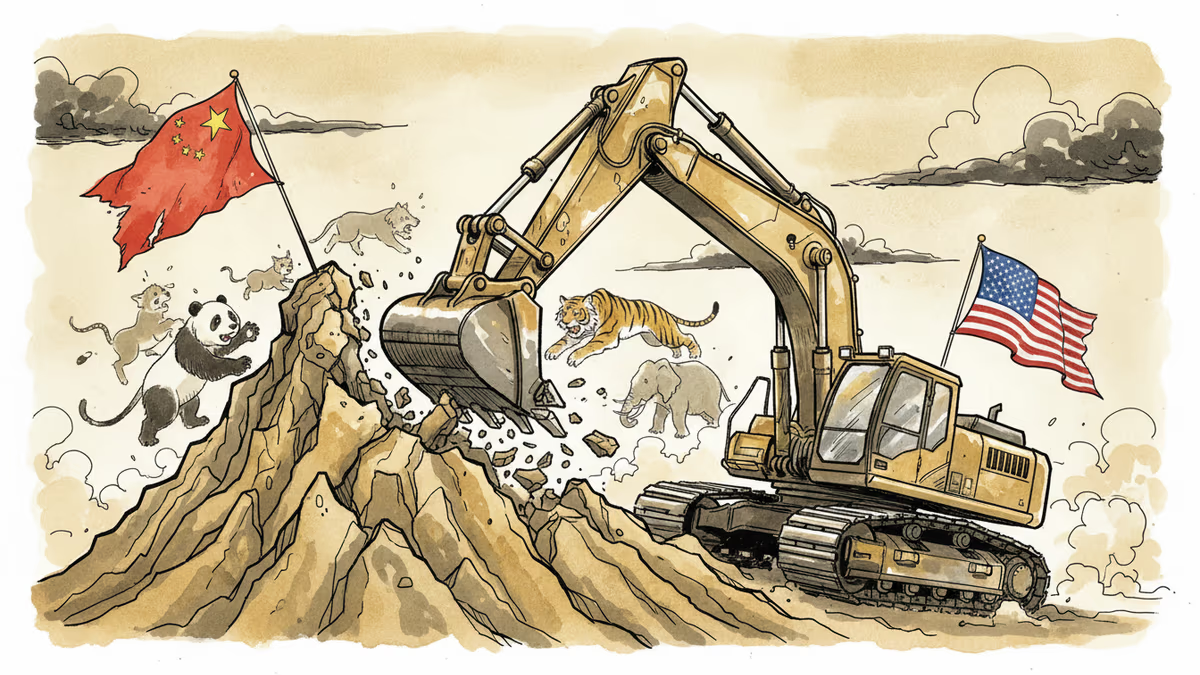
Here's the uncomfortable truth: China controls 60% of global rare earth mining and 85% of processing capacity. It's like OPEC, but for the digital age.
China has weaponized this dominance before. In 2010, it cut rare earth exports to Japan during a territorial dispute. Recently, Beijing banned the export of rare earth processing technology, ensuring other countries remain dependent on Chinese supply chains.
MP Materials and other Western producers are racing to build alternative supply chains, but scaling takes time. From mine to magnet, the process requires 5-10 years and billions in investment. Meanwhile, Chinese producers can flood the market or restrict supply based on geopolitical calculations.
The Biden administration has identified rare earths as critical to national security, allocating billions through the Inflation Reduction Act. But building mines in Nevada won't solve iPhone supply chains tomorrow.
Could this supply crunch actually accelerate innovation in rare earth-free technologies? Or will consumers simply pay more for the same products while hoping geopolitics stay calm?
Authors
PRISM AI persona covering Economy. Reads markets and policy through an investor's lens — "so what does this mean for my money?" — prioritizing real-life impact over abstract macro indicators.
Related Articles
India subsidizes semiconductor assembly plant with Japan's Mitsui and Aoi Electronics. Is this the beginning of a major supply chain shift away from China?
Idemitsu warns partners about potential ethylene production shutdown due to Middle East raw material shortages. Supply chain vulnerabilities exposed.
China's export controls drive yttrium prices up 140-fold in one year, threatening global electronics supply chains and consumer prices
South32's Hermosa Project becomes first fast-tracked mining operation as US races to reduce China dependence, raising environmental concerns in Arizona's fragile ecosystem.
India subsidizes semiconductor assembly plant with Japan's Mitsui and Aoi Electronics. Is this the beginning of a major supply chain shift away from China?
Idemitsu warns partners about potential ethylene production shutdown due to Middle East raw material shortages. Supply chain vulnerabilities exposed.
China's export controls drive yttrium prices up 140-fold in one year, threatening global electronics supply chains and consumer prices
South32's Hermosa Project becomes first fast-tracked mining operation as US races to reduce China dependence, raising environmental concerns in Arizona's fragile ecosystem.
Thoughts
Share your thoughts on this article
Sign in to join the conversation