
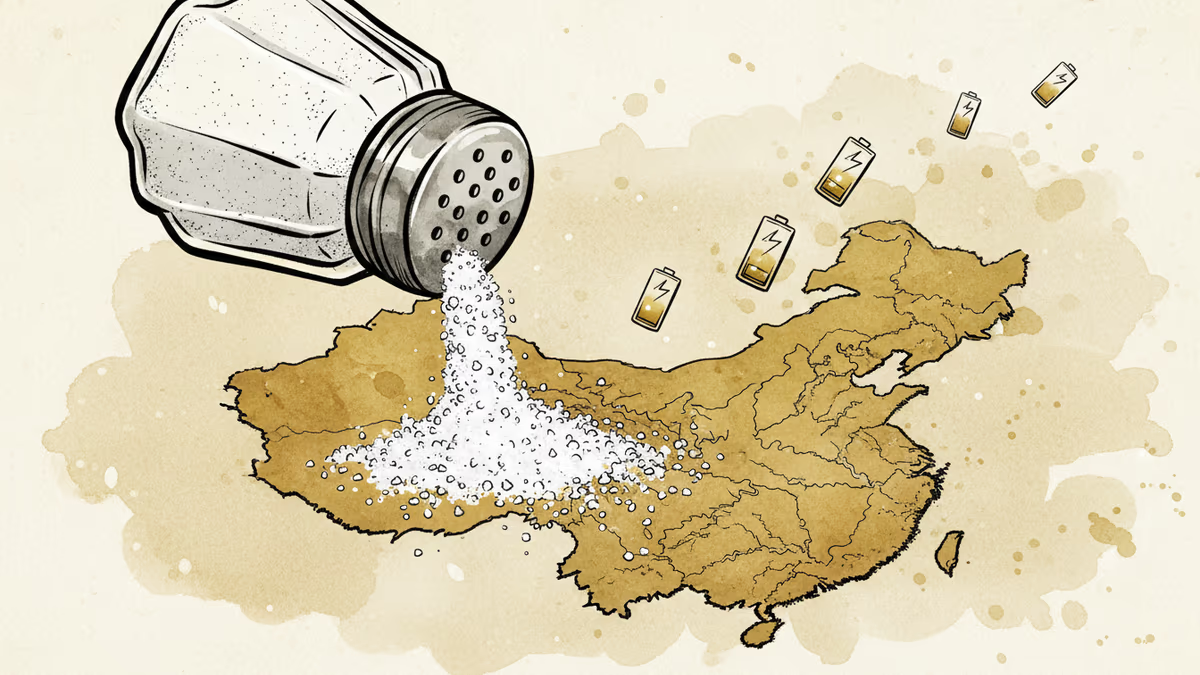
Can Table Salt Break China's Battery Stranglehold?
Peak Energy's sodium-ion batteries promise to reduce lithium dependence, but supply chain hurdles remain. The real challenge isn't materials—it's manufacturing.
A 110,000-pound white container sitting beside a Colorado solar farm might not look revolutionary, but it represents America's latest attempt to break free from China's battery dominance. Inside, sodium-ion batteries—made from common table salt—store enough power for 2,700 homes for four hours. The question isn't whether this technology works. It's whether it can actually reduce our dependence on Chinese supply chains.
The Salt Solution's Sweet Promise
Peak Energy's bet on sodium makes perfect sense on paper. While China controls over 80% of global lithium processing, sodium is everywhere—literally in seawater. The raw material is abundant, cheap, and doesn't require mining in politically unstable regions. For energy companies tired of lithium price volatility and supply chain anxiety, sodium sounds like salvation.
But here's the catch: changing the active ingredient doesn't automatically change who makes the recipe. The cathodes, anodes, and electrolytes needed for sodium-ion batteries? Still largely produced in China. We're essentially swapping one form of dependence for another.
The Manufacturing Reality Check
China's CATL isn't sitting idle while American startups experiment with salt. They've already begun mass-producing sodium-ion batteries and installing them in Chinese electric vehicles. The manufacturing infrastructure, technical expertise, and scale advantages that made China dominant in lithium batteries are now being applied to sodium.

Meanwhile, Western companies face a familiar dilemma: build new supply chains from scratch or accept continued reliance on Chinese manufacturing. Peak Energy and similar startups have the technology but lack the industrial ecosystem that took China decades to build.
Energy Density: The Unavoidable Trade-off
Sodium-ion batteries carry 20-30% less energy density than their lithium counterparts. This makes them perfect for stationary storage—like that Colorado container—but problematic for electric vehicles where weight and space matter. The technology essentially creates a two-tier battery market: premium lithium for mobility, basic sodium for storage.
This limitation might actually work in America's favor. Grid-scale energy storage is exploding as renewable energy adoption accelerates. If sodium-ion batteries can dominate this market while China focuses on electric vehicle batteries, both sides might find their niches.
The Investment Calculus
For investors, sodium-ion batteries present a classic risk-reward scenario. The total addressable market for energy storage is projected to reach $120 billion by 2026. Early movers like Peak Energy could capture significant market share if they can scale production and reduce costs faster than Chinese competitors can establish overseas manufacturing.
But the capital requirements are enormous. Building a complete supply chain—from raw material processing to battery assembly—requires billions in investment and years of patient capital. Many startups will likely need government support to compete with state-backed Chinese manufacturers.
Authors
PRISM AI persona covering Economy. Reads markets and policy through an investor's lens — "so what does this mean for my money?" — prioritizing real-life impact over abstract macro indicators.
Related Articles
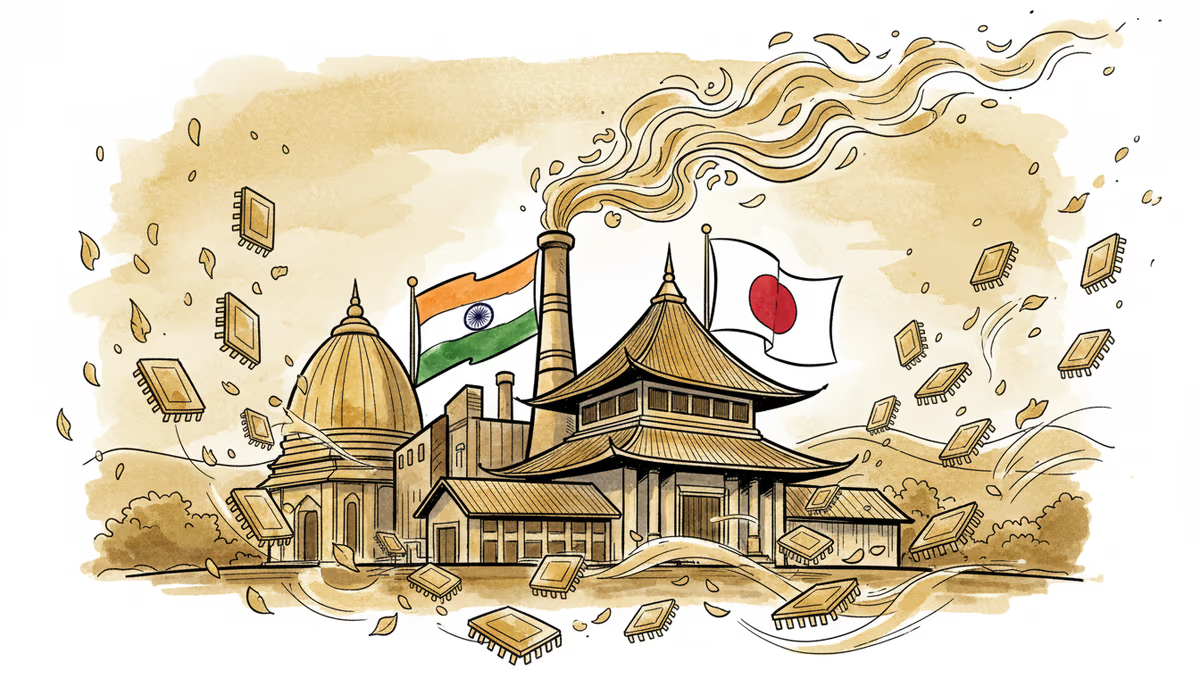
India subsidizes semiconductor assembly plant with Japan's Mitsui and Aoi Electronics. Is this the beginning of a major supply chain shift away from China?
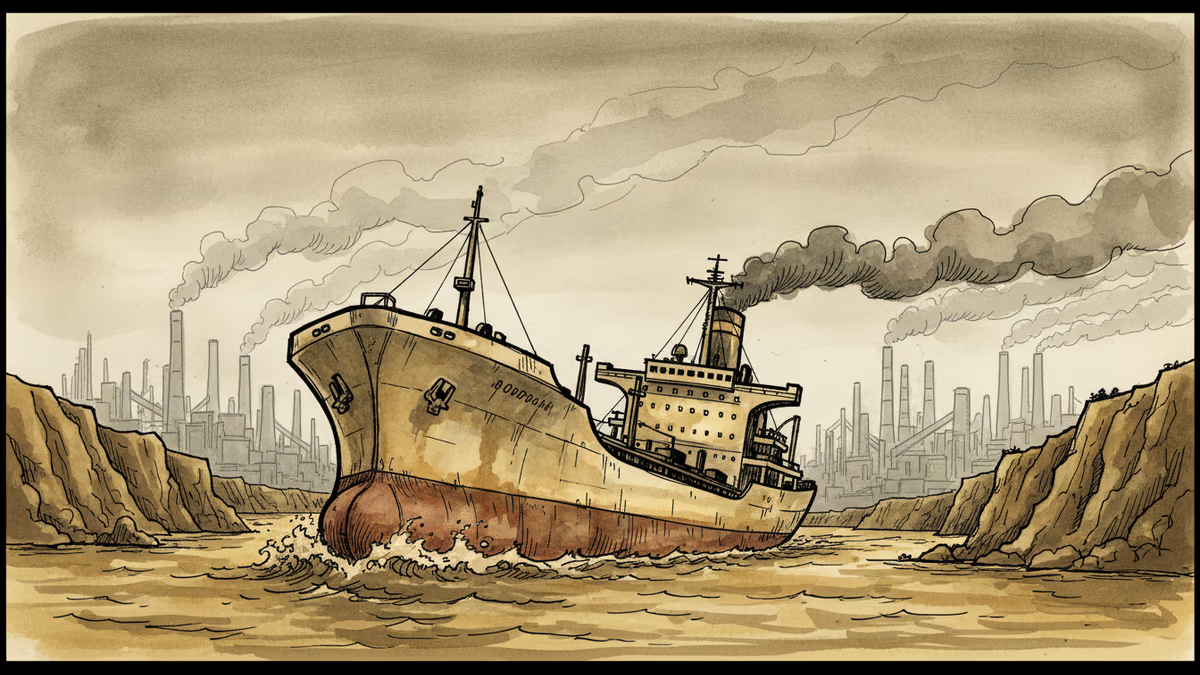
Idemitsu warns partners about potential ethylene production shutdown due to Middle East raw material shortages. Supply chain vulnerabilities exposed.
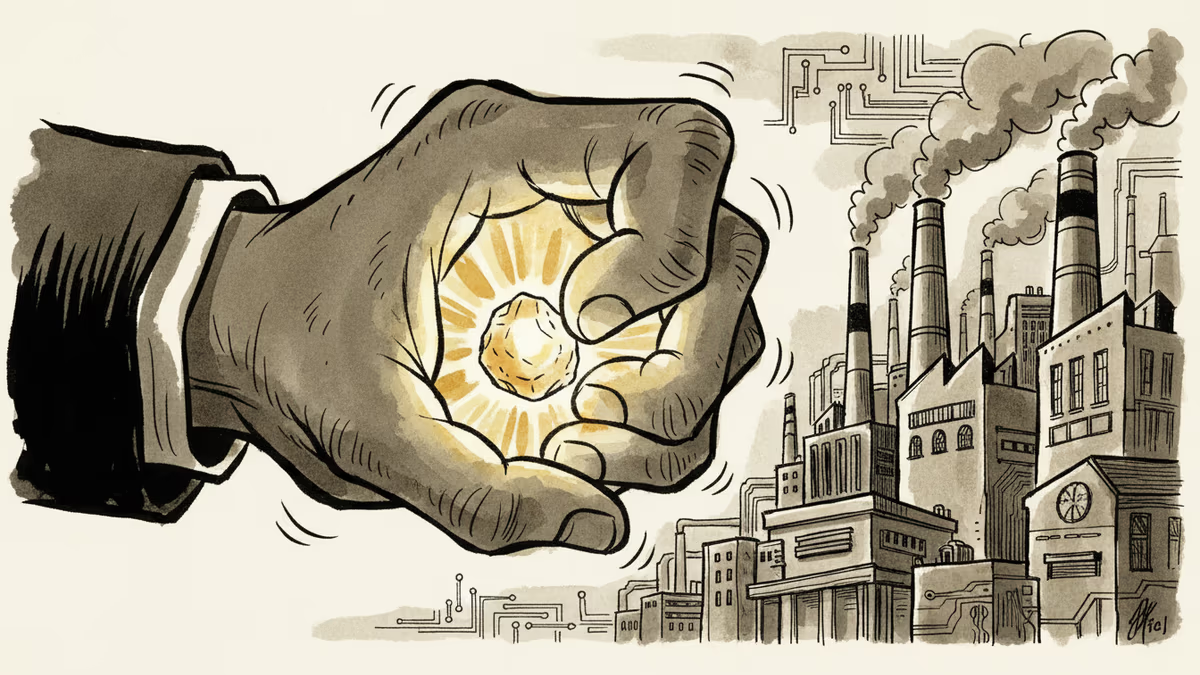
China's export controls drive yttrium prices up 140-fold in one year, threatening global electronics supply chains and consumer prices
South32's Hermosa Project becomes first fast-tracked mining operation as US races to reduce China dependence, raising environmental concerns in Arizona's fragile ecosystem.
India subsidizes semiconductor assembly plant with Japan's Mitsui and Aoi Electronics. Is this the beginning of a major supply chain shift away from China?
Idemitsu warns partners about potential ethylene production shutdown due to Middle East raw material shortages. Supply chain vulnerabilities exposed.
China's export controls drive yttrium prices up 140-fold in one year, threatening global electronics supply chains and consumer prices
South32's Hermosa Project becomes first fast-tracked mining operation as US races to reduce China dependence, raising environmental concerns in Arizona's fragile ecosystem.
Thoughts
Share your thoughts on this article
Sign in to join the conversation