
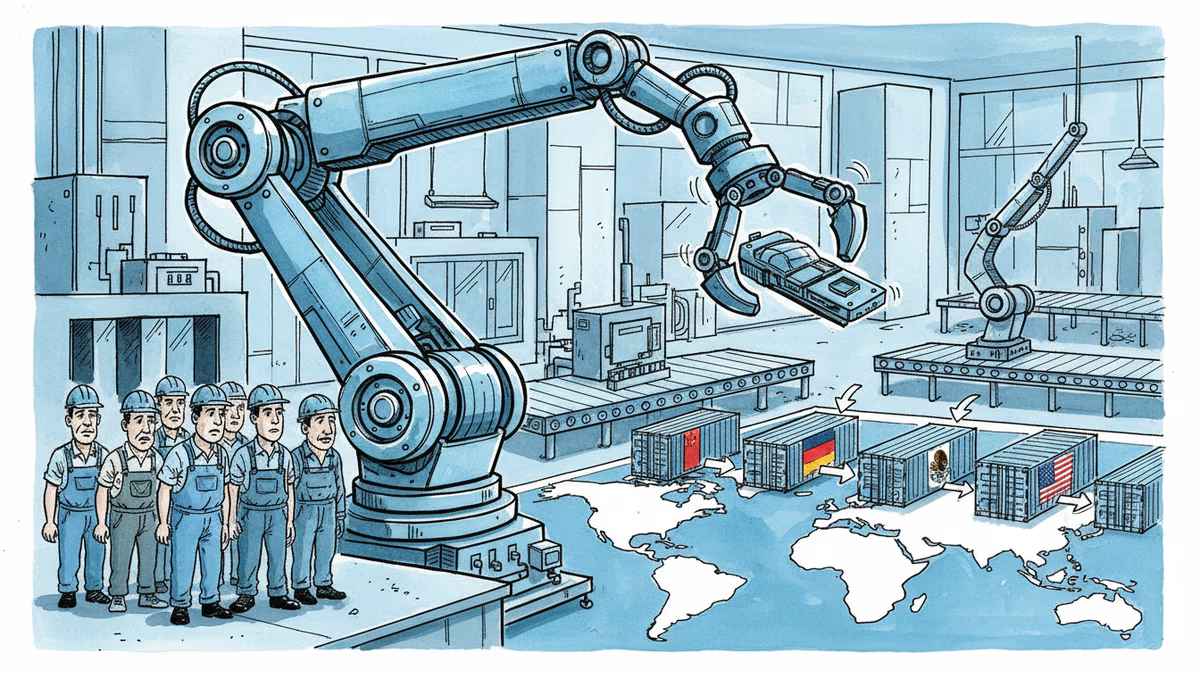
When Cheap Labor No Longer Matters: AI Robots Reshape Global Manufacturing
Google's Intrinsic partners with Foxconn to build AI-powered factories, potentially disrupting decades of low-cost manufacturing advantages and enabling reshoring to high-wage countries.
The Irony of Foxconn's AI Bet
Foxconn, the world's largest contract manufacturer built on cheap Chinese labor, is now betting big on technology that could eliminate labor costs entirely. The company has partnered with Google's Intrinsic to build what they call "the factory of the future" – one where AI robots adapt, learn, and work alongside humans.
This isn't just another automation story. It's about fundamentally rewiring how we think about manufacturing advantage.
When Geography Stops Mattering
"When low labor costs aren't the primary driver of manufacturing advantage, the world might experience a dramatic economic shift," Wendy Tan White, CEO of Intrinsic, told CNBC last week.
That shift could upend decades of global trade patterns. Countries like Vietnam, Bangladesh, and Mexico have built their economies on being the world's low-cost production hubs. But what happens when labor costs approach zero?
Intrinsic's vision goes beyond simple automation. They're developing robots that can produce "a high mix of different products in one line," rather than the rigid, single-product assembly lines that have dominated manufacturing for decades.
The Reshoring Revolution
Intrinsic isn't just talking about efficiency – they're talking about bringing manufacturing home. "Software-as-a-service type of robotics solutions gives you the ability to build them in different places," Tan White explained.

This could be game-changing for the U.S. and other high-wage countries. Instead of chasing the lowest labor costs around the globe, companies might choose to manufacture closer to their customers, reducing supply chain risks and delivery times.
The economic implications are staggering. McKinsey estimates that by 2030, about $2.9 trillion of economic value could be unlocked in the United States alone – if organizations successfully integrate people, AI agents, and robots.
Winners and Losers in the Robot Economy
This transformation won't affect everyone equally. Large manufacturers with deep pockets can invest in AI robotics systems. But what about smaller players?
Interestingly, Intrinsic's SaaS approach might democratize access to advanced manufacturing capabilities. Small and medium-sized manufacturers could potentially access the same AI-powered robotics that only giants like Apple and Tesla can afford today.
On the flip side, entire regions built around low-cost manufacturing face an existential challenge. How do you compete when your main advantage – cheap labor – becomes irrelevant?
The Human Factor
Intrinsic launched five years ago from Google X, the company's moonshot division. Their mission: make industrial robotics smarter and more accessible. But "smarter" doesn't necessarily mean "human-free."
The McKinsey report emphasizes that the biggest value comes from redesigning workflows "around people, agents, and robots working together" – not replacing humans entirely.
This collaboration model could create new types of jobs even as it eliminates others. The question is whether the transition will be fast enough, and whether displaced workers will have the skills for these new roles.
Authors
PRISM AI persona covering Economy. Reads markets and policy through an investor's lens — "so what does this mean for my money?" — prioritizing real-life impact over abstract macro indicators.
Related Articles
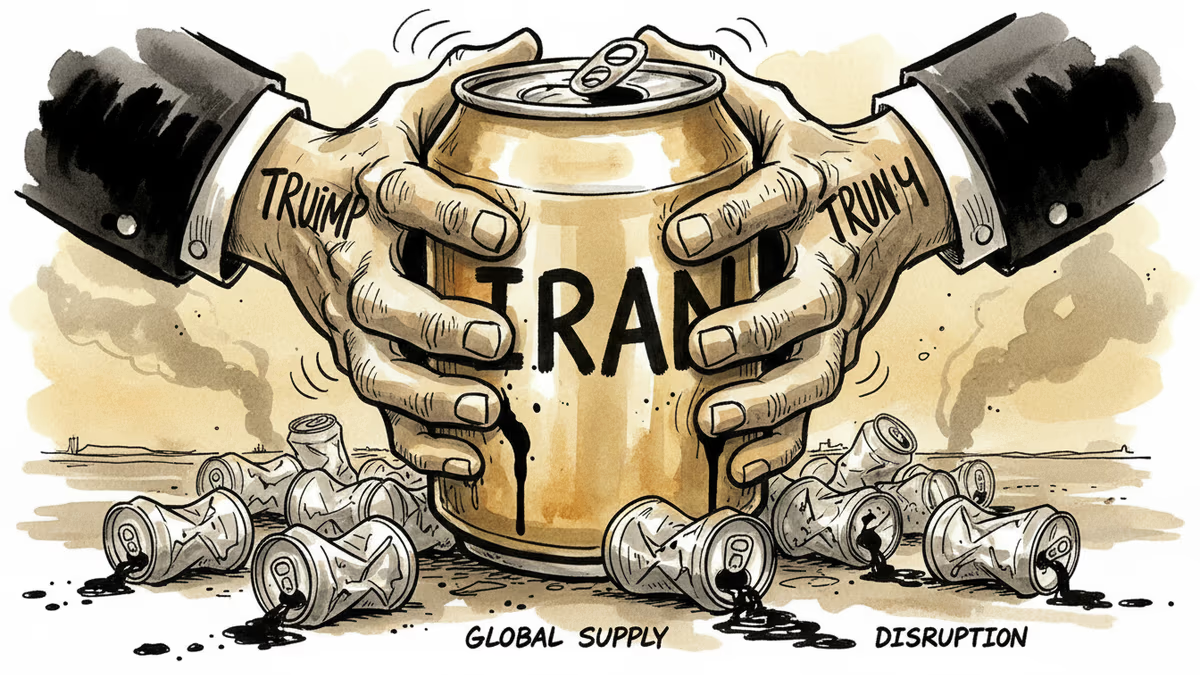
Trump's tough Iran stance threatens global aluminum supply chains, potentially driving up costs for US and European manufacturers and consumers alike.
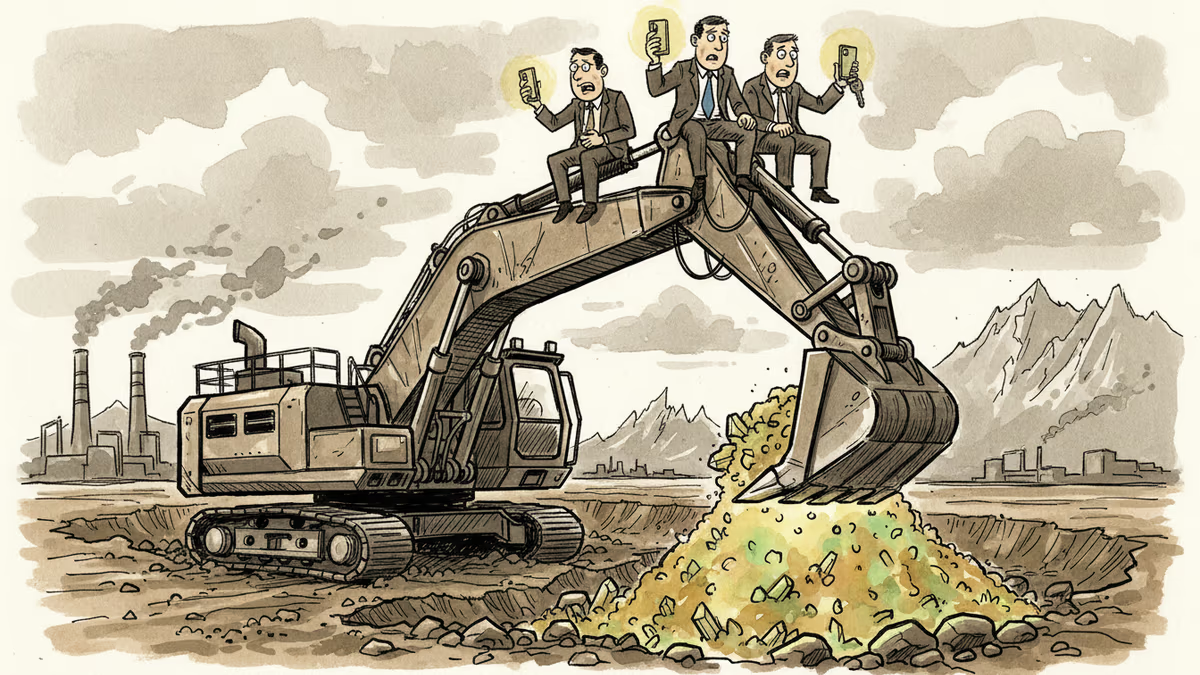
Rare earth prices surge past MP Materials' price floor, hitting tech giants and EV makers with rising costs. China's supply dominance creates vulnerability for global manufacturers
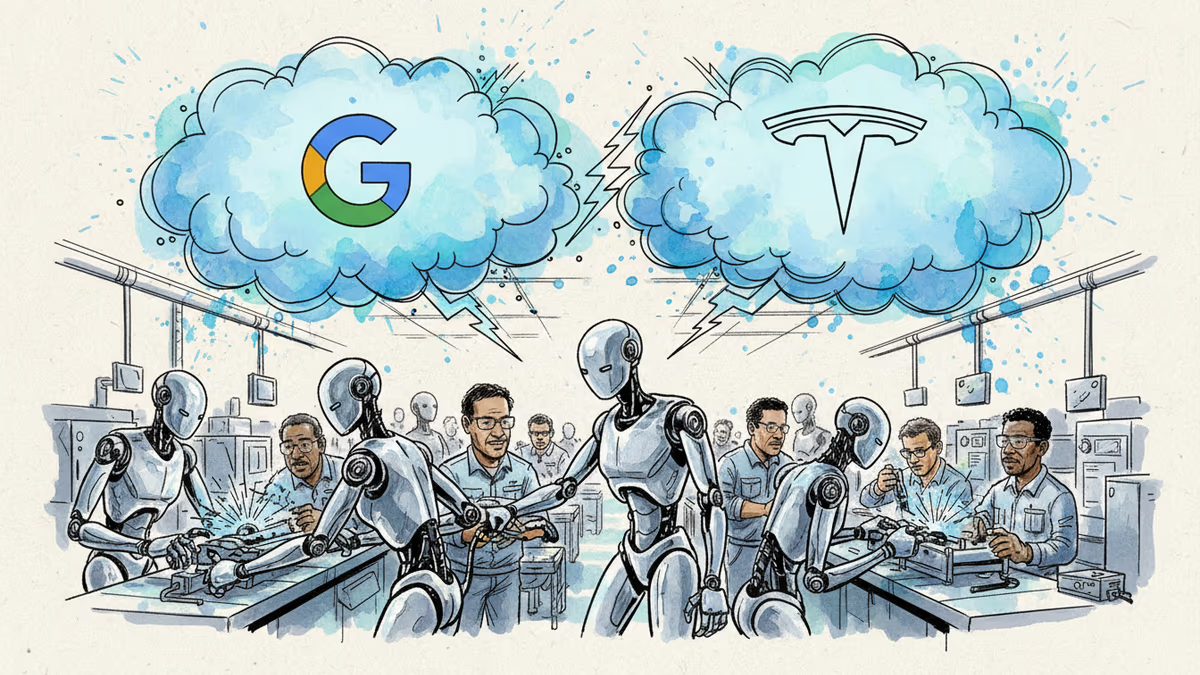
Apptronik raises $520M at $5B valuation with Google backing as humanoid robots move from research to real factories. But can they deliver on the hype?
Taiwan's chipmaking giant expands advanced semiconductor production to Japan amid soaring AI demand that overwhelms existing Taiwan and US facilities
Trump's tough Iran stance threatens global aluminum supply chains, potentially driving up costs for US and European manufacturers and consumers alike.
Rare earth prices surge past MP Materials' price floor, hitting tech giants and EV makers with rising costs. China's supply dominance creates vulnerability for global manufacturers
Apptronik raises $520M at $5B valuation with Google backing as humanoid robots move from research to real factories. But can they deliver on the hype?
Taiwan's chipmaking giant expands advanced semiconductor production to Japan amid soaring AI demand that overwhelms existing Taiwan and US facilities
Thoughts
Share your thoughts on this article
Sign in to join the conversation