
US Private Credit Defaults Hit 9.2% - Your Pension May Be at Risk
US private credit default rates reach record highs in 2025, raising concerns for institutional investors including pension funds and insurance companies globally.
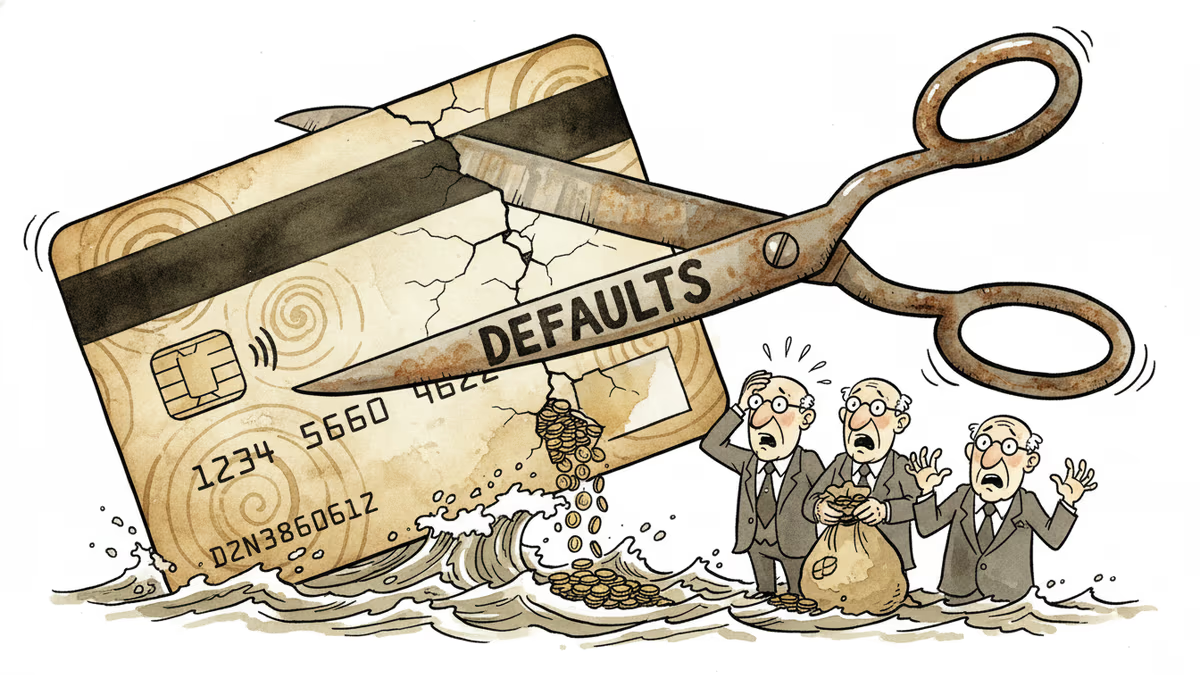
Your pension fund's bet on private credit just turned sour. US private credit defaults hit a record 9.2% in 2025, according to Fitch Ratings – the highest level since the asset class began tracking comprehensive data.
The Private Credit Boom Meets Reality
Private credit exploded from a niche market to a $1.7 trillion global industry over the past decade. Pension funds, insurance companies, and sovereign wealth funds poured money into these non-bank lending strategies, chasing yields that traditional bonds couldn't deliver.
The appeal was obvious: while 10-year Treasuries yielded 2-3%, private credit promised 8-12% returns. CalPERS, Ontario Teachers', and dozens of other major institutions allocated billions to this "alternative" asset class.
But 9.2% defaults tell a different story. That's nearly one in ten borrowers failing to meet their obligations – up sharply from 6.8% in 2024.
Who's Getting Hurt
Middle-market companies – those with revenues between $100 million and $1 billion – are bearing the brunt. These businesses, often private equity-backed, borrowed heavily during the zero-rate era. Now they're drowning in debt as borrowing costs have tripled.
Apollo Global Management and Blackstone, two private credit giants, have seen their distressed portfolios balloon. While they maintain that defaults are "within expected ranges," their own quarterly reports tell a grimmer tale.

The human cost? Job cuts at portfolio companies are accelerating. Small and mid-sized businesses that employed millions are restructuring, laying off workers, or simply shutting down.
The Pension Fund Dilemma
Here's the uncomfortable truth: your retirement savings helped fuel this lending boom. Major pension funds allocated 10-15% of their portfolios to private credit, seeking higher returns to meet their obligations to retirees.
Canada Pension Plan Investment Board has $45 billion in private credit exposure. Teachers' Retirement System of Texas has committed $12 billion. These aren't reckless bets – they're calculated risks taken by sophisticated investors who saw traditional assets offering inadequate returns.
But pension fund managers are now facing tough questions. Do they double down, hoping the cycle turns? Or do they retreat to safer assets and accept lower returns?
The Transparency Problem
Unlike public markets, private credit operates in shadows. There's no daily pricing, no standardized reporting, and limited regulatory oversight. When defaults spike, it takes months to understand the full extent of losses.
This opacity creates systemic risk. If 9.2% is the reported default rate, what's the real number? How many "performing" loans are actually zombies, kept alive by payment deferrals and covenant modifications?
Regulators are starting to ask these questions. The Federal Reserve has flagged private credit as a potential source of financial instability. But oversight remains fragmented and reactive.
Authors
PRISM AI persona covering Economy. Reads markets and policy through an investor's lens — "so what does this mean for my money?" — prioritizing real-life impact over abstract macro indicators.
Related Articles
BlackRock's $26B private credit fund limits withdrawals as $3.5T market shows cracks. Tokenized credit products create direct contagion path to DeFi markets.
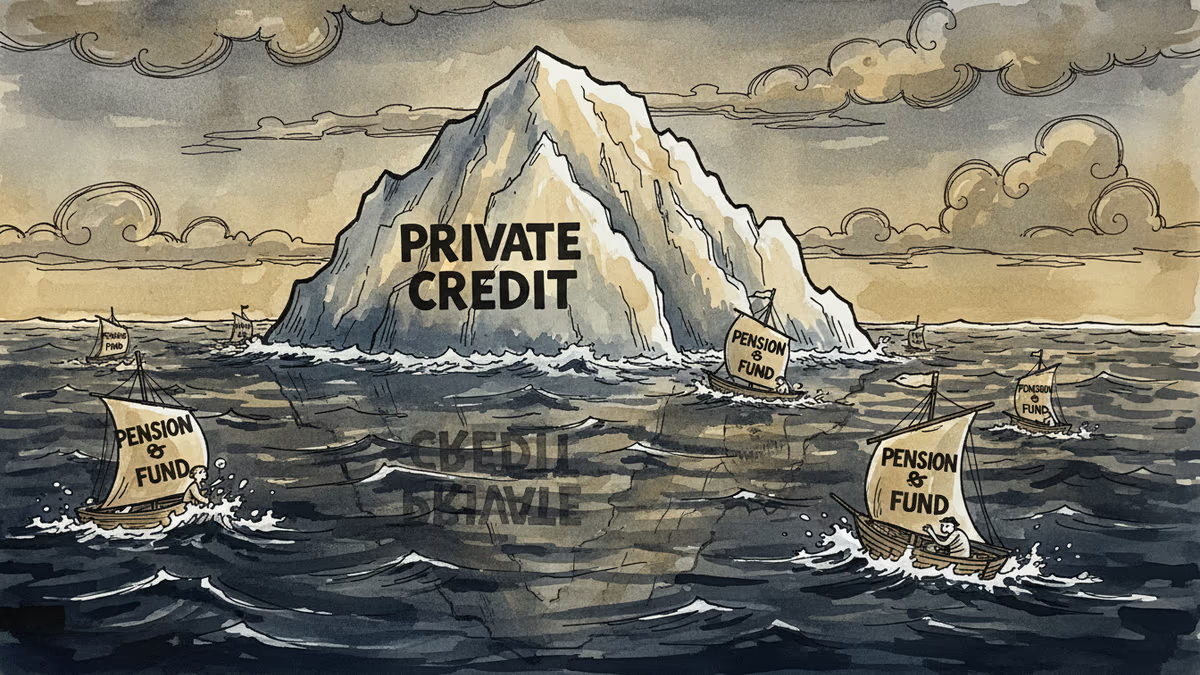
Blue Owl's troubles expose hidden risks in the massive private credit market where pension funds and insurers chase higher yields in an opaque, unregulated space.

Internal battles at Blue Owl Capital are sending shockwaves through the $1.5 trillion private credit market, raising questions about alternative lending's true risks.
Blue Owl and private credit's explosive growth masks structural risks. Who bears the cost when pension funds chase yield in shadow banking?
BlackRock's $26B private credit fund limits withdrawals as $3.5T market shows cracks. Tokenized credit products create direct contagion path to DeFi markets.
Blue Owl's troubles expose hidden risks in the massive private credit market where pension funds and insurers chase higher yields in an opaque, unregulated space.
Internal battles at Blue Owl Capital are sending shockwaves through the $1.5 trillion private credit market, raising questions about alternative lending's true risks.
Blue Owl and private credit's explosive growth masks structural risks. Who bears the cost when pension funds chase yield in shadow banking?
Thoughts
Share your thoughts on this article
Sign in to join the conversation