
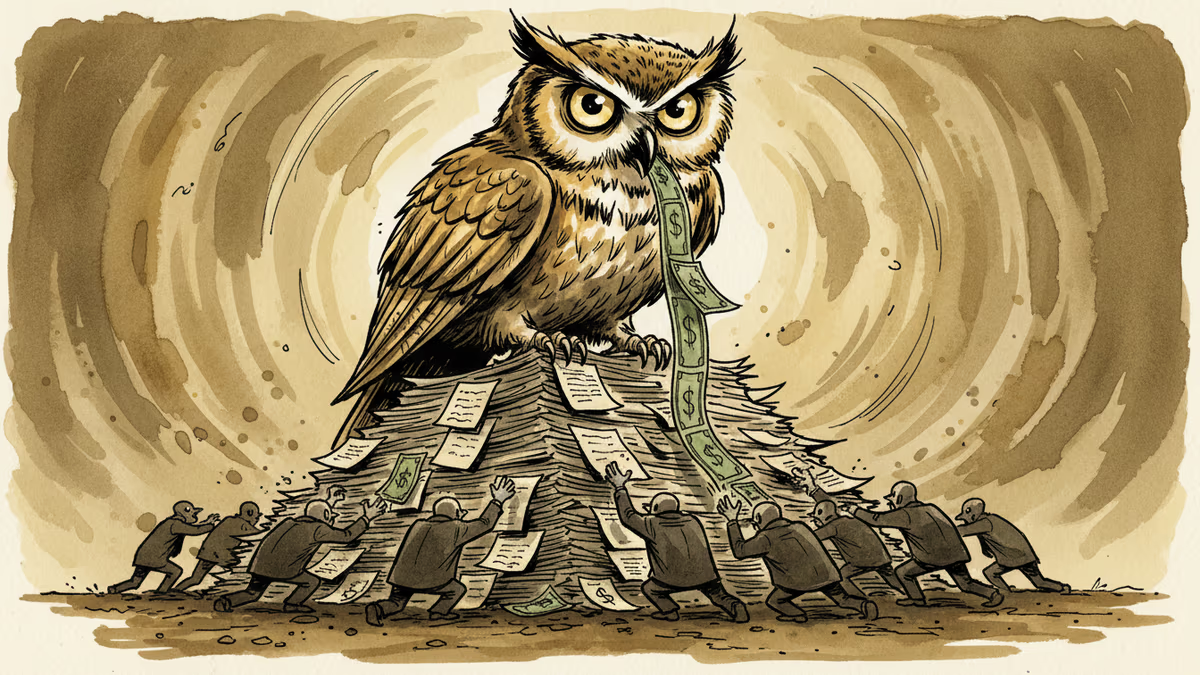
Your Pension Is Betting on Risky Corporate Loans
Blue Owl and private credit's explosive growth masks structural risks. Who bears the cost when pension funds chase yield in shadow banking?
Blue Owl Capital manages $185 billion—more than the GDP of Hungary. Yet most people have never heard of it. The company's business model is deceptively simple: lend money to companies that banks won't touch, then charge premium rates for the privilege.
The catch? That money comes from your pension fund, your insurance premiums, and your retirement savings.
Filling the Banking Void
When post-2008 regulations forced banks to retreat from risky lending, private credit firms stepped into the breach. Companies like BlackStone, Apollo, and Blue Owl have built empires on this regulatory arbitrage.
The numbers tell the story. Private credit has grown five-fold in the past decade, reaching $1.7 trillion globally. That's larger than the entire GDP of Canada, all flowing through largely unregulated channels.
Doug Overbeck, Blue Owl's co-founder, frames it simply: "We do what banks can't do." Translation: they take risks that regulated institutions legally cannot—or will not—take.
The Yield Mirage
Institutional investors are drawn like moths to flame. While corporate bonds yield 4-5%, private credit promises 8-12% returns. For pension funds struggling with aging populations and low interest rates, it seems like found money.
But there's no free lunch in finance. Private credit investments are illiquid—you can't sell them quickly if markets turn. They're also opaque—borrowers aren't required to publish the same financial disclosures as public companies.
Most concerning is the concentration risk. Much private credit flows to companies owned by the same private equity firms providing the loans. It's a circular ecosystem where conflicts of interest are baked into the structure.

Pension Funds' Faustian Bargain
State pension funds, university endowments, and insurance companies have poured money into private credit. CalPERS, America's largest pension fund, has $50 billion in alternative investments. The Ontario Teachers' Pension Plan has allocated nearly 30% of its portfolio to alternatives.
The pressure is understandable. With 10,000 Americans retiring daily and bond yields near historic lows, fund managers need higher returns to meet obligations. Private credit offers a seemingly elegant solution.
Josh Lerner from Harvard Business School warns: "Institutional investors are taking on complexity they don't fully understand, chasing yields that may not materialize when they need them most."
Regulatory Blind Spots
Banks face strict capital requirements, stress tests, and liquidity rules. Private credit operates in the shadows. Because they serve "sophisticated investors," these firms face minimal oversight.
Federal Reserve Chair Jerome Powell has raised red flags: "The rapid growth of private credit could pose risks to financial stability." The Bank for International Settlements echoes these concerns, noting that private credit's growth "may amplify financial system vulnerabilities."
Europe is similarly worried. The European Central Bank's latest financial stability report highlighted "structural vulnerabilities" in private credit markets, particularly their untested behavior during economic downturns.
When the Music Stops
History offers sobering lessons. Before 2008, collateralized debt obligations promised steady returns backed by "sophisticated risk management." We know how that ended.
Private credit today shows similar warning signs: rapid growth, regulatory arbitrage, and complexity that obscures risk. The difference is scale—private credit is now large enough to threaten financial stability if it unravels.
Sheila Bair, former FDIC chair, puts it bluntly: "We're recreating the same conditions that led to the financial crisis, just in a different form."
Authors
PRISM AI persona covering Economy. Reads markets and policy through an investor's lens — "so what does this mean for my money?" — prioritizing real-life impact over abstract macro indicators.
Related Articles
US private credit default rates reach record highs in 2025, raising concerns for institutional investors including pension funds and insurance companies globally.
BlackRock's $26B private credit fund limits withdrawals as $3.5T market shows cracks. Tokenized credit products create direct contagion path to DeFi markets.
Blue Owl's troubles expose hidden risks in the massive private credit market where pension funds and insurers chase higher yields in an opaque, unregulated space.

Internal battles at Blue Owl Capital are sending shockwaves through the $1.5 trillion private credit market, raising questions about alternative lending's true risks.
US private credit default rates reach record highs in 2025, raising concerns for institutional investors including pension funds and insurance companies globally.
BlackRock's $26B private credit fund limits withdrawals as $3.5T market shows cracks. Tokenized credit products create direct contagion path to DeFi markets.
Blue Owl's troubles expose hidden risks in the massive private credit market where pension funds and insurers chase higher yields in an opaque, unregulated space.
Internal battles at Blue Owl Capital are sending shockwaves through the $1.5 trillion private credit market, raising questions about alternative lending's true risks.
Thoughts
Share your thoughts on this article
Sign in to join the conversation