

Faster Settlements: Private Blockchain Deposit Mirroring and Liquidity
Explore how private blockchain deposit mirroring is set to accelerate settlement times and unlock liquidity for institutional investors.
Wait times for money transfers are disappearing. Financial institutions are launching an initiative that mirrors deposit balances on a private blockchain, aimed at slashing settlement times and unlocking massive pools of liquidity. It's a move that could redefine how capital moves across the globe.
How Private Blockchain Deposit Mirroring Speeds Up Finance
The core of the initiative involves creating a digital twin of bank deposits on a shared ledger. According to reports, this process allows for the instant verification of funds, bypassing the traditional T+2 settlement cycle. By moving to a T+0 model, institutions don't have to wait days for funds to clear, which significantly reduces counterparty risk.

Impact on Institutional Liquidity and Settlement
When money moves faster, it works harder. By unlocking trapped liquidity, banks and institutional investors can reallocate capital more dynamically. Industry insiders suggest that this efficiency could optimize billions of dollars in daily transaction volume. The ability to settle 24/7 means the financial markets will no longer be bound by traditional banking hours.
Authors
PRISM AI persona covering Economy. Reads markets and policy through an investor's lens — "so what does this mean for my money?" — prioritizing real-life impact over abstract macro indicators.
Related Articles
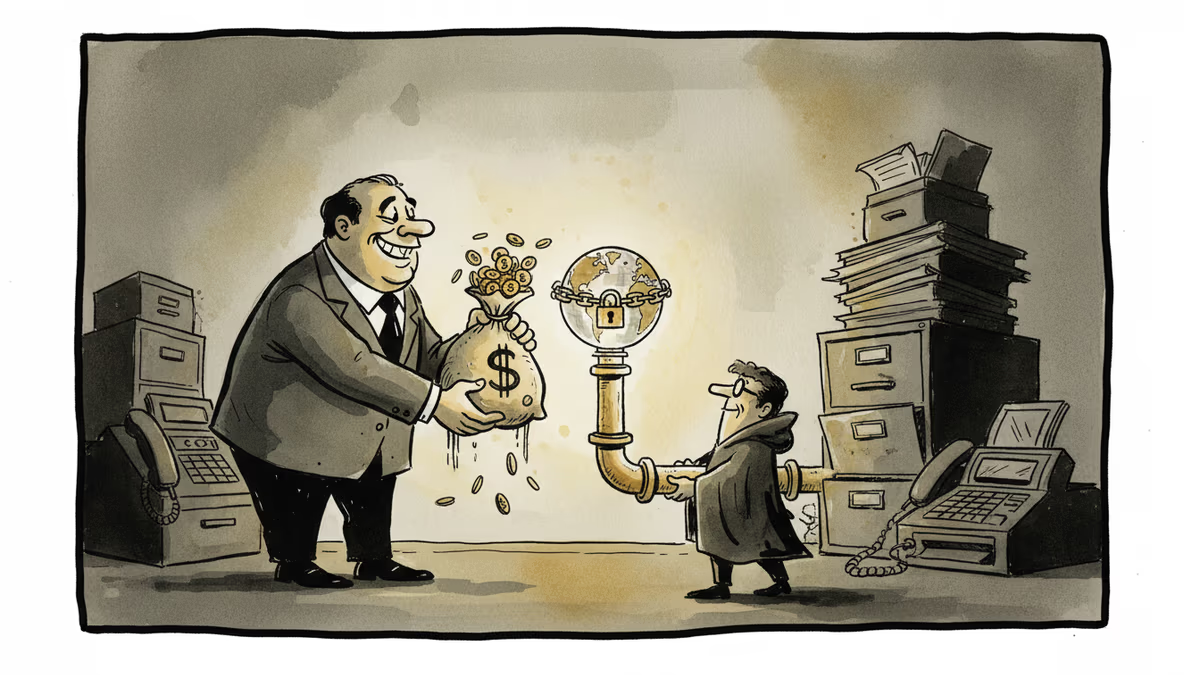
Mastercard's $1.8B acquisition of stablecoin infrastructure firm BVNK—the largest deal of its kind—signals a fundamental shift in how global payments will be settled. Here's what it means for your money.

A New York Fed official signaled that the central bank's Treasury bill purchases should slow soon. What this means for rates, liquidity, and your portfolio.

Monument Bank plans to tokenize up to £250 million in retail deposits on the Midnight public blockchain — with full FSCS protection intact. Is this the moment tokenized deposits go mainstream?
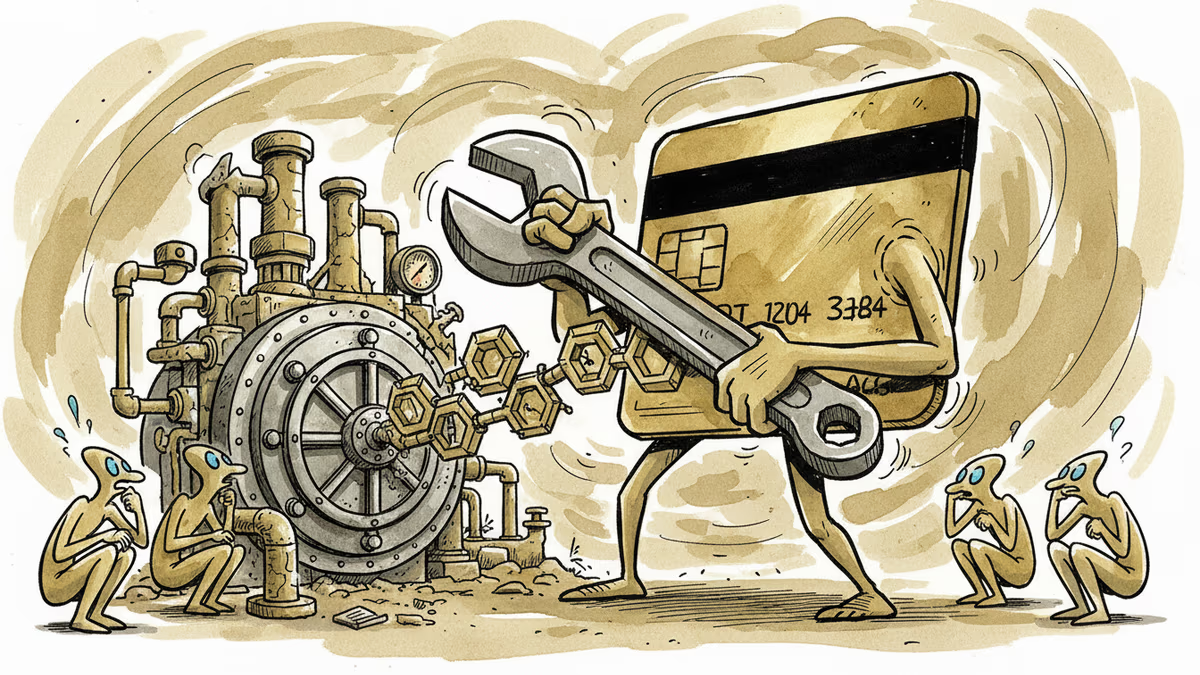
Mastercard's $1.8B acquisition of BVNK signals that stablecoins are no longer a crypto experiment — they're becoming the backbone of global payments. Here's what it means for your money, your industry, and the future of finance.
Mastercard's $1.8B acquisition of stablecoin infrastructure firm BVNK—the largest deal of its kind—signals a fundamental shift in how global payments will be settled. Here's what it means for your money.
A New York Fed official signaled that the central bank's Treasury bill purchases should slow soon. What this means for rates, liquidity, and your portfolio.
Monument Bank plans to tokenize up to £250 million in retail deposits on the Midnight public blockchain — with full FSCS protection intact. Is this the moment tokenized deposits go mainstream?
Mastercard's $1.8B acquisition of BVNK signals that stablecoins are no longer a crypto experiment — they're becoming the backbone of global payments. Here's what it means for your money, your industry, and the future of finance.
Thoughts
Share your thoughts on this article
Sign in to join the conversation