
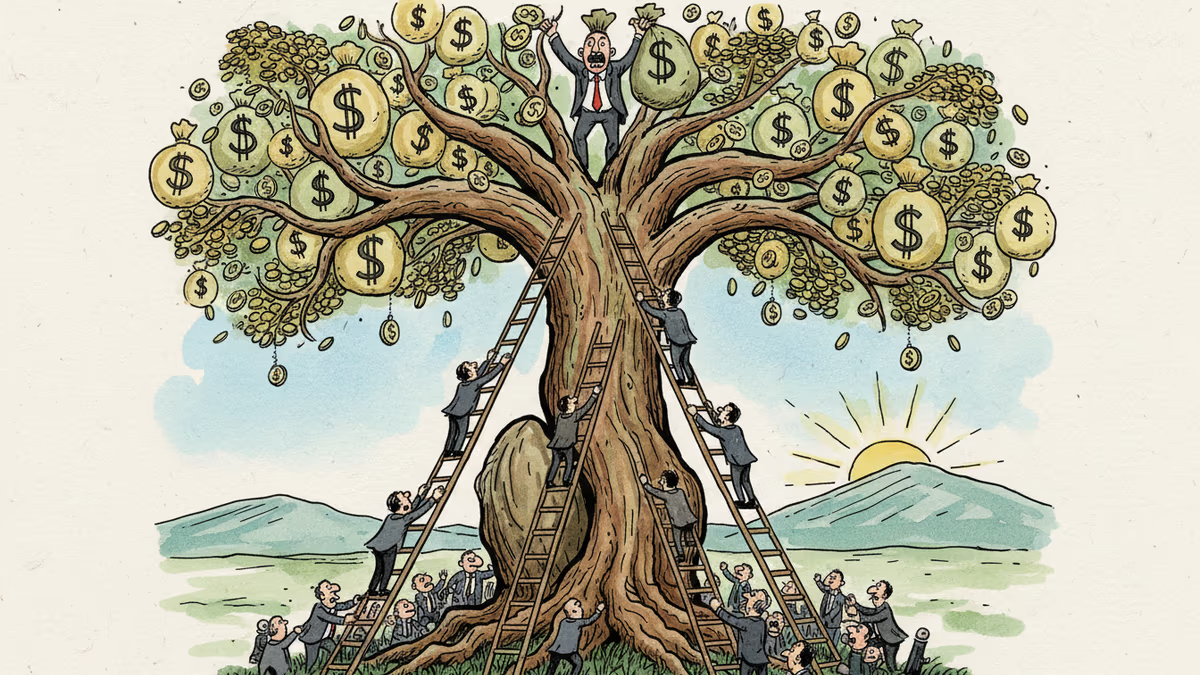
When Seed Rounds Look Like Series A
Primary Ventures' $625M fund signals a new era where seed investing becomes its own asset class. What does this mean for early-stage startups and founders?
$625 Million for Companies That Barely Exist
Primary Ventures just closed a $625 million Fund V focused exclusively on seed investing. To put that in perspective: they're writing $5-10 million checks to companies that might be nothing more than a deck and a dream. Over three years, they plan to back 40-50 startups.
This isn't just big money—it's a fundamental shift in how we think about early-stage investing.
The Geography of Innovation Has Changed
Primary started as a quintessential New York VC, but now they're cutting checks everywhere from Chicago to Seattle to Virginia. "The talent, the founder, and the startups are happening everywhere," co-founder Ben Sun told TechCrunch.
This geographic expansion reflects a broader truth: the pandemic didn't just change where people work—it changed where innovation happens. When your first hire can be in Estonia and your biggest customer in Singapore, does it matter if you're based in Manhattan or Montana?
Seed Is Becoming Its Own Asset Class

Sun believes seed investing is "headed toward its own asset class." He's not alone in thinking big. Sequoia raised a $200 million seed fund, and Uncork Capital announced a $225 million seed fund last year.
The math is compelling: if you can identify the next OpenAI or Stripe at the seed stage, the returns dwarf traditional venture metrics. But there's a catch—you're competing with funds that have $600+ million to deploy.
The AI Premium
Why are seed rounds getting so large? One word: AI. Primary's portfolio includes Etched (AI chips) and Dandelion Health (AI marketplace). When a three-person team can potentially disrupt a $100 billion industry with the right AI model, traditional funding amounts suddenly seem quaint.
But this creates a new problem: if seed rounds look like Series A rounds, what happens to actual Series A rounds? And more importantly, what happens to founders who don't need $10 million to validate their idea?
The Founder's Dilemma
For entrepreneurs, this trend is both exciting and terrifying. More capital means more runway and bigger swings. But it also means higher expectations, more dilution, and pressure to scale before you've figured out product-market fit.
The question isn't whether you can raise a $10 million seed round—it's whether you should.
Authors
Related Articles
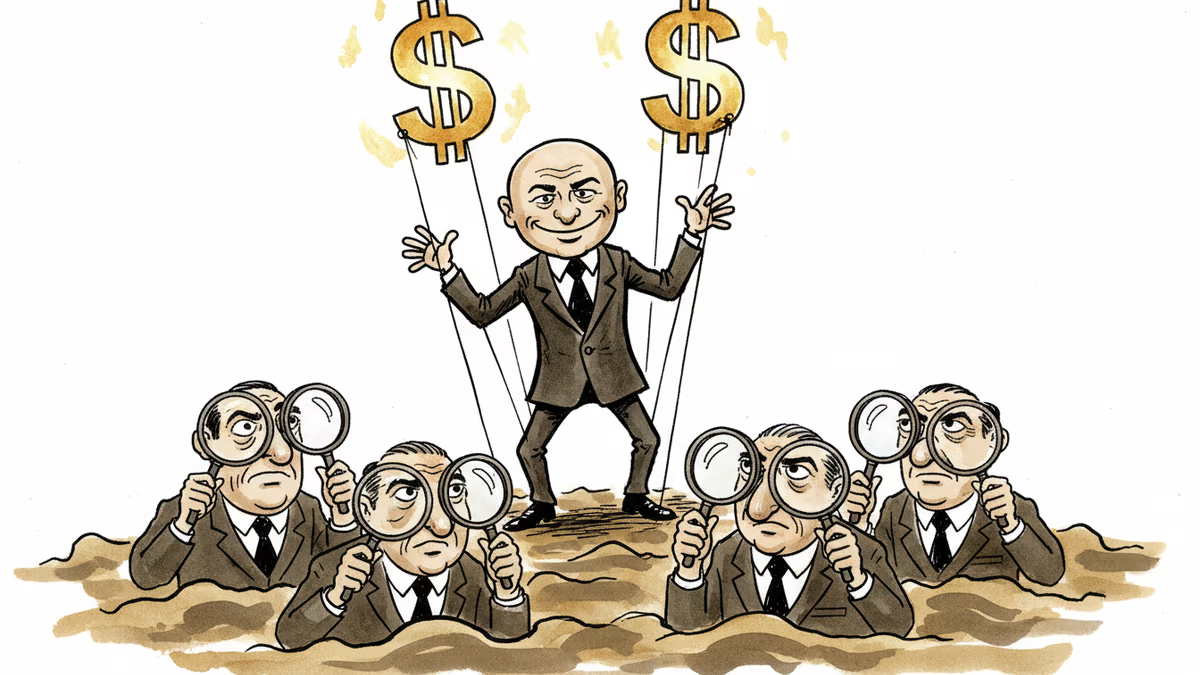
Cluely CEO admits to fabricating $7M revenue figure, exposing how startup "fake it till you make it" culture has gone too far. What this means for the ecosystem.
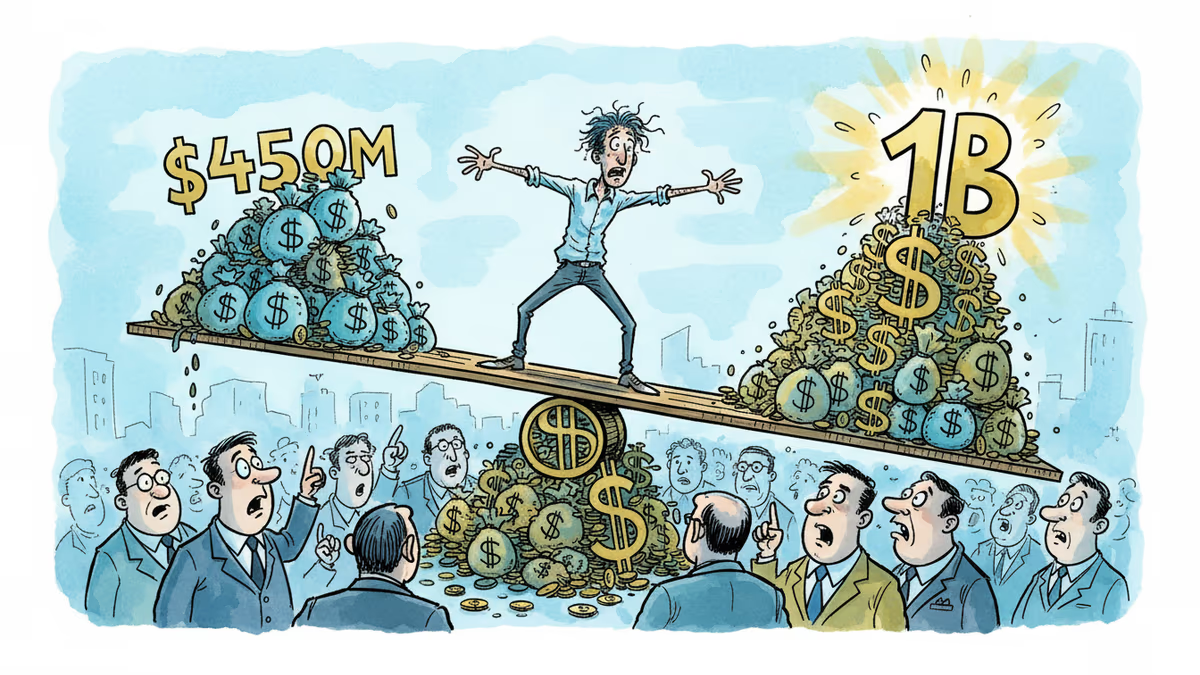
AI startups are using dual-tier valuations to manufacture unicorn status. Why are investors playing along with this new valuation game?
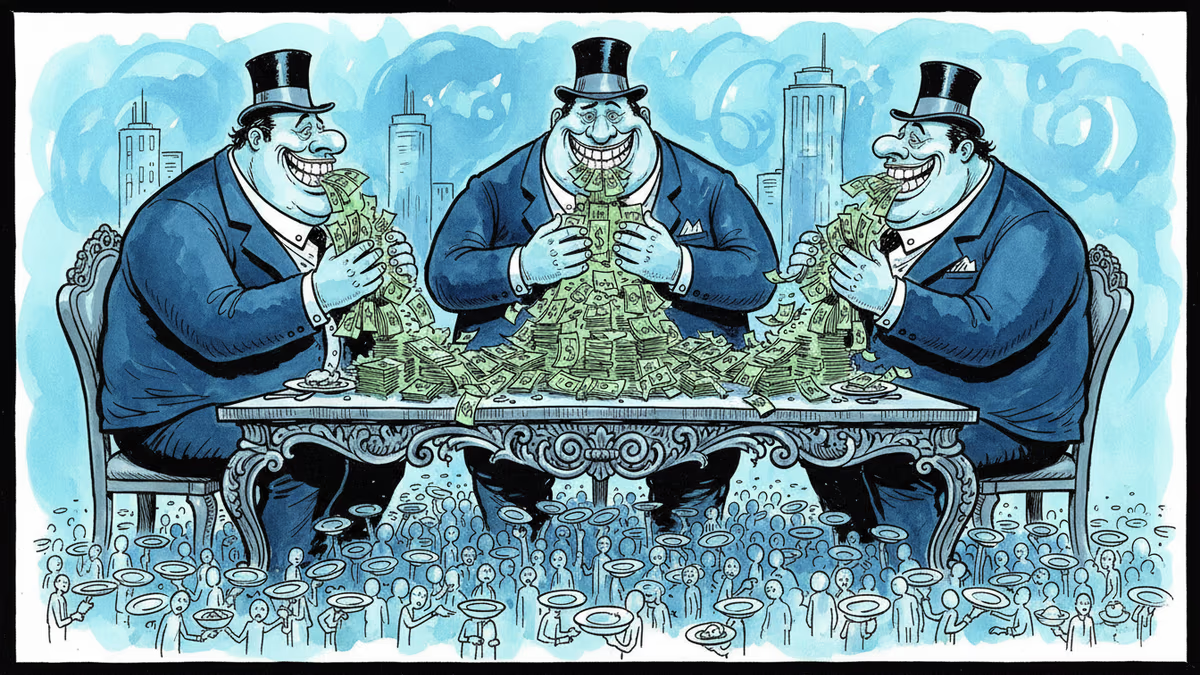
AI startups captured 90% of record $189B February VC funding, with OpenAI, Anthropic, and Waymo dominating 83% of all investments, reshaping venture landscape
Anduril's $60B valuation bid signals a seismic shift in defense tech. As VCs pour billions into weapons, what does this mean for warfare's future?
Cluely CEO admits to fabricating $7M revenue figure, exposing how startup "fake it till you make it" culture has gone too far. What this means for the ecosystem.
AI startups are using dual-tier valuations to manufacture unicorn status. Why are investors playing along with this new valuation game?
AI startups captured 90% of record $189B February VC funding, with OpenAI, Anthropic, and Waymo dominating 83% of all investments, reshaping venture landscape
Anduril's $60B valuation bid signals a seismic shift in defense tech. As VCs pour billions into weapons, what does this mean for warfare's future?
Thoughts
Share your thoughts on this article
Sign in to join the conversation