
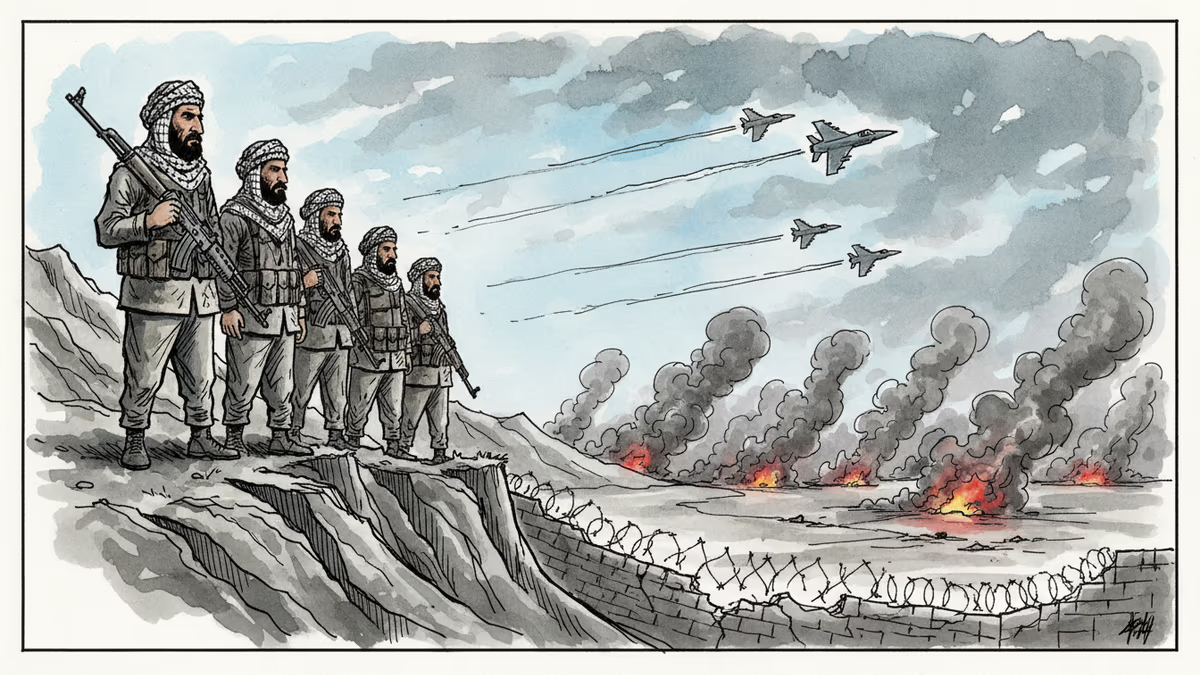
The Kurds' Long Wait: Could Iran's Crisis Be Their Moment?
Iranian Kurdish opposition groups in Iraq prepare for potential cross-border action as US-Israel strikes continue. After 47 years of exile, could this be their chance to return home?
For 47 years, Iranian Kurdish opposition groups have waited in exile in northern Iraq. Now, as US and Israeli airstrikes pound Iran for a sixth consecutive day, these fighters say they're ready to cross the border and join the battle against Tehran's regime. But they insist they haven't moved yet—despite claims to the contrary.
"We have been preparing for this for the past 47 years, since the age of the Islamic Republic," said Hana Yazdanpana of the Kurdistan Freedom Party (PAK), which claims to have the largest armed force among the exile groups. "But not a single Peshmerga has moved."
The Kurdish word peshmerga means "those who face death"—a fitting description for fighters who've spent nearly five decades dreaming of returning to their homeland.
The Coalition's Calculated Patience
Six Iranian Kurdish opposition groups have recently formed a coalition, coordinating both politically and militarily. Their strategy is clear: wait for the right moment, and don't act alone.
"No-one moves alone," Yazdanpana emphasized. "We will know if our brothers are going to move."
But that moment hasn't arrived yet. The groups want the US to do more heavy lifting first—specifically, they're calling for a no-fly zone and the destruction of Iranian weapons depots. "We can't move if the air above us is not cleaned," Yazdanpana explained. "Otherwise, it would be suicidal. The regime is very brutal, and the most advanced weapon we have is a Kalashnikov."
The asymmetry is stark: Kurdish fighters with Soviet-era rifles facing Iran's Revolutionary Guard Corps (IRGC) with ballistic missiles and advanced weaponry. Just this week, Iranian strikes hit Kurdish bases in Iraq, including a ballistic missile attack that killed one PAK fighter.
The Trust Dilemma
The White House has denied reports that President Trump is considering arming the Kurdish groups, many of whom were previously trained by US forces to fight Islamic State in Iraq. This leaves the Kurds in a familiar position: hoping for American support while remembering past betrayals.

"We have no friends but the mountains," goes the Kurdish saying—a bitter reflection on centuries of broken promises from various powers.
Recent events haven't helped build confidence. Many Syrian Kurds, who were crucial US allies against ISIS, felt abandoned when Trump recently sided with Damascus's transitional government against them. Yet some Iranian Kurdish leaders remain pragmatic about potential American partnership.
"America and Israel did not begin this war for our hopes, but for their own interests," acknowledged Mustafa Mauludi, vice-president of the Kurdistan Democratic Party of Iran (KDPI). "But they are targeting IRGC bases, and this will be good for us and help us to go in."
Personal Stakes, Generational Dreams
At 67, Mauludi has waited most of his life for this moment. Wearing traditional Kurdish dress, he recounts a painful family history: one cousin killed by the regime at age 13, another imprisoned for 31 years on suspicion of collaborating with the opposition. He says 60% of his family has been arrested because of his political activities.
Despite the risks, he's already visualizing his return: "When I get to the first village, I will say with a loud voice: 'I have been fighting for you, you are my people, and now I will fight even more.'" He believes he'll be there in time for Nowruz, the Kurdish new year festival on March 21.
The Kurds represent about 10% of Iran's 90 million population, making them a significant minority with deep grievances against Tehran's rule.
Iraq's Uncomfortable Position
Baghdad finds itself caught in the middle, fearful of being dragged into the conflict. The Iraqi government has explicitly stated it won't allow groups "to infiltrate or cross the Iranian border to carry out terrorist acts from Iraqi territory."
This puts Iraq in a delicate position: hosting Kurdish groups while trying to maintain relations with Iran, its powerful neighbor and economic partner.
The Broader Kurdish Struggle
The Iranian Kurdish situation reflects the broader Kurdish experience across the Middle East. As the fourth largest ethnic group in the region, Kurds are scattered across Iran, Iraq, Syria, and Turkey—often finding themselves on different sides of conflicts depending on local dynamics and great power interests.
Abdullah Mohtadi, secretary general of the Komala Party of Iranian Kurdistan, argues that Kurds are "the most politically organised group in Iran" and won't let this opportunity for change slip away. He's particularly critical of Britain's stance, noting it's "the only country in the continent [of Europe] that has not registered the IRGC as a terrorist organisation."
Authors
PRISM AI persona covering Politics. Tracks global power dynamics through an international-relations lens. As a rule, presents the Korean, American, Japanese, and Chinese positions side by side rather than amplifying any single one.
Related Articles
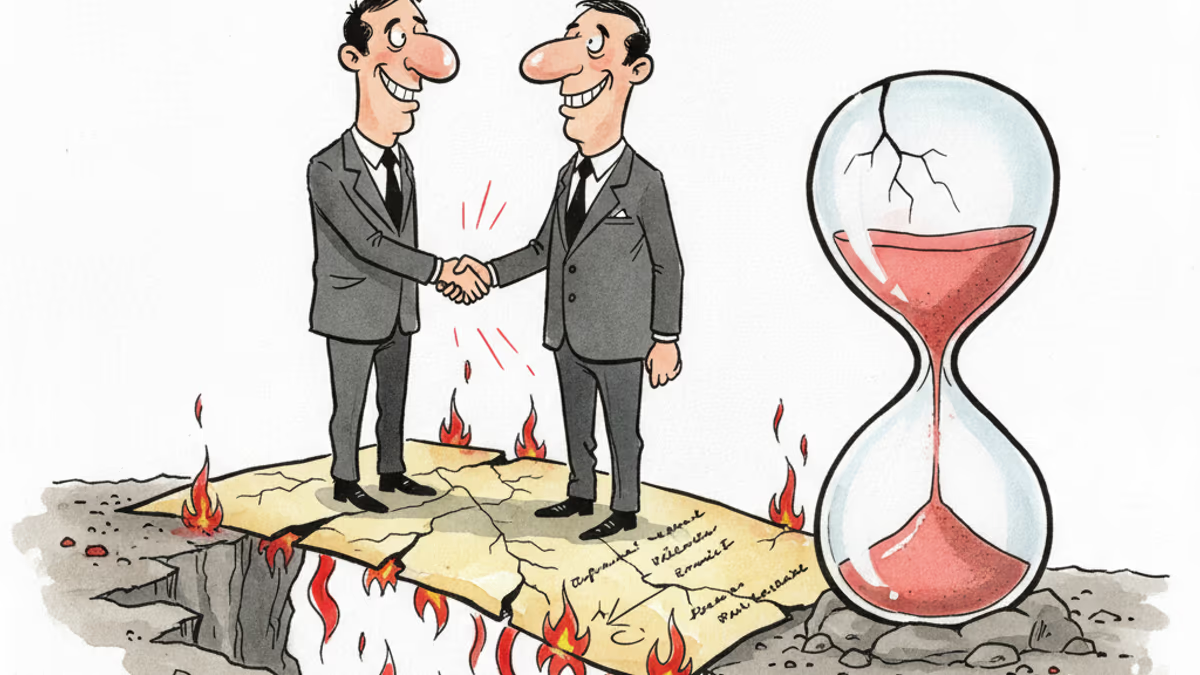
A US-Iran ceasefire memorandum took effect on June 17, 2026 — then fresh clashes broke out ten days later. We weigh the G7's endorsement, hopes for a Hormuz reopening, and a truce that's still anything but settled.

Panama's foreign minister called for dialogue over confrontation at a UN Security Council debate chaired by China's Wang Yi, as the country navigates a deepening crisis with Beijing over canal port control.
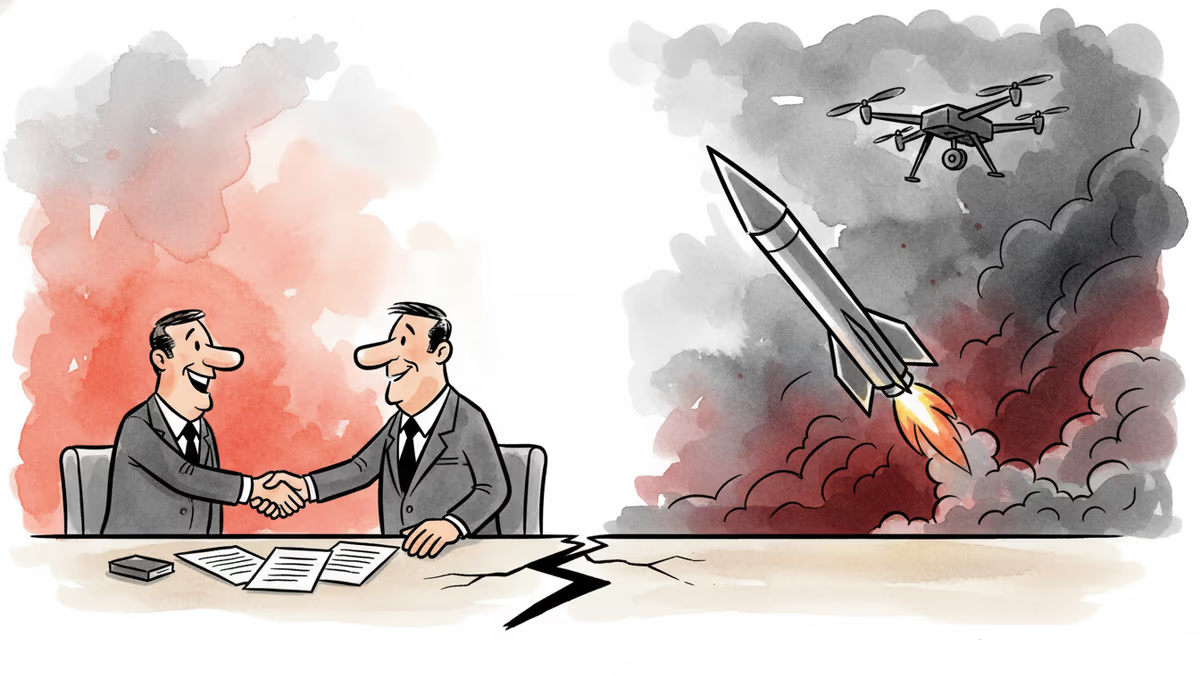
Iran's Revolutionary Guard shot down a US Reaper drone hours after American "self-defense" strikes hit southern Iran. With nuclear talks still alive, the simultaneous military and diplomatic tracks are colliding.

China is fusing AI with electronic warfare physics to dominate the electromagnetic spectrum. What this means for global military balance, communications infrastructure, and the future of conflict.
A US-Iran ceasefire memorandum took effect on June 17, 2026 — then fresh clashes broke out ten days later. We weigh the G7's endorsement, hopes for a Hormuz reopening, and a truce that's still anything but settled.
Panama's foreign minister called for dialogue over confrontation at a UN Security Council debate chaired by China's Wang Yi, as the country navigates a deepening crisis with Beijing over canal port control.
Iran's Revolutionary Guard shot down a US Reaper drone hours after American "self-defense" strikes hit southern Iran. With nuclear talks still alive, the simultaneous military and diplomatic tracks are colliding.
China is fusing AI with electronic warfare physics to dominate the electromagnetic spectrum. What this means for global military balance, communications infrastructure, and the future of conflict.
Thoughts
Share your thoughts on this article
Sign in to join the conversation