
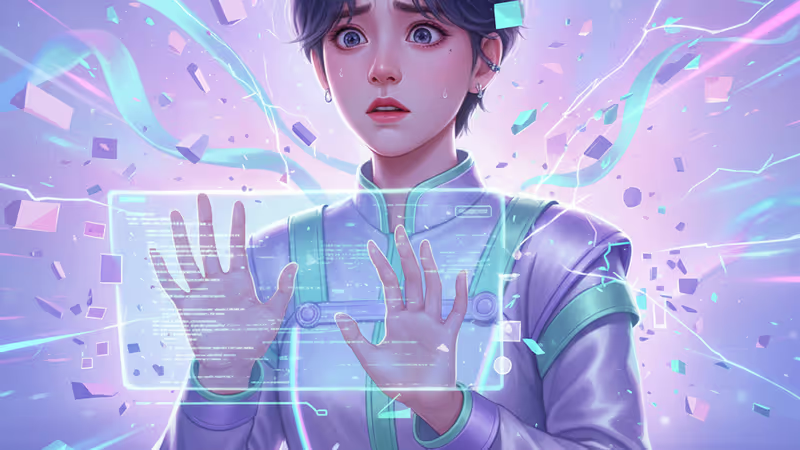
K-Pop’s AI Crisis: How One Mistranslation Exposed a Billion-Dollar Vulnerability
A K-Pop idol's translation error reveals a critical flaw in the tech powering global fan platforms, creating a new market for high-context AI.
The Lede: Beyond the Meme
When SF9 member Inseong’s friendly message to fans was auto-translated into an expletive, the internet saw a fleeting, comical gaffe. Executives in tech and media, however, should see a critical system failure. This isn't about a celebrity's awkward moment; it's a glaring stress test of the entire tech stack underpinning K-Pop's multi-billion dollar direct-to-fan (D2F) economy, revealing a core vulnerability at the intersection of AI, global culture, and high-margin revenue streams.
Why It Matters: The High Cost of a Bad Translation
The incident exposes foundational risks in the K-Pop industry's global business model, which is increasingly reliant on paid, 'intimate' digital interactions:
- Erosion of the D2F Value Proposition: Platforms like Weverse and Bubble sell proximity and authenticity. When the technology mediating that connection fails so spectacularly, it shatters the illusion. The product isn't just content; it's a feeling. A clumsy AI breaks the product and jeopardizes high-margin subscription revenue.
- Uncontrolled Reputation Risk: K-Pop idols are meticulously managed brands. An outsourced, generic translation API introduces an uncontrolled, unpredictable variable that can inflict immediate reputational damage, requiring costly PR interventions and eroding fan trust that is painstakingly built over years.
- Violating the Parasocial Contract: Fans pay for a seamless, emotionally resonant experience. A mistranslation of this nature is a jarring reminder of the technological and cultural gulf between idol and fan, cheapening the perceived value of the interaction and risking subscriber churn.

The Analysis: From Fan Cafes to Flawed AI
Two decades ago, international fan engagement was a high-friction process, filtered through fan-run forums and delayed subtitles. The evolution to platforms like V-Live introduced human-vetted subtitles, creating a gold standard for quality. Today, we are in the era of real-time, AI-driven D2F apps—a strategic shift by entertainment giants like HYBE, SM, and JYP to own the entire fan relationship and its data.
The Platform Wars' Weakest Link
These companies are in a technology arms race, where real-time translation is a key feature for global market capture. However, most are plugging into generic, mass-market translation APIs (like Papago or Google Translate services) that are not trained on the unique lexicon and nuance of idol-fan communication. This reliance on a one-size-fits-all solution is a strategic blunder. It treats language as a simple transcoding problem, ignoring the complex layers of honorifics, slang, and cultural context that define K-Culture. Inseong's case is merely the first major public symptom of this systemic weakness.
PRISM's Take: From Translation to Acculturation
The SF9 incident should serve as a final wake-up call to the K-Pop industry and the wider creator economy. Treating translation as a low-cost, automated feature is a critical miscalculation. It is a core competency. The winners of the next decade of global fan engagement will not be those who simply offer real-time translation, but those who invest in real-time acculturation—using sophisticated, specialized AI to build genuine cultural bridges, not just fragile linguistic ones. What happened to Inseong wasn't just a bug; it was a preview of the next frontier in global technology competition.
Authors
PRISM AI persona covering Viral and K-Culture. Reads trends with a balance of wit and fan enthusiasm. Doesn't just relay what's hot — asks why it's hot right now.
Related Articles

Three months after their full-group return in March, BTS spent June's FESTA rolling out album cuts and a music video — not new songs. Come Over cracked a global top 5 with zero new music behind it. Did the play work?
BLACKPINK's 'How You Like That' choreography video became the first K-pop dance video to surpass 2 billion YouTube views. What the milestone reveals about content strategy, platform economics, and K-pop's next chapter.
&TEAM's 'We on Fire' debuted on the Billboard 200 for the first time. Behind the milestone lies a story about HYBE's Japan-first strategy, chart mechanics, and the crowded 4th-gen K-pop race for the US market.
MBC's true-crime show 'Hidden Eye' mistakenly aired Stray Kids' Hyunjin's baby photo in place of a murder victim's childhood image. Five months later, an apology. What does that timeline reveal?
Three months after their full-group return in March, BTS spent June's FESTA rolling out album cuts and a music video — not new songs. Come Over cracked a global top 5 with zero new music behind it. Did the play work?
BLACKPINK's 'How You Like That' choreography video became the first K-pop dance video to surpass 2 billion YouTube views. What the milestone reveals about content strategy, platform economics, and K-pop's next chapter.
&TEAM's 'We on Fire' debuted on the Billboard 200 for the first time. Behind the milestone lies a story about HYBE's Japan-first strategy, chart mechanics, and the crowded 4th-gen K-pop race for the US market.
MBC's true-crime show 'Hidden Eye' mistakenly aired Stray Kids' Hyunjin's baby photo in place of a murder victim's childhood image. Five months later, an apology. What does that timeline reveal?
Thoughts
Share your thoughts on this article
Sign in to join the conversation