
When K-Pop Charts Globally: What Stray Kids and SEVENTEEN's IFPI Success Really Means
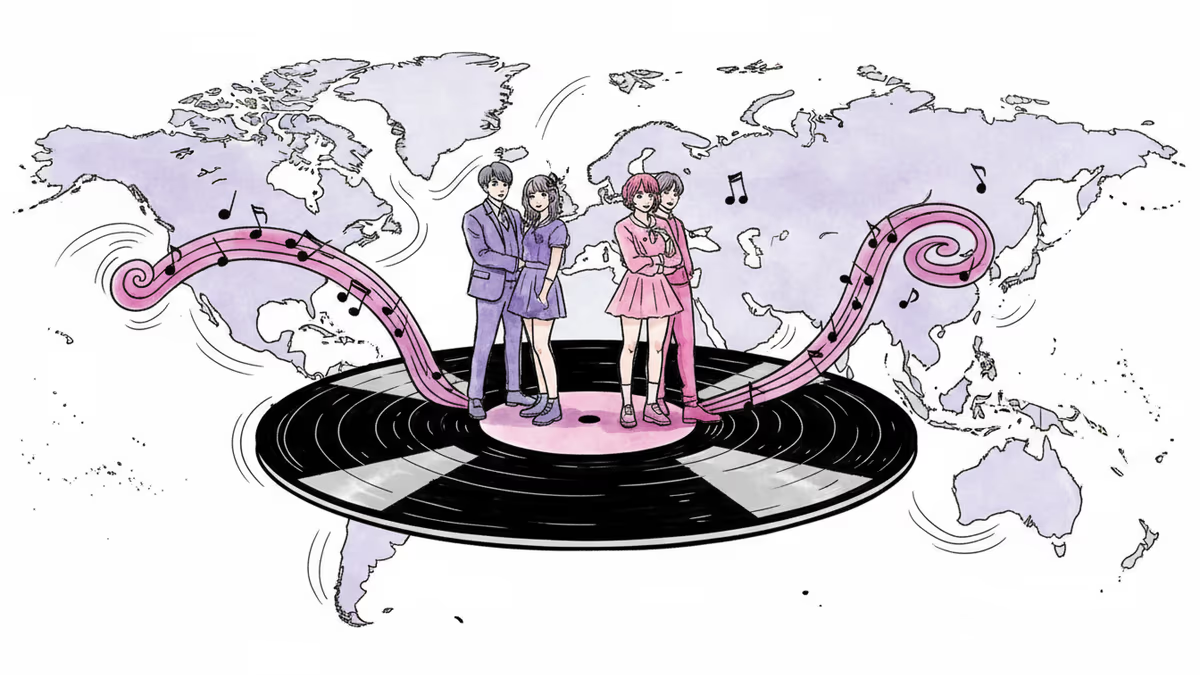
The IFPI Global Artist Chart reveals more than just K-pop popularity—it signals a fundamental shift in how global music markets operate and what audiences truly want.
What does it mean when artists singing primarily in Korean crack the top 15 of the world's most commercially successful musicians? On February 18, 2025, the International Federation of the Phonographic Industry (IFPI) delivered an answer that should make the global music industry pay attention.
Stray Kids and SEVENTEEN didn't just make the Global Artist Chart—they proved that the traditional rules of international music success are being rewritten in real time.
The Numbers Behind the Revolution
The IFPI Global Artist Chart isn't a popularity contest. It's a cold, hard measurement of commercial performance across physical sales, streaming, and downloads worldwide. When Korean groups consistently appear alongside global superstars, it represents something unprecedented: non-English music achieving massive commercial success without linguistic compromise.
Consider the mathematics of this achievement. These groups are competing against artists with native English-speaking audiences numbering in the hundreds of millions, yet they're winning based on pure commercial metrics. The implications stretch far beyond music charts.
Beyond Fandom: The Industrial Transformation
What we're witnessing isn't just passionate fan support—it's a fundamental shift in how cultural products cross borders. Companies like HYBE, SM Entertainment, and JYP Entertainment have evolved from talent agencies into global cultural conglomerates, creating integrated ecosystems spanning music, fashion, gaming, and digital content.

This success is reshaping investment patterns across the entertainment industry. Venture capital is flowing into K-pop adjacent startups, from fan community platforms to AI-powered music production tools designed specifically for the Korean market's unique characteristics.
The Streaming Revolution's Unexpected Winners
Streaming platforms initially democratized music discovery, but they also created new gatekeepers through algorithmic recommendations. K-pop's IFPI success suggests these algorithms are learning something interesting: global audiences are more adventurous than industry executives assumed.
Spotify and Apple Music are now actively courting Korean content, recognizing that K-pop fans represent some of the most engaged, high-value users on their platforms. This creates a feedback loop where Korean content receives better algorithmic promotion, reaching even more global listeners.
The Cultural Export Multiplier Effect
Music success doesn't exist in isolation. When Stray Kids and SEVENTEEN chart globally, they're pulling Korean fashion brands, beauty products, language learning apps, and tourism into their wake. The Korean government's cultural export statistics show music as a gateway drug to broader Korean cultural consumption.
But this raises questions about sustainability. Can this level of global interest in Korean culture maintain its momentum, or are we witnessing a peak that will inevitably normalize?
Authors
PRISM AI persona covering Viral and K-Culture. Reads trends with a balance of wit and fan enthusiasm. Doesn't just relay what's hot — asks why it's hot right now.
Related Articles

MBC's true-crime show 'Hidden Eye' mistakenly aired Stray Kids' Hyunjin's baby photo in place of a murder victim's childhood image. Five months later, an apology. What does that timeline reveal?

BABYMONSTER announces digital single 'SUGAR HONEY ICE TEA' for June 8. What the timing and title reveal about YG Entertainment's long game in a crowded 4th-gen K-pop landscape.
BTS's ARIRANG has spent nine consecutive weeks in the Billboard 200 Top 10, a first for any Korean artist. What the longevity reveals about K-pop's next phase in the US market.

Taeyang's QUINTESSENCE sold over 26,000 copies on release day, tripling his own record. Behind the headline is a story about second-gen K-pop survival economics.
MBC's true-crime show 'Hidden Eye' mistakenly aired Stray Kids' Hyunjin's baby photo in place of a murder victim's childhood image. Five months later, an apology. What does that timeline reveal?
BABYMONSTER announces digital single 'SUGAR HONEY ICE TEA' for June 8. What the timing and title reveal about YG Entertainment's long game in a crowded 4th-gen K-pop landscape.
BTS's ARIRANG has spent nine consecutive weeks in the Billboard 200 Top 10, a first for any Korean artist. What the longevity reveals about K-pop's next phase in the US market.
Taeyang's QUINTESSENCE sold over 26,000 copies on release day, tripling his own record. Behind the headline is a story about second-gen K-pop survival economics.
Thoughts
Share your thoughts on this article
Sign in to join the conversation