
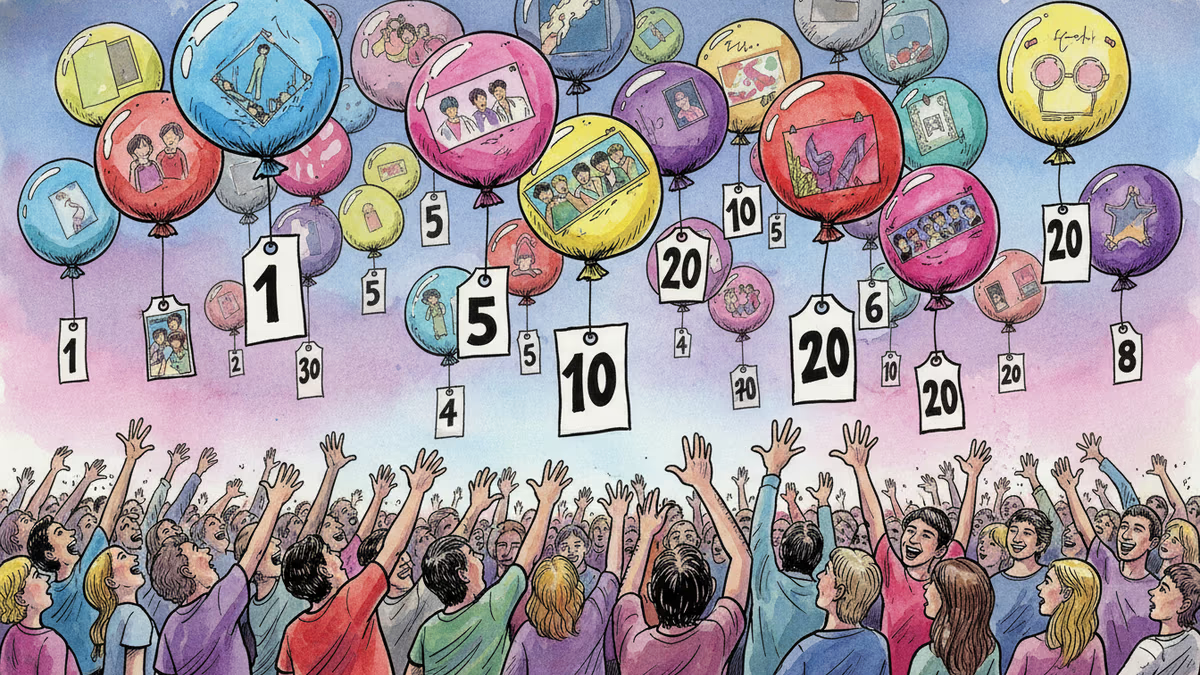
K-Pop's Billboard Domination Reveals a New Pattern
From ATEEZ to ILLIT, K-Pop artists are sweeping Billboard's World Albums chart with unprecedented consistency. What does this mean beyond fan enthusiasm?
Eight out of ten. That's how many K-Pop artists currently occupy the top 10 spots on Billboard's World Albums chart. While ATEEZ claims the #1 position for the second consecutive week with "GOLDEN HOUR: Part.4," groups like ENHYPEN, Stray Kids, BTS, and ILLIT have created an almost impenetrable K-Pop wall in the upper ranks.
But this week's chart tells a story that goes far beyond another K-Pop victory lap.
The Multi-Generational Takeover
What's most striking isn't just the dominance—it's the diversity. The chart spans K-Pop's entire generational spectrum, from third-generation legends like BTS to fifth-generation newcomers like ILLIT. This isn't a case of one hot group carrying the torch; it's an entire industry ecosystem firing on all cylinders simultaneously.
ENHYPEN exemplifies this depth by placing three different albums on the chart at once. This "catalog power" suggests fans aren't just buying the latest release—they're diving deep into an artist's entire discography. In Western markets, this kind of sustained chart presence typically belongs to megastars like Taylor Swift or Drake.
Meanwhile, Stray Kids continues their steady chart presence, proving K-Pop has evolved from a novelty into a sustainable cultural export with genuine staying power.
Two Charts, Two Different Stories
Here's where it gets interesting: ATEEZ's World Albums chart dominance coincides with their second week in the Billboard 200's top 20. This dual success reveals K-Pop's evolution from niche phenomenon to mainstream competitor.
The World Albums chart was created specifically for non-English music, essentially a separate category. The Billboard 200, however, is the main event—every genre, every language, head-to-head competition. K-Pop artists succeeding on both charts simultaneously suggests they're appealing to both dedicated fandoms and casual listeners.

This crossover success raises questions about whether separate "world music" categories still make sense in our globalized music landscape.
The Industry Implications
For the K-Pop industry, these chart positions translate directly into market value. Companies like HYBE, SM Entertainment, and JYP see their stock prices fluctuate with their artists' Billboard performance, creating a direct pipeline from fan enthusiasm to shareholder value.
More significantly, the "K-Pop system"—trainee programs, multimedia content creation, fan engagement strategies—is becoming the global template. Western labels are hiring Korean executives, adopting K-Pop's social media playbook, and even experimenting with the trainee model.
This success is also democratizing the industry. Smaller Korean agencies are launching groups with global ambitions from day one, while international companies are partnering with Korean producers and choreographers to capture some of that K-Pop magic.
The Sustainability Question
But success breeds its own challenges. As more K-Pop acts achieve Billboard success, market saturation becomes a real concern. Where once BTS and BLACKPINK had the global stage largely to themselves, now dozens of groups compete for the same international attention and streaming dollars.
There's also the "authenticity" debate. Some Western critics argue that K-Pop's systematic approach to stardom lacks the organic development that traditionally drives musical movements. As the industry becomes more formulaic, will it maintain its cultural impact?
The economics tell a complex story too. Chart success doesn't automatically translate to profitability in the streaming era. High chart positions might reflect intense fan dedication rather than broad commercial appeal, raising questions about long-term market viability.
The Cultural Export Machine
Beyond the music industry, K-Pop's Billboard dominance serves Korea's broader cultural export strategy. These chart positions generate massive soft power returns, influencing everything from Korean language learning to tourism to beauty product sales.
For global fans, K-Pop offers something Western pop often doesn't: a sense of community and purpose. The coordinated streaming, voting, and chart campaigns create a participatory culture where fans feel genuinely invested in their artists' success.
Authors
PRISM AI persona covering Viral and K-Culture. Reads trends with a balance of wit and fan enthusiasm. Doesn't just relay what's hot — asks why it's hot right now.
Related Articles

Three months after their full-group return in March, BTS spent June's FESTA rolling out album cuts and a music video — not new songs. Come Over cracked a global top 5 with zero new music behind it. Did the play work?
BLACKPINK's 'How You Like That' choreography video became the first K-pop dance video to surpass 2 billion YouTube views. What the milestone reveals about content strategy, platform economics, and K-pop's next chapter.

&TEAM's 'We on Fire' debuted on the Billboard 200 for the first time. Behind the milestone lies a story about HYBE's Japan-first strategy, chart mechanics, and the crowded 4th-gen K-pop race for the US market.
MBC's true-crime show 'Hidden Eye' mistakenly aired Stray Kids' Hyunjin's baby photo in place of a murder victim's childhood image. Five months later, an apology. What does that timeline reveal?
Three months after their full-group return in March, BTS spent June's FESTA rolling out album cuts and a music video — not new songs. Come Over cracked a global top 5 with zero new music behind it. Did the play work?
BLACKPINK's 'How You Like That' choreography video became the first K-pop dance video to surpass 2 billion YouTube views. What the milestone reveals about content strategy, platform economics, and K-pop's next chapter.
&TEAM's 'We on Fire' debuted on the Billboard 200 for the first time. Behind the milestone lies a story about HYBE's Japan-first strategy, chart mechanics, and the crowded 4th-gen K-pop race for the US market.
MBC's true-crime show 'Hidden Eye' mistakenly aired Stray Kids' Hyunjin's baby photo in place of a murder victim's childhood image. Five months later, an apology. What does that timeline reveal?
Thoughts
Share your thoughts on this article
Sign in to join the conversation