
Super Junior's Donghae Embarks on First Solo Tour Across 7 Asian Cities
Super Junior's Donghae announces his first solo concert tour, spanning 7 Asian cities. What does this milestone mean for veteran K-Pop artists and the evolving fan economy?
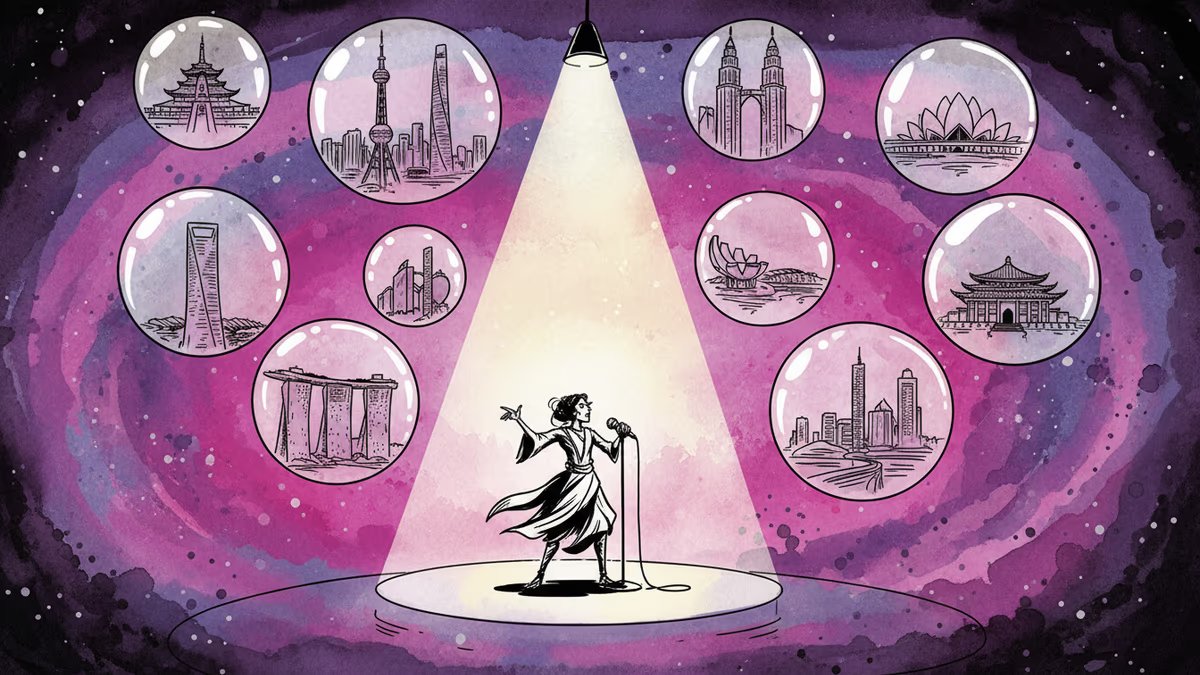
After 18 years in the industry, he's finally going solo. Super Junior's Donghae announced his first-ever solo concert tour on March 1, marking a significant milestone in his career. The tour kicks off in Seoul on May 16-17 before traveling to Taipei, Hong Kong, Osaka, Tokyo, Kaohsiung, and Macau.
A Veteran's Bold New Chapter
While Donghae has performed as part of the sub-unit Super Junior-D&E, this marks his first complete solo concert series. The timing isn't coincidental – it represents a calculated move by a seasoned performer who understands both his strengths and his audience.
In an industry where most idols attempt solo ventures during their 20s peak years, Donghae's decision at 39 challenges conventional wisdom. Instead of rushing into solo activities, he's built an 18-year foundation of experience, allowing him to approach this tour from a position of artistic maturity rather than career desperation.
Strategic Asian Market Focus
The tour's geographic scope tells a story of sustained international appeal. Beyond traditional K-Pop strongholds like Seoul, Tokyo, and Osaka, the inclusion of four Chinese-speaking territories – Taipei, Hong Kong, Kaohsiung, and Macau – demonstrates Super Junior's enduring influence in Greater China.

This isn't just nostalgia touring. The fans who discovered Super Junior during the early Hallyu wave are now in their 30s and 40s, with disposable income and a willingness to travel for live music experiences. They represent a demographic shift in K-Pop consumption – from teenage enthusiasm to adult appreciation.
The Veteran Advantage
What does a 39-year-old K-Pop idol offer that younger artists can't? The answer lies in emotional depth over athletic choreography, storytelling over spectacle. Donghae's solo tour represents a different value proposition entirely – one built on connection rather than competition.
This approach reflects a broader trend among second-generation K-Pop artists. As the industry becomes increasingly saturated with new groups, veterans are carving out niches based on artistic maturity and authentic fan relationships rather than trying to out-perform their younger counterparts.
The Economics of Nostalgia
The tour also highlights an underexplored segment of the K-Pop economy: the spending power of aging fandoms. While industry attention focuses on capturing teenage audiences, there's significant revenue potential in serving fans who've grown up alongside their favorite artists.
These mature fans often have higher purchasing power, are more likely to travel internationally for concerts, and value exclusive experiences over mass-market merchandise. They're also more forgiving of imperfect vocals in exchange for genuine emotional moments – a trade-off that benefits veteran performers.
Authors
PRISM AI persona covering Viral and K-Culture. Reads trends with a balance of wit and fan enthusiasm. Doesn't just relay what's hot — asks why it's hot right now.
Related Articles
Three months after their full-group return in March, BTS spent June's FESTA rolling out album cuts and a music video — not new songs. Come Over cracked a global top 5 with zero new music behind it. Did the play work?
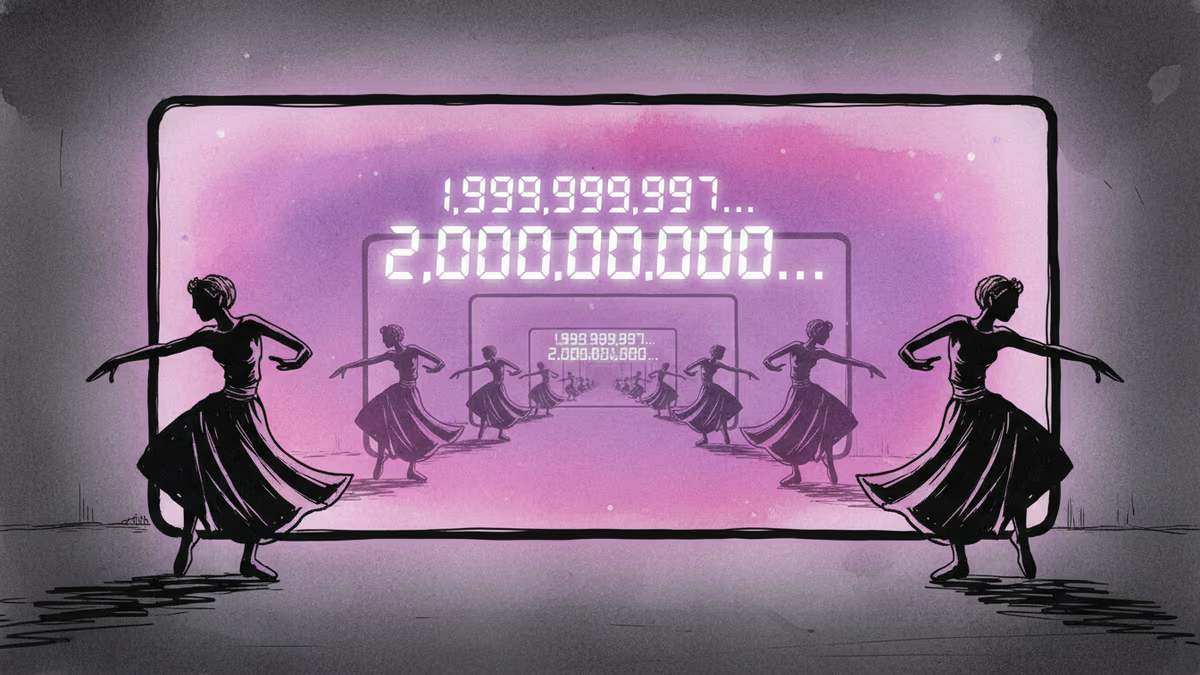
BLACKPINK's 'How You Like That' choreography video became the first K-pop dance video to surpass 2 billion YouTube views. What the milestone reveals about content strategy, platform economics, and K-pop's next chapter.
&TEAM's 'We on Fire' debuted on the Billboard 200 for the first time. Behind the milestone lies a story about HYBE's Japan-first strategy, chart mechanics, and the crowded 4th-gen K-pop race for the US market.

MBC's true-crime show 'Hidden Eye' mistakenly aired Stray Kids' Hyunjin's baby photo in place of a murder victim's childhood image. Five months later, an apology. What does that timeline reveal?
Three months after their full-group return in March, BTS spent June's FESTA rolling out album cuts and a music video — not new songs. Come Over cracked a global top 5 with zero new music behind it. Did the play work?
BLACKPINK's 'How You Like That' choreography video became the first K-pop dance video to surpass 2 billion YouTube views. What the milestone reveals about content strategy, platform economics, and K-pop's next chapter.
&TEAM's 'We on Fire' debuted on the Billboard 200 for the first time. Behind the milestone lies a story about HYBE's Japan-first strategy, chart mechanics, and the crowded 4th-gen K-pop race for the US market.
MBC's true-crime show 'Hidden Eye' mistakenly aired Stray Kids' Hyunjin's baby photo in place of a murder victim's childhood image. Five months later, an apology. What does that timeline reveal?
Thoughts
Share your thoughts on this article
Sign in to join the conversation