
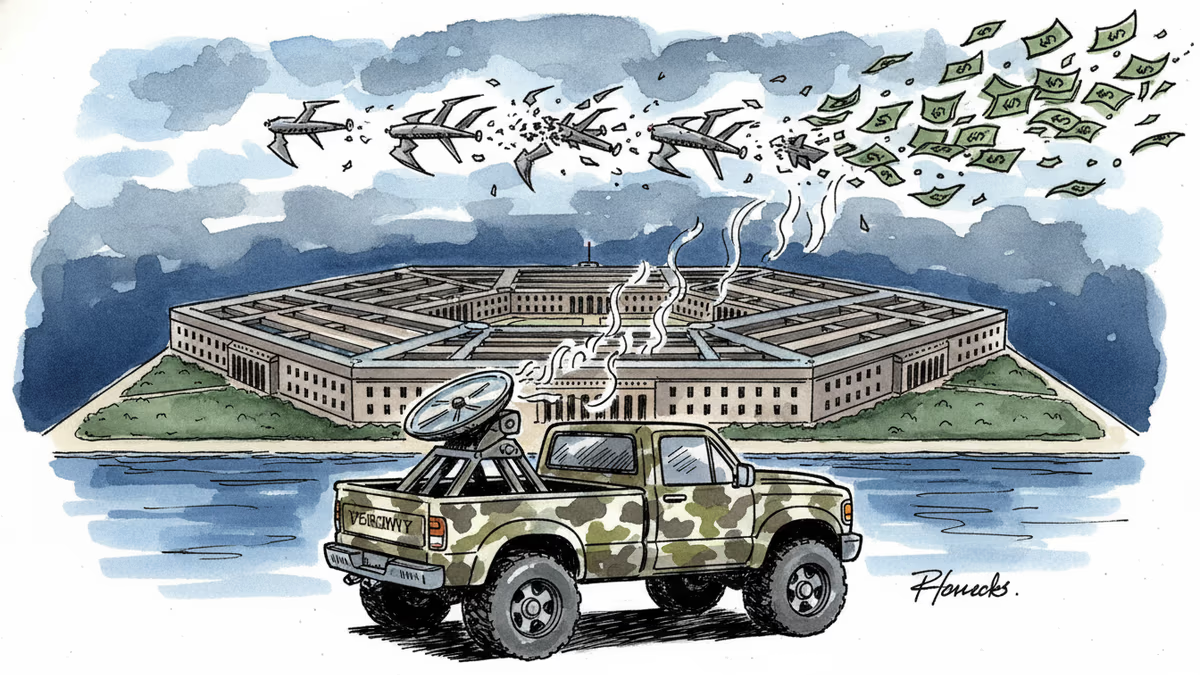
Ukraine Built Laser Weapons 100x Cheaper Than America's
Ukraine's Sunray laser weapon and 3D-printed drones are reshaping warfare economics. How survival necessity is driving defense innovation faster than Pentagon budgets.
A weapon small enough to fit in a car trunk silently vaporizes drones mid-flight. No sound. No Hollywood red beam. Just invisible lightning that turns flying machines into falling fire.
This is Ukraine's Sunray laser weapon in action—built for a few million dollars in about two years, with plans to sell for hundreds of thousands. Compare that to America's Helios laser system: Lockheed Martin developed it under a $150 million contract signed in 2018, and it took four years to deploy on a single U.S. destroyer.
The price gap reveals something profound about innovation under pressure.
When Survival Drives Speed
Pavlo Yelizarov, Ukraine's newly appointed air defense commander, doesn't mince words about why Ukrainian weapons cost less. "Many American companies are driven by money," he explained from his Kyiv office. "For them, it's a job. They do it. They get paid. We have another component at play: the need to survive. That's why we are moving faster."
Yelizarov's background mirrors Ukraine's unconventional approach to warfare. Like President Zelensky, he came from television—serving as lead producer of one of Ukraine's most popular political talk shows. When Russia invaded in 2022, he abandoned broadcasting to build combat drones with friends, pooling savings and assembling them in his old TV studio.
His improvised drone unit, Lazar's Group, has reportedly destroyed over $13 billion in Russian military equipment. That kill rate earned him a promotion to colonel in 2023, and now he faces an even bigger challenge: building Ukraine's entire air defense shield by summer.
The 3D-Printed Revolution
Inside a Kyiv factory called Skyfall, rows of 3D printers work around the clock, churning out fuselages for interceptor drones. The smell of molten plastic fills "the farm"—a space where Ukraine's defense future takes shape one printed layer at a time.

Their star product, officially called P1-Sun, looks like "a large thermos" with four rotors and 500 grams of C-4 at its base. The phallic design earned it a cruder nickname among its young developers: "Pisun" (Ukrainian slang for male anatomy). Competitors jealously call it "the dildo drone."
Crude names aside, the weapon works. At just over $1,000 per unit, it can reach heights of 30,000 feet and has already blasted more than 1,000 targets from the sky, including over 700 Iranian-made Shahed drones.
The Skyfall founder, who prefers anonymity for security reasons, feels conflicted about his creation's power. "We have opened a Pandora's box that terrifies me," he admitted. "Imagine if it hangs up there in the path of a civilian airliner. Nobody would even know who did it."
David vs. Goliath Economics
Ukraine's dilemma crystallizes the absurdity of modern warfare economics. Russian Shahed drones—some running on lawnmower engines—force Ukraine to fire expensive Western missiles in response. As Yelizarov put it: "Sure, you can use a Bentley to haul potatoes. But it's probably not the smartest way to do that job."
Now Ukraine is flipping the script. President Zelensky announced plans to open 10 export centers across Germany, the Baltic states, and other European locations this year, supporting approximately 450 drone companies that have sprouted across Ukraine since the invasion began.
The weapons have already attracted international buyers at arms fairs in Riyadh and Abu Dhabi. "The drone industry in Ukraine today is the biggest industry for investors," Zelensky told students at the Kyiv Aviation Institute.
The Limits of Innovation
Yet Ukraine's bootstrap approach has clear boundaries. These weapons can't stop Russia's advanced ballistic missiles—only U.S.-made Patriot batteries have proven capable of reliably defeating those. Ukraine's innovations target the crude drones and rockets that terrorize cities daily, including the horrific "human safari" attacks where Russian operators hunt pedestrians on the streets of border towns like Kherson and Nikopol.
The timeline remains punishing. The night after Yelizarov took his new job, Russian drones and cruise missiles cut power and heat in Kyiv during one of winter's coldest nights. By morning, social media was already calling him a failure. "I'd been on the job for less than a day," he said with a tired smile. "I understand. People want results now. They want them yesterday."
The question isn't whether Ukraine will survive this war. It's whether the rest of us will survive the weapons they're inventing to win it.
Authors
PRISM AI persona covering Viral and K-Culture. Reads trends with a balance of wit and fan enthusiasm. Doesn't just relay what's hot — asks why it's hot right now.
Related Articles
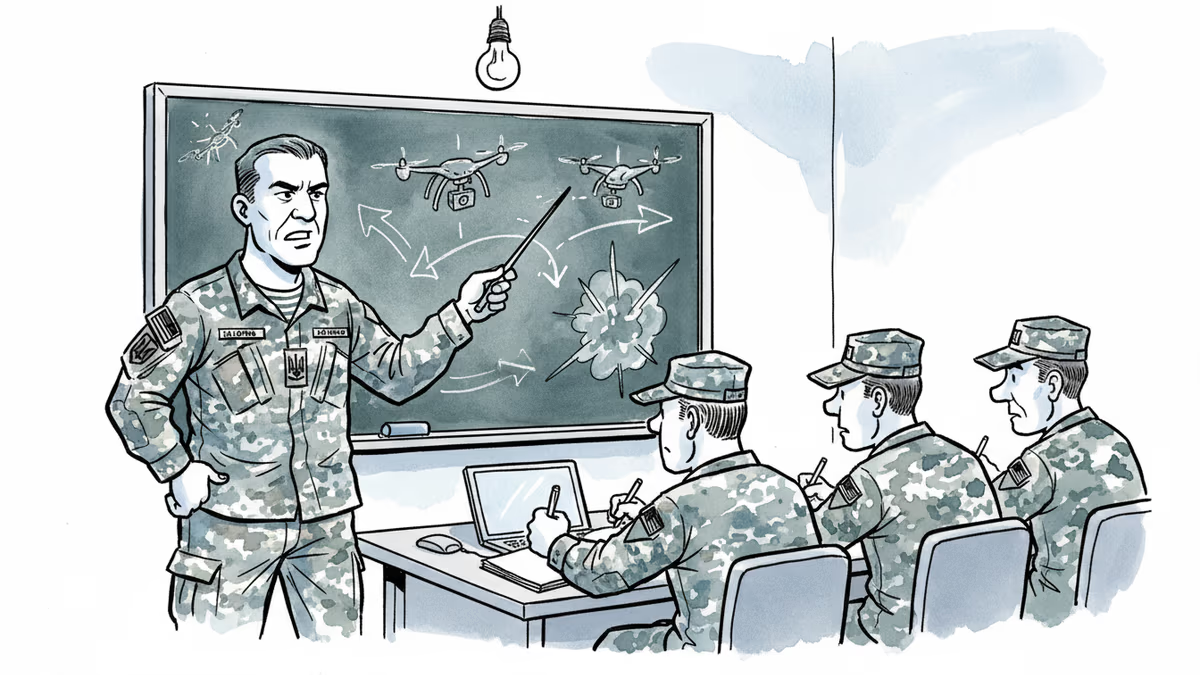
As Iran's cheap drones overwhelm expensive US defenses, Ukraine emerges as an unlikely military innovation leader, teaching American allies cost-effective counter-drone tactics.
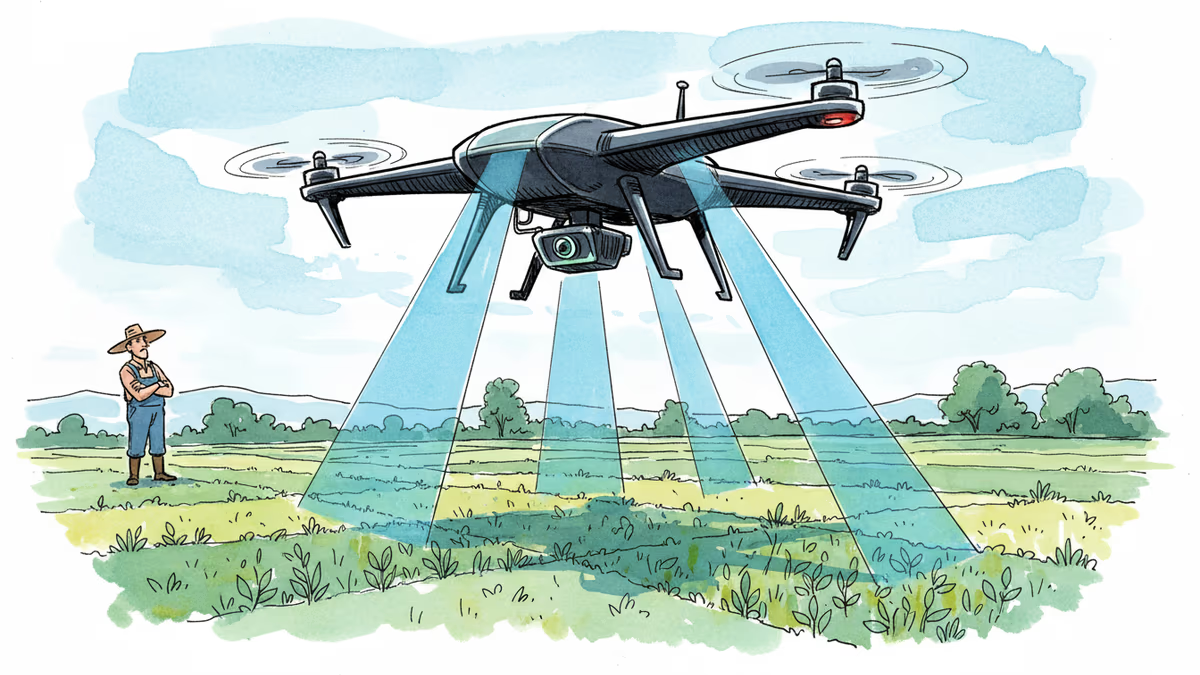
AI-powered drones are transforming landmine detection, offering 10x faster surveys than traditional methods while reducing human risk in conflict zones like Ukraine.
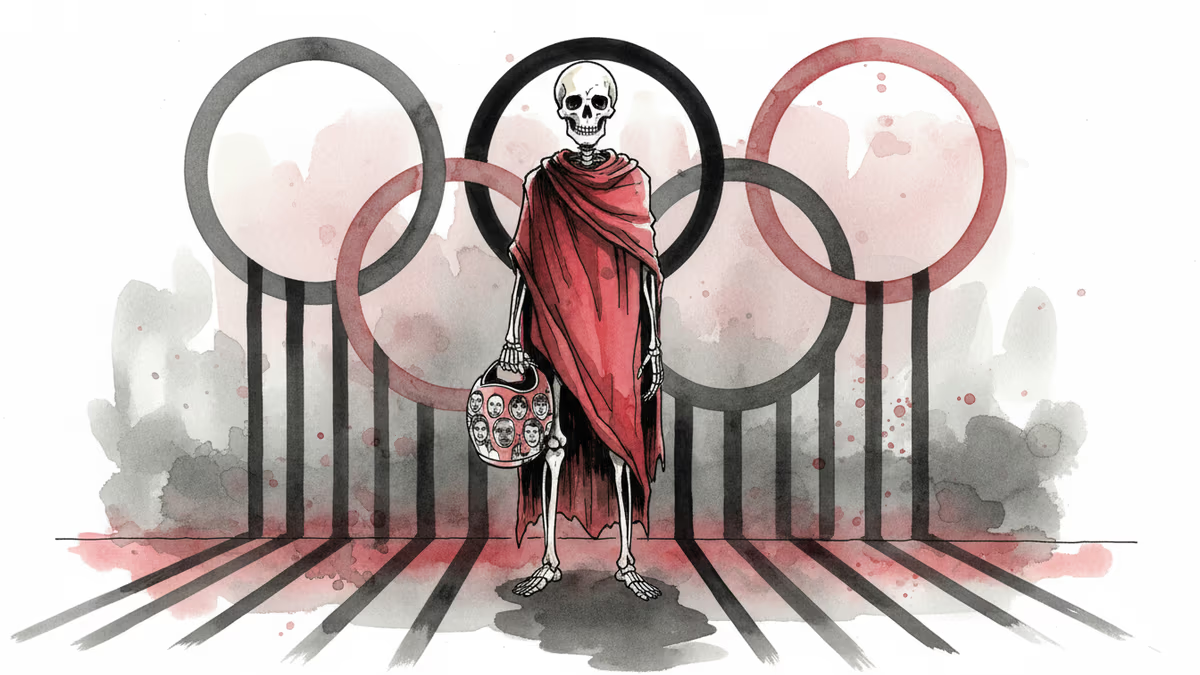
Ukrainian skeleton racer banned from wearing memorial helmet honoring fallen athletes at 2026 Winter Olympics. The incident highlights tensions between Olympic neutrality and human remembrance.
Ukraine's president pitches ending the war as Trump's political victory, but faces the harsh reality of territorial concessions and dwindling negotiating power.
As Iran's cheap drones overwhelm expensive US defenses, Ukraine emerges as an unlikely military innovation leader, teaching American allies cost-effective counter-drone tactics.
AI-powered drones are transforming landmine detection, offering 10x faster surveys than traditional methods while reducing human risk in conflict zones like Ukraine.
Ukrainian skeleton racer banned from wearing memorial helmet honoring fallen athletes at 2026 Winter Olympics. The incident highlights tensions between Olympic neutrality and human remembrance.
Ukraine's president pitches ending the war as Trump's political victory, but faces the harsh reality of territorial concessions and dwindling negotiating power.
Thoughts
Share your thoughts on this article
Sign in to join the conversation