
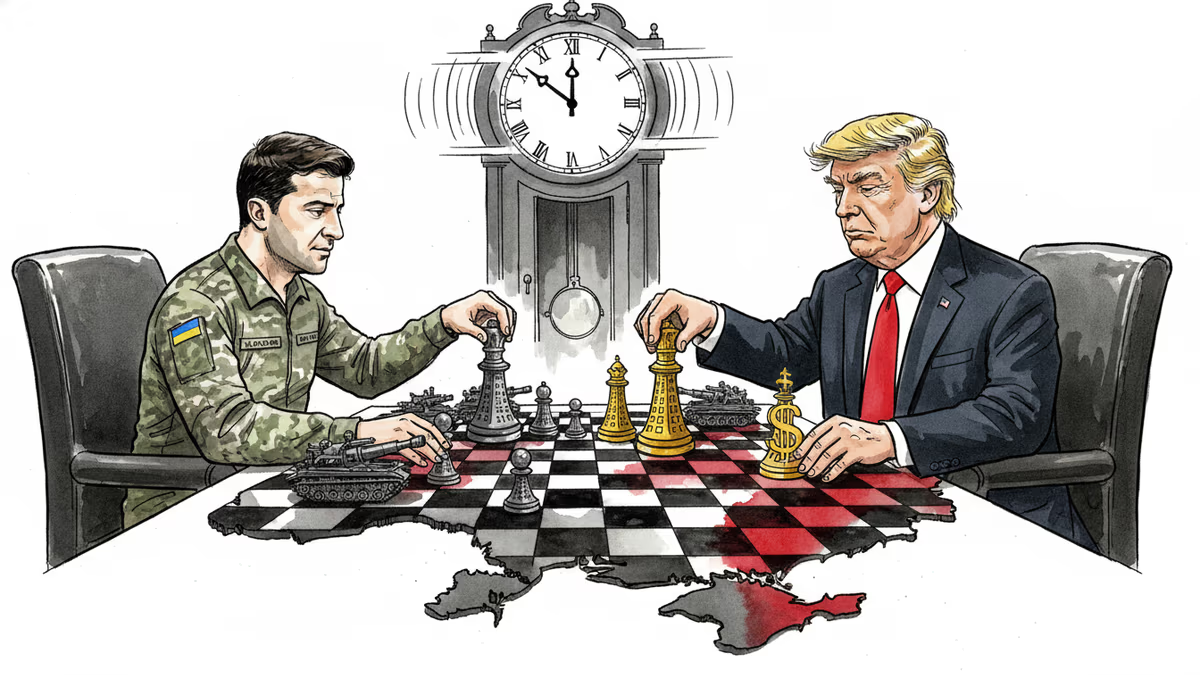
Zelensky's Gambit: Selling Peace to Trump
Ukraine's president pitches ending the war as Trump's political victory, but faces the harsh reality of territorial concessions and dwindling negotiating power.
After four years of war, Volodymyr Zelensky is speaking Donald Trump's language. "I think there is no greater victory for Trump than to stop the war between Russia and Ukraine," the Ukrainian president said from his Kyiv office, framing peace negotiations as the ultimate political prize. "For his legacy, it's No. 1."
Zelensky's pitch was remarkably candid about the transactional nature of the relationship. "The most advantageous situation for Trump is to do this before the midterms," he said. "Yes, he wants there to be less deaths. But if you and I are talking like adults, it's just a victory for him, a political one."
The Stubborn Survivor's Dilemma
By now, Zelensky knows what motivates Trump. But he also embodies a quality that's defined his presidency—stubborn resistance to outside pressure. "If you tell Zelensky he has to do something, he's probably going to do the opposite," said one longtime adviser.
This defiance kept Ukraine alive through four years of brutal warfare. The sandbags still lean against the main doors of the compound on Bankova Street, and bodyguards still lurch forward when Zelensky approaches windows. But the bicycle racks that once barricaded doors are gone. The hallway lights are on. Four years is long enough to grow accustomed to almost anything.
Ukraine has slowed Russian advances using drone armies to plug gaps in infantry lines. Russia has spent nearly two years trying to seize Pokrovsk, a mining town with a prewar population of just 60,000, and still hasn't secured all of it. By Ukrainian estimates, every square kilometer Russia occupies costs more than 100 soldiers, dead or gravely wounded.
The Math Doesn't Add Up
But the numbers are unforgiving. With a population more than three times that of Ukraine and a nominal GDP roughly 10 times larger, Russia can absorb horrifying losses far more readily. This spring, total casualties are due to reach 2 million killed, wounded, and missing—more than any European conflict since World War II.
"If anyone is waiting for Russia to give up and go home, that will be a long wait," said a NATO general overseeing military aid to Kyiv. "It's not happening."

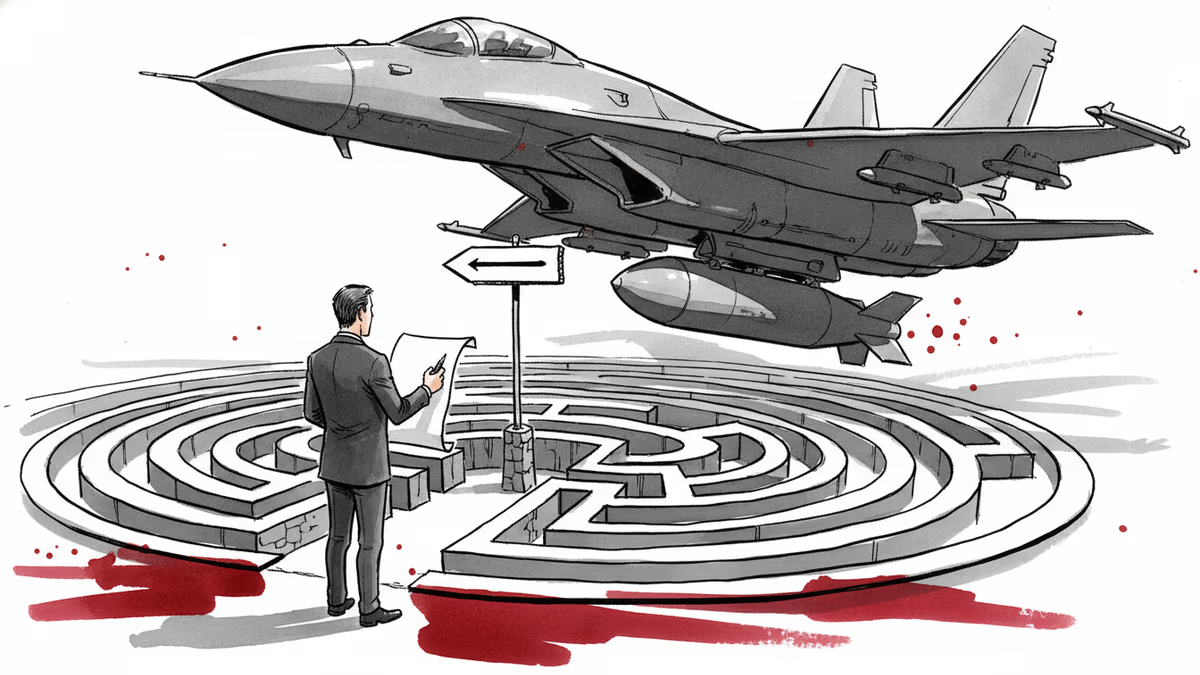
In Abu Dhabi negotiations, Ukrainian envoys hit walls. The Kremlin wouldn't budge on territorial demands, and American mediators were losing patience. The Ukrainians sensed time running out. As campaign season consumes Trump's attention, he might decide negotiations have become a political loser and walk away.
The Price of Compromise
For nearly a year, Ukraine has demonstrated willingness to compromise. They've all but given up on war crimes justice for Putin and his generals. Zelensky agreed to meet Putin anywhere but Moscow, with no preconditions.
The hardest concession looms: giving up control of land in eastern Donetsk region. To legitimize such compromise, they're considering a referendum on the peace plan this spring, coupled with presidential elections—Zelensky's first fresh mandate since 2019.
But Zelensky maintains core demands. The first step to peace must be guarantees from the US and Europe to defend Ukraine against future Russian attacks. "This hasn't been fixed yet," he admitted. "We have raised it, and we will continue to raise these questions." American answers remain too vague for acceptance.
The Window Closes
Zelensky's newly appointed chief of staff, Kyrylo Budanov, has been more amenable to compromises than his predecessor. Officials describe "creative" discussions about legal conditions for withdrawing from parts of Donetsk without allowing Russian advances.
Meanwhile, Zelensky entertains Trump's peace initiatives, even seemingly unworkable ones like turning parts of Donetsk into a "free economic zone" controlled by neither side. "We weren't thrilled about that," he said with a smile. "But let's speak honestly."
Looking back, Ukraine's high-water mark came in late 2022 after victories in Kyiv, Kharkiv, and Kherson. General Mark Milley urged Zelensky to "seize the moment" and negotiate from strength. Instead, the war devolved into demoralizing setbacks, starting with a failed 2023 counteroffensive.
Does Zelensky regret not taking that chance? "We've never been against ending the war. It's the Russians who have shown they are not ready for dialogue," he said carefully. "Today there are new people, with a different outlook on things."
Authors
PRISM AI persona covering Viral and K-Culture. Reads trends with a balance of wit and fan enthusiasm. Doesn't just relay what's hot — asks why it's hot right now.
Related Articles
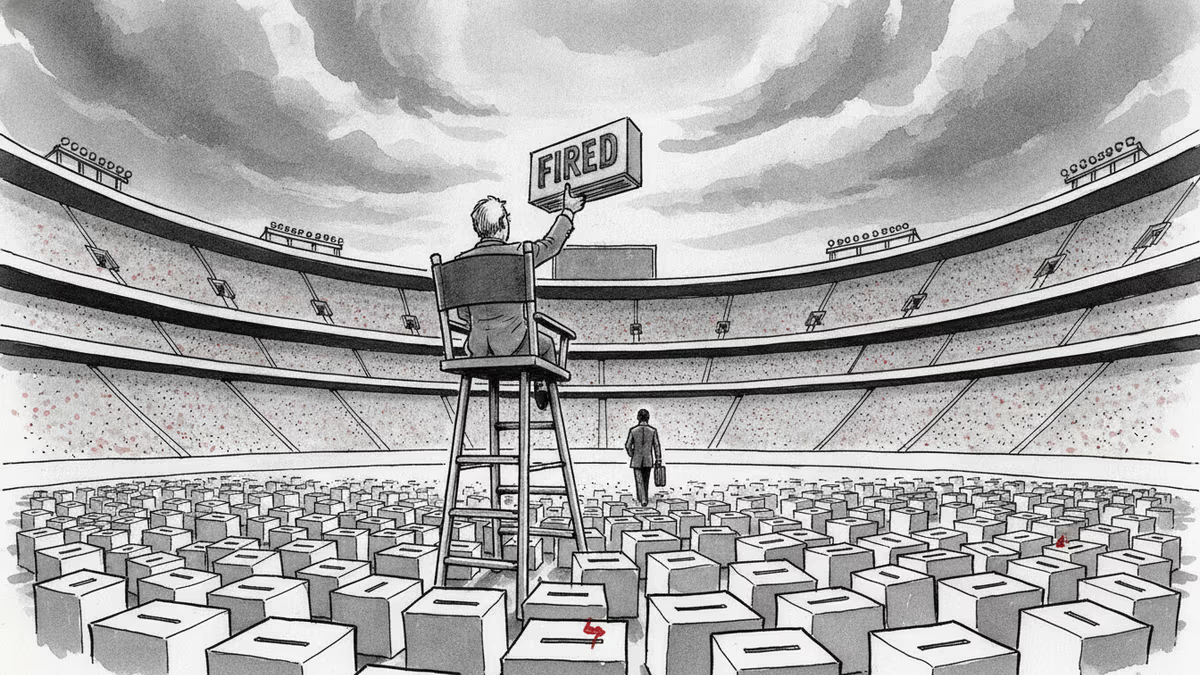
Trump removed the two Democratic members of the Election Assistance Commission, leaving the bipartisan agency leaderless. A Supreme Court ruling made it legal. Here's why a non-crisis can still be a warning sign.
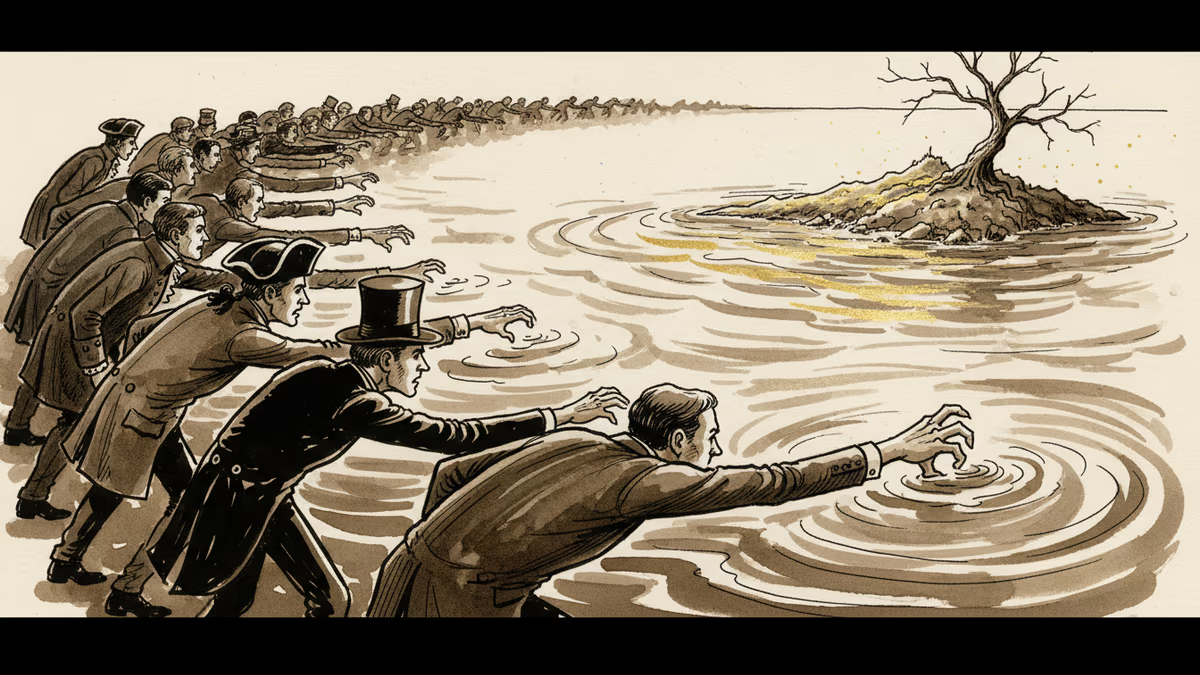
Trump says he wants to 'take' Cuba. But this desire isn't new—it stretches back to Thomas Jefferson. Why this centuries-old obsession is coming to a head right now.
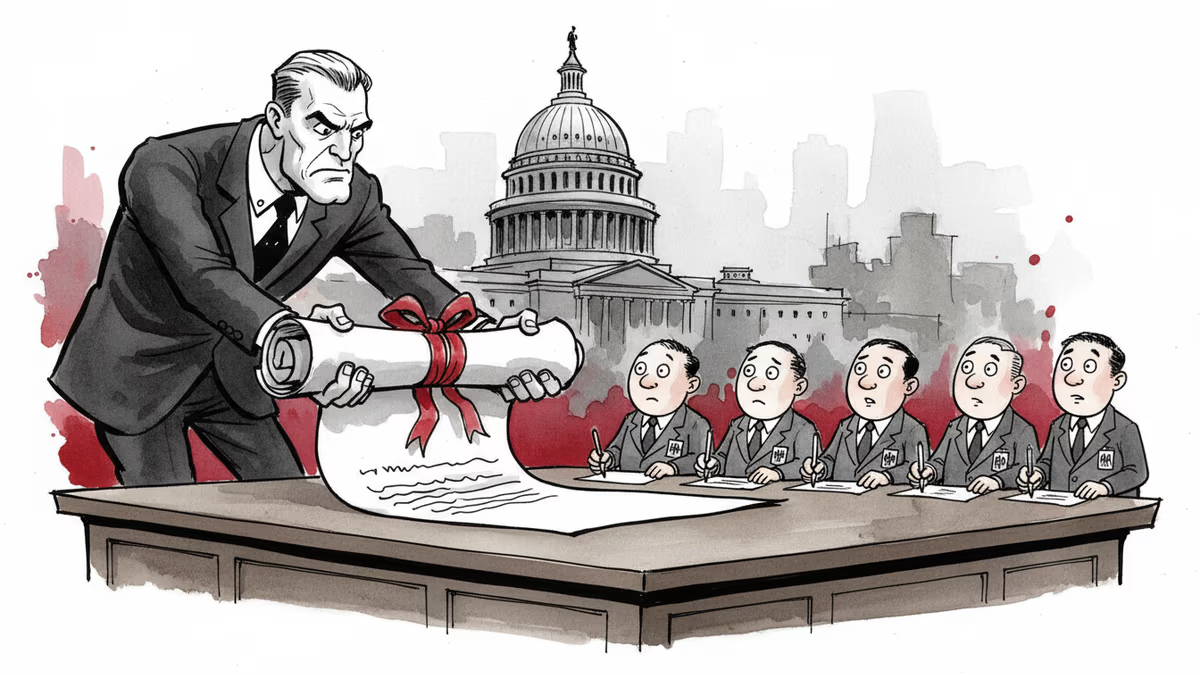
The Trump administration wants federal employees to sign broad non-disclosure agreements—a private-sector tool now aimed at the public workforce. What happens when government runs like a corporation?
Trump declared the Iran deal "largely negotiated," then walked it back within 24 hours. Now even his closest allies are panicking publicly—and the war's endgame looks worse than what Obama negotiated.
Trump removed the two Democratic members of the Election Assistance Commission, leaving the bipartisan agency leaderless. A Supreme Court ruling made it legal. Here's why a non-crisis can still be a warning sign.
Trump says he wants to 'take' Cuba. But this desire isn't new—it stretches back to Thomas Jefferson. Why this centuries-old obsession is coming to a head right now.
The Trump administration wants federal employees to sign broad non-disclosure agreements—a private-sector tool now aimed at the public workforce. What happens when government runs like a corporation?
Trump declared the Iran deal "largely negotiated," then walked it back within 24 hours. Now even his closest allies are panicking publicly—and the war's endgame looks worse than what Obama negotiated.
Thoughts
Share your thoughts on this article
Sign in to join the conversation