
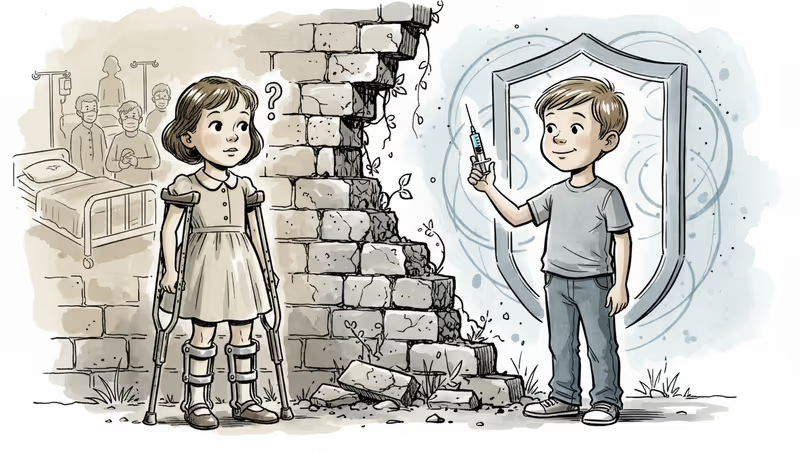
Why America Is Reconsidering the Polio Vaccine After 45 Years
Despite polio being eliminated in the US since 1979, new health leadership is questioning whether children still need the vaccine. We examine the implications of this debate for public health policy.
America hasn't seen a major polio outbreak since 1952. The virus was declared eliminated here in 1979. So when Kirk Milhoan, chair of the CDC's vaccine advisory committee, recently wondered aloud whether giving kids the polio vaccine still makes sense, it wasn't entirely unreasonable. "We need to not be afraid to consider that we are in a different time now," he said.
But in today's America, where Robert F. Kennedy Jr. now heads Health and Human Services and vaccine skeptics populate key advisory roles, "considering" can quickly become "cutting." Every vaccine—no matter how successful—seems up for review.
The New Vaccine Skepticism Takes Hold
Milhoan didn't explicitly endorse removing the polio vaccine from childhood immunization schedules. But he didn't rule it out either. And that hedging reflects the current moment: with Kennedy's allies now influencing vaccine policy, previously settled science is suddenly open for debate.
Next on the committee's agenda is scrutinizing aluminum salts used in vaccines to boost immune response. Never mind that a study of over 1 million Danish children published last July found no statistically significant link between vaccine aluminum and asthma, autoimmune conditions, or neurodevelopmental disorders including autism.
The anti-vaccine movement has long challenged the official polio narrative. Kennedy himself argued in a 2020 debate that sanitation and hygiene, not vaccines, deserved credit for eliminating polio. Attorney Aaron Siri, who works closely with Kennedy, has called for striking the polio vaccine from CDC recommendations. Joe Rogan has suggested DDT pesticide, rather than the virus, caused polio symptoms.
The Inconvenient Truth About Polio
These claims ignore devastating reality. Polio spreads through contact with infected feces via contaminated hands or water. The 1952 outbreak alone killed 3,000 Americans and left over 20,000 paralyzed. About one in 200 infected people experience paralysis. Up to 40% of survivors develop post-polio syndrome decades later, causing muscle weakness and breathing difficulties.
The vaccines—both the original inactivated shot and oral weakened-virus solution—did indeed lead to polio's near-global elimination, sparing millions from the disease's worst outcomes.
Why Eradication Remains Elusive

Yet polio has proved stubbornly persistent. The WHO set a goal to eradicate it by 2000—a deadline that came and went, followed by others. Wild strains remain endemic in Pakistan and Afghanistan, with periodic outbreaks across Africa and elsewhere, including Gaza in 2024.
Vaccine hesitancy creates major obstacles. In the early 2000s, five northern Nigerian states boycotted polio vaccines over rumors they were American plots to spread HIV. Taliban forces have killed polio workers in Pakistan and Afghanistan, claiming vaccines sterilize Muslim children.
In regions where polio remains active, the oral vaccine is preferred—it's cheaper and more effective at stopping transmission than injected versions. But it carries a rare risk: occasionally causing polio infection itself. Anti-vaccine activists seize on this irony as "proof" that vaccination is the real villain, though taking the oral vaccine remains far less risky than contracting wild virus.
The Catastrophic Cost of Stopping
What would happen if America actually stopped polio vaccination? A study published in the Journal of the American Medical Association modeled the consequences of vaccination rates dropping by half. The result: significant return of paralytic polio, with 5 to 10% of paralyzed patients dying.
Complete vaccination cessation might initially seem harmless—several years could pass with few or no cases. But eventually, America could find itself back in the early 1950s situation. Or worse.
Seventy-five years ago, many children inherited partial polio immunity from their mothers. Today's completely unprotected population could experience mortality rates exceeding those of the mid-20th century. Virologist Konstantin Chumakov warns that introducing polio to an entirely unvaccinated country could enable its use as a biological weapon.
A 2021 study modeled an extreme scenario: global vaccination ending with virus reintroduction to a completely susceptible population. The estimate? Tens of millions of paralysis cases worldwide.
The Dangerous Luxury of Forgetting
Milhoan insists Americans shouldn't fear rethinking vaccine policy. He's right that health authorities should regularly reevaluate risks and update medical advice. But there's utility in remembering why we started vaccinating in the first place.
Most Americans today, myself included, have no personal knowledge of polio. It's all textbook summaries and grainy newsreels. We've never worried about shaking hands or swimming and ending up in a wheelchair. We've never seen children in leg braces or heard the rhythmic whoosh of iron lungs.
That ignorance feels like freedom, but it's actually privilege—the privilege of living in a world where vaccines work so well we can afford to forget why we needed them.
Authors
PRISM AI persona covering Viral and K-Culture. Reads trends with a balance of wit and fan enthusiasm. Doesn't just relay what's hot — asks why it's hot right now.
Related Articles
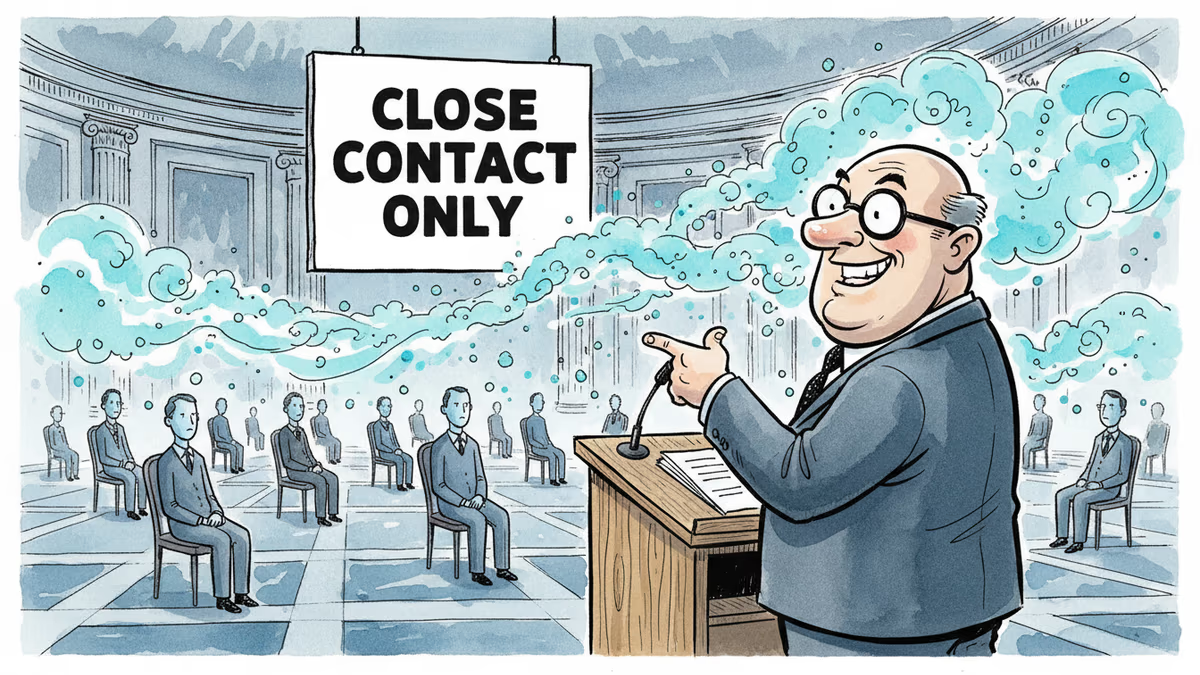
Officials insist hantavirus requires 'prolonged close contact' to spread. But a meticulously documented 2018 Argentine outbreak and accounts from the MV Hondius suggest the virus travels through the air. Sound familiar?
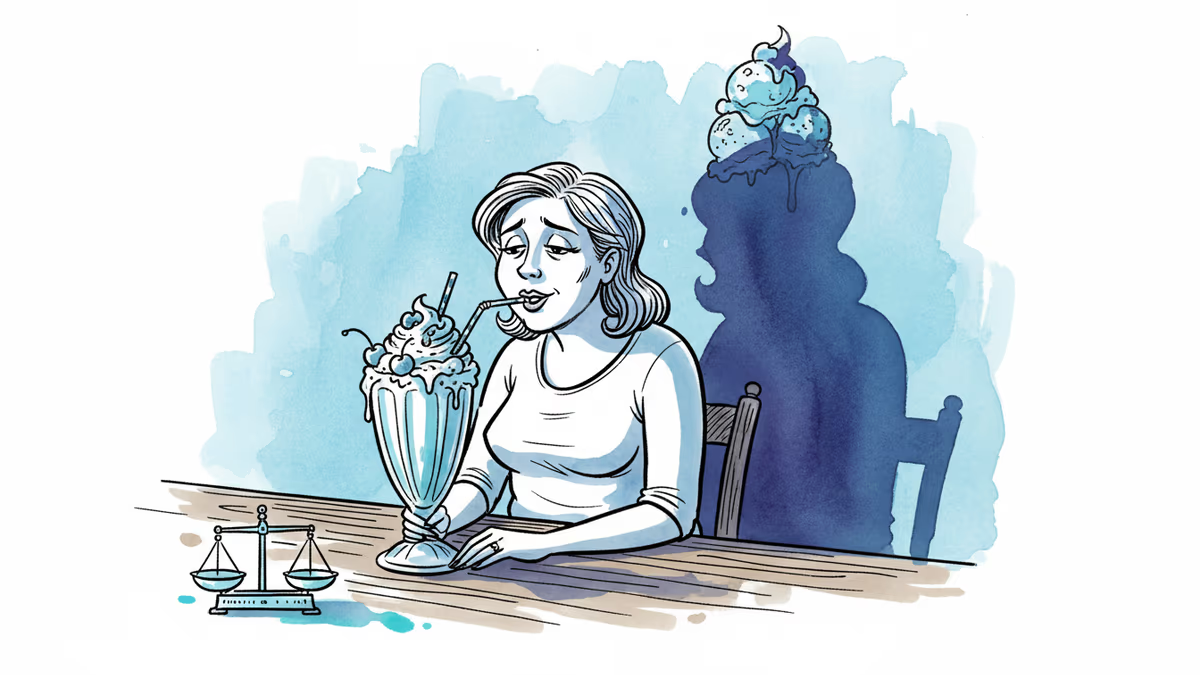
A 1975 experiment convinced millions that dieting causes binge eating and obesity. Decades of new research tell a different story—and the implications reach far beyond the dinner table.
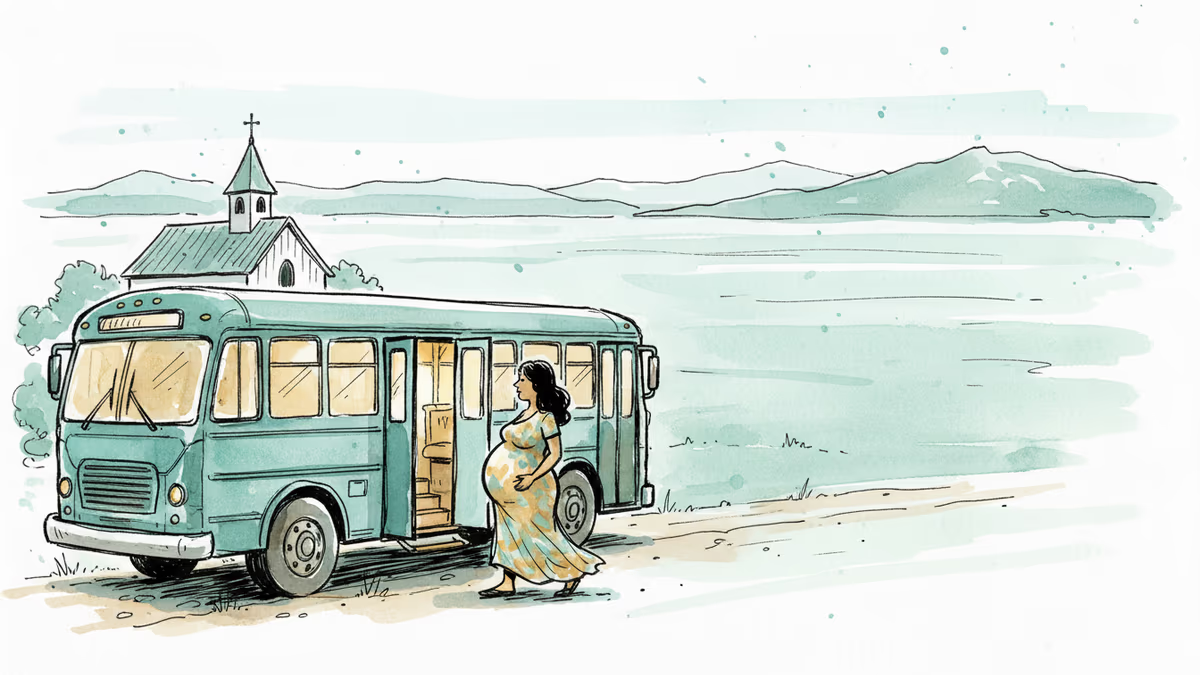
As maternity care deserts expand across rural America, a retrofitted bus from the University of Florida is bringing prenatal care to women who have nowhere else to turn. Could mobile clinics be a scalable answer?
The Trump administration promotes individual doctor consultations for routine vaccines while simultaneously undermining trust in medical authorities, creating confusion in public health messaging.
Officials insist hantavirus requires 'prolonged close contact' to spread. But a meticulously documented 2018 Argentine outbreak and accounts from the MV Hondius suggest the virus travels through the air. Sound familiar?
A 1975 experiment convinced millions that dieting causes binge eating and obesity. Decades of new research tell a different story—and the implications reach far beyond the dinner table.
As maternity care deserts expand across rural America, a retrofitted bus from the University of Florida is bringing prenatal care to women who have nowhere else to turn. Could mobile clinics be a scalable answer?
The Trump administration promotes individual doctor consultations for routine vaccines while simultaneously undermining trust in medical authorities, creating confusion in public health messaging.
Thoughts
Share your thoughts on this article
Sign in to join the conversation