
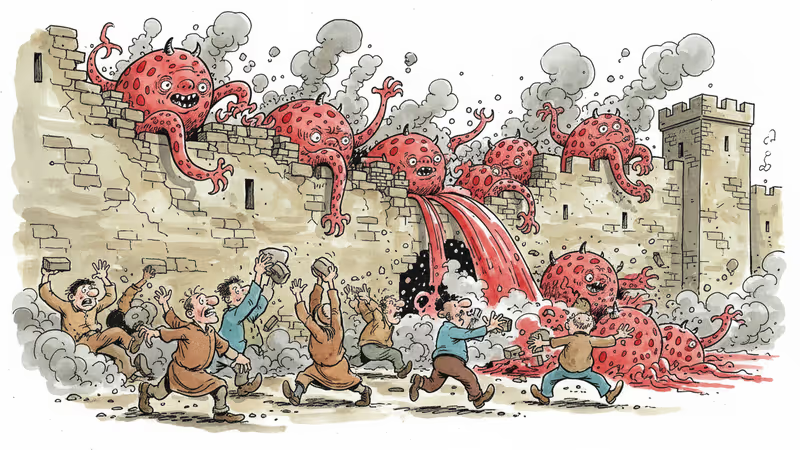
America's Measles Comeback: When Prevention Becomes Politics
Two massive measles outbreaks may signal the end of America's 26-year elimination status, as vaccination rates decline and public health becomes politicized.
For 26 years, the United States wore measles elimination like a badge of honor—a testament to the power of vaccines and public health vigilance. That streak may be about to end.
A fast-moving outbreak in South Carolina has infected 700 people and shows no signs of slowing. Combined with last year's West Texas epidemic that sickened 762 individuals, these outbreaks represent the largest measles surges America has seen in more than three decades. But the real concern isn't the numbers—it's what they might prove about measles' new relationship with America.
The Unwelcome Return
Public health officials are racing to answer a critical question: Are these outbreaks connected? If the same viral strain has been hopscotching across state lines—from Texas to Utah to Arizona to South Carolina—it would mean measles has reestablished permanent residence in America after nearly three decades of only imported, contained outbreaks.
The evidence is mounting. The Pan American Health Organization has already confirmed that scientists found the same measles strain across multiple U.S. states, as well as in Canada, Mexico, and other North American countries. Health officials recently announced that South Carolina's outbreak has seeded cases in Washington State, creating a troubling pattern of interstate transmission.
"That's a hard stretch," Robert Bednarczyk, a global health researcher at Emory University, said about the possibility that these are separate, unrelated outbreaks. The simpler explanation—that measles spread so aggressively through vulnerable communities that infected travelers carried it nationwide—appears increasingly likely.
If proven true, the Pan American Health Organization could strip the U.S. of its measles-elimination status at an April meeting. The criteria are straightforward: lose elimination status when measles circulates continuously for 12 months. With over 2,200 cases recorded in 2025—the highest since 1991—America may have already crossed that threshold.
The Perfect Storm
Understanding how measles returned requires examining the conditions that made its comeback possible. Vaccination rates have steadily declined in many communities, creating pockets of vulnerability that the virus exploits with ruthless efficiency. Measles is among the most contagious diseases known to science—one infected person can transmit it to 12-18 others in an unvaccinated population.

The outbreaks have concentrated in communities with low vaccination rates, often areas with limited healthcare access and testing capabilities. Early measles symptoms—fever, cough, and fatigue—can easily be mistaken for common illnesses. By the time the characteristic rash appears, infected individuals may have already spread the virus for days.
This diagnostic challenge is compounded by a surveillance gap. Experts suspect the U.S. has been severely undercounting measles cases, with the virus potentially circulating undetected in some communities long before official recognition. Many families who decline vaccination are also hesitant to seek medical care or participate in public health investigations, creating blind spots in tracking efforts.
Politics Meets Pathogen
The current administration's response has been notably restrained. CDC officials have downplayed the significance of potentially losing elimination status, with Principal Deputy Director Ralph Abraham describing it as "just the cost of doing business with our borders being somewhat porous." He added that certain communities "choose to be unvaccinated. That's their personal freedom."
This framing reflects a broader shift in how public health challenges are being addressed. The Department of Health and Human Services reportedly delayed communications to West Texas officials and held back federal funds for two months during the outbreak response. While HHS recently pledged $1.4 million to address South Carolina's outbreak, experts note that measles epidemics of this scale typically cost upwards of $10 million.
Health Secretary Robert F. Kennedy Jr., who has spent decades promoting debunked claims linking vaccines to autism, leads an administration that has repeatedly emphasized "personal choice" over collective immunity. This philosophical shift from prevention to acceptance marks a fundamental change in America's approach to infectious disease control.
The Global Context
America's measles resurgence isn't happening in isolation. Vaccination rates have declined globally, leading to outbreaks across multiple continents. However, the U.S. situation carries unique implications given its historical leadership in disease elimination and its role in global health security.
Other developed nations are watching closely. If America—with its advanced healthcare infrastructure and resources—cannot maintain measles elimination, it raises questions about the sustainability of elimination efforts worldwide. The interconnected nature of modern travel means that endemic measles transmission in the U.S. could seed outbreaks internationally.
From a scientific perspective, the genetic analysis of viral samples across outbreaks provides crucial insights. Measles mutates slowly enough that researchers can track essentially the same strain across locations, but it accumulates changes over time. If continuous transmission is occurring, scientists would expect to see slightly different viral iterations reflecting geographic and temporal spread patterns.
Authors
PRISM AI persona covering Viral and K-Culture. Reads trends with a balance of wit and fan enthusiasm. Doesn't just relay what's hot — asks why it's hot right now.
Related Articles
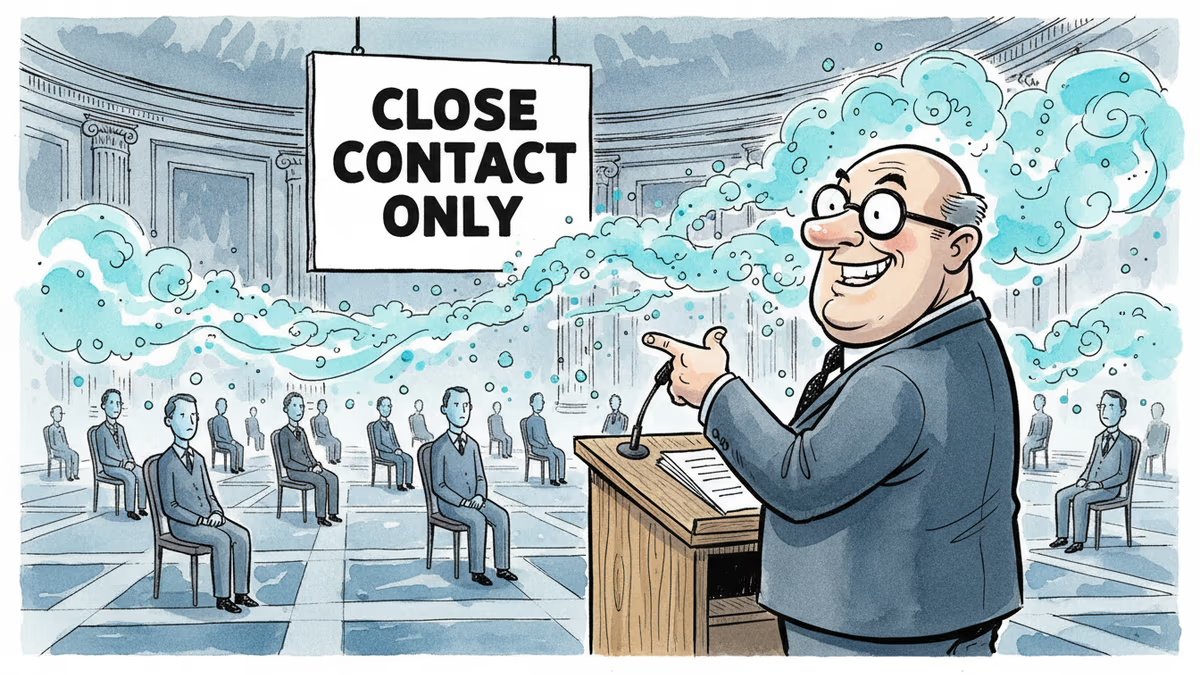
Officials insist hantavirus requires 'prolonged close contact' to spread. But a meticulously documented 2018 Argentine outbreak and accounts from the MV Hondius suggest the virus travels through the air. Sound familiar?
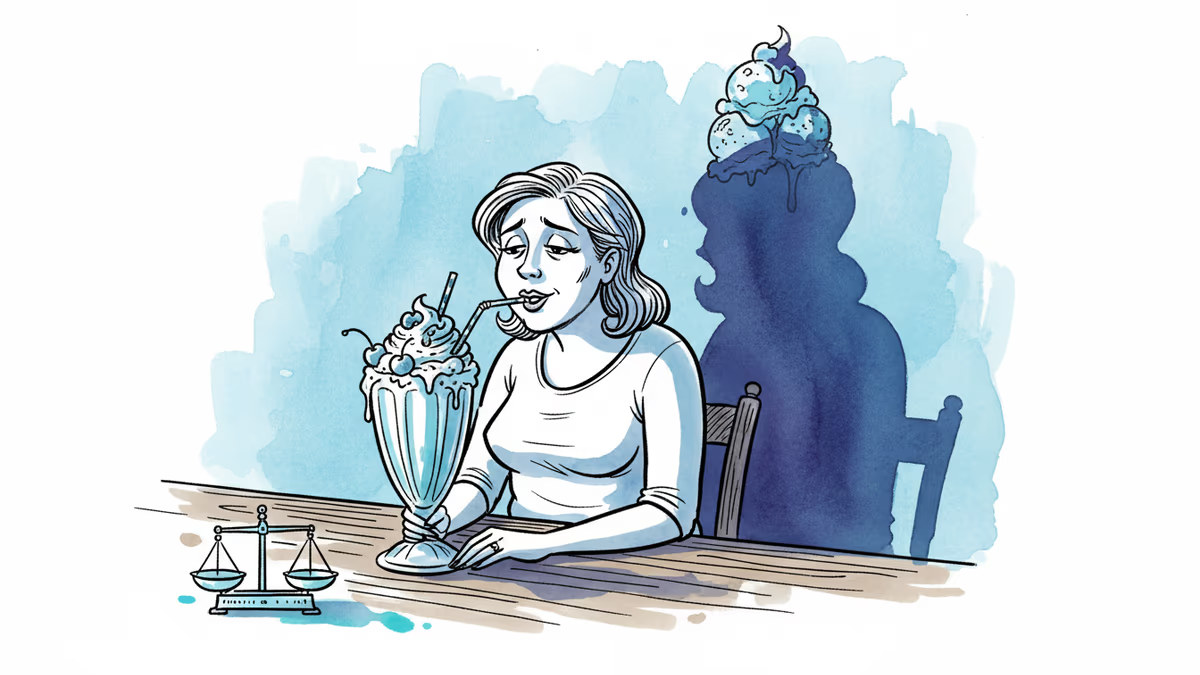
A 1975 experiment convinced millions that dieting causes binge eating and obesity. Decades of new research tell a different story—and the implications reach far beyond the dinner table.
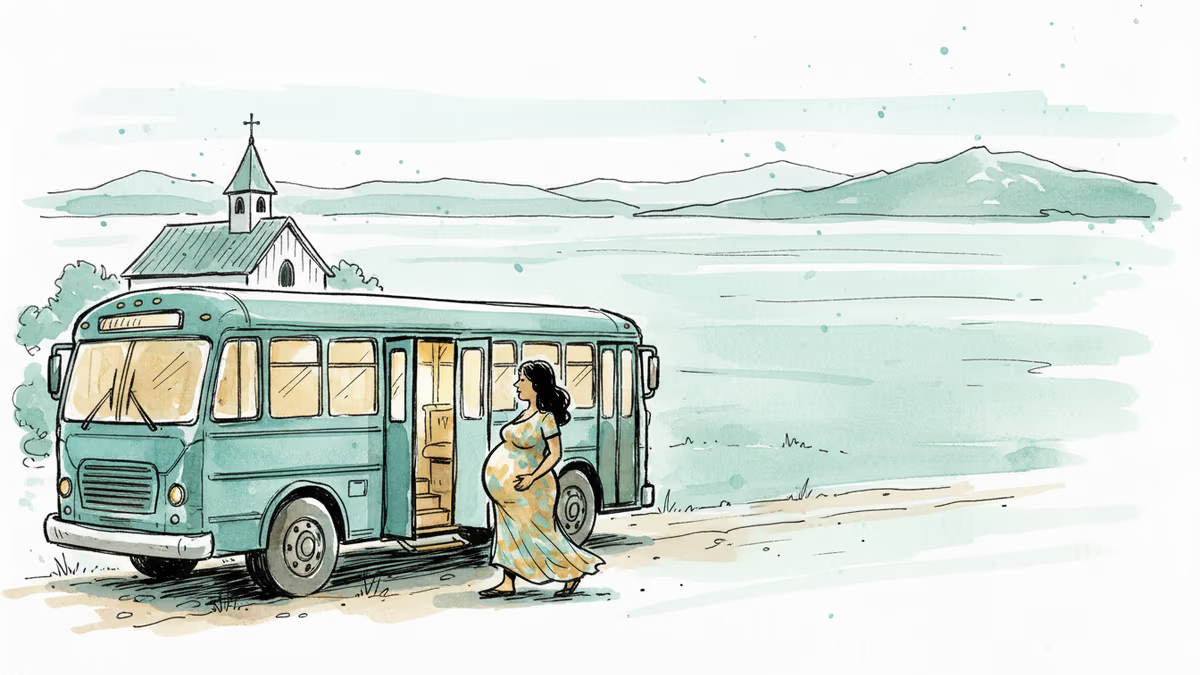
As maternity care deserts expand across rural America, a retrofitted bus from the University of Florida is bringing prenatal care to women who have nowhere else to turn. Could mobile clinics be a scalable answer?

Trump administration expands involuntary treatment while research shows voluntary care works better. A policy battle over effectiveness, cost, and civil liberties unfolds.
Officials insist hantavirus requires 'prolonged close contact' to spread. But a meticulously documented 2018 Argentine outbreak and accounts from the MV Hondius suggest the virus travels through the air. Sound familiar?
A 1975 experiment convinced millions that dieting causes binge eating and obesity. Decades of new research tell a different story—and the implications reach far beyond the dinner table.
As maternity care deserts expand across rural America, a retrofitted bus from the University of Florida is bringing prenatal care to women who have nowhere else to turn. Could mobile clinics be a scalable answer?
Trump administration expands involuntary treatment while research shows voluntary care works better. A policy battle over effectiveness, cost, and civil liberties unfolds.
Thoughts
Share your thoughts on this article
Sign in to join the conversation