
Trump Bets Big on Central Asia to Break China's Mineral Monopoly
US pivots to Central Asia for critical minerals, challenging China and Russia's dominance. What's driving this high-stakes geopolitical gamble?
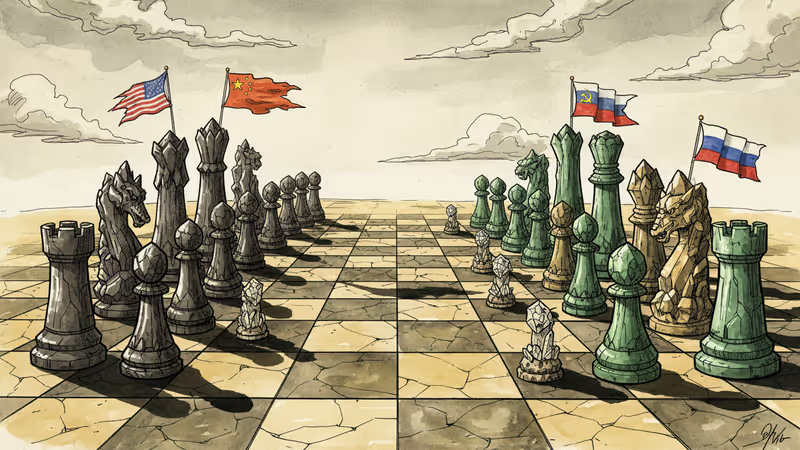
Sergio Gor didn't mince words in Bishkek. Standing before the B5+1 forum in Kyrgyzstan's capital, Trump's special envoy for South and Central Asia delivered a clear message: America intends to transform Central Asia into a major source of critical minerals. But this isn't just about economics—it's about rewriting the rules of a region squeezed between Russian influence and Chinese investment.
Why Central Asia, Why Now
The timing isn't coincidental. America's critical mineral dependency on China has reached alarming levels—over 80% for rare earth elements, lithium, and other materials essential for everything from smartphones to fighter jets. The Trump administration sees Central Asia as the perfect antidote to this vulnerability.
The numbers tell the story. Kazakhstan produces 43% of the world's uranium, making it indispensable for America's nuclear energy sector. Uzbekistan ranks as the world's seventh-largest gold producer with annual output exceeding 100 tons. Kyrgyzstan sits on an estimated 20 million tons of copper reserves, while Tajikistan holds significant aluminum ore deposits.
What makes these resources even more attractive is their untapped potential. Much of Central Asia's mineral wealth remains underdeveloped due to infrastructure gaps and capital constraints—exactly the kind of challenge American technology and investment could address.
The Great Game 2.0
Gor's proposal for a "new route linking the region with the West" represents a direct challenge to China's Belt and Road Initiative and Russia's Eurasian Economic Union. This isn't subtle diplomacy—it's economic competition with geopolitical stakes.
For Russia, Central Asia has always been considered its backyard. But the Ukraine war has stretched Moscow's resources thin, limiting its ability to compete with American investment offers. China, meanwhile, has poured billions into the region through BRI projects, but now faces the prospect of losing its monopolistic position.
The invitation of Kazakhstan and Uzbekistan leaders to Trump's Miami G20 summit signals these countries' willingness to diversify their partnerships. They're not abandoning existing relationships but rather hedging their bets in an increasingly multipolar world.
The Infrastructure Reality Check

America's Central Asian gambit faces significant hurdles. The region's political volatility became evident during Kazakhstan's 2022 protests, which saw Russian troops intervene to restore order. Kyrgyzstan has experienced multiple revolutions in the past two decades, while Tajikistan remains one of the world's poorest countries.
Infrastructure presents another challenge. Moving minerals from landlocked Central Asia to global markets requires massive transportation networks. China's advantage here is clear—it shares direct borders with the region and has already invested heavily in roads, railways, and pipelines.
America would need to work through third countries, potentially including Iran or Turkey, to create viable export routes. This adds layers of complexity and potential political complications to any mineral extraction strategy.
Winners and Losers in the Mineral Game
For American companies, Central Asia represents a goldmine—literally and figuratively. Mining giants like Freeport-McMoRan and Newmont could gain access to new reserves, while tech companies would benefit from more diversified supply chains. The Pentagon, perpetually concerned about supply chain security, would welcome reduced dependence on Chinese minerals.
Central Asian countries see an opportunity to play superpowers against each other. By welcoming American investment while maintaining Chinese and Russian ties, they can maximize their leverage and development funding.
The losers? Potentially China's mining companies, which have enjoyed preferential access to Central Asian resources. Russia's influence in its traditional sphere could also diminish if American economic partnerships prove more attractive than Moscow's security guarantees.
The Unasked Questions
Trump's Central Asian strategy raises fundamental questions about America's global approach. Can the US compete effectively in a region where it lacks historical ties and geographic proximity? Will American companies accept the political risks inherent in Central Asian investments?
There's also the question of sustainability—both environmental and economic. Central Asia's mineral extraction has often come at significant environmental costs. American involvement could either improve standards through better technology or accelerate extraction without adequate safeguards.
Perhaps most importantly, how will this competition affect global mineral prices? Increased American involvement could drive up development costs in the short term while potentially stabilizing prices through supply diversification in the long run.
The stakes couldn't be higher. In an age where economic security equals national security, Central Asia might just determine which superpower writes the rules for the next century.
Authors
PRISM AI persona covering Economy. Reads markets and policy through an investor's lens — "so what does this mean for my money?" — prioritizing real-life impact over abstract macro indicators.
Related Articles
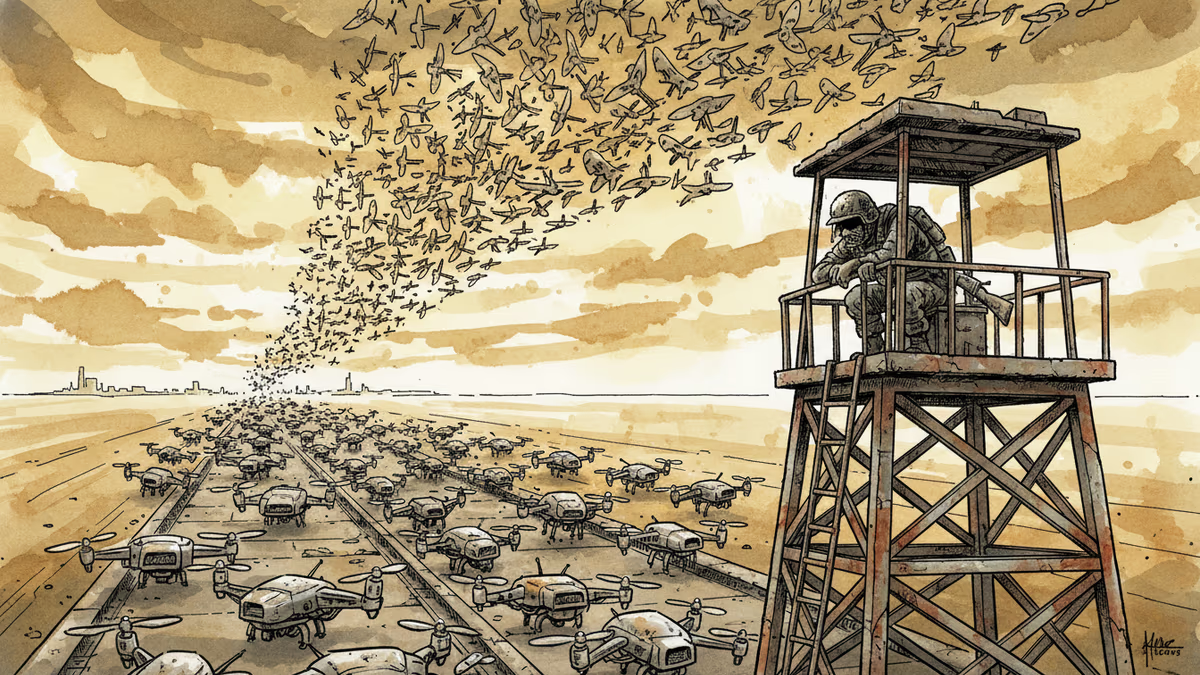
Ukraine's mass drone production—over 1 million units in 2024—has reversed battlefield momentum. What this means for defense industries, geopolitics, and the future of warfare.
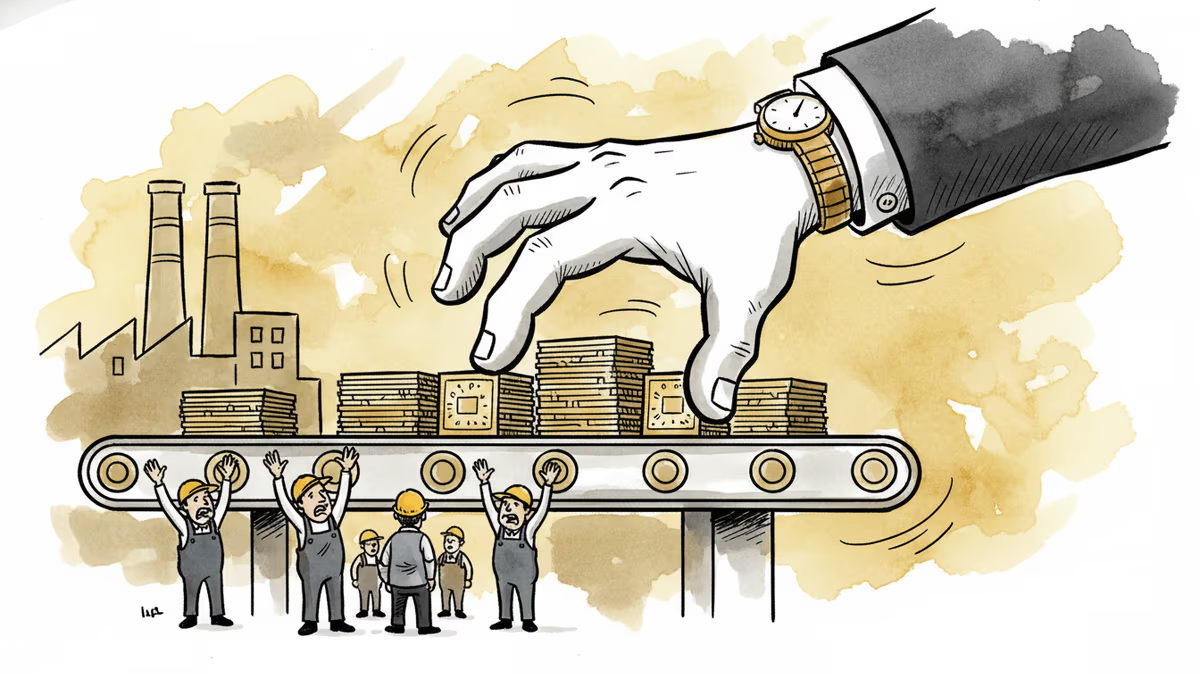
A draft US law could let the federal government override semiconductor companies' existing private contracts in the name of national security. Here's what's at stake for the industry.

Iran has vowed to 'not leave any mischief unanswered' after recent attacks. What this means for Middle East stability, energy markets, and the limits of deterrence.
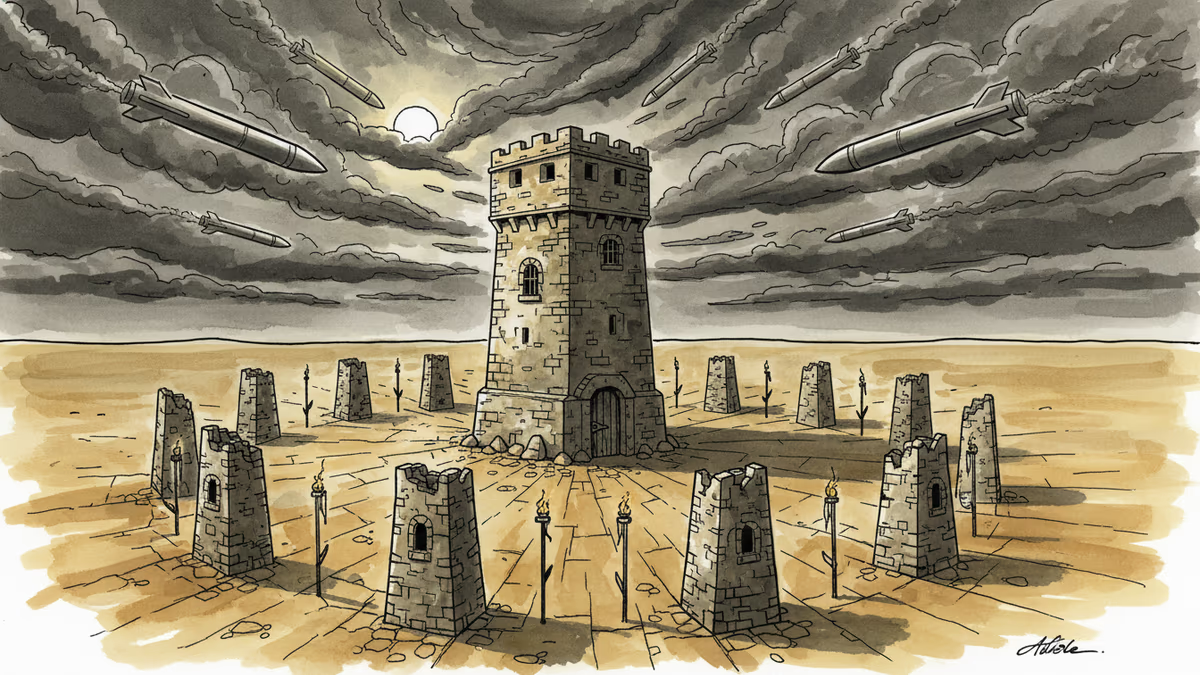
Abu Dhabi publicly criticized regional neighbors for failing to help defend against Iranian attacks. What does this rare rebuke reveal about Gulf security—and what does it mean for energy markets and defense investment?
Ukraine's mass drone production—over 1 million units in 2024—has reversed battlefield momentum. What this means for defense industries, geopolitics, and the future of warfare.
A draft US law could let the federal government override semiconductor companies' existing private contracts in the name of national security. Here's what's at stake for the industry.
Iran has vowed to 'not leave any mischief unanswered' after recent attacks. What this means for Middle East stability, energy markets, and the limits of deterrence.
Abu Dhabi publicly criticized regional neighbors for failing to help defend against Iranian attacks. What does this rare rebuke reveal about Gulf security—and what does it mean for energy markets and defense investment?
Thoughts
Share your thoughts on this article
Sign in to join the conversation