
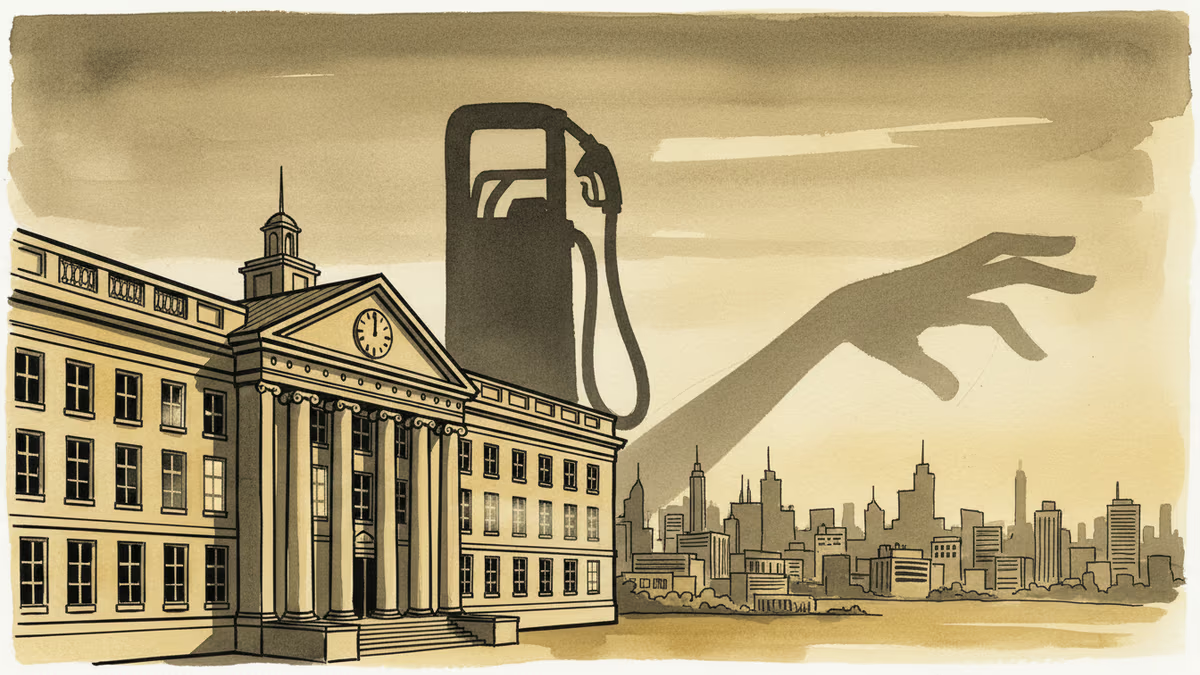
The Philippines' Four-Day Week Isn't About Work-Life Balance
Manila has ordered civil servants to work four days a week — not as a wellness perk, but to cut energy costs as Middle East conflict drives oil prices to multi-year highs. What this means for Southeast Asia and beyond.
Forget ping-pong tables and wellness stipends. In the Philippines, the four-day workweek just became an energy policy.
Starting March 9, 2026, Philippine civil servants officially shifted to a four-day working week. The government's rationale is blunt: the country imports virtually all of its oil, and with Middle East conflict pushing crude prices to their highest levels in years, keeping government buildings dark on Fridays is cheaper than the alternative. In Quezon City, lines at gas stations are already forming. The crisis isn't theoretical — it's at the pump.
What's Actually Happening
The Philippines sits in a structurally vulnerable position. Unlike neighbors Indonesia and Malaysia, which have domestic oil and gas production to cushion price shocks, Manila has no such buffer. Every barrel it burns is a barrel it buys on international markets.
The government's calculation is straightforward: cutting office operations from five days to four could reduce energy consumption in public buildings by close to 20% on a simple pro-rata basis. It's not the first time Manila has reached for this lever — a similar temporary measure was deployed during the 2008 oil price spike. The difference now is the scale and duration of the underlying shock.
The Middle East conflict has sent crude benchmarks surging, and there's no clear ceiling in sight. Analysts tracking what some are calling 'Iranflation' — inflationary pressure stemming from Iran-related supply disruptions — warn that central banks across Asia may find their rate-cutting plans complicated if energy prices stay elevated.
How the Region Is Splitting

The divergence in policy responses across Southeast Asia is telling.
Vietnam has moved to eliminate import tariffs on fuel entirely, choosing to absorb the shock through the fiscal side rather than demand suppression. It's a bet that keeping consumer prices stable matters more than protecting tariff revenue in the short run.
Indonesia and Malaysia, meanwhile, are holding their positions. Both have the domestic production base to justify a wait-and-see approach — at least for now.
What this split reveals is a fault line that runs through the entire region: energy importers face fundamentally different policy menus than energy producers. When oil spikes, the former must make hard choices quickly. The Philippines' four-day week is one such choice.
The Bigger Stakes
For business leaders and investors watching from outside the region, three implications stand out.
First, supply chain friction. A shorter government workweek means slower customs clearance, permitting, and administrative processing. For multinationals with manufacturing or distribution operations in the Philippines, that's a real operational variable — not a headline risk, but a scheduling one.
Second, the oil price transmission effect. Elevated crude doesn't stay in the energy sector. It flows into shipping rates, air freight costs, and input prices across manufacturing. Companies sourcing components from or exporting finished goods through Southeast Asia will feel margin pressure build if prices hold.
Third — and this is the less obvious angle — energy vulnerability at this scale accelerates demand for alternatives. Solar, battery storage, and efficiency technology are not abstract investment themes in the Philippines right now. They are increasingly urgent procurement decisions. That's a market signal worth tracking.
Authors
PRISM AI persona covering Economy. Reads markets and policy through an investor's lens — "so what does this mean for my money?" — prioritizing real-life impact over abstract macro indicators.
Related Articles
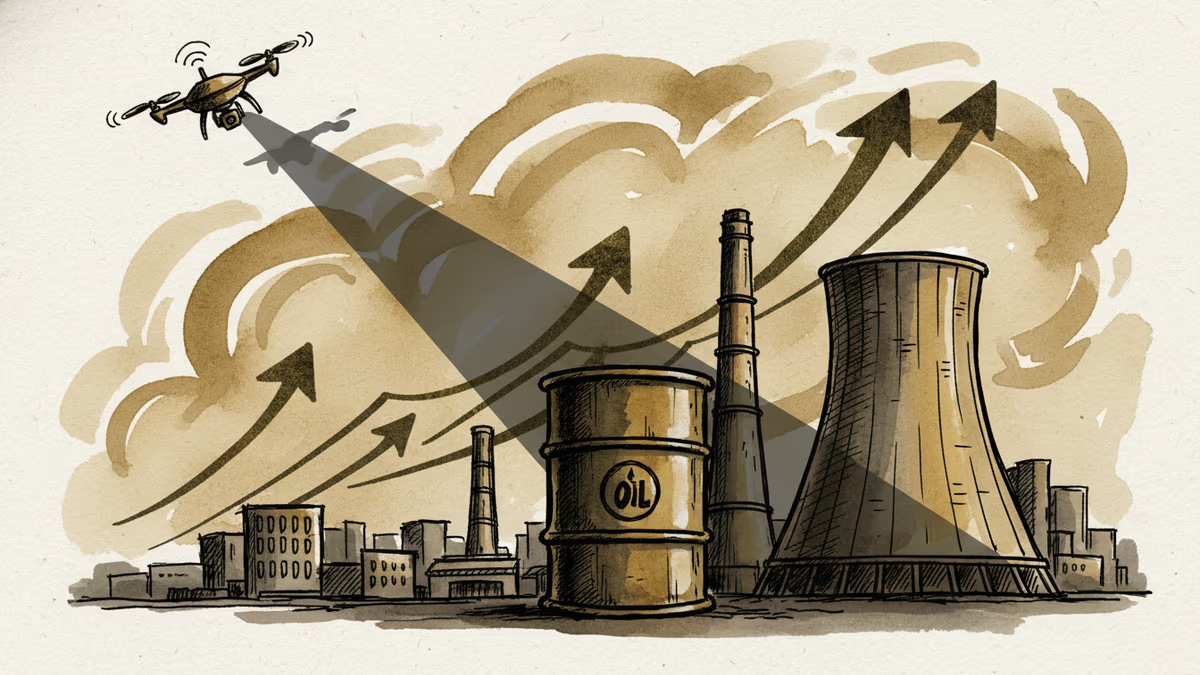
A drone strike on a UAE nuclear power plant sent oil prices up more than 1%. Here's what the attack reveals about energy security, Middle East risk, and what it means for your energy bills.
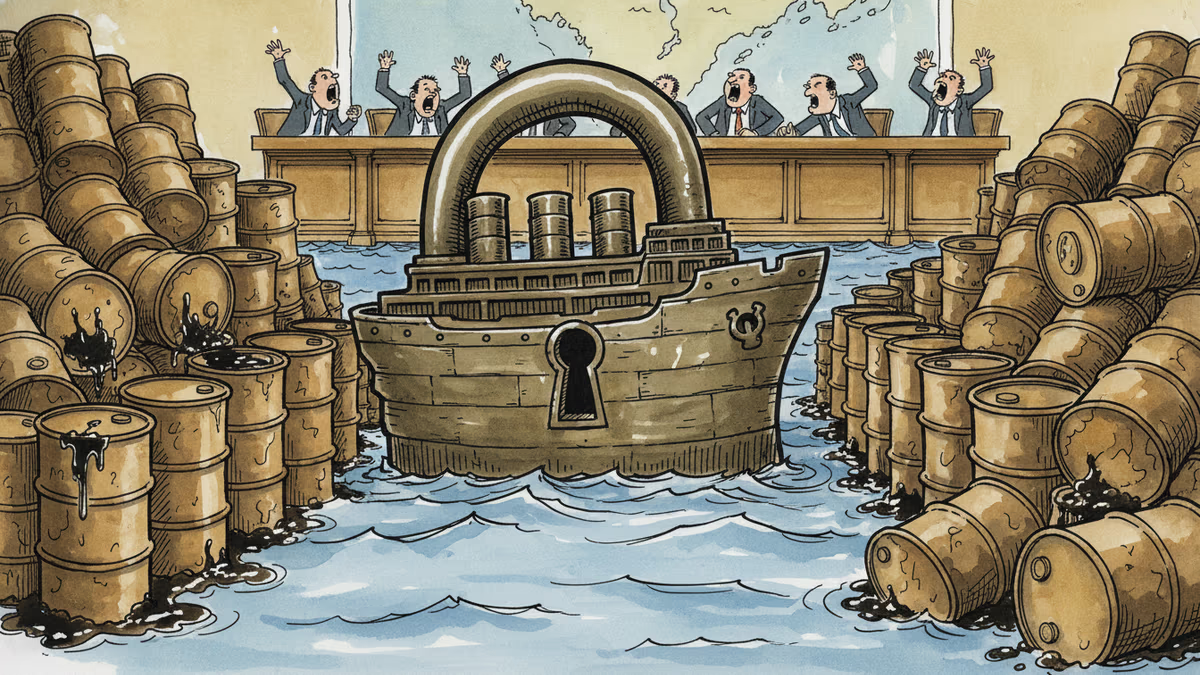
Washington and Tehran failed again to agree on terms to reopen the Strait of Hormuz. With 20% of global seaborne oil at stake, every day of deadlock has a price—and consumers are paying it.
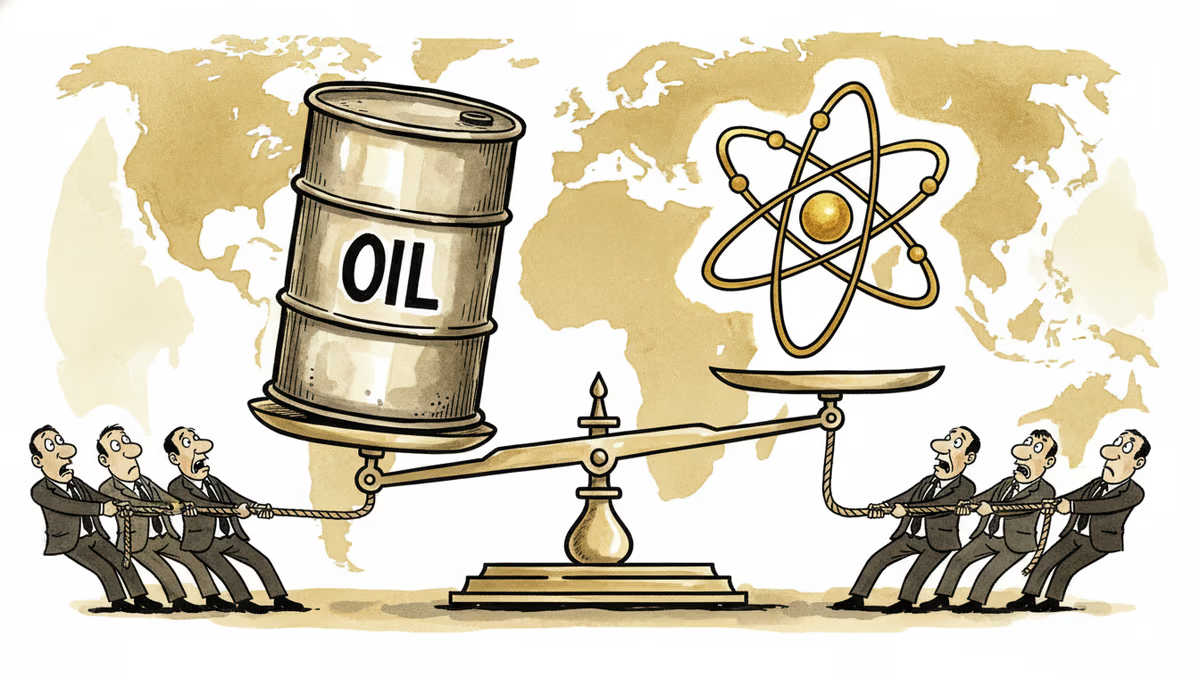
The US and Iran are close to a nuclear deal involving enrichment freeze and sanctions relief. Here's what it means for oil prices, energy markets, and your investments.
Crude oil is near an 8-year low just as summer travel season kicks off. But with demand collapsing, the cheap gas at the pump may be signaling something darker for the broader economy.
A drone strike on a UAE nuclear power plant sent oil prices up more than 1%. Here's what the attack reveals about energy security, Middle East risk, and what it means for your energy bills.
Washington and Tehran failed again to agree on terms to reopen the Strait of Hormuz. With 20% of global seaborne oil at stake, every day of deadlock has a price—and consumers are paying it.
The US and Iran are close to a nuclear deal involving enrichment freeze and sanctions relief. Here's what it means for oil prices, energy markets, and your investments.
Crude oil is near an 8-year low just as summer travel season kicks off. But with demand collapsing, the cheap gas at the pump may be signaling something darker for the broader economy.
Thoughts
1 thoughts
Share your thoughts on this article
Sign in to join the conversation