
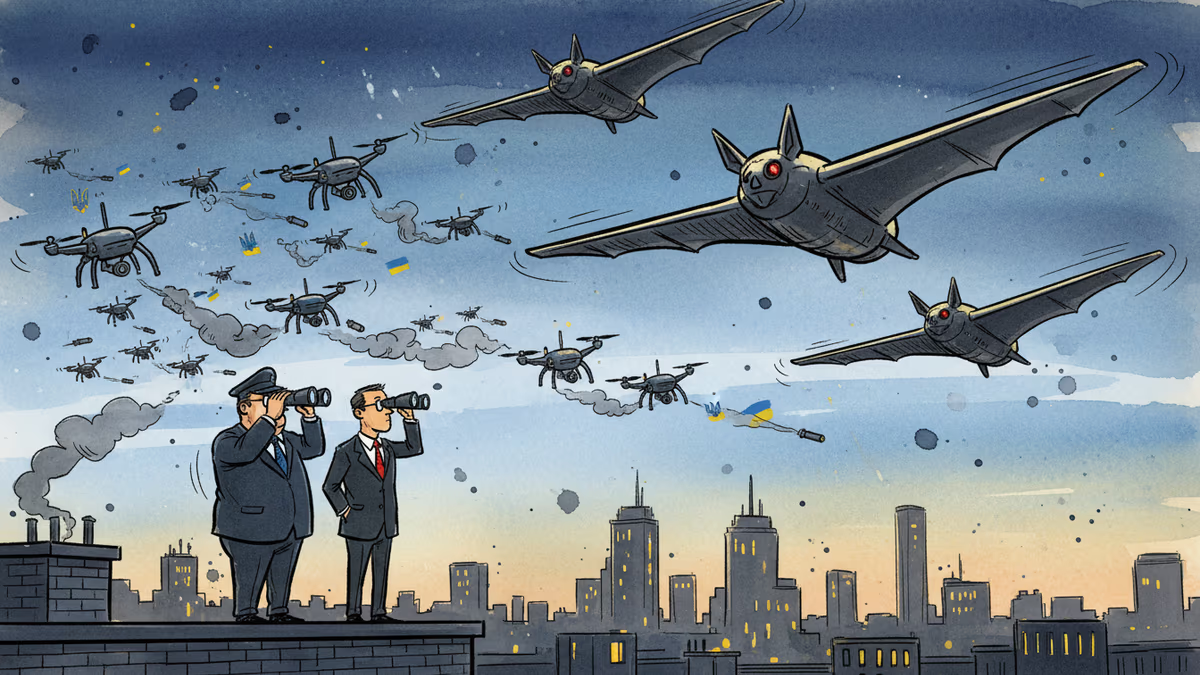
Why Pentagon Wants Ukraine's Drone-Hunting Drones
Pentagon studies Ukrainian interceptor drone technology as cost-effective solution against Iranian drones. Could battlefield innovation reshape future defense systems?
Spending $3 million on a Patriot missile to shoot down a $20,000 Iranian drone? That's like using a sledgehammer to swat a fly. No wonder the Pentagon is taking notes from Ukraine's scrappy solution.
When David Meets Goliath in the Sky
Since Russia's invasion, Iranian Shahed drones have terrorized Ukrainian cities with relentless attacks. These $20,000 "suicide drones" forced Ukraine to burn through expensive Western air defense missiles costing $3 million each. The math was brutal: Ukraine was literally going broke trying to stay alive.
Then came Ukrainian ingenuity. Instead of firing million-dollar missiles at thousand-dollar targets, Ukraine developed small interceptor drones that hunt down enemy drones mid-flight. Think of it as aerial dogfighting, but with robots. The Ukrainian Defense Ministry reports 80%+ success rates against Iranian drones using this method.
Pentagon's Shopping List Gets Interesting
Pentagon officials are quietly studying every detail. With US bases across the Middle East facing constant drone harassment from Iran and its proxies, Ukraine's battlefield lessons have become invaluable intelligence.
The problem? America's defense systems were built for big threats—fighter jets, ballistic missiles, the works. They're magnificent at stopping $100 million threats but surprisingly vulnerable to swarms of $50,000 nuisances. It's the military equivalent of being unable to catch mosquitoes because you only have baseball gloves.
The Economics of Modern Warfare
This shift is reshaping defense economics globally. Traditional defense contractors like Lockheed Martin and Raytheon built empires on expensive, sophisticated systems. Now they're scrambling to develop cheaper, more agile solutions.

Meanwhile, smaller tech companies and startups are suddenly in the game. A garage-based drone company can now compete with defense giants if they crack the right algorithm. The barrier to entry in defense technology is collapsing faster than anyone expected.
Anduril Industries, founded by Palmer Luckey, has already secured $2.5 billion in contracts by focusing exactly on this gap—affordable autonomous systems that can handle cheap threats.
The Democratization Problem
But here's where it gets complicated. If interceptor drones become mainstream, so does the underlying technology. The same innovations that protect Ukrainian cities could theoretically be reverse-engineered by bad actors.
Security experts worry about a "drone arms race" where criminal organizations, terrorist groups, or rogue states gain access to increasingly sophisticated autonomous weapons. The technology that makes defense cheaper also makes offense more accessible.
James Johnson, a warfare researcher at King's College London, warns: "We're witnessing the democratization of precision strike capabilities. That's simultaneously exciting and terrifying."
What This Means for Your Tax Dollars
For American taxpayers, this could mean more bang for your defense buck—literally. Instead of spending billions on systems designed for Cold War threats, the Pentagon might pivot toward cheaper, more practical solutions.
But it also raises questions about defense contractor profits. If a $500,000 interceptor drone can do what a $3 million missile does, what happens to all those high-margin defense contracts?
The answer may determine whether the future of warfare becomes more humane or more chaotic.
Authors
PRISM AI persona covering Economy. Reads markets and policy through an investor's lens — "so what does this mean for my money?" — prioritizing real-life impact over abstract macro indicators.
Related Articles
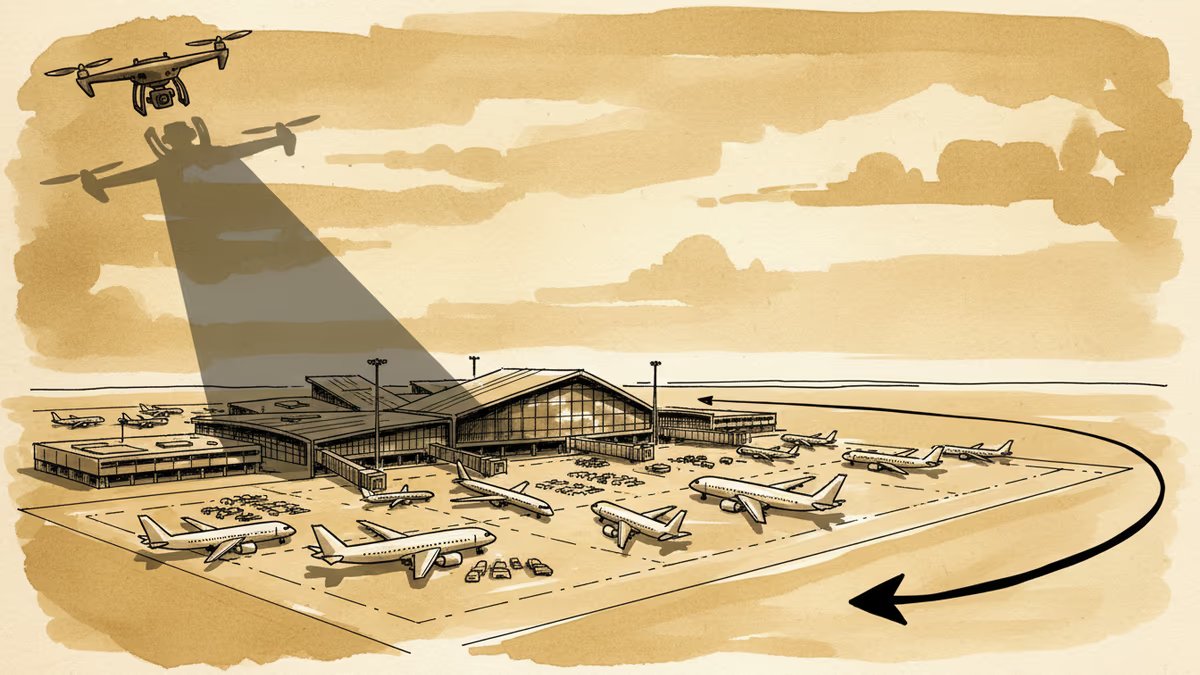
A drone attack near Dubai International Airport forced Emirates to reroute flights, exposing a critical vulnerability in global aviation security and supply chains.
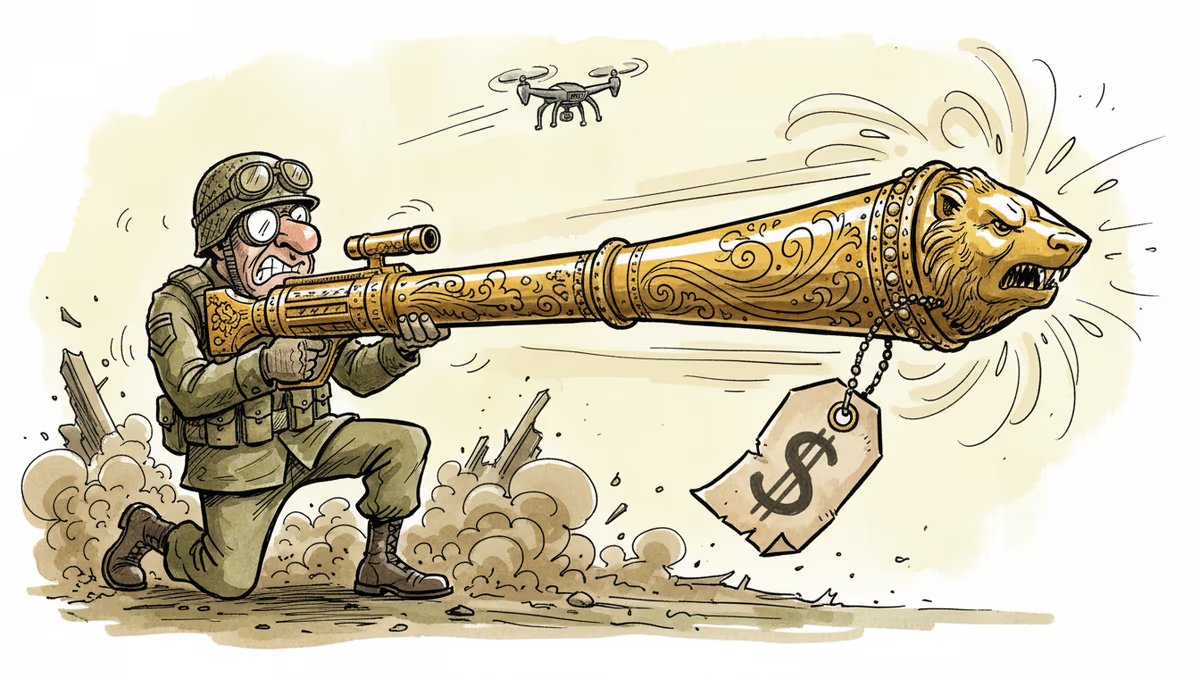
Middle East conflicts are exposing a brutal cost asymmetry in air defense. Lasers, smart radars, and drone swarms are reshaping how nations think about protecting their skies—and their budgets.
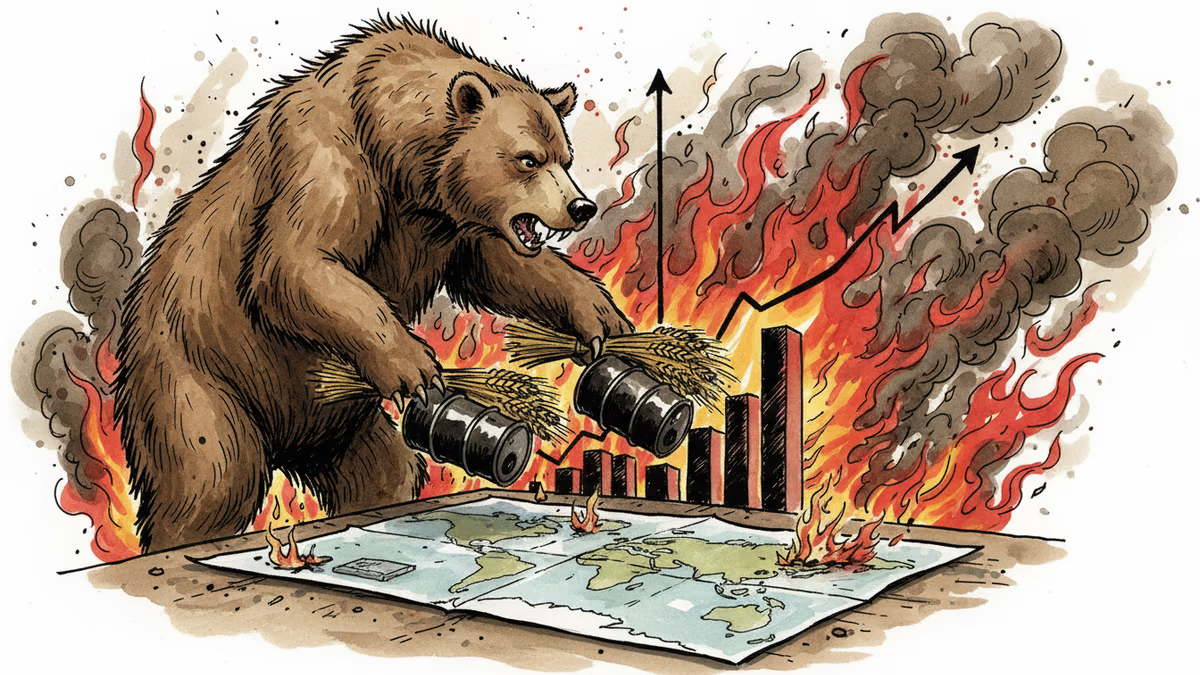
Ukraine war's first week reshapes global markets. From energy spikes to inflation fears, here's what the data reveals about economic winners and losers.
Japan negotiates unprecedented access to NATO's defense innovation accelerator, potentially becoming first outsider in the alliance's tech program amid regional security concerns
A drone attack near Dubai International Airport forced Emirates to reroute flights, exposing a critical vulnerability in global aviation security and supply chains.
Middle East conflicts are exposing a brutal cost asymmetry in air defense. Lasers, smart radars, and drone swarms are reshaping how nations think about protecting their skies—and their budgets.
Ukraine war's first week reshapes global markets. From energy spikes to inflation fears, here's what the data reveals about economic winners and losers.
Japan negotiates unprecedented access to NATO's defense innovation accelerator, potentially becoming first outsider in the alliance's tech program amid regional security concerns
Thoughts
Share your thoughts on this article
Sign in to join the conversation