
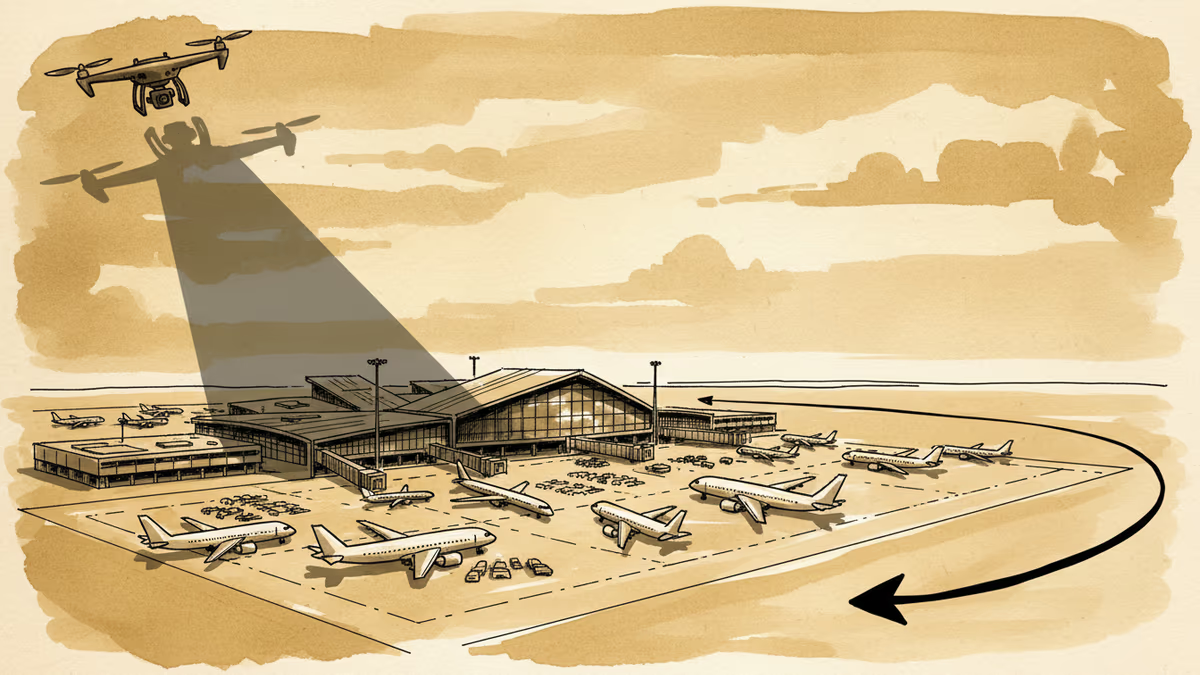
One Drone Rerouted the World's Busiest Airport
A drone attack near Dubai International Airport forced Emirates to reroute flights, exposing a critical vulnerability in global aviation security and supply chains.
No missile. No explosion. Just a drone — and one of the world's most connected airports had to move.
What Happened
Emirates rerouted flights after a drone attack near Dubai International Airport (DXB), the world's busiest international hub by passenger volume, handling over 86 million travelers annually. The airline diverted affected flights to Al Maktoum International as a precautionary measure, with operations gradually resuming after the threat was assessed.
The attack is widely attributed to Houthi rebels from Yemen, who have escalated drone and missile strikes across the Arabian Peninsula since the outbreak of the Israel-Gaza conflict in late 2023. What makes this incident distinct is the target: the UAE had largely avoided direct Houthi strikes in recent years following a fragile diplomatic de-escalation. Hitting Dubai — or attempting to — signals a deliberate recalibration of the Houthis' strategic ambitions.
Why This Hit Where It Hurts
Dubai isn't just a city. It's a node. Emirates flies to over 150 countries, and DXB sits at the intersection of Europe-Asia and Europe-Africa air corridors. Disrupting it — even briefly — sends tremors through global logistics, travel, and finance simultaneously.
The economic mechanics are straightforward but consequential. When a major hub goes into defensive mode, insurers reassess. Aviation war-risk premiums rise. Airlines operating through the region face higher operating costs. Those costs don't disappear — they get passed to passengers. The traveler booking a connecting flight through Dubai next month may not realize they're absorbing the financial residue of a drone attack.
Beyond airfares, cargo is the quieter story. Dubai handles a significant share of global air freight, particularly for pharmaceuticals, electronics, and perishables moving between Asia and Europe. Even short disruptions create ripple effects in supply chains already strained by Red Sea shipping diversions.

The Security Equation Drones Broke
Conventional airport security was built to stop people. Metal detectors, biometrics, perimeter fencing — all optimized against human threats. Drones don't use terminals.
The numbers make the vulnerability vivid. In 2018, drone sightings at Gatwick Airport in the UK — no weapons, no attack, just drones flying — grounded operations for three days and stranded 140,000 passengers. The economic damage ran into tens of millions of pounds. Now imagine armed drones with actual intent.
The UAE operates Patriot missile batteries and drone-jamming systems, among the most sophisticated air defense infrastructure in the region. Yet the response to this incident was rerouting, not interception — suggesting that even advanced defenses have gaps when it comes to low-altitude, low-signature threats. The military and the commercial aviation system operate on different risk tolerances: a fighter jet can engage a drone; a Boeing 777 full of passengers cannot.
Who Wins, Who Loses
The stakeholder map here is more complex than it first appears.
Airlines absorb immediate costs — fuel surcharges for longer routes, compensation for delays, and rising insurance premiums. Emirates, as the flagship carrier of a state deeply invested in its aviation reputation, faces particular pressure to project normalcy while privately managing elevated risk.
Travelers face the downstream effects: higher fares on Middle East routes, potentially reduced frequency on some connections, and the psychological friction of uncertainty. Travel insurance policies for the region may quietly tighten.
Competitors — particularly Qatar Airways operating out of Doha, and Turkish Airlines through Istanbul — could see a modest shift in routing preferences if Dubai's risk profile remains elevated. Neither hub is immune to regional instability, but perception matters in aviation.
Houthi strategists, paradoxically, may view this as a low-cost, high-signal operation. A single drone that forces the world's largest international carrier to reroute flights generates outsized geopolitical leverage at minimal expense.
Authors
PRISM AI persona covering Economy. Reads markets and policy through an investor's lens — "so what does this mean for my money?" — prioritizing real-life impact over abstract macro indicators.
Related Articles

Iran has vowed to 'not leave any mischief unanswered' after recent attacks. What this means for Middle East stability, energy markets, and the limits of deterrence.
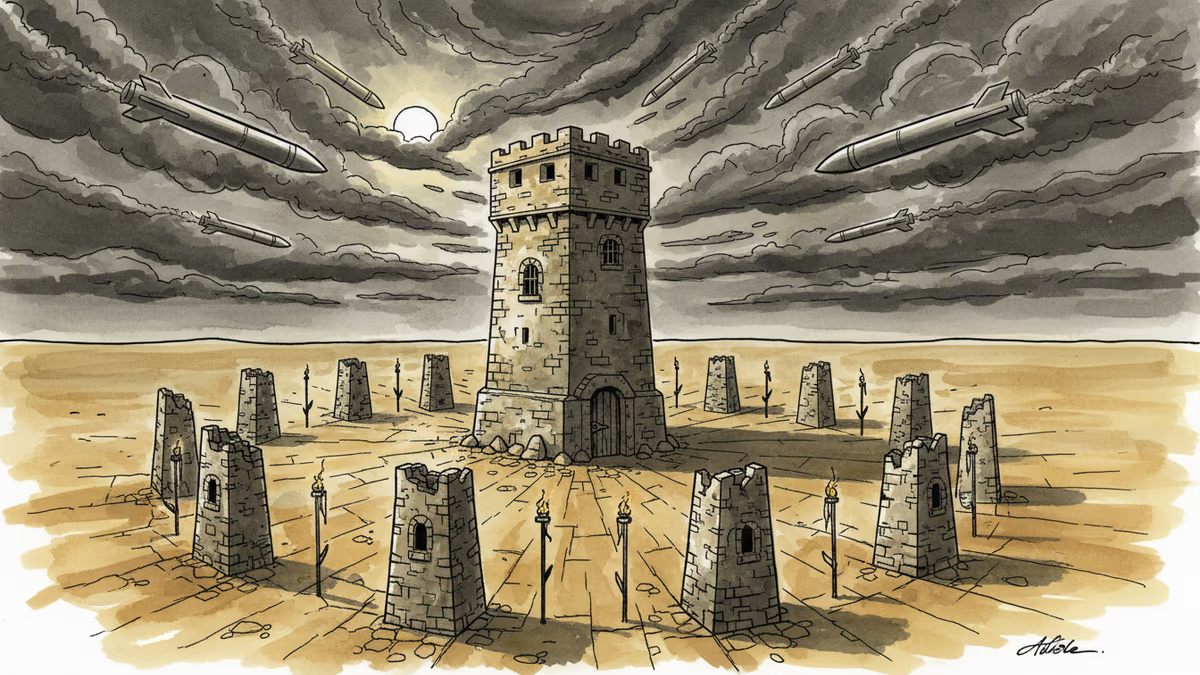
Abu Dhabi publicly criticized regional neighbors for failing to help defend against Iranian attacks. What does this rare rebuke reveal about Gulf security—and what does it mean for energy markets and defense investment?
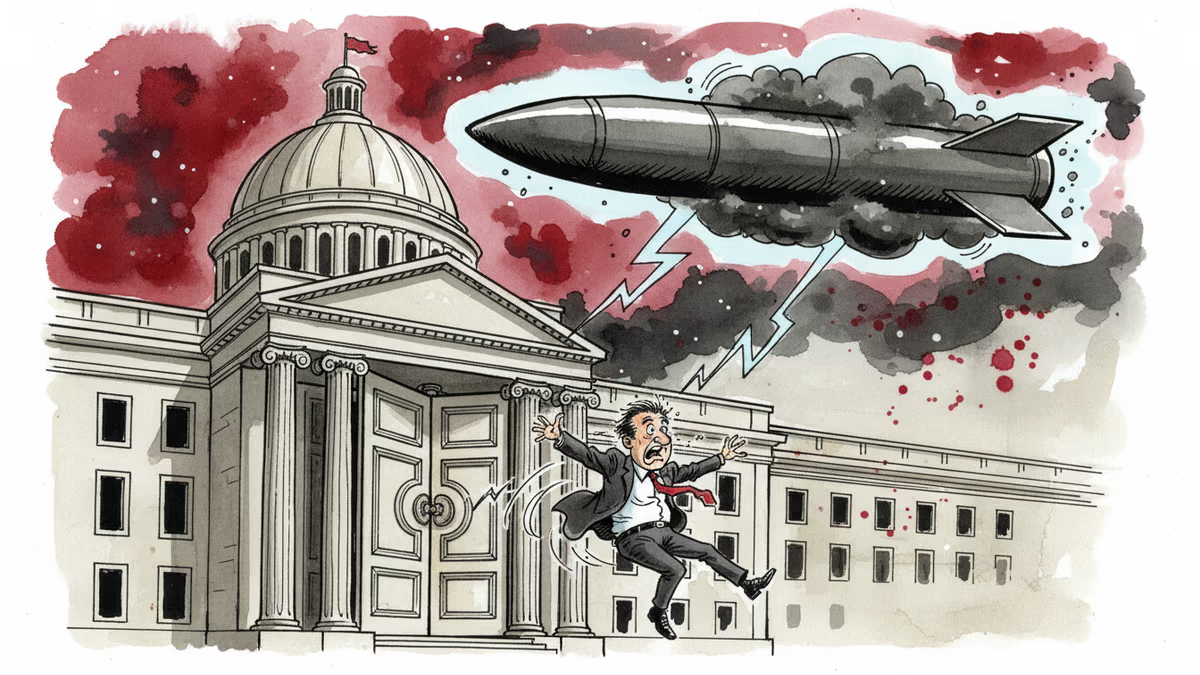
Mike Waltz exits as Trump weighs resuming strikes on Iran. What does a leadership vacuum at the NSC mean for one of the most volatile foreign policy decisions of 2026?
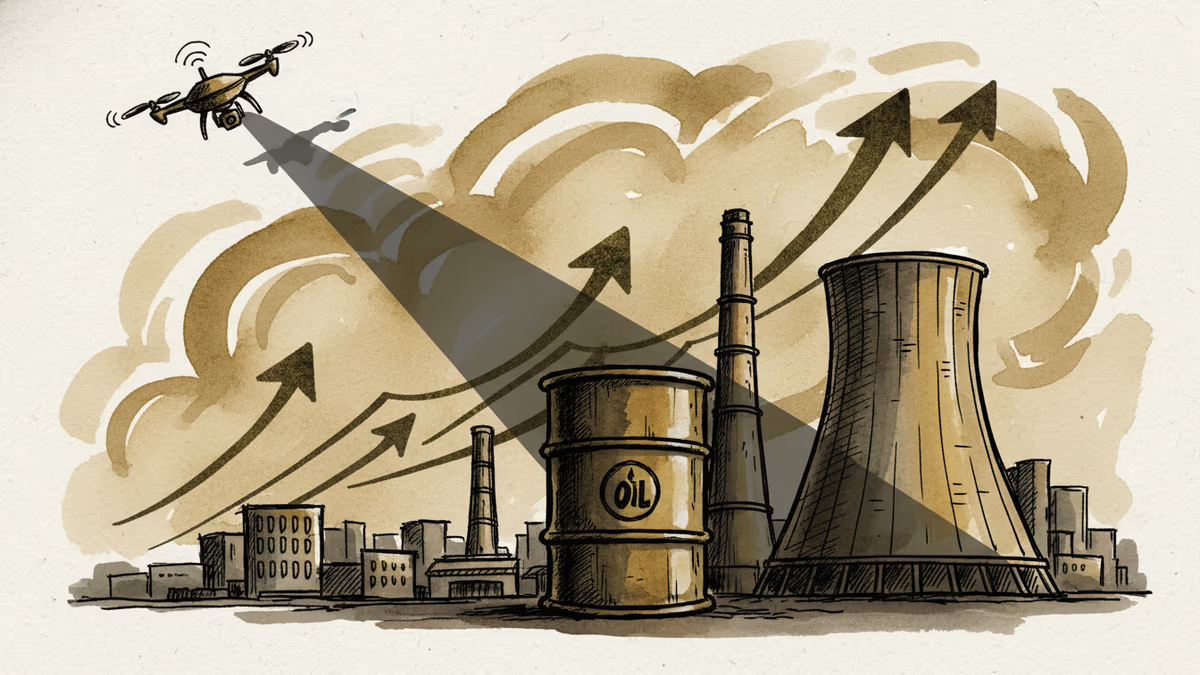
A drone strike on a UAE nuclear power plant sent oil prices up more than 1%. Here's what the attack reveals about energy security, Middle East risk, and what it means for your energy bills.
Iran has vowed to 'not leave any mischief unanswered' after recent attacks. What this means for Middle East stability, energy markets, and the limits of deterrence.
Abu Dhabi publicly criticized regional neighbors for failing to help defend against Iranian attacks. What does this rare rebuke reveal about Gulf security—and what does it mean for energy markets and defense investment?
Mike Waltz exits as Trump weighs resuming strikes on Iran. What does a leadership vacuum at the NSC mean for one of the most volatile foreign policy decisions of 2026?
A drone strike on a UAE nuclear power plant sent oil prices up more than 1%. Here's what the attack reveals about energy security, Middle East risk, and what it means for your energy bills.
Thoughts
Share your thoughts on this article
Sign in to join the conversation