

pcTattletale Creator Bryan Fleming Guilty Plea: The End of a 24-Year Spyware Reign
Bryan Fleming, creator of pcTattletale, has pleaded guilty to marketing his software for illegal stalking. A deep dive into the 24-year history of this spyware.
Your digital privacy has a new legal precedent. The man who spent nearly 25 years helping people spy on their partners has finally admitted his guilt in federal court. According to court records, Bryan Fleming, the creator of the monitoring software pcTattletale, pleaded guilty to knowingly marketing his tool for illegal surveillance of adults without their consent.
Inside the pcTattletale Creator Bryan Fleming Guilty Plea
Fleming launched pcTattletale in 2002 as a tool for recording phone and computer activity. While his website claimed to help parents stop pedophiles and businesses track productivity, federal prosecutors revealed a darker reality. Fleming didn't just provide a tool; he actively marketed it as 'stalkerware,' enabling users to spy on romantic partners. The software would record everything on a target device and upload the footage to a central server for subscribers to view.

The Crackdown on the Stalkerware Gray Market
For years, companies like pcTattletale operated in a legal gray area by claiming their software was for legitimate monitoring. However, the Department of Justice is increasingly targeting the developers who knowingly facilitate stalking. Fleming's plea marks a significant win for privacy advocates, signaling that 'helping' people commit digital surveillance is a federal crime. The case highlights the fine line between safety tools and predatory technology.
Authors
Related Articles
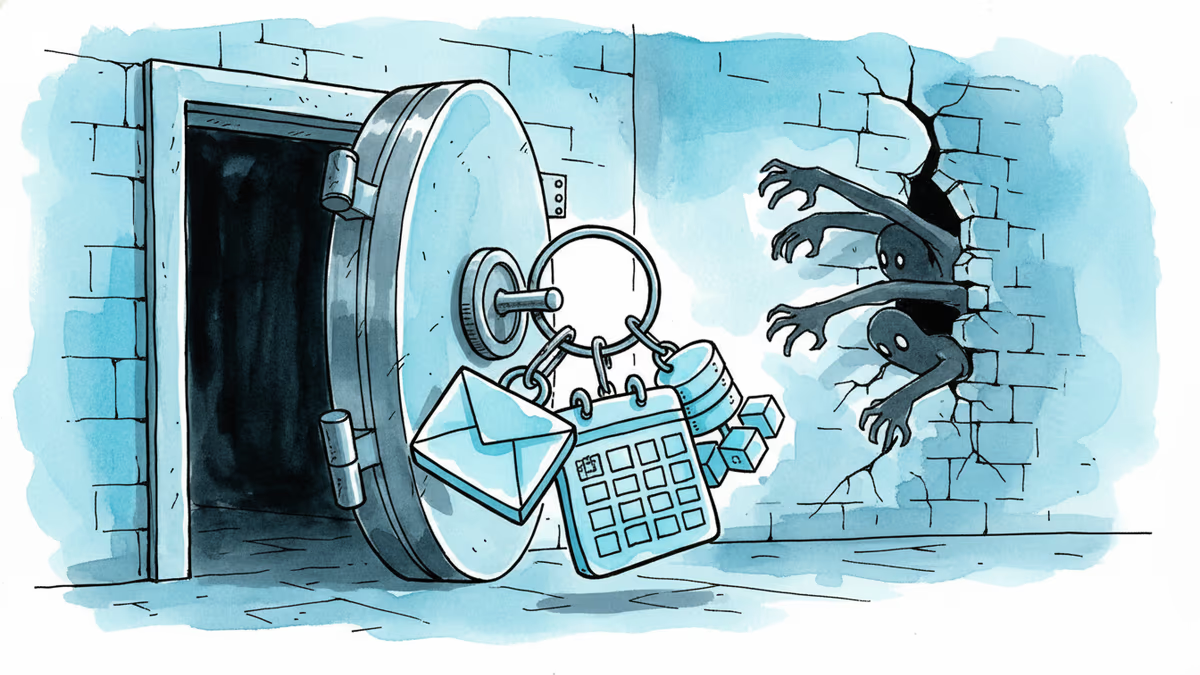
A critical vulnerability in Starlette—downloaded 325 million times per week—puts millions of AI agent servers at risk, exposing stored credentials for email, databases, and third-party services.

GitHub confirmed hackers stole data from 3,800 internal repositories via a poisoned VS Code extension. Here's why developer tools are now the most dangerous attack surface in tech.

A Utah woman was sentenced to life in prison partly because of her Google searches and deleted texts. The Kouri Richins case reveals how digital footprints have become the courtroom's most reliable witness.
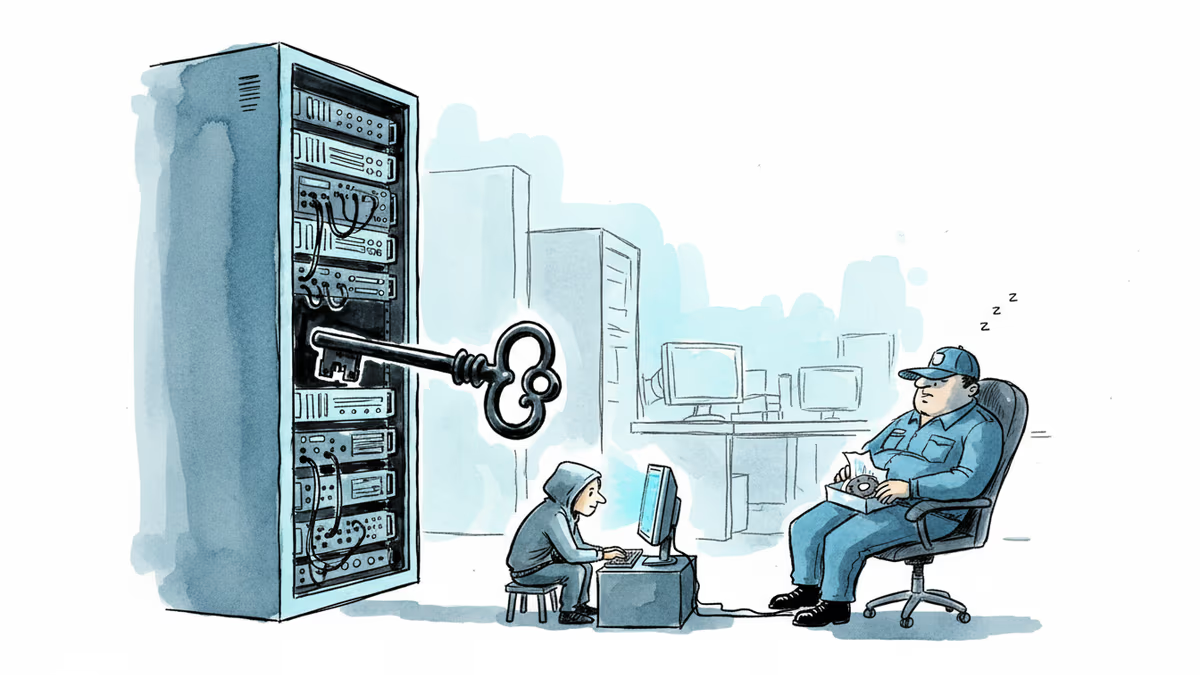
Dirty Frag gives low-privilege users root access on virtually every Linux distro. The exploit code leaked three days ago. Microsoft says attackers are already experimenting with it.
A critical vulnerability in Starlette—downloaded 325 million times per week—puts millions of AI agent servers at risk, exposing stored credentials for email, databases, and third-party services.
GitHub confirmed hackers stole data from 3,800 internal repositories via a poisoned VS Code extension. Here's why developer tools are now the most dangerous attack surface in tech.
A Utah woman was sentenced to life in prison partly because of her Google searches and deleted texts. The Kouri Richins case reveals how digital footprints have become the courtroom's most reliable witness.
Dirty Frag gives low-privilege users root access on virtually every Linux distro. The exploit code leaked three days ago. Microsoft says attackers are already experimenting with it.
Thoughts
Share your thoughts on this article
Sign in to join the conversation