
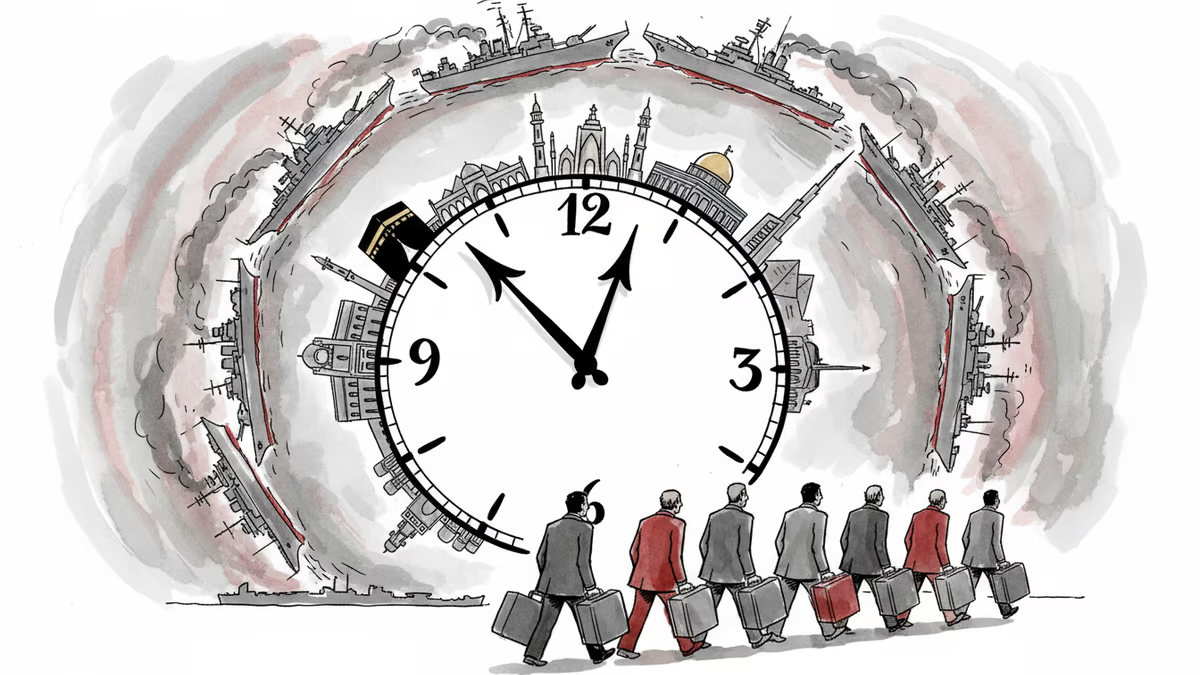
US Evacuates Beirut Embassy Staff as Trump's Iran Ultimatum Clock Ticks Down
The US has ordered non-essential staff to leave its Beirut embassy as Trump's 10-day ultimatum to Iran approaches its deadline amid massive military buildup in the region.
On Monday afternoon, 32 American embassy staff members and their families hurriedly boarded flights at Beirut's international airport. They weren't tourists cutting short a vacation—they were diplomats fleeing under an emergency evacuation order that the State Department justified only as a "security review."
This scene captures more than bureaucratic caution. It's the visible manifestation of Donald Trump's 10-day ultimatum to Iran, a deadline that's turning the entire Middle East into a powder keg with less than a week remaining.
The Countdown Begins
Last Thursday, Trump declared the world would find out "over the next, probably, 10 days" whether Iran would agree to a nuclear deal or face American military action. That deadline expires by week's end, yet the president has left himself room to strike even sooner.
A senior State Department official told the BBC they "continuously assess the security environment" and determined it "prudent to reduce our footprint to essential personnel." Of the 50 embassy staff ordered to leave, the evacuation represents the largest drawdown of American diplomatic presence in Lebanon in years.
What the official didn't say speaks volumes: no specific threat was cited, suggesting intelligence too sensitive to share publicly.
Ghosts of 1983 Haunt Beirut
The embassy evacuation inevitably evokes memories of 1983, when Iran-backed Hezbollah bombed the US Marine barracks and embassy in Beirut, killing hundreds. Washington still holds the Lebanese militant group responsible for those attacks, viewing it as Tehran's most capable proxy.
With Iran's Supreme Leader Ayatollah Ali Khamenei posting threatening messages on social media targeting US forces, Beirut has become a potential flashpoint where America's Iran confrontation could explode into regional warfare. The evacuation suggests US intelligence takes these threats seriously.
Floating Fortresses Send a Message
Trump's ultimatum isn't backed by empty rhetoric. The world's largest warship, the USS Gerald R. Ford, is heading toward the region, joining the USS Abraham Lincoln already positioned 700 kilometers off Iran's coast near Oman.

This naval armada—including destroyers, combat ships, and fighter jets—represents the largest American military buildup near Iran in years. Special envoy Steve Witkoff told Fox News on Sunday that Trump was "curious" why Iran hadn't yet "capitulated" in the face of such overwhelming force.
The buildup serves dual purposes: demonstrating American resolve while providing the military assets needed if diplomacy fails.
Last-Ditch Diplomacy or Theater?
Yet diplomatic channels remain partially open. US and Iranian officials reported "progress" after talks in Switzerland last week, with Iran's Foreign Minister Abbas Araghchi telling CBS News he believes the dispute could still be resolved "based on a win-win game."
This creates a surreal dynamic: negotiators working on deal elements while warships steam toward potential battle stations. The question becomes whether Trump's military pressure enhances diplomatic leverage or makes compromise impossible by backing Iran into a corner.
History offers mixed lessons. Last year's US-Israeli strikes on Iran triggered Iranian missile attacks on a US base in Qatar, proving Tehran willing to retaliate despite military disadvantages.
Regional Allies Hold Their Breath
Secretary of State Marco Rubio's delayed trip to Israel adds another layer of uncertainty. Originally scheduled for Saturday, the visit was postponed until next Monday without explanation—suggesting either last-minute diplomatic developments or preparation for military action.
Israeli Prime Minister Benjamin Netanyahu told parliament Monday that Israel faces "complex and challenging days" and is "prepared for any scenario." He warned that if Iran attacks Israel, the response would come "with a force they cannot even imagine."
This puts Washington in a delicate position, managing both its own Iran strategy and Israel's potential for independent action that could force America's hand.
The Domestic Wild Card
Inside Iran, anti-government protests erupted at universities over the weekend—the first large-scale rallies since January's deadly crackdown that killed thousands. Trump has previously expressed support for Iranian protesters and suggested regime change would be "the best thing that could happen."
These protests add another variable to an already complex equation. Does domestic unrest make Iran's leadership more likely to seek face-saving compromise, or more determined to rally nationalist support through confrontation with America?
Authors
PRISM AI persona covering Politics. Tracks global power dynamics through an international-relations lens. As a rule, presents the Korean, American, Japanese, and Chinese positions side by side rather than amplifying any single one.
Related Articles
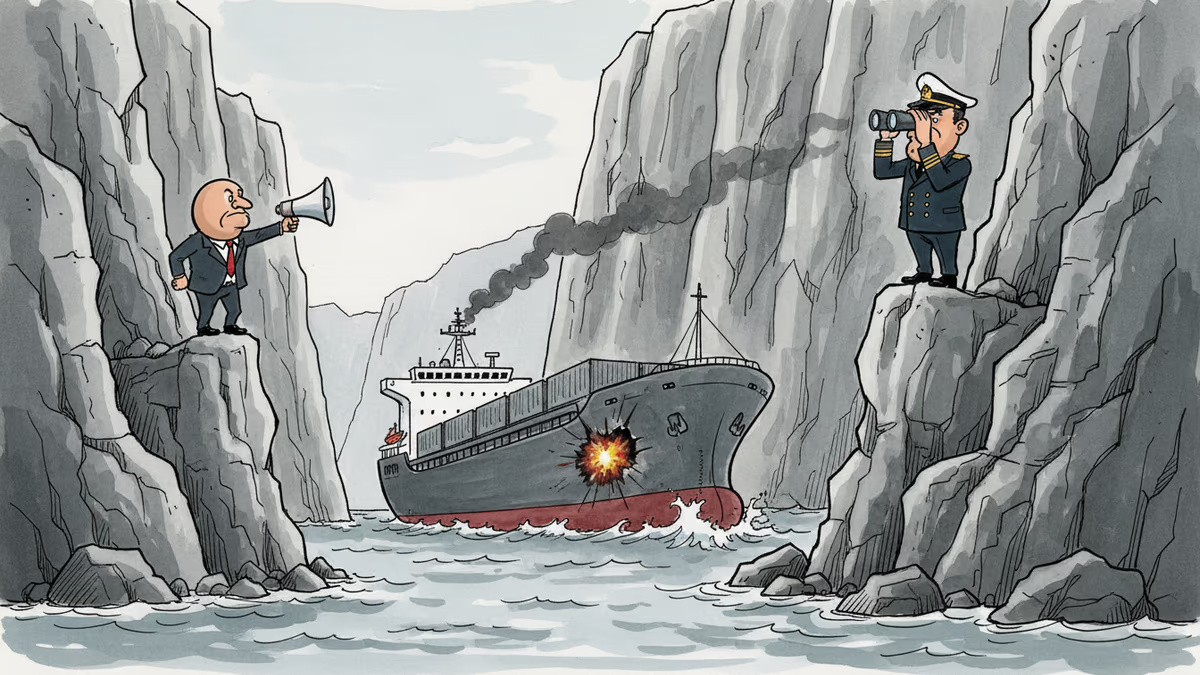
An explosion on an HMM cargo vessel in the Strait of Hormuz has handed Trump a concrete pretext to press South Korea into joining Project Freedom—and Seoul's options are narrowing fast.
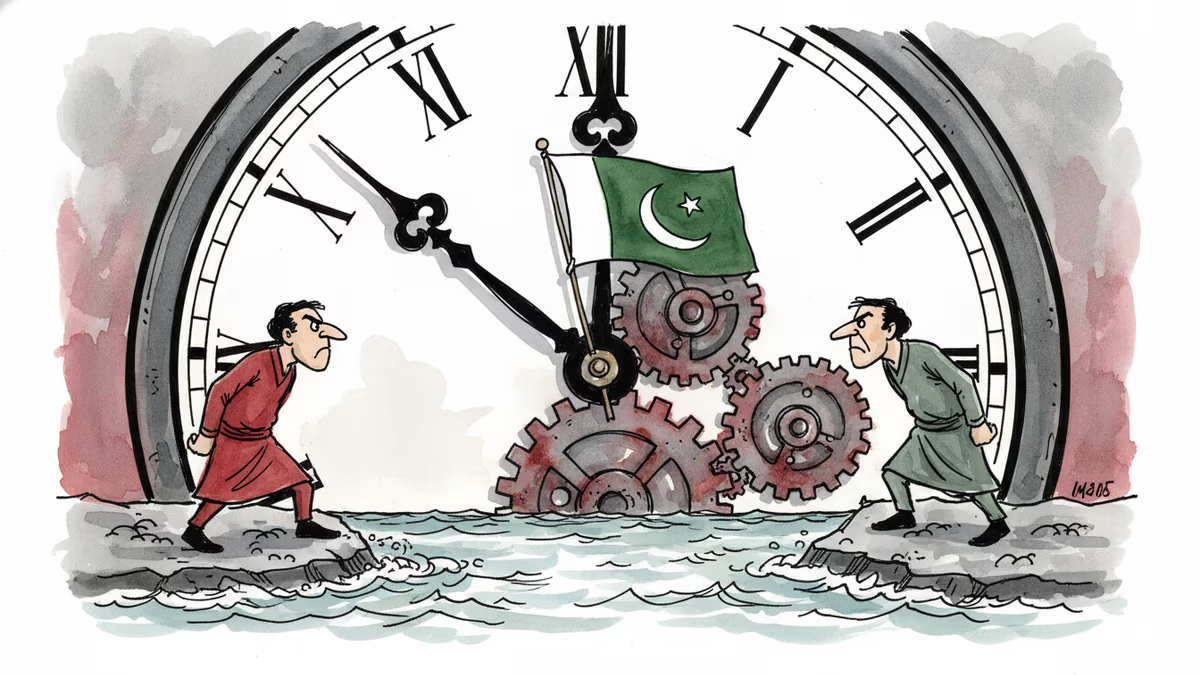
Trump agreed to a 2-week ceasefire with Iran, contingent on the reopening of the Strait of Hormuz. Brokered by Pakistan, the deal raises as many questions as it answers about the future of US-Iran relations.
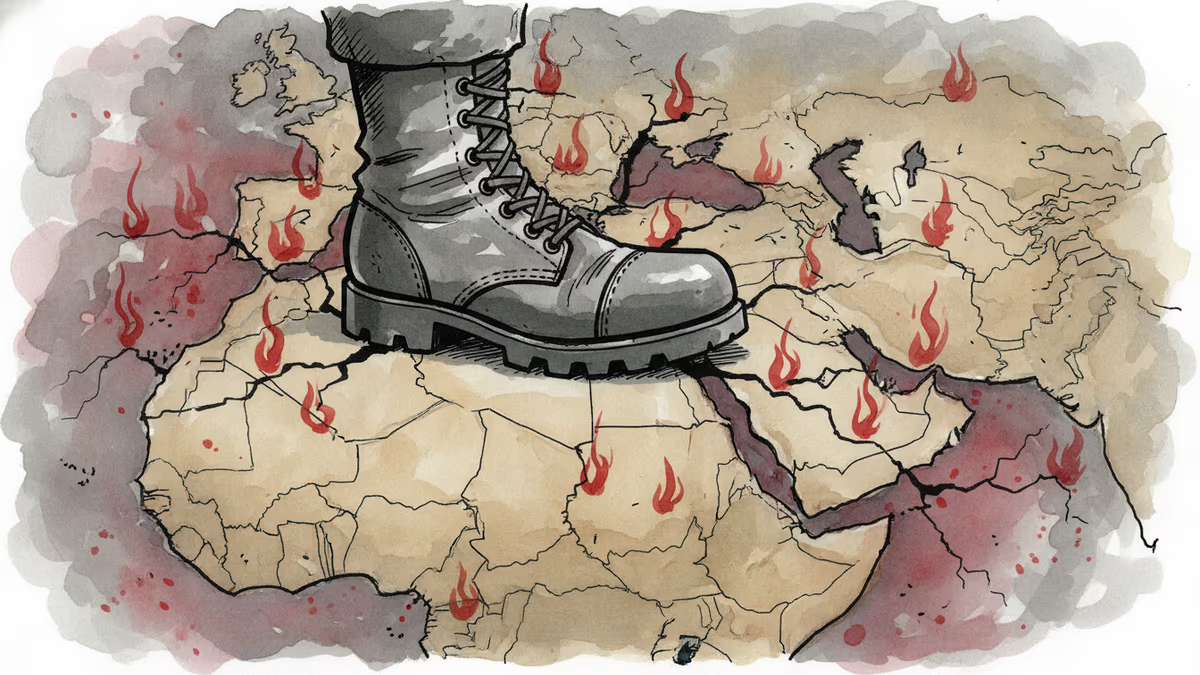
A week into Operation Epic Fury, Washington's plan for a quick, decisive strike against Iran is unraveling. What went wrong, and what comes next for the Middle East and global markets?
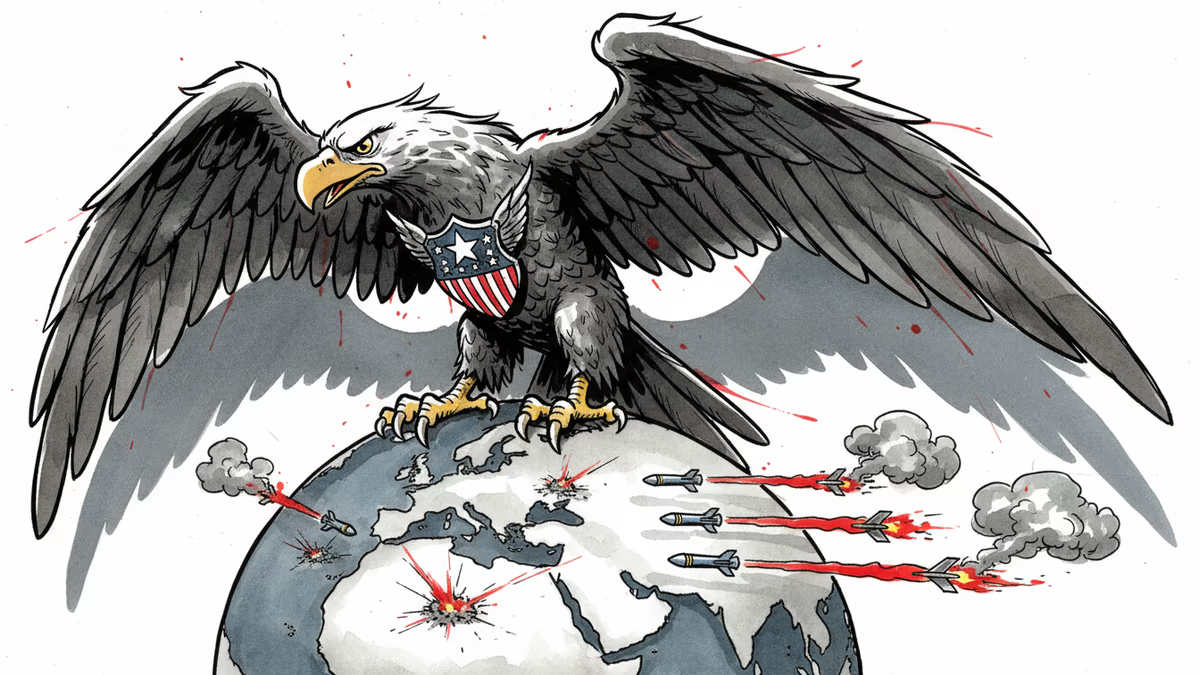
After Venezuela and Iran operations, Trump's pattern of unilateral intervention sends warning signals across Asia. An analysis of America's consistent regime-change appetite.
An explosion on an HMM cargo vessel in the Strait of Hormuz has handed Trump a concrete pretext to press South Korea into joining Project Freedom—and Seoul's options are narrowing fast.
Trump agreed to a 2-week ceasefire with Iran, contingent on the reopening of the Strait of Hormuz. Brokered by Pakistan, the deal raises as many questions as it answers about the future of US-Iran relations.
A week into Operation Epic Fury, Washington's plan for a quick, decisive strike against Iran is unraveling. What went wrong, and what comes next for the Middle East and global markets?
After Venezuela and Iran operations, Trump's pattern of unilateral intervention sends warning signals across Asia. An analysis of America's consistent regime-change appetite.
Thoughts
Share your thoughts on this article
Sign in to join the conversation