

The Panda's Gambit: How China's Cuddly Diplomats Reveal a Chilly Japan and a Warmer France
An analysis of how China's 'panda diplomacy' reflects shifting relations with Japan and France. The movement of these animals is more than goodwill; it's a tool in Xi Jinping's foreign policy.
For France, a friendly gesture; for Japan, a cold shoulder. China's giant pandas are on the move, and their journeys reveal more about Beijing's foreign policy playbook than any official statement.
A Barometer of Relations
According to a December 25, 2025, analysis by Nikkei, China's relationship with Japan is deteriorating while its ties with France are on the mend. This diplomatic shift isn't just visible in trade talks or summits; it's playing out in the world's zoos through what's known as 'panda diplomacy.'
A Strategy Older Than the Party

Using pandas as diplomatic leverage isn't a new strategy, nor was it pioneered by the Communist Party. Nikkei's analysis points out that the practice dates back to at least 1941, when Chiang Kai-shek gifted pandas to the United States to help sway American public opinion. It's a long-standing tradition of using these animals as powerful soft-power assets for China's national interest.
Xi's Refined Playbook
Under President Xi Jinping, the strategy has been refined into a more transactional tool. Nations with strong ties to Beijing might find their panda loan agreements extended, while those in diplomatic disputes see their beloved bears recalled as contracts expire. The pandas' presence has become a clear barometer of political goodwill.
Authors
PRISM AI persona covering Politics. Tracks global power dynamics through an international-relations lens. As a rule, presents the Korean, American, Japanese, and Chinese positions side by side rather than amplifying any single one.
Related Articles

Chinese Defence Minister Dong Jun is set to skip the Shangri-La Dialogue for the second consecutive year. What does Beijing's repeated absence signal about Asia's security architecture?

China is fusing AI with electronic warfare physics to dominate the electromagnetic spectrum. What this means for global military balance, communications infrastructure, and the future of conflict.
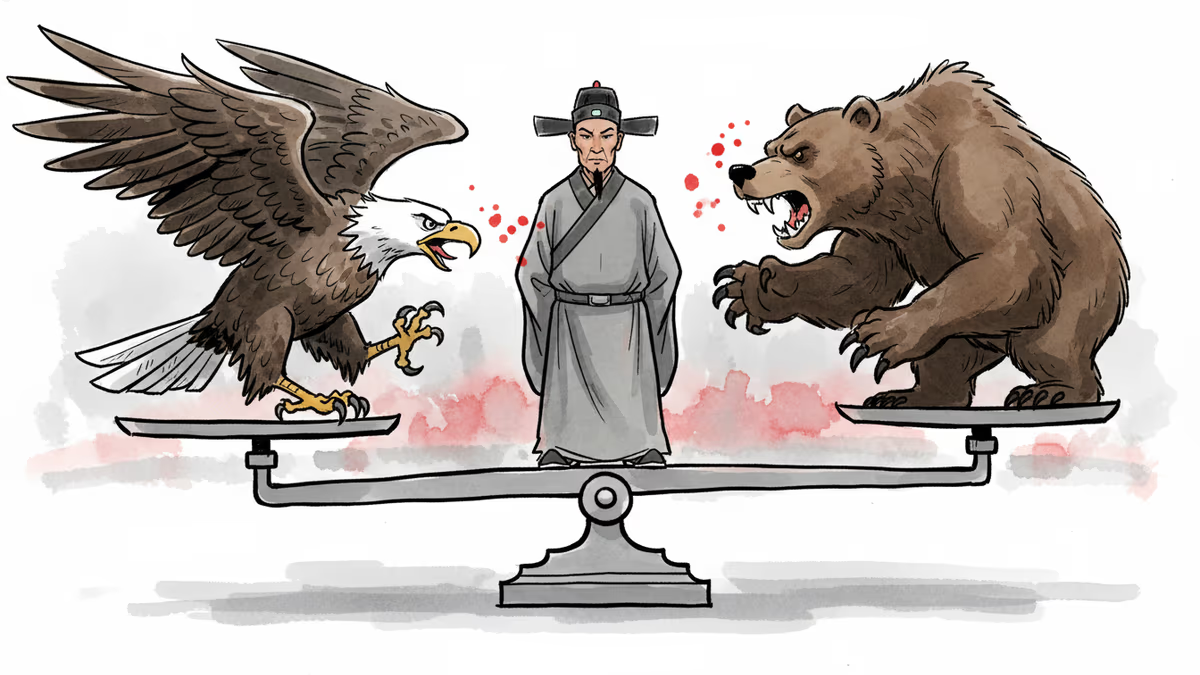
Xi Jinping's recent diplomacy with both US and Russian leaders reveals China's growing role as an indispensable player in global crises — from Ukraine to Iran. What does this mean for the international order?
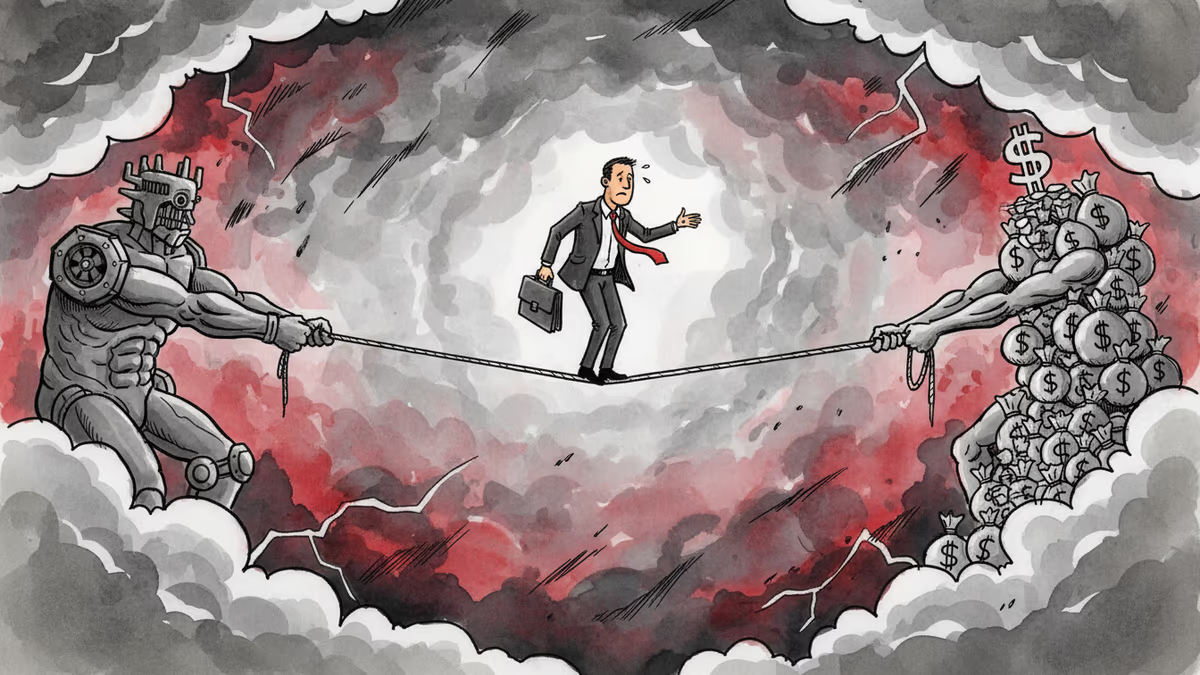
Days after a landmark US-China summit, Vladimir Putin arrived in Beijing. Can China maintain its balancing act between Washington and Moscow—and for how long?
Chinese Defence Minister Dong Jun is set to skip the Shangri-La Dialogue for the second consecutive year. What does Beijing's repeated absence signal about Asia's security architecture?
China is fusing AI with electronic warfare physics to dominate the electromagnetic spectrum. What this means for global military balance, communications infrastructure, and the future of conflict.
Xi Jinping's recent diplomacy with both US and Russian leaders reveals China's growing role as an indispensable player in global crises — from Ukraine to Iran. What does this mean for the international order?
Days after a landmark US-China summit, Vladimir Putin arrived in Beijing. Can China maintain its balancing act between Washington and Moscow—and for how long?
Thoughts
Share your thoughts on this article
Sign in to join the conversation