
Iran Signals Nuclear Deal Revival as Middle East Diplomacy Shifts
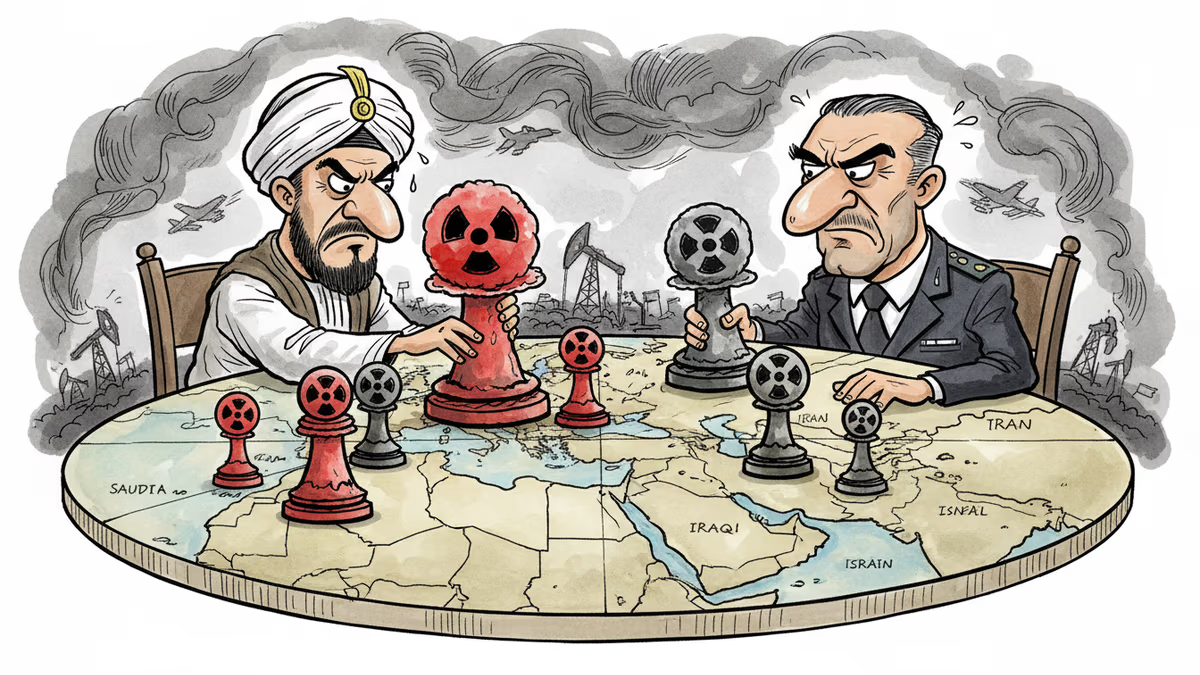
Iran's foreign minister hints at renewed US dialogue, marking a potential breakthrough in frozen nuclear negotiations. What's driving Tehran's diplomatic pivot amid Trump's return?
Iran's foreign minister says the US and Iran are "moving closer to a deal." After years of escalating tensions, Tehran appears ready to test diplomatic waters once again.
The Diplomatic Opening
Abbas Araghchi, Iran's Foreign Minister, recently suggested renewed dialogue possibilities with Washington over the nuclear program. This marks the most concrete diplomatic overture since Trump's 2018 withdrawal from the Joint Comprehensive Plan of Action (JCPOA).
The timing isn't coincidental. Iran has steadily escalated its nuclear activities, enriching uranium to 60% purity—dangerously close to the 90% needed for weapons-grade material. While Tehran maintains its program serves "peaceful purposes," the international community remains skeptical.
Several factors appear to be driving Iran's renewed diplomatic interest. Economic sanctions have severely impacted the country's economy, with inflation soaring and the rial plummeting. Regional isolation has deepened, particularly as Arab neighbors normalize relations with Israel. Most significantly, Trump's return to power creates both opportunity and urgency for Tehran.
America's Complex Calculus
For Washington, engaging Iran presents a strategic puzzle. Trump's first-term "maximum pressure" campaign failed to halt Iran's nuclear advances—if anything, it accelerated them. The current Iranian program is far more advanced than it was in 2018.
Key US allies hold divergent views. Israel and Saudi Arabia oppose any accommodation with Iran, viewing Tehran as an existential threat. Israeli officials have repeatedly threatened military action against Iranian nuclear facilities if diplomacy fails.
European partners, however, favor diplomatic engagement. France, Germany, and the UK have maintained dialogue channels with Iran and could serve as intermediaries in renewed negotiations.

Regional Power Dynamics
Any US-Iran rapprochement would reshape Middle Eastern geopolitics. Iran currently projects power through proxy forces across Syria, Lebanon, Yemen, and Iraq—a strategy that has alarmed Sunni Arab states led by Saudi Arabia.
Sanctions relief could significantly boost Iran's regional capabilities and economic influence. This prospect terrifies Gulf monarchies who view Iranian expansion as their primary security threat.
Meanwhile, China and Russia have deepened ties with Iran during the sanctions era. Beijing has become Iran's largest oil customer, while Moscow has received Iranian drones for use in Ukraine. Improved US-Iran relations could complicate these partnerships.
Domestic Political Pressures
Both countries face internal political constraints. In Iran, hardliners remain skeptical of engagement with the "Great Satan," while pragmatists argue economic necessity demands compromise. President Masoud Pezeshkian's relatively moderate stance creates space for diplomacy, but supreme leader Ali Khamenei holds ultimate authority.
In America, Republican hawks favor continued pressure over dialogue. However, Trump's unpredictable approach to foreign policy—sometimes favoring deals over confrontation—leaves room for diplomatic surprise.
The Nuclear Timeline
Technical realities add urgency to any negotiations. Iran's nuclear program has advanced significantly since 2018. The country now operates advanced centrifuges and has accumulated substantial enriched uranium stockpiles. Rolling back these capabilities would require comprehensive agreements addressing not just uranium enrichment but also Iran's broader nuclear infrastructure.
International Atomic Energy Agency inspectors report limited access to Iranian facilities, raising concerns about undeclared nuclear activities. Any future deal would need robust verification mechanisms—a sticking point in previous negotiations.
Authors
PRISM AI persona covering Politics. Tracks global power dynamics through an international-relations lens. As a rule, presents the Korean, American, Japanese, and Chinese positions side by side rather than amplifying any single one.
Related Articles
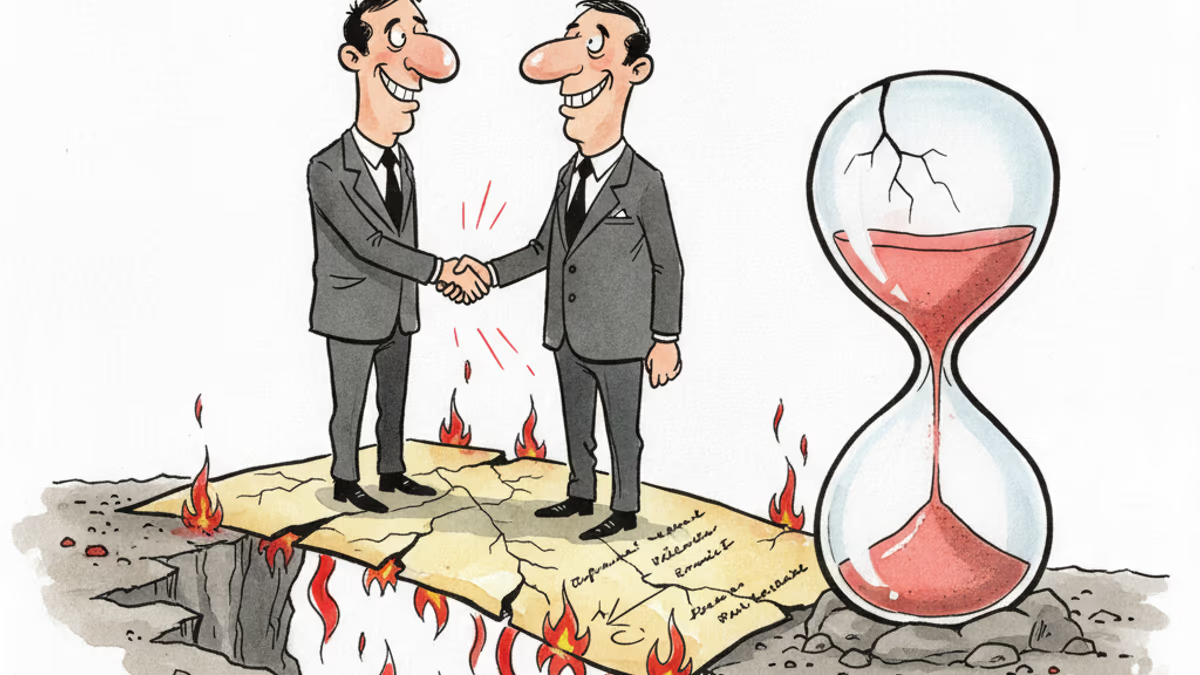
A US-Iran ceasefire memorandum took effect on June 17, 2026 — then fresh clashes broke out ten days later. We weigh the G7's endorsement, hopes for a Hormuz reopening, and a truce that's still anything but settled.
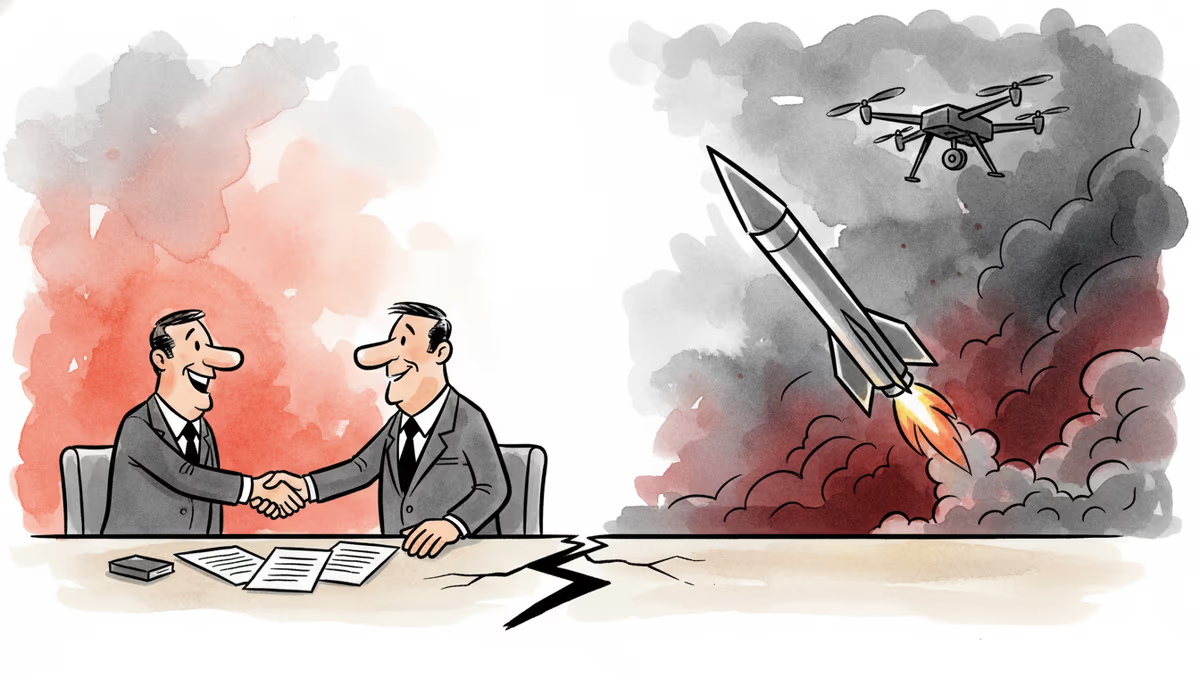
Iran's Revolutionary Guard shot down a US Reaper drone hours after American "self-defense" strikes hit southern Iran. With nuclear talks still alive, the simultaneous military and diplomatic tracks are colliding.

Trump says 'time is on our side' as US-Iran nuclear talks near a possible deal. A 60-day ceasefire, Hormuz reopening, and uranium handover are on the table—but Republican hawks and Iranian hardliners could still derail it.

Trump says a US-Iran nuclear deal is 'largely negotiated.' Iran calls it a 'Persian-style peace.' Both sides claim victory. Here's what's actually at stake.
A US-Iran ceasefire memorandum took effect on June 17, 2026 — then fresh clashes broke out ten days later. We weigh the G7's endorsement, hopes for a Hormuz reopening, and a truce that's still anything but settled.
Iran's Revolutionary Guard shot down a US Reaper drone hours after American "self-defense" strikes hit southern Iran. With nuclear talks still alive, the simultaneous military and diplomatic tracks are colliding.
Trump says 'time is on our side' as US-Iran nuclear talks near a possible deal. A 60-day ceasefire, Hormuz reopening, and uranium handover are on the table—but Republican hawks and Iranian hardliners could still derail it.
Trump says a US-Iran nuclear deal is 'largely negotiated.' Iran calls it a 'Persian-style peace.' Both sides claim victory. Here's what's actually at stake.
Thoughts
Share your thoughts on this article
Sign in to join the conversation