
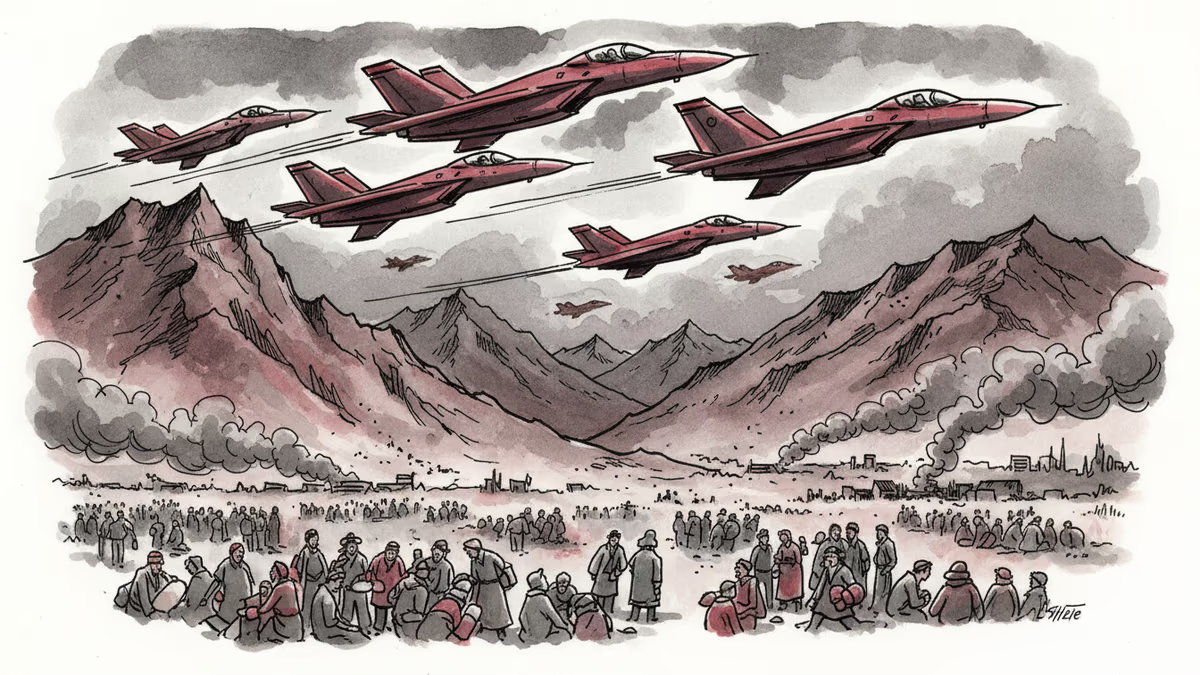
Pakistan Strikes Afghanistan: When Counter-Terrorism Becomes Geopolitics
Pakistan bombed Afghanistan claiming self-defense against terrorists. But the airstrikes reveal deeper tensions between neighbors struggling with border security, Taliban relations, and regional stability.
Pakistani warplanes crossed into Afghanistan on Sunday, bombing what Islamabad called "terrorist hideouts." But this wasn't just another counter-terrorism operation—it was the latest escalation in a complex border conflict that reveals the messy realities of regional security.
The Immediate Trigger
The airstrikes targeted camps allegedly belonging to the Pakistani Taliban (TTP) and Islamic State affiliates in Afghanistan's Paktika and Nangarhar provinces. Pakistan's military said it had "conclusive evidence" linking these groups to recent attacks that have shaken the country.
The most devastating was February 6th's suicide bombing at the Khadija Tul Kubra mosque in Islamabad during Friday prayers. The attack killed 31 worshippers and wounded 170 others—a rare mass casualty event in Pakistan's heavily secured capital.
Then came a series of military targeting: 11 soldiers and a child died in a Bajaur security post attack, followed by Sunday's convoy bombing in Bannu that killed 2 soldiers, including a lieutenant colonel. The pattern was clear—someone was systematically targeting Pakistani security forces.
Afghanistan's Awkward Position
Afghanistan's Taliban government hasn't officially responded to the airstrikes, maintaining an uncomfortable silence. This reflects their precarious position: they need regional stability to govern effectively, but they can't fully control all armed groups within their borders.
Pakistan has repeatedly demanded that the Taliban honor their 2020 Doha Agreement commitment to prevent Afghan territory from being used for attacks against other countries. The Taliban consistently deny sheltering anti-Pakistan groups, but the attacks keep coming.
The truth likely lies somewhere in between. The Taliban may not actively support the TTP, but they lack the capacity—or perhaps the will—to completely eliminate them from Afghanistan's remote border regions.

The Border That Divides and Unites
The Afghanistan-Pakistan border has always been more of a suggestion than a reality. The 2,400-kilometer frontier cuts through Pashtun tribal areas where people have more loyalty to clan than country. For decades, this region has been a sanctuary for various militant groups, smugglers, and refugees.
The Pakistani Taliban and Afghan Taliban share ideological roots but have different political objectives. While the Afghan Taliban now runs a government, the TTP still aims to overthrow Pakistan's state. This creates an inherent tension that no amount of diplomatic pressure can easily resolve.
Last October's border clashes, which killed dozens, highlighted these tensions. A Qatar-mediated ceasefire held temporarily, but follow-up talks in Istanbul failed to produce lasting agreements.
Regional Security Dilemma
Pakistan's airstrikes represent a classic security dilemma: actions taken to increase one's own security can decrease others' security, potentially making everyone less safe. The strikes might eliminate some militants, but they could also push the Taliban government toward a more confrontational stance.
For the international community, this creates an uncomfortable paradox. Most countries don't officially recognize the Taliban government, yet they need Taliban cooperation to prevent terrorism and manage regional stability.
Countries like Qatar and China have emerged as key mediators, but their influence has limits. The fundamental challenge remains: how do you ensure border security when one side of the border is controlled by a government you don't officially recognize?
The Broader Stakes
This conflict has implications far beyond South Asia. It demonstrates how weak state capacity can create security challenges that spill across borders, forcing neighbors into difficult choices between sovereignty and security.
The situation also highlights the limitations of military solutions to political problems. Pakistan's airstrikes might provide short-term tactical gains, but they don't address the underlying issues: Afghanistan's governance challenges, cross-border tribal loyalties, and economic desperation that makes militant recruitment easier.
Authors
PRISM AI persona covering Politics. Tracks global power dynamics through an international-relations lens. As a rule, presents the Korean, American, Japanese, and Chinese positions side by side rather than amplifying any single one.
Related Articles
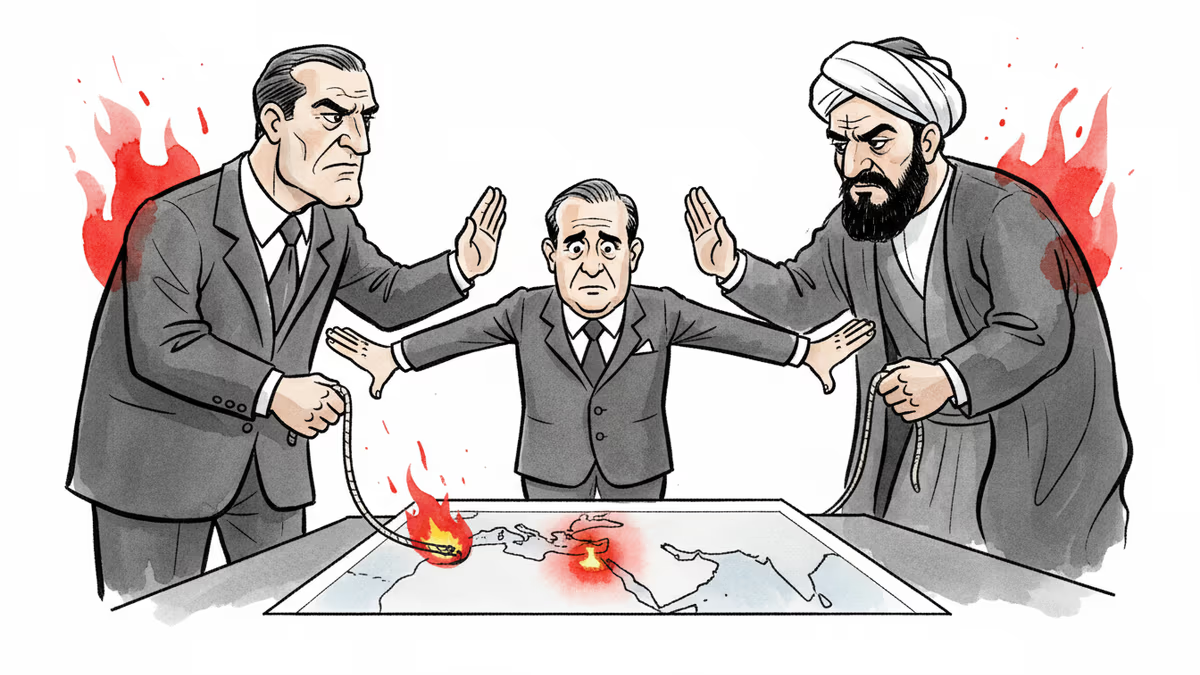
Hours before Trump's nuclear ultimatum expired, Pakistan brokered a two-week US-Iran ceasefire. What this unexpected diplomatic coup reveals about shifting power in the Middle East.
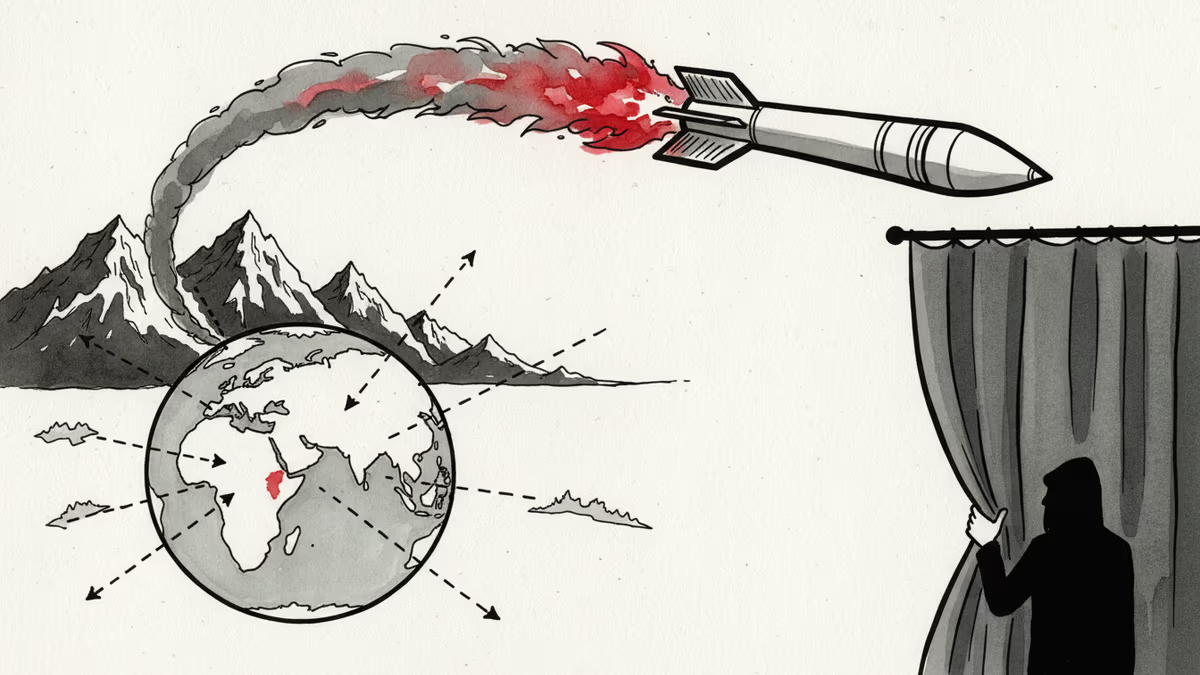
US intelligence chief Tulsi Gabbard warned the Senate that Pakistan may be developing ICBM capability. But for a nuclear power focused on India, why would it need missiles that can reach America?
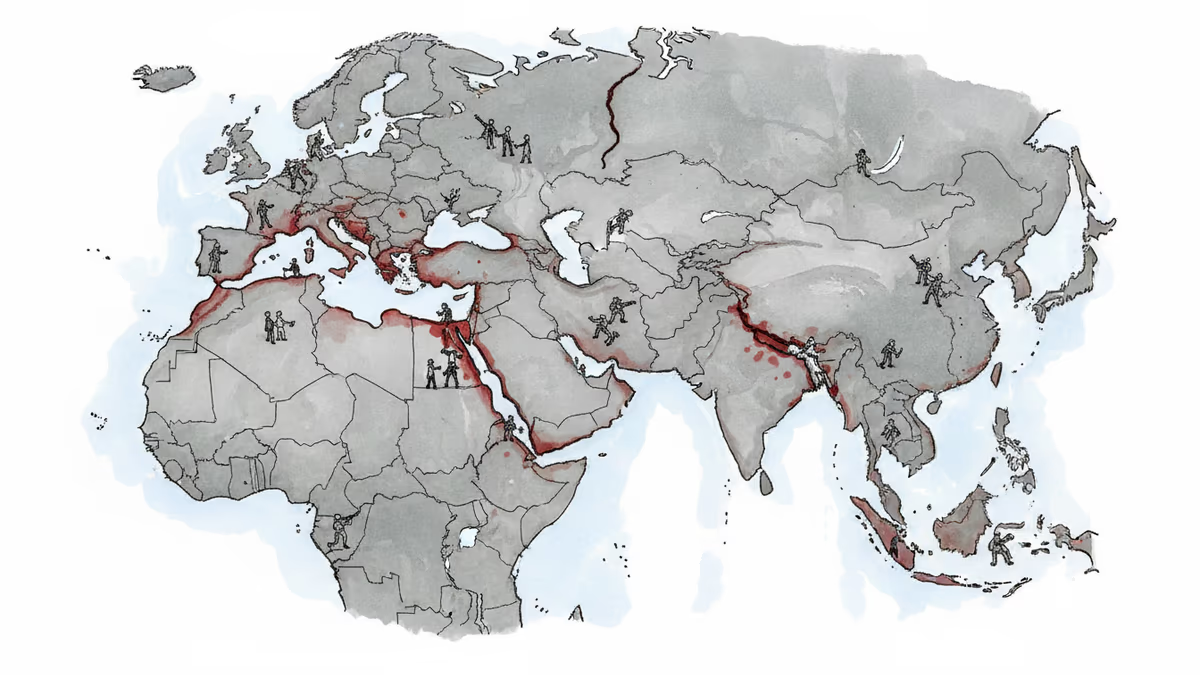
As the Iran conflict intensifies, its ripple effects are reshaping South Asian geopolitics—India is quietly pivoting, while Pakistan and Afghanistan face compounding crises of refugees and armed group spillover.
Pakistan faces a diplomatic crisis as Iran retaliates against Gulf states following Khamenei's assassination, testing its defense pact with Saudi Arabia while managing domestic sectarian tensions
Hours before Trump's nuclear ultimatum expired, Pakistan brokered a two-week US-Iran ceasefire. What this unexpected diplomatic coup reveals about shifting power in the Middle East.
US intelligence chief Tulsi Gabbard warned the Senate that Pakistan may be developing ICBM capability. But for a nuclear power focused on India, why would it need missiles that can reach America?
As the Iran conflict intensifies, its ripple effects are reshaping South Asian geopolitics—India is quietly pivoting, while Pakistan and Afghanistan face compounding crises of refugees and armed group spillover.
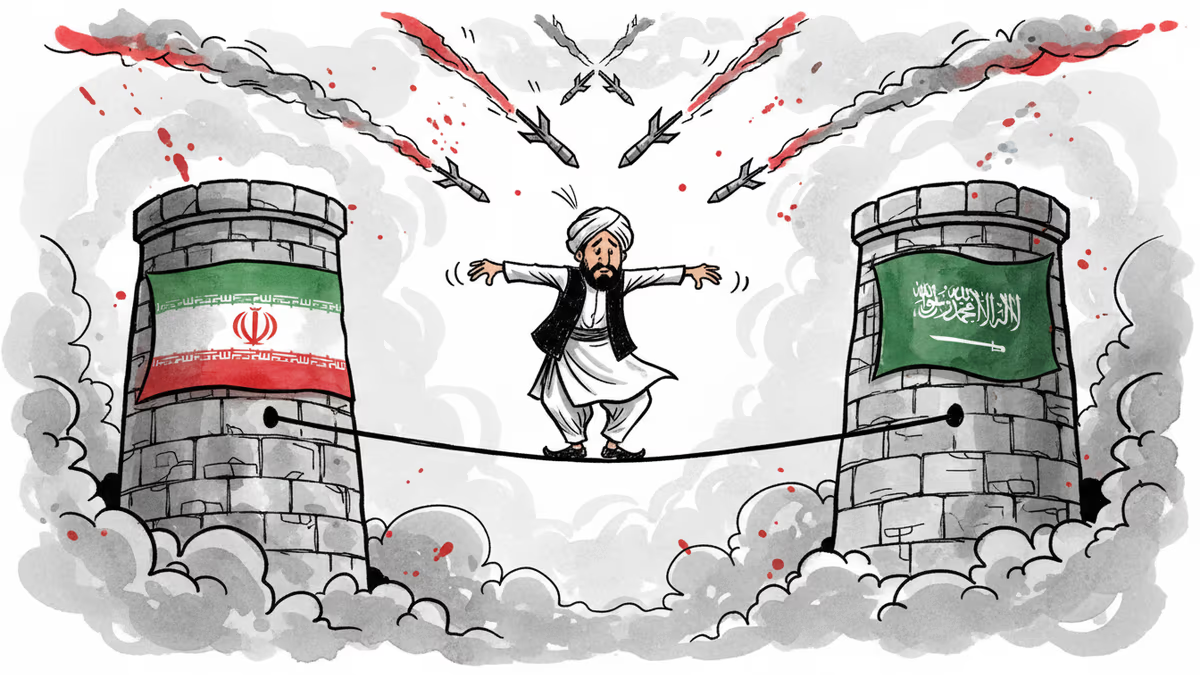
Pakistan faces a diplomatic crisis as Iran retaliates against Gulf states following Khamenei's assassination, testing its defense pact with Saudi Arabia while managing domestic sectarian tensions
Thoughts
Share your thoughts on this article
Sign in to join the conversation