

The Price of Fear: Understanding Global Gold Price Trends 2026
Explore the driving forces behind the global gold price trends 2026. From Syrian reconstruction to China's Middle East influence, discover why fear is the primary market driver.
When the world trembles, capital seeks a sanctuary. A wave of global fear is pushing gold prices to unprecedented heights as of January 12, 2026. It's not just a market rally; it's a barometer of the intensifying geopolitical instability shaking the foundations of the global economy.
Geopolitical Catalysts Driving Global Gold Price Trends 2026
According to reports from Al Jazeera, the market is reacting to a cocktail of crises. In Syria, the introduction of new banknotes and the staggering estimated costs of rebuilding the nation have raised alarms about regional stability. Meanwhile, U.S. pressure on Venezuela’s fragile economy continues to ripple through international markets, reinforcing the allure of safe-haven assets.

The shifting tides in the Middle East also play a crucial role. China's rising economic influence in the region suggests a move away from traditional dollar-dominated trade, further boosting the strategic value of gold. Even domestic issues, such as the feasibility of Zohran Mamdani’s financial promises for New York City, add to the broader narrative of fiscal uncertainty that drives investors toward hard assets.
Hard Assets in a Digital Age
The cost of maintaining Israel’s propaganda machine and the ongoing military expenditures in multiple theaters have created a climate where 'tangible value' is the only currency of trust. As these global tensions simmer, gold remains the ultimate hedge against a world where the old rules no longer seem to apply.
Authors
Related Articles

Iran has fired 1,700+ drones and 360 missiles at the UAE in a month. Dubai's expat tech community isn't leaving — and some are doubling down. What this tells us about geopolitical risk pricing in 2026.
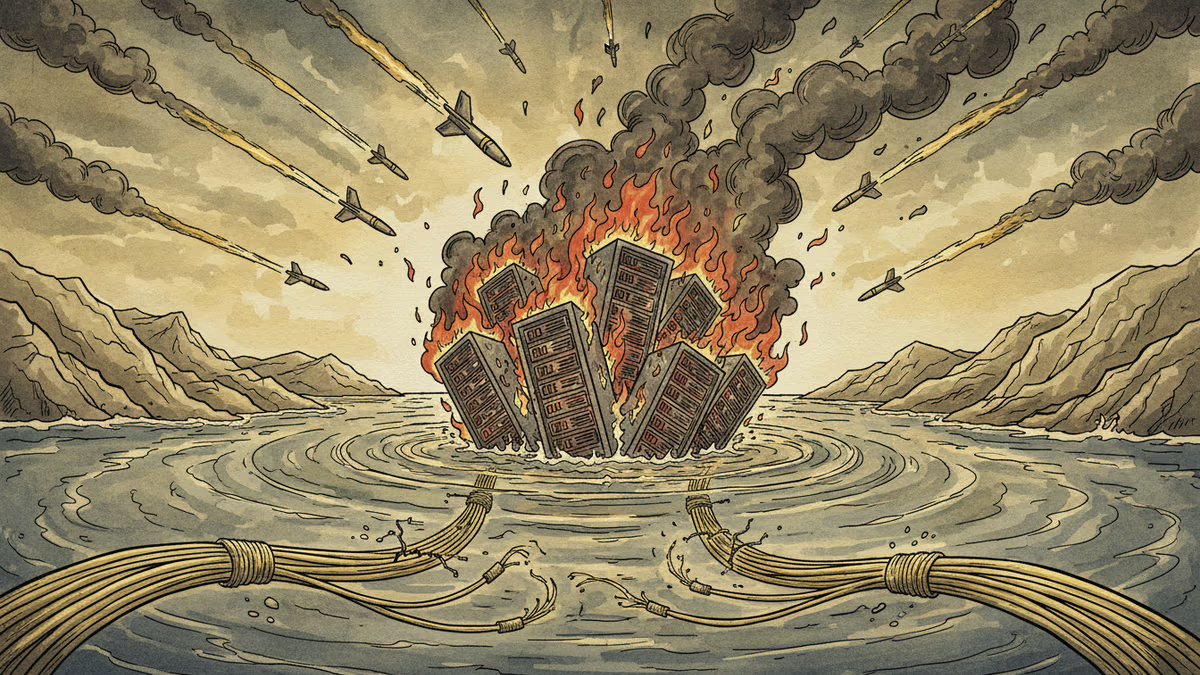
Iran's closure of Hormuz Strait and renewed Houthi attacks threaten $2.2 trillion in Middle East AI investments. Amazon data center strikes expose critical infrastructure vulnerabilities in the region's tech hub ambitions.

The Israel tech sector relocation trend 2025 is intensifying as talent seeks stability abroad. Analysis of the brain drain and its economic impact according to Reuters.
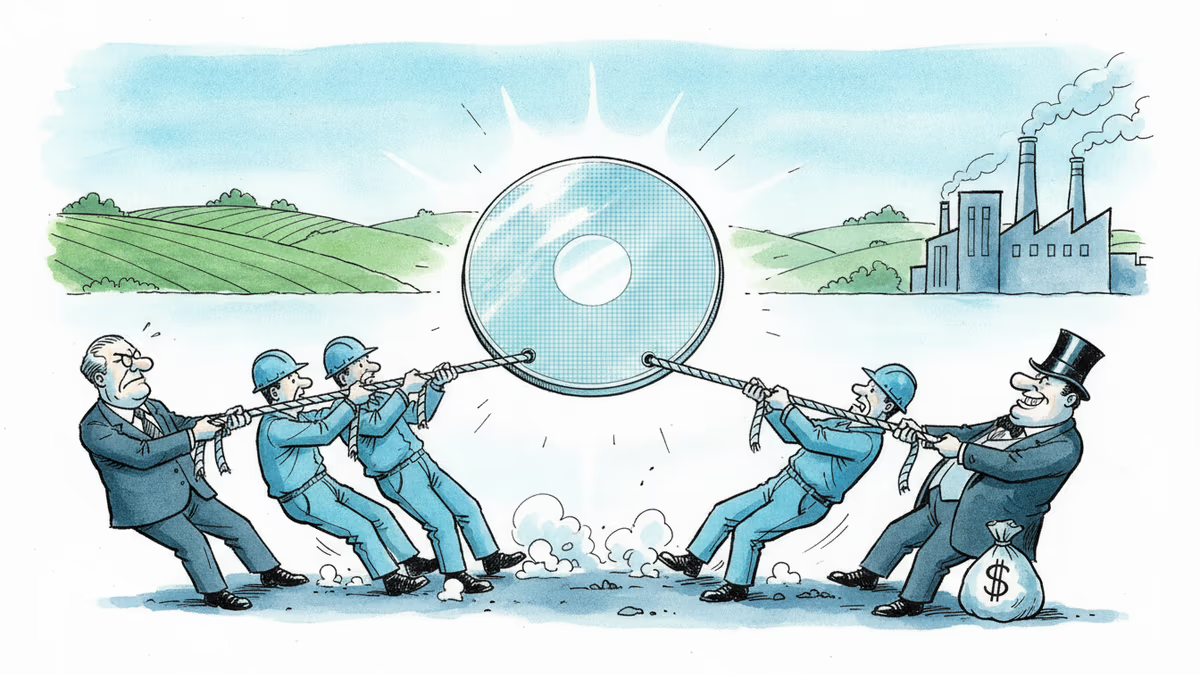
Samsung Electronics' union branch revealed that 84% of survey respondents oppose the government's roughly $290 billion (₩400 trillion) semiconductor megaproject in Gwangju. Government, management, the union and shareholders are all reading the same national project in sharply different ways.
Iran has fired 1,700+ drones and 360 missiles at the UAE in a month. Dubai's expat tech community isn't leaving — and some are doubling down. What this tells us about geopolitical risk pricing in 2026.
Iran's closure of Hormuz Strait and renewed Houthi attacks threaten $2.2 trillion in Middle East AI investments. Amazon data center strikes expose critical infrastructure vulnerabilities in the region's tech hub ambitions.
The Israel tech sector relocation trend 2025 is intensifying as talent seeks stability abroad. Analysis of the brain drain and its economic impact according to Reuters.
Samsung Electronics' union branch revealed that 84% of survey respondents oppose the government's roughly $290 billion (₩400 trillion) semiconductor megaproject in Gwangju. Government, management, the union and shareholders are all reading the same national project in sharply different ways.
Thoughts
Share your thoughts on this article
Sign in to join the conversation