

Orchestral AI: The Synchronous 2026 Framework for Scientific Agents
Discover Orchestral AI, the new synchronous framework designed for scientific reproducibility and cost-effective AI agent development in 2026.
Complexity is the enemy of science. For years, AI developers have been forced to choose between the bloated, async-heavy ecosystems of LangChain or single-vendor lock-in. But Orchestral AI, a new 'anti-framework' released this week, is charting a third path.
Rejecting the Magic of Orchestral AI Framework
Developed by physicist Alexander Roman and engineer Jacob Roman, Orchestral positions itself as the scientific computing answer to agent orchestration. Unlike AutoGPT, which relies on confusing asynchronous loops, Orchestral utilizes a strictly synchronous execution model. This ensures deterministic behavior—a dealbreaker for researchers who need to know exactly why an agent made a specific decision.
| Feature | Standard Frameworks | Orchestral AI |
|---|---|---|
| Execution | Asynchronous / Event-based | Synchronous / Linear |
| Schema | Manual JSON definitions | Automatic Python Type Hints |
| Target | General Purpose Agents | Scientific & Reproducible Research |

LLM-UX: Designing for the Model
The framework introduces 'LLM-UX', a philosophy that simplifies tool creation by generating JSON schemas directly from Python type hints. This reduces cognitive load on the model and prevents errors. It also includes an automated cost-tracking module, allowing labs to monitor their token burn rates in real-time across providers like OpenAI and Anthropic.
- LaTeX Integration: Drop agent reasoning logs directly into academic papers.
- Read-Before-Edit Guardrails: Prevents agents from overwriting files they haven't accessed.
- Provider Agnostic: Swap 'brains' with a single line of code via Ollama or Gemini.
Authors
Related Articles
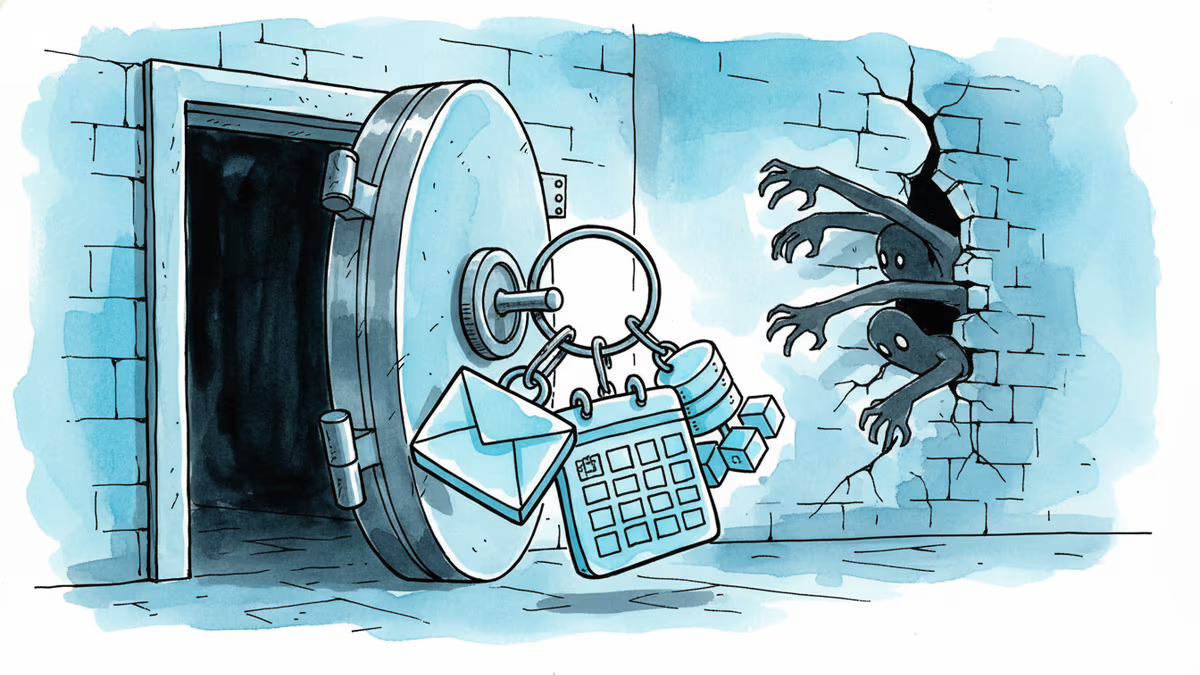
A critical vulnerability in Starlette—downloaded 325 million times per week—puts millions of AI agent servers at risk, exposing stored credentials for email, databases, and third-party services.

A small but growing group of developers has gone all-in on AI coding agents like Claude Code and OpenClaw. History suggests the rest of us won't be far behind.
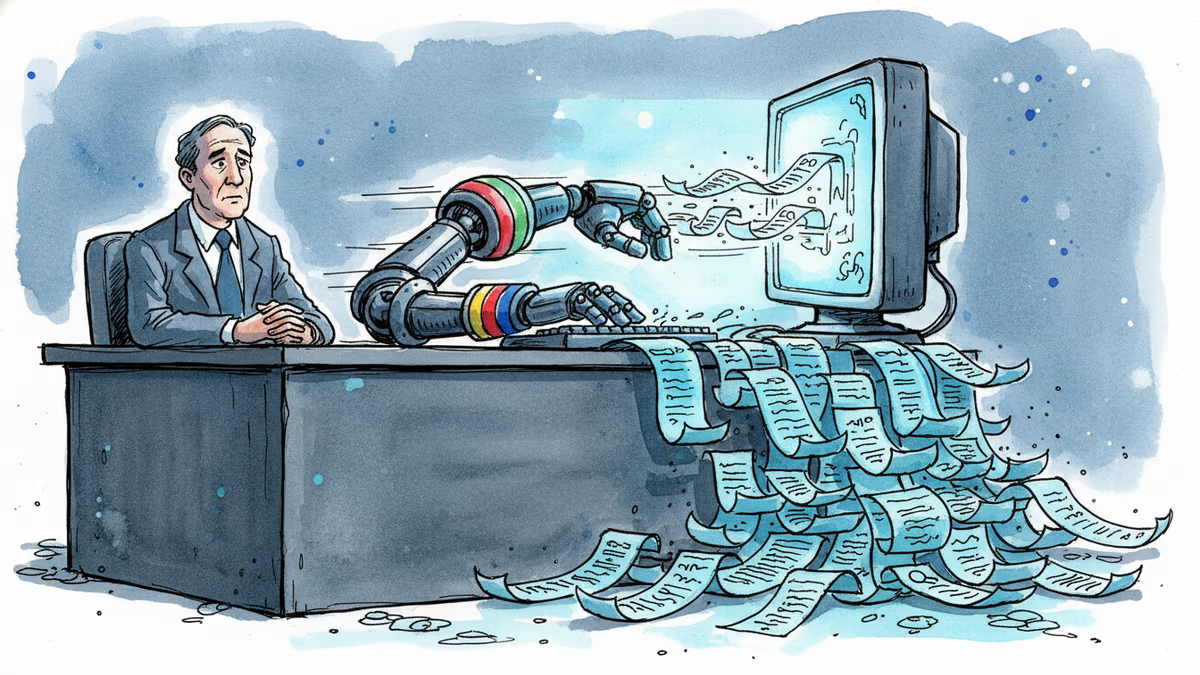
Google is building AI agents that search the web proactively, without user prompting. That's not just a product update — it's a fundamental shift in who controls the information you receive.

OpenAI has reorganized for the second time in a month, merging ChatGPT and Codex into a single agentic platform under president Greg Brockman's unified product leadership.
A critical vulnerability in Starlette—downloaded 325 million times per week—puts millions of AI agent servers at risk, exposing stored credentials for email, databases, and third-party services.
A small but growing group of developers has gone all-in on AI coding agents like Claude Code and OpenClaw. History suggests the rest of us won't be far behind.
Google is building AI agents that search the web proactively, without user prompting. That's not just a product update — it's a fundamental shift in who controls the information you receive.
OpenAI has reorganized for the second time in a month, merging ChatGPT and Codex into a single agentic platform under president Greg Brockman's unified product leadership.
Thoughts
Share your thoughts on this article
Sign in to join the conversation