
AI Agents Are About to Get Their Own Credit Cards
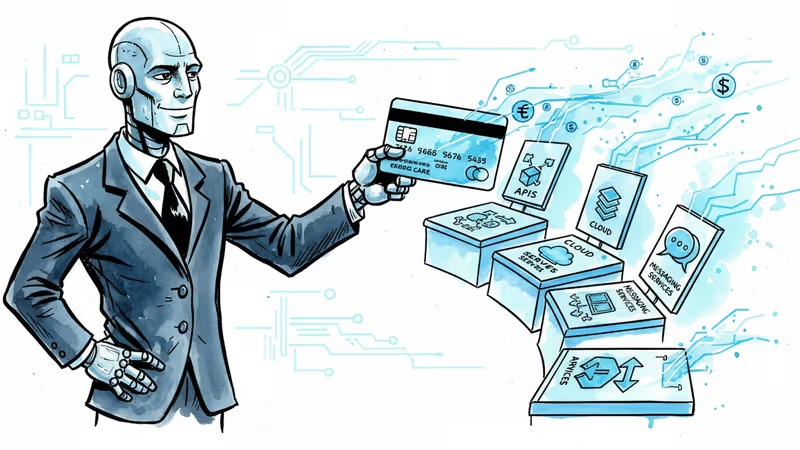
Sapiom raises $15M to build payment infrastructure for AI agents, enabling autonomous purchasing of APIs and services without human intervention.
What happens when your AI assistant needs to spend money? Right now, it asks you. But Ilan Zerbib envisions a world where AI agents pull out their own digital wallets.
The former Shopify payments director has just raised $15 million from Accel and others for Sapiom, a startup building the financial infrastructure that lets AI agents autonomously purchase APIs, cloud compute, and digital services. Think of it as giving every AI agent its own corporate credit card.
The Vibe Coding Bottleneck
The timing couldn't be better. "Vibe coding" platforms like Lovable are democratizing app development, letting non-programmers describe what they want and watch code materialize. But there's a catch: these AI-generated apps hit a wall when they need to connect to external services.
Want to send SMS messages? You'll need Twilio. Processing payments? Hello, Stripe. Each integration requires manual account setup, credit card entry, and API key management. For someone who just "vibed" their way to a working prototype, these backend hurdles can feel insurmountable.
Sapiom aims to eliminate this friction entirely. Instead of manually configuring each service, the AI agent would automatically purchase access to whatever APIs it needs, when it needs them. The human creator gets charged through their chosen platform as a pass-through fee.
Beyond Convenience: The Autonomous Economy

What Amit Kumar from Accel finds compelling isn't just the convenience factor. "Every API call is a payment," he explains. "Every time you send a text message, it's a payment. Every time you spin up a server for AWS, it's a payment."
This reframes the entire software economy. If AI agents become truly autonomous, they'll need autonomous purchasing power. Sapiom is building the financial rails for this future, where software doesn't just consume data—it consumes services, and pays for them in real-time.
The startup is starting with B2B use cases, but the implications stretch much further. Personal AI assistants could eventually handle routine purchases: ordering your Uber, restocking your Amazon cart, or booking that restaurant reservation. The question isn't whether this will happen, but when we'll trust machines to make financial decisions on our behalf.
The Trust Equation
Zerbib makes an interesting bet: he doesn't believe AI will make people buy more things. Instead, he's focused on making existing business processes more efficient. This suggests Sapiom sees itself as infrastructure, not as a growth driver for consumption.
But this raises deeper questions about control and transparency. If an AI agent autonomously purchases a dozen APIs to complete a task, who's responsible when something goes wrong? How do we audit these micro-transactions? What happens when an agent makes a purchase we didn't anticipate?
The technical challenge is significant too. Each API has different authentication methods, pricing models, and usage limits. Creating a universal payment layer that works across this fragmented ecosystem requires solving not just financial, but also technical integration challenges.
Authors
Related Articles
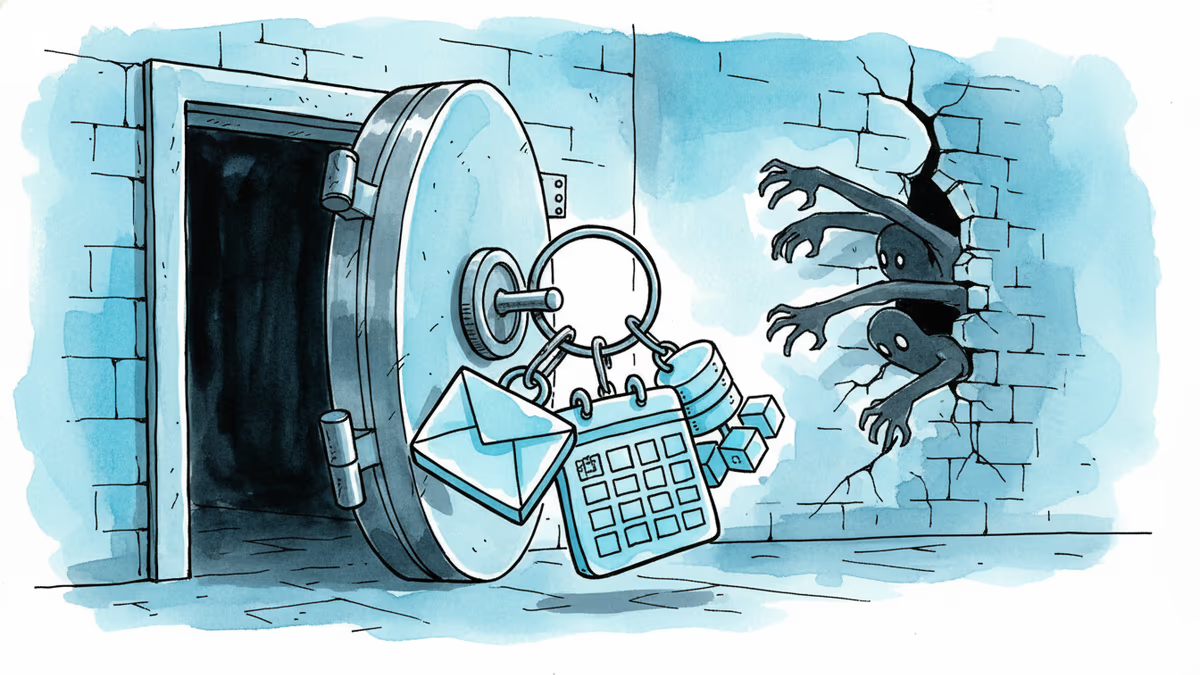
A critical vulnerability in Starlette—downloaded 325 million times per week—puts millions of AI agent servers at risk, exposing stored credentials for email, databases, and third-party services.

A small but growing group of developers has gone all-in on AI coding agents like Claude Code and OpenClaw. History suggests the rest of us won't be far behind.
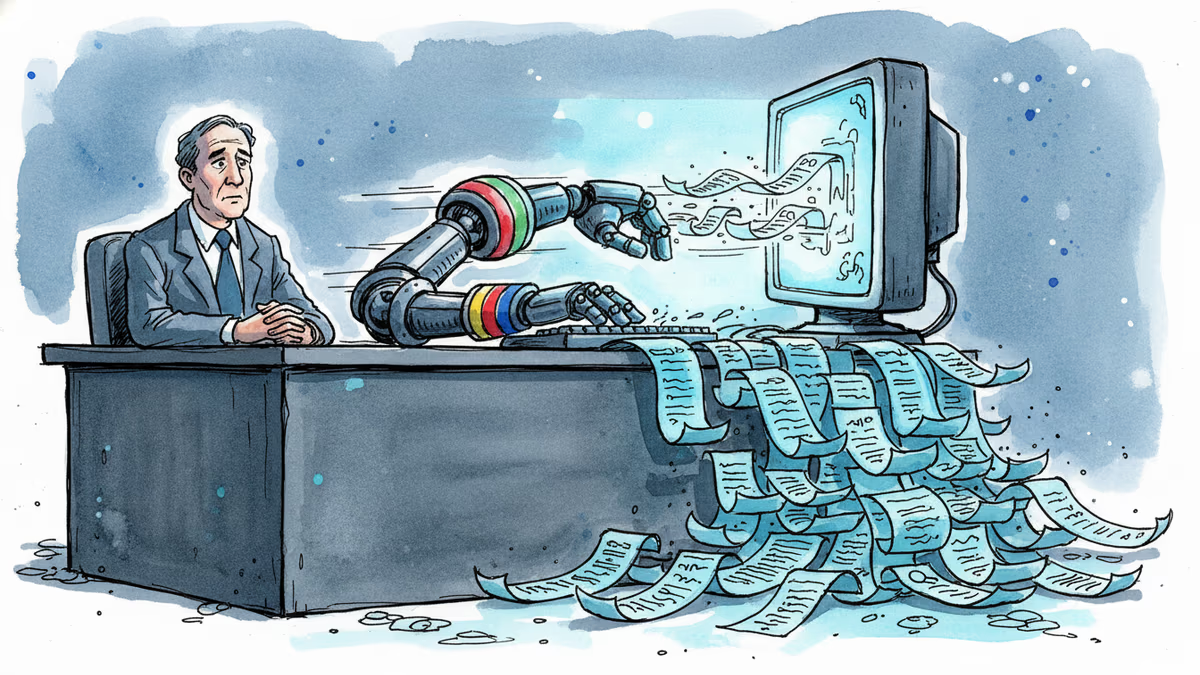
Google is building AI agents that search the web proactively, without user prompting. That's not just a product update — it's a fundamental shift in who controls the information you receive.

OpenAI has reorganized for the second time in a month, merging ChatGPT and Codex into a single agentic platform under president Greg Brockman's unified product leadership.
A critical vulnerability in Starlette—downloaded 325 million times per week—puts millions of AI agent servers at risk, exposing stored credentials for email, databases, and third-party services.
A small but growing group of developers has gone all-in on AI coding agents like Claude Code and OpenClaw. History suggests the rest of us won't be far behind.
Google is building AI agents that search the web proactively, without user prompting. That's not just a product update — it's a fundamental shift in who controls the information you receive.
OpenAI has reorganized for the second time in a month, merging ChatGPT and Codex into a single agentic platform under president Greg Brockman's unified product leadership.
Thoughts
Share your thoughts on this article
Sign in to join the conversation