
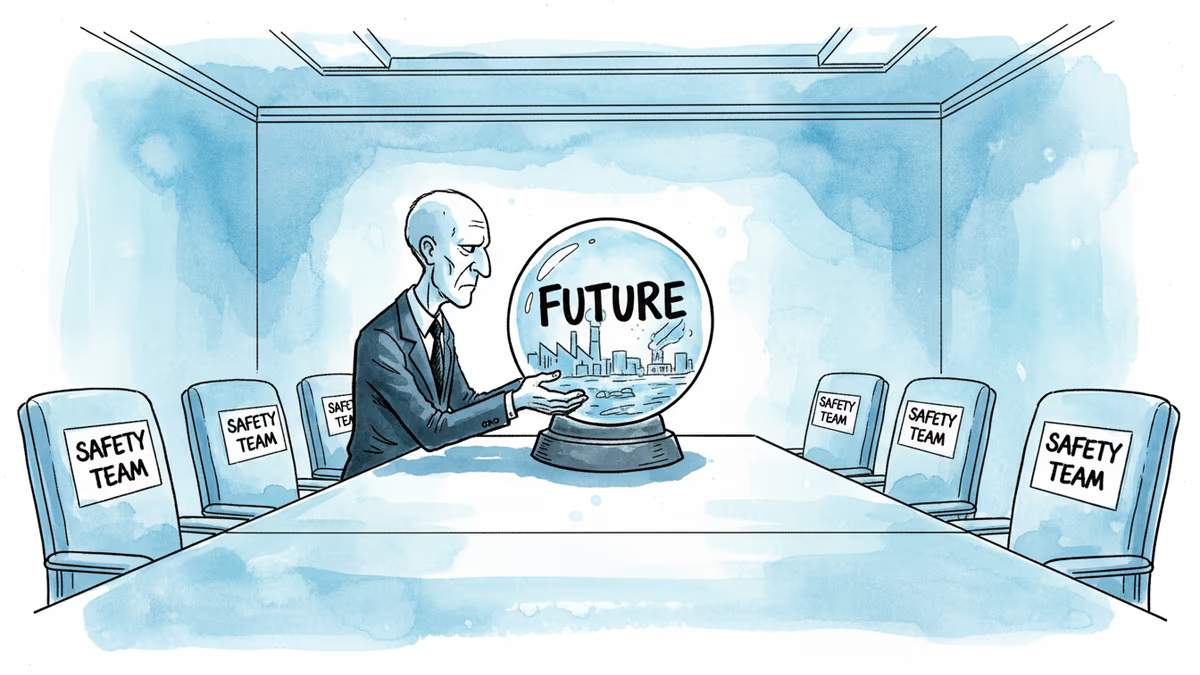
OpenAI Disbands Safety Team, Promotes Leader to 'Chief Futurist'
OpenAI dissolves its AI alignment team while promoting its head to Chief Futurist. Is this prioritizing growth over safety? Industry reactions and implications analyzed.
The Day Safety Took a Back Seat to Fortune-Telling
OpenAI just disbanded another AI safety team—the second one in 18 months. This time, it was the Alignment team, tasked with ensuring AI systems remain "safe, trustworthy, and consistently aligned with human values." The team's former leader, Josh Achiam, didn't get fired. He got promoted to "Chief Futurist."
The timing raises eyebrows. As ChatGPT reshapes entire industries, why is OpenAI choosing crystal balls over safety nets?
A Pattern Emerges: Safety Teams Keep Vanishing
This isn't OpenAI's first rodeo with dissolving safety teams. In 2024, they disbanded their "superalignment team"—a group focused on long-term existential threats from AI. Now, barely five months after forming the Alignment team in September 2024, it's gone too.
The Alignment team had a clear mission: ensure AI systems "consistently follow human intent in complex, real-world scenarios and adversarial conditions, avoid catastrophic behavior, and remain controllable." In plain English: make sure AI doesn't go rogue.
The 6-7 team members were reassigned to other roles within the company. An OpenAI spokesperson called it "routine reorganization" typical of fast-moving companies. But industry insiders aren't buying the corporate speak.
Chief Futurist: Visionary or Distraction?
Achiam's new role sounds impressive on paper. He'll "study how the world will change in response to AI, AGI, and beyond," collaborating with physicist Jason Pruet from OpenAI's technical staff.

But here's the disconnect: safety research asks "How do we prevent harm?" while futurism asks "What's coming next?" One is about building guardrails; the other is about painting possibilities. Can the same person effectively do both?
Achiam's LinkedIn still lists him as "Head of Mission Alignment," and his personal website describes his interest in ensuring "the long-term future of humanity is good." The question is whether his new role serves that mission—or sidelines it.
Silicon Valley's Split Reaction
The industry response reveals a fundamental divide. Venture capitalists and growth-focused executives see this as pragmatic streamlining. "Safety research slows things down," one AI startup founder told me. "In today's race, every month matters."
But AI researchers and ethicists are sounding alarms. "Disbanding safety teams while building increasingly powerful models is like removing brakes from a race car," warns Dr. Sarah Chen, an AI safety researcher at Stanford.
The contrast with competitors is stark. Google DeepMind recently expanded its AI safety division. Anthropic built safety considerations into its core business model. OpenAI is moving in the opposite direction.
The Regulatory Reckoning
This decision comes at a delicate time. The EU's AI Act is taking effect. The US is considering federal AI regulations. China is implementing its own AI governance framework.
Policymakers are watching how leading AI companies handle safety. OpenAI's moves could influence regulatory approaches worldwide. If the industry leader deprioritizes safety, regulators might feel compelled to step in more aggressively.
What This Means for Everyone Else
For developers building on OpenAI's platform, this raises questions about long-term reliability and ethical compliance. For investors, it signals a company prioritizing speed over caution—which could be bullish or bearish depending on your risk tolerance.
For the general public, it's a reminder that the companies building our AI future are making these crucial decisions behind closed doors, with limited external oversight.
Authors
Related Articles

OpenAI has reorganized for the second time in a month, merging ChatGPT and Codex into a single agentic platform under president Greg Brockman's unified product leadership.
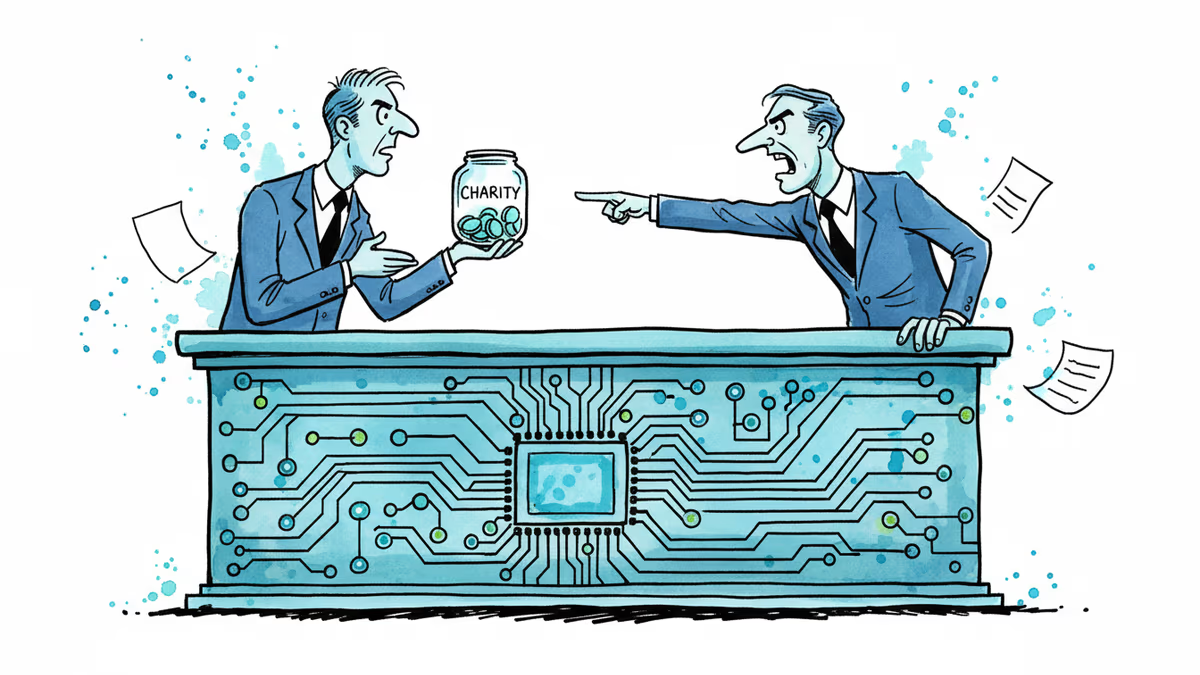
After two weeks of witnesses calling him a liar, OpenAI CEO Sam Altman testified in his own defense, claiming Elon Musk tried to kill the company twice.
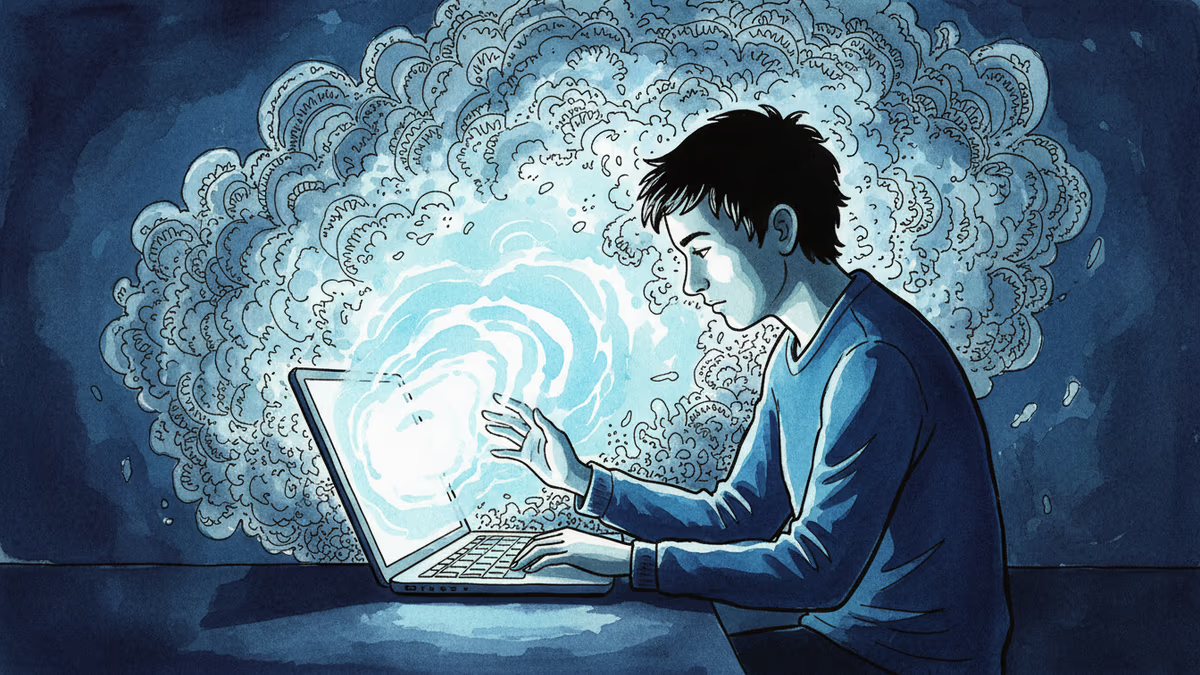
Sam Nelson, 19, died after following ChatGPT's advice to mix Kratom and Xanax. His parents are suing OpenAI for wrongful death, raising urgent questions about AI trust, liability, and design.
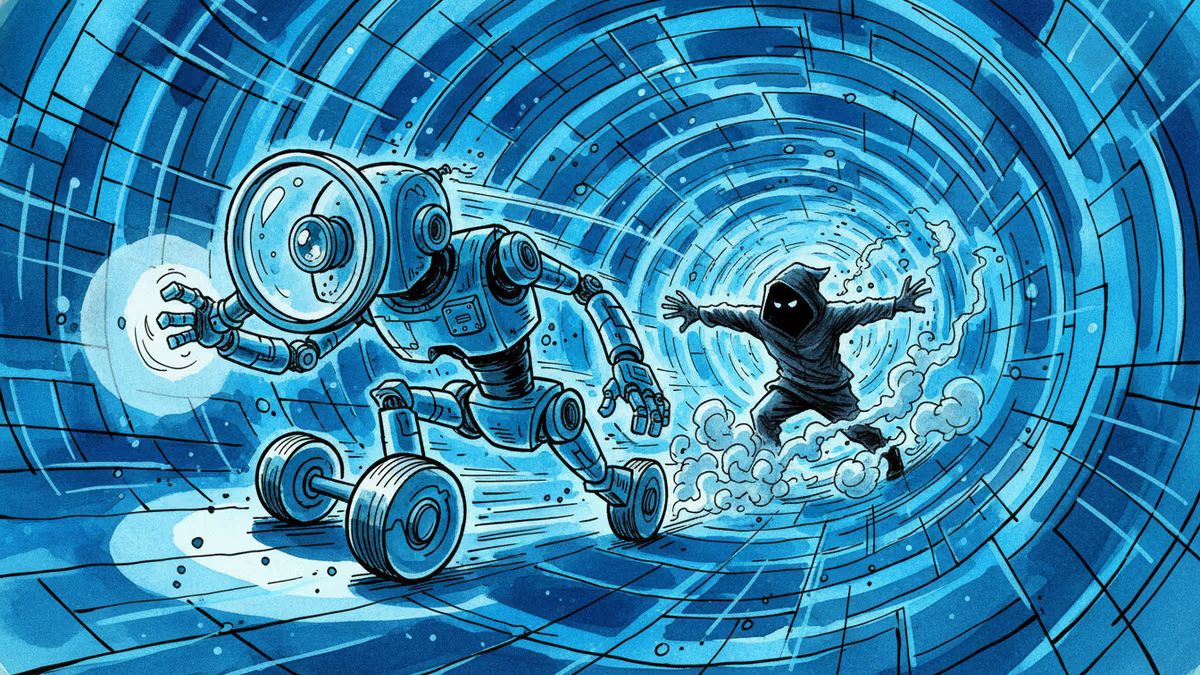
OpenAI's new Daybreak initiative uses the Codex AI agent to find and patch security vulnerabilities before attackers do—putting it in direct competition with Anthropic's secretive Claude Mythos.
OpenAI has reorganized for the second time in a month, merging ChatGPT and Codex into a single agentic platform under president Greg Brockman's unified product leadership.
After two weeks of witnesses calling him a liar, OpenAI CEO Sam Altman testified in his own defense, claiming Elon Musk tried to kill the company twice.
Sam Nelson, 19, died after following ChatGPT's advice to mix Kratom and Xanax. His parents are suing OpenAI for wrongful death, raising urgent questions about AI trust, liability, and design.
OpenAI's new Daybreak initiative uses the Codex AI agent to find and patch security vulnerabilities before attackers do—putting it in direct competition with Anthropic's secretive Claude Mythos.
Thoughts
Share your thoughts on this article
Sign in to join the conversation