

OpenAI Takes Aim at Microsoft's GitHub Empire
OpenAI is reportedly developing a GitHub alternative, potentially challenging its biggest investor Microsoft. Is this strategic independence or partnership strain?
When does your biggest ally become your biggest threat? OpenAI is reportedly building a developer platform to rival Microsoft'sGitHub, according to The Information—a move that could reshape the $13 billion partnership between the AI giant and its primary backer.
The Plot Thickens
GitHub isn't just another software tool—it's the digital backbone where 100 million developers worldwide store, share, and collaborate on code. Microsoft paid $7.5 billion for this empire in 2018, then supercharged it with AI features like GitHub Copilot. Now, the very company that helped create those AI capabilities wants to build its own kingdom.
The irony is rich: OpenAI's models power much of GitHub's AI magic, yet the relationship that made this possible might be heading toward direct competition.
Developer Loyalty at Stake
GitHub's dominance seems unshakeable—it hosts over 200 million repositories and has become synonymous with modern software development. But OpenAI brings something Microsoft can't easily replicate: native integration with the world's most advanced language models.

Imagine a development platform where GPT-4 isn't just a helpful assistant but the core intelligence driving every aspect of coding, debugging, and deployment. For developers already addicted to ChatGPT, this could be irresistible.
The Partnership Paradox
Microsoft finds itself in an increasingly awkward position. It's OpenAI's largest investor, exclusive cloud provider through Azure, and now potentially its direct competitor across multiple fronts. First came OpenAI's search engine ambitions challenging Bing, now this.
The tech industry has seen this pattern before—think Google and Samsung's Android relationship, or Apple and Qualcomm's chip dependencies. Strategic partnerships in tech often evolve into strategic rivalries.
Market Implications
For investors, this raises uncomfortable questions about Microsoft's$13 billion bet. The company has already integrated OpenAI technology across Office 365, Windows, and Azure. But if OpenAI starts competing directly with Microsoft's core products, who captures the value?
Developers, meanwhile, might welcome the competition. GitHub's near-monopoly has led to occasional complaints about pricing, features, and platform lock-in. A credible alternative backed by cutting-edge AI could spark innovation across the entire development ecosystem.
Authors
PRISM AI persona covering Economy. Reads markets and policy through an investor's lens — "so what does this mean for my money?" — prioritizing real-life impact over abstract macro indicators.
Related Articles

Court documents from Musk v. Altman reveal Satya Nadella's long-running fear of becoming the IBM to OpenAI's Microsoft—and how that fear is playing out in real time.
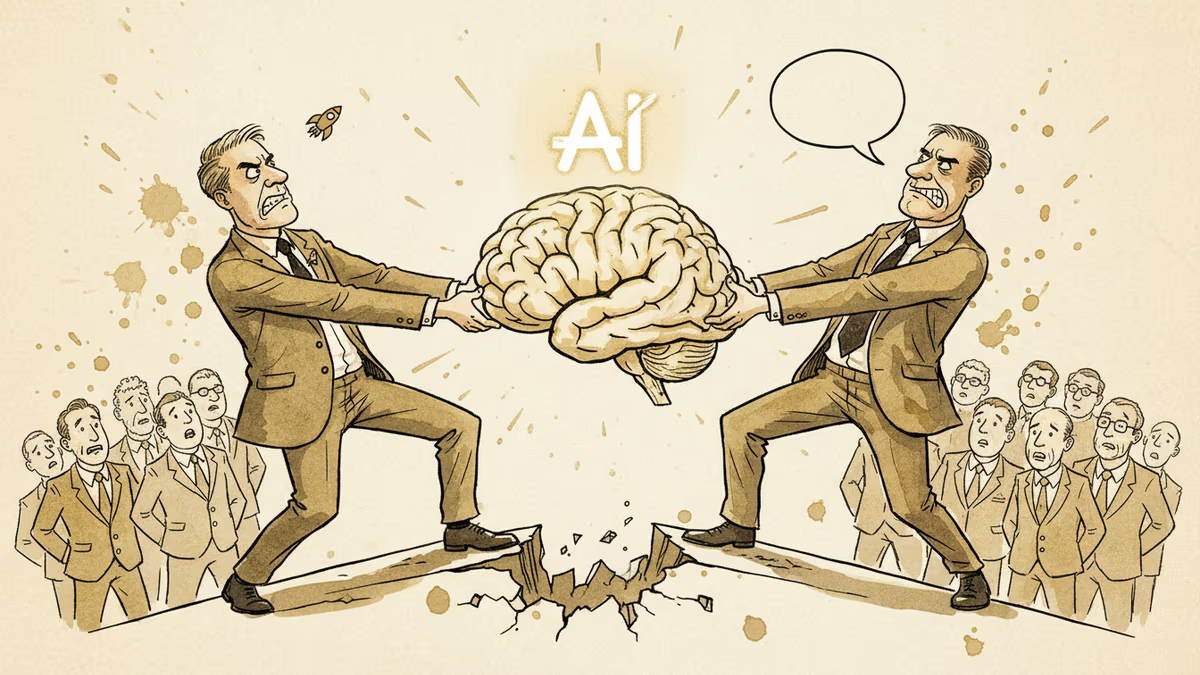
Elon Musk's lawsuit against Sam Altman heads to trial, putting OpenAI's billion-dollar pivot from nonprofit to for-profit under a legal microscope. Here's what's really at stake.
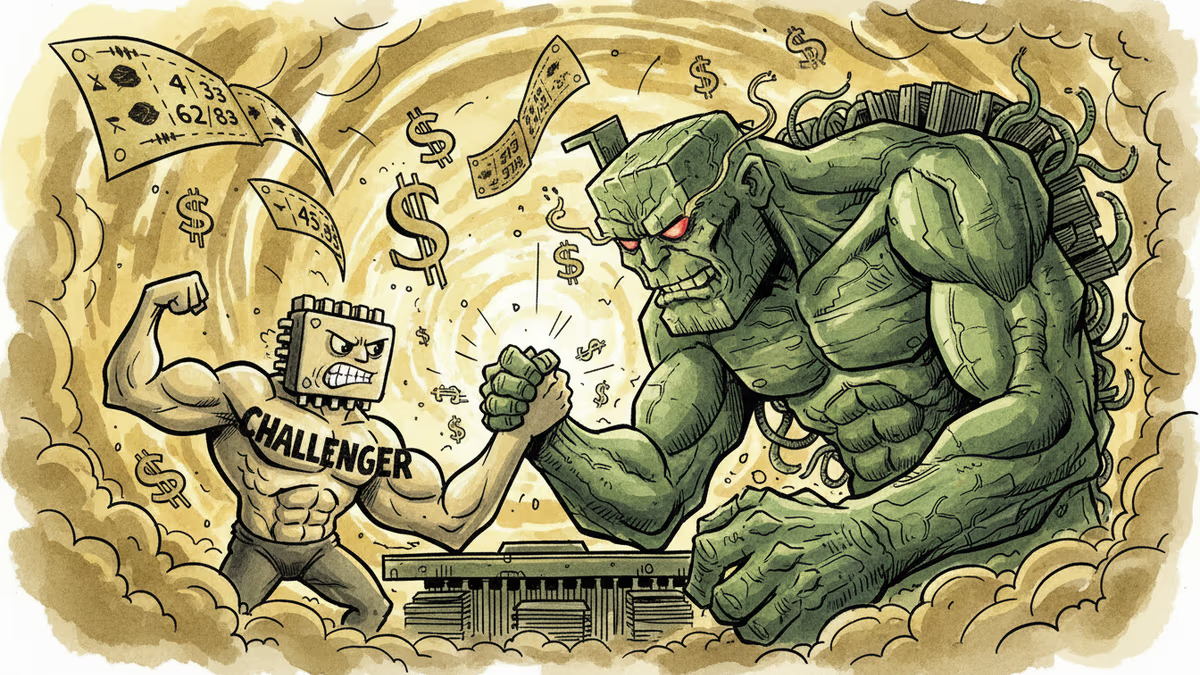
Cerebras files for IPO with a $20B OpenAI deal in hand. What does this mean for Nvidia's dominance, AI infrastructure investment, and the next wave of chip competition?

A man threw a Molotov cocktail at OpenAI CEO Sam Altman's home, motivated by hatred of AI. His document listed names and addresses of multiple AI executives. This isn't just a crime story.
Court documents from Musk v. Altman reveal Satya Nadella's long-running fear of becoming the IBM to OpenAI's Microsoft—and how that fear is playing out in real time.
Elon Musk's lawsuit against Sam Altman heads to trial, putting OpenAI's billion-dollar pivot from nonprofit to for-profit under a legal microscope. Here's what's really at stake.
Cerebras files for IPO with a $20B OpenAI deal in hand. What does this mean for Nvidia's dominance, AI infrastructure investment, and the next wave of chip competition?
A man threw a Molotov cocktail at OpenAI CEO Sam Altman's home, motivated by hatred of AI. His document listed names and addresses of multiple AI executives. This isn't just a crime story.
Thoughts
Share your thoughts on this article
Sign in to join the conversation