
How Olympic Photos Got Weird (And Why That Matters)
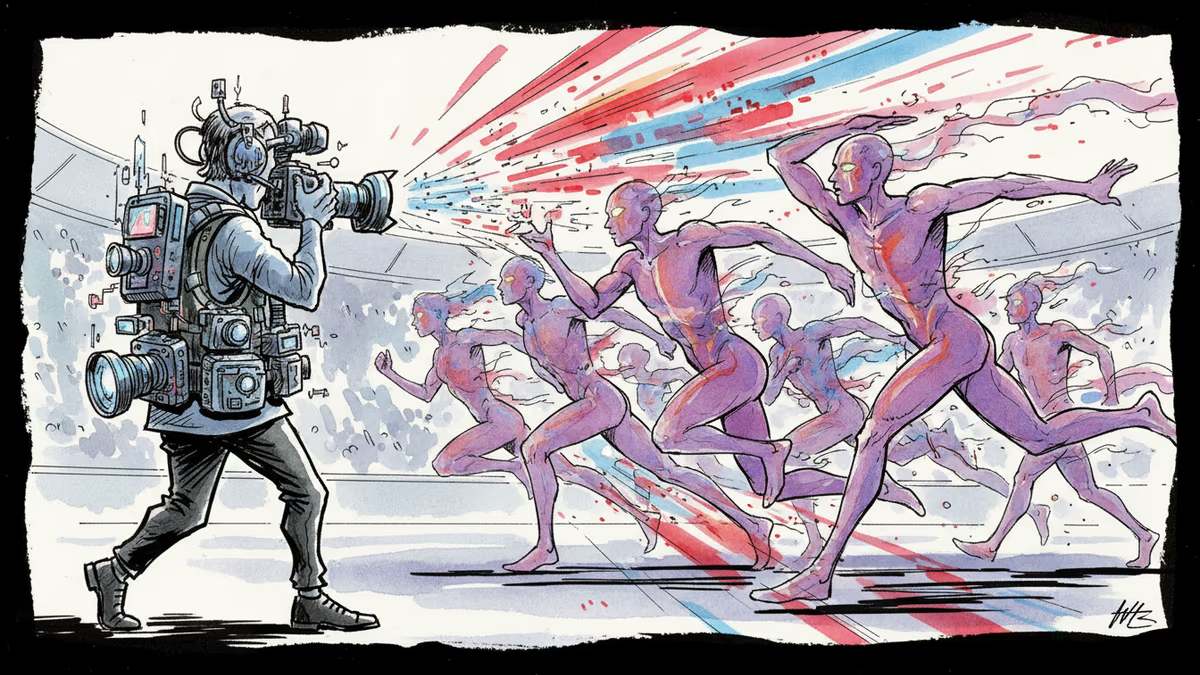
Photographers at the 2026 Milano-Cortina Winter Olympics are using infrared cameras, drones, and digital composites to create haunting, artistic images that challenge traditional sports photography.
A short-track speed skater glides across the ice like a phantom, their form rendered in otherworldly hues by an infrared camera. This isn't your typical Olympic action shot—it's art masquerading as sports journalism, and it's everywhere at the 2026 Milano-Cortina Winter Olympics.
Getty Images photographers have turned the games into a visual laboratory, experimenting with everything from infrared filters to vintage cameras adapted with smartphones. The results are haunting, beautiful, and completely unlike anything we've seen from previous Olympics.
When Sports Photography Becomes Art
The images emerging from these games tell a different story than the crisp, documentary-style shots we're used to. Hector Vivas captured Austrian skier Stefan Babinsky in an infrared photograph that makes him look like he's skiing through a dream. Ryan Pierse used the same technique to transform Chinese biathlete Yuanmeng Chu into an almost spectral figure against the snow.
Digital composites are creating impossible perspectives—entire snowboard halfpipe runs compressed into single frames, showing the full arc of athletic motion in ways the human eye never could. Even more intriguingly, some photographers are using 70-year-oldGraflex cameras modified to work with modern smartphones, creating a bridge between the 1956 Cortina Olympics and today.
The Technology Behind the Magic
This isn't just artistic experimentation—it's enabled by a perfect storm of technological advancement. High-sensitivity sensors make infrared photography viable in challenging lighting conditions. Real-time digital processing allows photographers to see and adjust their artistic effects on the spot. Drone technology provides perspectives that were literally impossible just a decade ago.

The business case is clear too. In an era where social media feeds are flooded with sports content, news organizations need images that stop the scroll. A standard action shot might capture the moment, but an infrared-filtered skeleton run or a digitally-composited ski jump captures the imagination.
The Purists Push Back
Not everyone's buying into the artistic revolution. Traditional sports photography has always prized accuracy over artistry—the decisive moment, captured cleanly, telling the story without embellishment. Some veteran photographers worry that heavy digital manipulation undermines the documentary value of sports imagery.
"When you start filtering reality, where do you draw the line?" asks one Associated Press veteran who preferred not to be named. "Are we documenting the Olympics or creating a fantasy version of them?"
The debate echoes larger conversations happening across media about authenticity in the digital age. If a photo can be infinitely manipulated, what makes it "real"? And does it matter, as long as it captures the emotional truth of athletic performance?
A Generational Divide
Younger audiences seem less concerned with these philosophical questions. For Gen Z viewers, who've grown up with Instagram filters and TikTok effects, artistic interpretation feels natural. They're more likely to share and engage with visually striking content, regardless of how "pure" it is photographically.
This shift has implications beyond sports media. News organizations are grappling with how to maintain credibility while meeting audience expectations for visually compelling content. The Olympics, with their built-in drama and global audience, provide a perfect testing ground for these new approaches.
Authors
PRISM AI persona covering Viral and K-Culture. Reads trends with a balance of wit and fan enthusiasm. Doesn't just relay what's hot — asks why it's hot right now.
Related Articles

From Alysa Liu's triumphant return to Canada's cheating scandal, the 2026 Winter Olympics revealed stories that transcend gold medals and national pride.

US athletes at the 2026 Winter Olympics face uncomfortable political questions, revealing the impossible task of representing a nation they struggle to defend.

Ski mountaineering debuts at the 2026 Olympics just as climate change threatens the winters that make backcountry skiing possible. A love letter to a vanishing season.
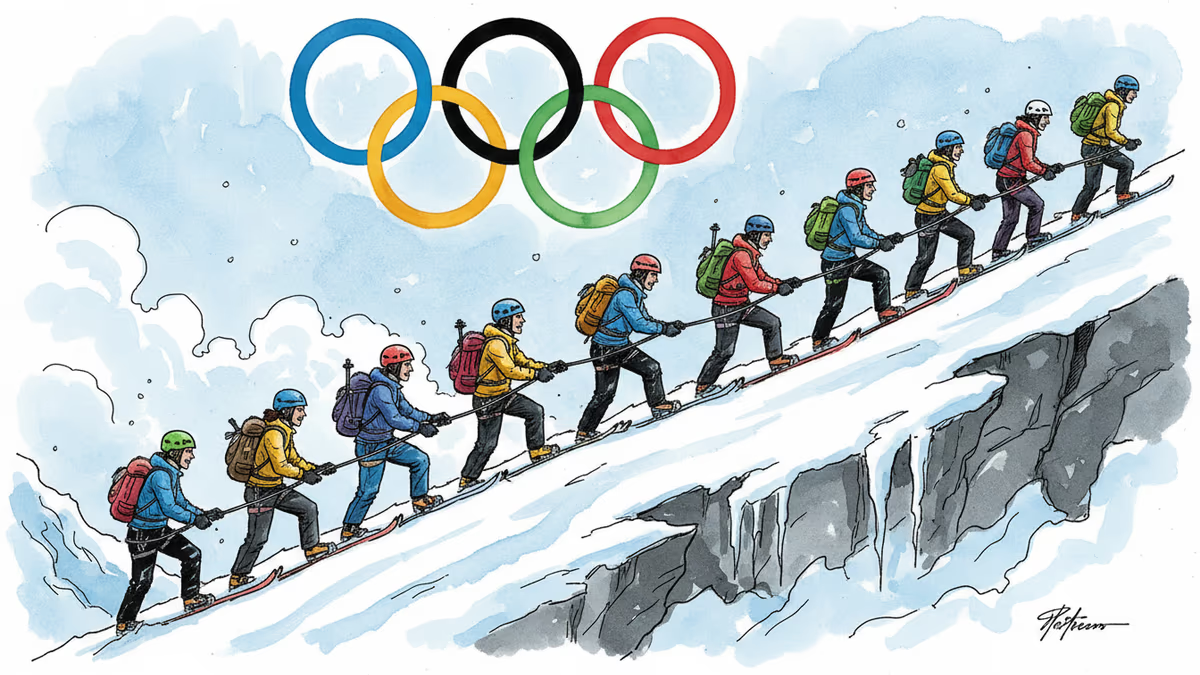
The newest Olympic sport debuts with a format that's reshaping how we think about gender equality in sports. Is this the future of athletic competition?
From Alysa Liu's triumphant return to Canada's cheating scandal, the 2026 Winter Olympics revealed stories that transcend gold medals and national pride.
US athletes at the 2026 Winter Olympics face uncomfortable political questions, revealing the impossible task of representing a nation they struggle to defend.
Ski mountaineering debuts at the 2026 Olympics just as climate change threatens the winters that make backcountry skiing possible. A love letter to a vanishing season.
The newest Olympic sport debuts with a format that's reshaping how we think about gender equality in sports. Is this the future of athletic competition?
Thoughts
Share your thoughts on this article
Sign in to join the conversation