

Oil Prices Stall as Traders Juggle Sanction Threats and Economic Headwinds
Oil prices remain steady as traders balance the risk of supply disruptions from Venezuela and Russia against growing concerns over a global economic slowdown and weakening demand.
Oil prices are locked in a holding pattern as the market weighs bullish supply risks against mounting fears of an economic slowdown. According to Reuters, traders are cautiously watching potential U.S. sanctions on Venezuela and persistent uncertainty around Russia, but these concerns are being offset by a gloomy demand outlook.
Geopolitical Jitters Put a Floor Under Prices
On the supply side, two key geopolitical flashpoints are keeping prices from falling. The primary concern is the potential for the U.S. to re-impose sanctions on Venezuela's oil sector. A decision to snap sanctions back into place could pull hundreds of thousands of barrels of crude oil off the global market, tightening supply.
Meanwhile, Russia's ongoing conflict and the resulting Western sanctions continue to cast a shadow over its long-term production and export capabilities. Any unexpected disruption from one of the world's largest producers provides a fundamental level of support for crude prices.
But Demand Fears Cap the Upside
Despite these supply threats, oil has struggled to break out of its recent range, with Brent crude futures hovering around $84 a barrel. The culprit is a darkening demand picture. Prolonged high-interest rate policies from central banks like the Federal Reserve are fueling concerns that global economic growth will falter, crimping fuel consumption.
These worries have been amplified by recent weak economic data from China, the world's top oil importer, and a surprise build in U.S. crude inventories, suggesting that current demand isn't as robust as previously hoped.
The oil market is in a classic tug-of-war between supply-side geopolitics and demand-side macroeconomics. This equilibrium is delicate and could be broken by the next major catalyst. Investors should watch for a definitive U.S. announcement on Venezuela sanctions (a bullish trigger) or weaker-than-expected economic data from a major economy (a bearish trigger) to signal the market's next direction.
This content is AI-generated based on source articles. While we strive for accuracy, errors may occur. We recommend verifying with the original source.
Related Articles
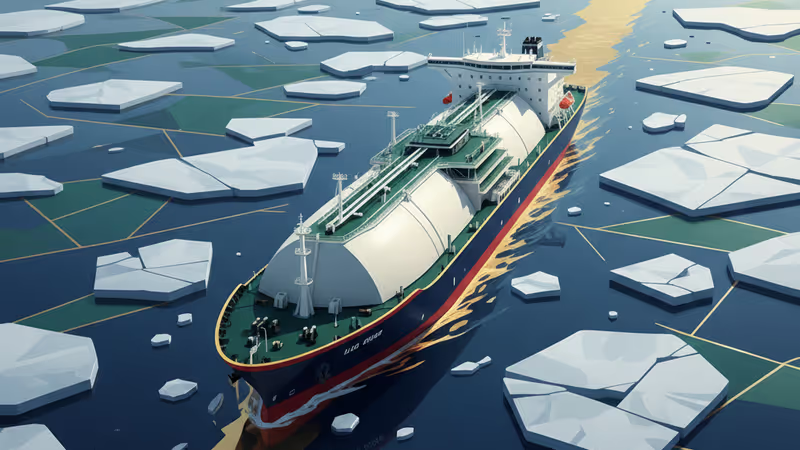
A Chinese-owned tanker, the Kunpeng, has loaded the first LNG cargo from Russia's sanctioned Arctic LNG 2 plant, testing the effectiveness of U.S. sanctions and potentially impacting global energy markets.

Iran's crude oil exports have climbed 5% in 2025 to a 7-year high, driven by massive purchases from China that defy U.S. sanctions. What does this mean for oil prices and geopolitics?

Japan announces plans for a deep-sea rare earth processing facility by 2027 on Minamitorishima island, aiming to tap vast reserves 6,000 meters deep to reduce its critical mineral reliance on China.

Oil prices climbed after the U.S. intercepted a tanker near Venezuela, fueling concerns over supply disruptions and geopolitical instability. We analyze the market impact on your portfolio.