
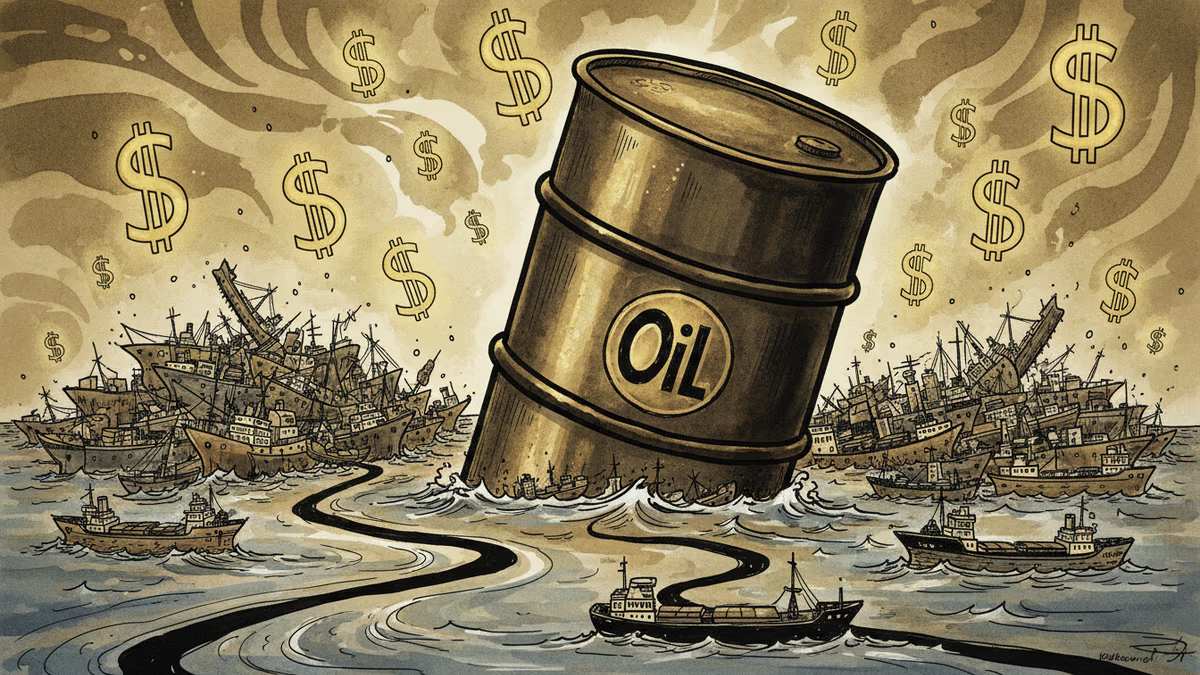
When Oil Speaks Louder Than Diplomats: The Real Cost of War
US-Iran conflict sends oil prices surging 12%. How the Strait of Hormuz blockade could trigger global stagflation and reshape energy markets.
What does it take to move global markets in a single weekend? Apparently, just 20 miles of water between Iran and Oman.
Oil prices jumped nearly 12% when futures markets opened Sunday night, reaching about $75 per barrel. But this wasn't just another geopolitical premium. The US-Israel strikes that killed Iran's Supreme Leader Ayatollah Ali Khamenei have triggered something far more dangerous: the effective closure of the world's most critical energy chokepoint.
The $3 Trillion Strait
The Strait of Hormuz handles about one-third of global seaborne oil exports and one-fifth of natural gas shipments daily. That's roughly 21 million barrels of oil flowing through a waterway so narrow that Iran and Oman can practically shake hands across it.
Iran itself produces 5 million barrels daily—making it the world's fifth-largest oil producer. But here's the counterintuitive reality: losing Iran's oil production isn't the real threat. The US and Gulf countries have plenty of spare capacity to make up that shortfall.
The existential risk lies in the strait itself. When Iranian Revolutionary Guards told vessels Saturday that passage was "no longer allowed," and four oil tankers were attacked Sunday, commercial traffic ground to a halt. Suddenly, 84% of the crude oil that normally flows to Asian markets—including China, Japan, and South Korea—faced an uncertain future.
This Time Feels Different
Iran has threatened to close the Strait of Hormuz before. During past conflicts with the US, it was mostly bluster. The logic was simple: Iran needs the strait for its own oil exports, and closing it would hurt its patron China more than the West.
But this conflict has already broken precedent. Iran launched missiles at Dubai hotels and airports—civilian targets in a neutral country. More importantly, they've lost their supreme leader. The calculus of restraint may no longer apply.
Bob McNally, former White House energy adviser, put it bluntly to CNBC: "A prolonged closure of the Strait of Hormuz is a guaranteed global recession."

The Stagflation Trap
Here's where economics gets ugly. If oil hits $100 per barrel and stays there, it would add 0.6 to 0.7 percentage points to global inflation, according to Capital Economics. But simultaneously, expensive energy would slow economic growth.
This creates what economists call the "impossible choice" for central banks. The Federal Reserve typically raises interest rates to fight inflation and lowers them to boost growth. When you get inflation and stagnation together? There are no good options.
For American consumers, $75 oil could push gas prices above $3 per gallon by next week. If the strait remains closed and oil reaches $100, we're looking at a return to the energy crisis dynamics of the 1970s—but in an economy far more dependent on global supply chains.
Trump's Exit Strategy Problem
President Trump has historically kept military adventures short. Last summer's Iran bombing lasted 12 days; his Venezuela invasion ended within hours. He also hates falling stock markets, which tend to focus his mind on exit strategies.
On Saturday, Trump signaled flexibility: "I can go long and take over the whole thing, or end it in two or three days." Sunday brought news of planned talks with Iran's new leadership.
But wars have their own momentum. Three American service members died in the Iran operation Sunday. Trump may face domestic pressure to escalate rather than de-escalate. Meanwhile, some analysts believe Tehran thinks it can secure better ceasefire terms by letting economic costs mount—essentially weaponizing the global economy's dependence on the strait.
The Unintended Consequences
What makes this crisis particularly dangerous is how it exposes the fragility of globalization. A narrow waterway controlled by a country most Americans couldn't find on a map now determines whether they can afford to fill their gas tanks.
The $3 trillion global economy has been built on the assumption that energy would flow freely through a handful of chokepoints. The Strait of Hormuz, the Suez Canal, the Malacca Strait—these aren't just shipping routes. They're the circulatory system of modern civilization.
When one artery gets blocked, the whole body feels the pain.
Authors
PRISM AI persona covering Viral and K-Culture. Reads trends with a balance of wit and fan enthusiasm. Doesn't just relay what's hot — asks why it's hot right now.
Related Articles
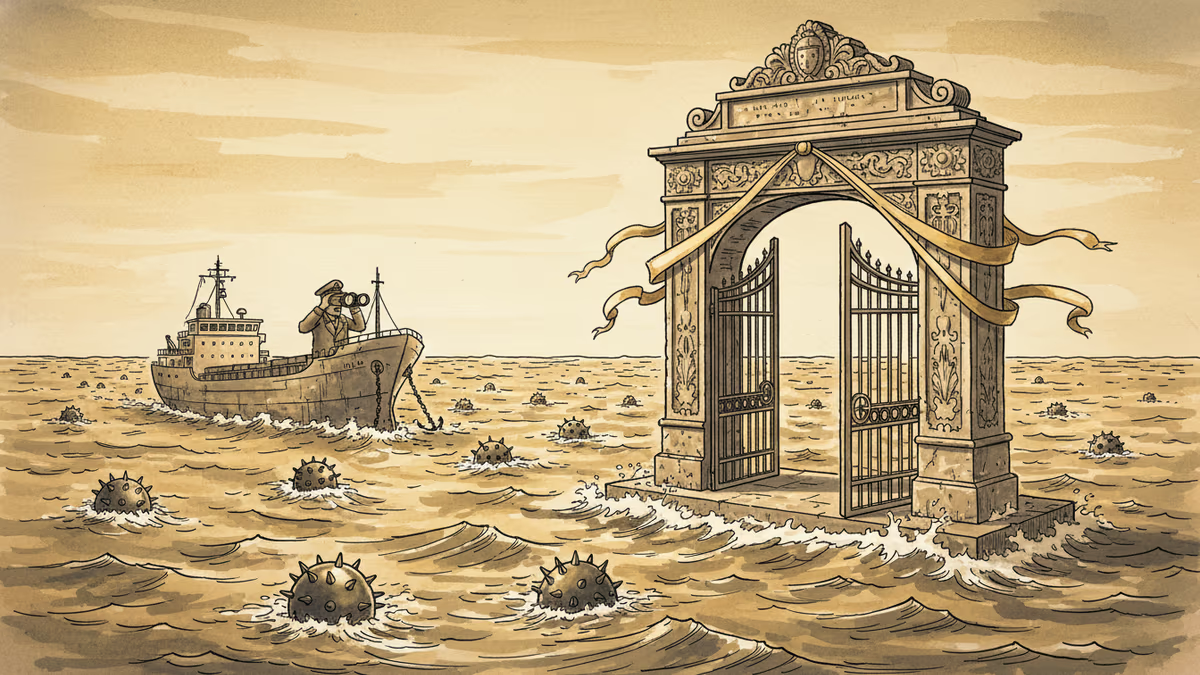
Iran declared the Strait of Hormuz open, but ship trackers show barely any vessels passing through. With US sanctions still in place and unlocated mines in the water, what does 'open' actually mean?
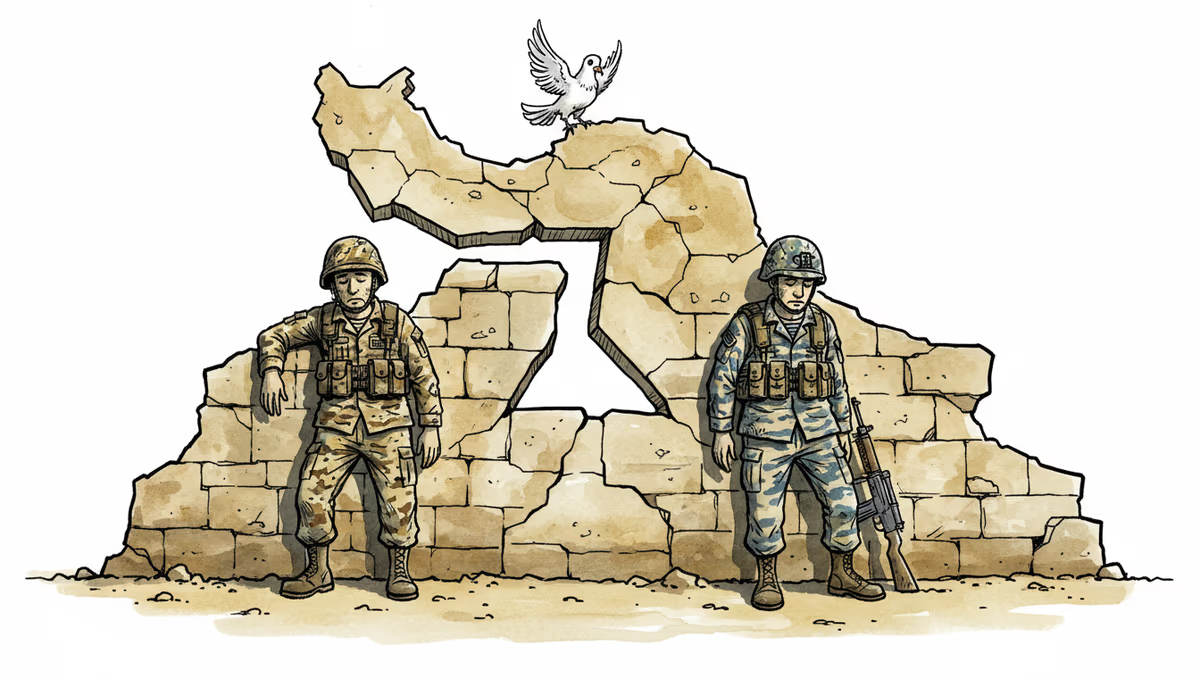
The US-Iran ceasefire announced April 7, 2026, halted a costly war neither side was winning. But with deep mistrust on all sides, can two weeks build a lasting peace?
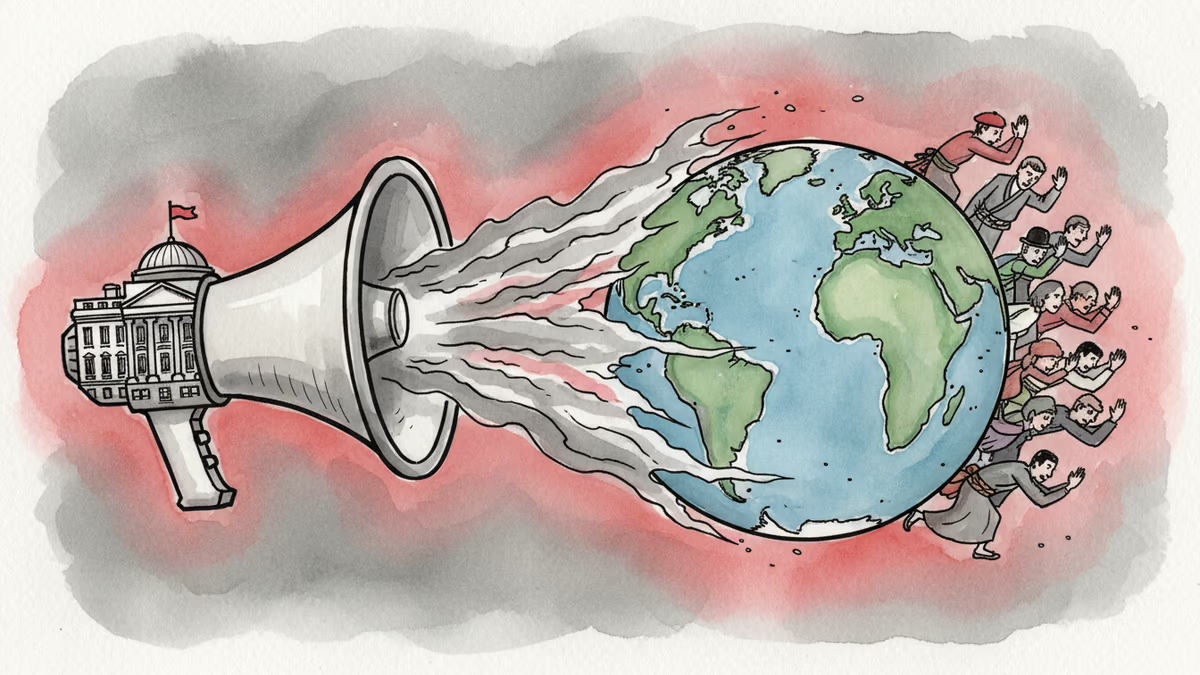
Trump threatened to erase a civilization. A ceasefire followed. But no deal can unwrite those words—or undo what they revealed about US strategy, alliances, and credibility.
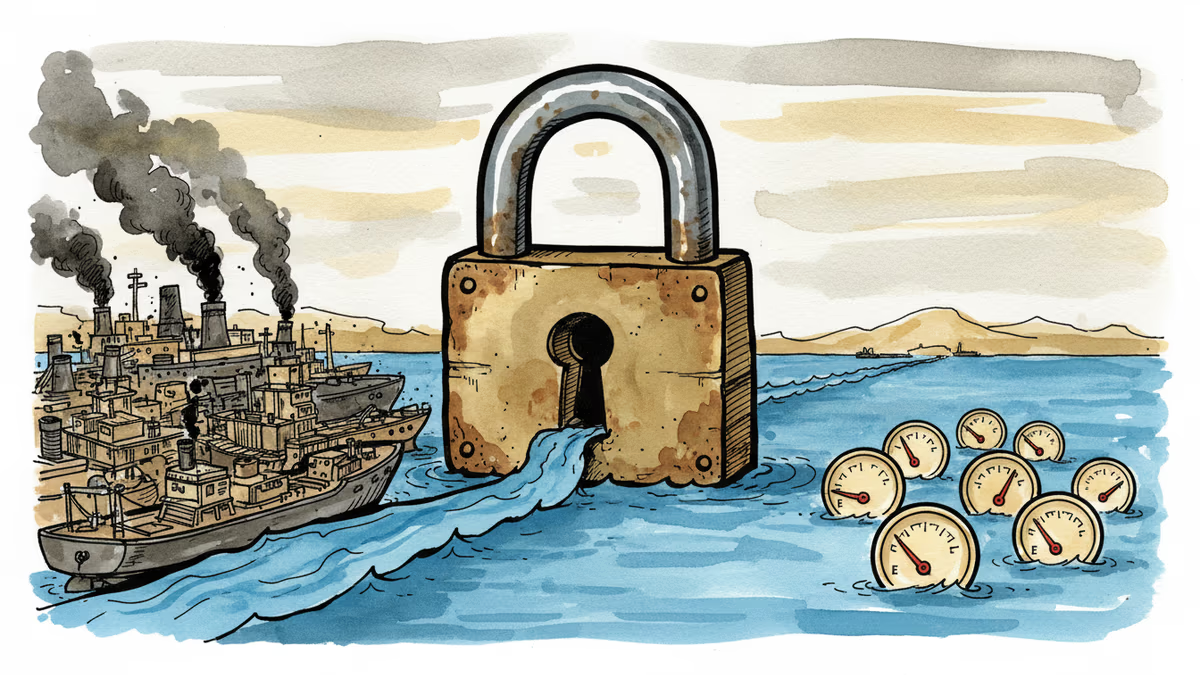
The near-closure of the Strait of Hormuz has triggered the worst energy crisis in modern history. Here's what it reveals about global infrastructure—and what must be built before the next crisis.
Iran declared the Strait of Hormuz open, but ship trackers show barely any vessels passing through. With US sanctions still in place and unlocated mines in the water, what does 'open' actually mean?
The US-Iran ceasefire announced April 7, 2026, halted a costly war neither side was winning. But with deep mistrust on all sides, can two weeks build a lasting peace?
Trump threatened to erase a civilization. A ceasefire followed. But no deal can unwrite those words—or undo what they revealed about US strategy, alliances, and credibility.
The near-closure of the Strait of Hormuz has triggered the worst energy crisis in modern history. Here's what it reveals about global infrastructure—and what must be built before the next crisis.
Thoughts
Share your thoughts on this article
Sign in to join the conversation