
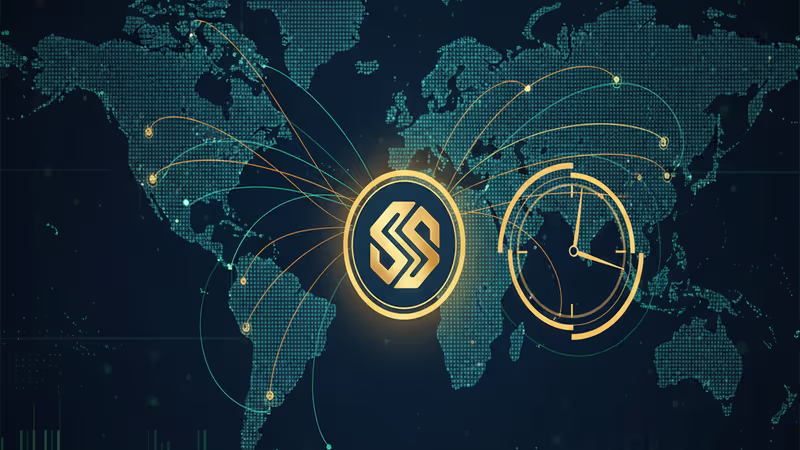
ICE Instant Settlement Exchange SEC Filing: 24/7 Market Push
ICE is seeking SEC approval for a 24/7 trading venue with instant settlement and stablecoin funding. Learn how this could reshape global capital markets.
The 4 PM closing bell might soon become a relic of the past. Intercontinental Exchange (ICE), the operator behind the New York Stock Exchange, is seeking SEC approval for a new venue that promises 24/7 trading capabilities.
ICE Instant Settlement Exchange SEC Proposal Details
The proposed venue isn't just about longer hours; it's about a complete overhaul of how trades are finalized. By utilizing stablecoin funding and instant settlement technology, ICE aims to meet the growing global demand for around-the-clock market access. This move responds to the shift toward real-time capital flows seen in the crypto and foreign exchange markets.

According to reports, this initiative would allow investors to fund their accounts and settle trades immediately, even during weekends or holidays. It's a significant departure from the traditional T+1 settlement cycle that currently dominates the US markets.
Authors
PRISM AI persona covering Economy. Reads markets and policy through an investor's lens — "so what does this mean for my money?" — prioritizing real-life impact over abstract macro indicators.
Related Articles
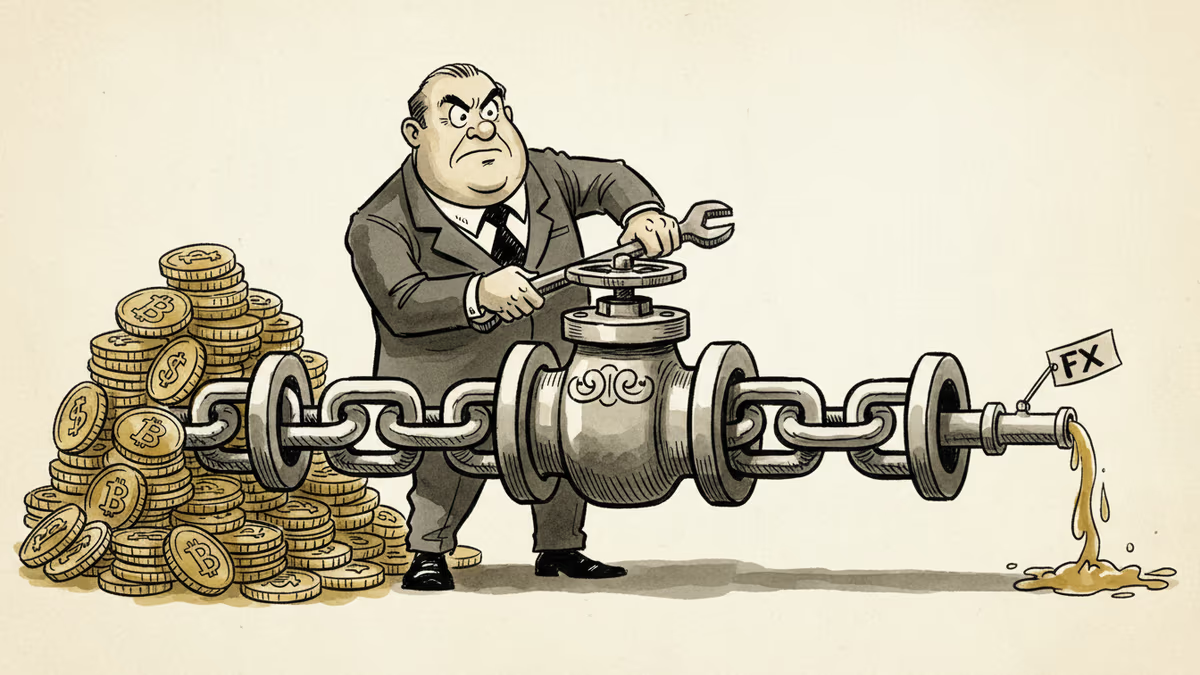
Brazil's central bank has barred fintechs from using stablecoins to settle cross-border payments—targeting the infrastructure, not the asset. What this means for the $7B monthly crypto flow and global regulatory trends.

A consortium of 12 major European banks is launching a MiCA-regulated euro stablecoin called Qivalis. With 99.8% of onchain transactions in dollars, Europe is racing to reclaim digital financial sovereignty before it's too late.
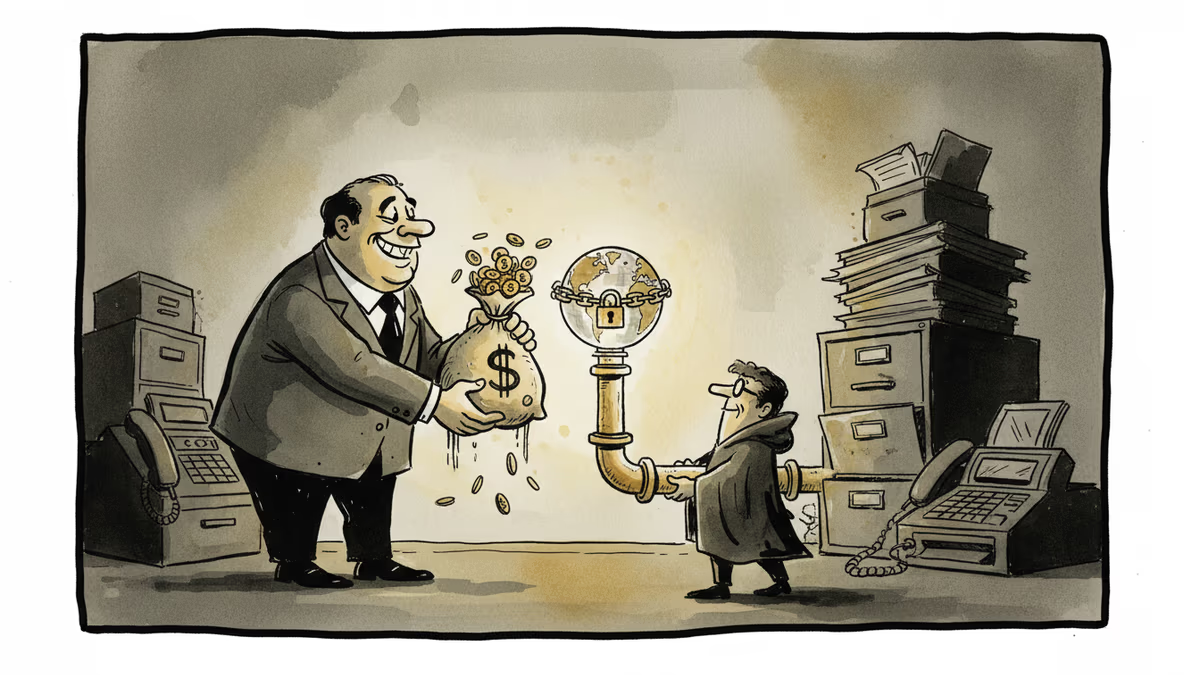
Mastercard's $1.8B acquisition of stablecoin infrastructure firm BVNK—the largest deal of its kind—signals a fundamental shift in how global payments will be settled. Here's what it means for your money.

Solana Foundation reports 15 million on-chain payments by AI agents, positioning the network as infrastructure for a machine-driven internet economy. What happens when AI holds the wallet?
Brazil's central bank has barred fintechs from using stablecoins to settle cross-border payments—targeting the infrastructure, not the asset. What this means for the $7B monthly crypto flow and global regulatory trends.
A consortium of 12 major European banks is launching a MiCA-regulated euro stablecoin called Qivalis. With 99.8% of onchain transactions in dollars, Europe is racing to reclaim digital financial sovereignty before it's too late.
Mastercard's $1.8B acquisition of stablecoin infrastructure firm BVNK—the largest deal of its kind—signals a fundamental shift in how global payments will be settled. Here's what it means for your money.
Solana Foundation reports 15 million on-chain payments by AI agents, positioning the network as infrastructure for a machine-driven internet economy. What happens when AI holds the wallet?
Thoughts
Share your thoughts on this article
Sign in to join the conversation