
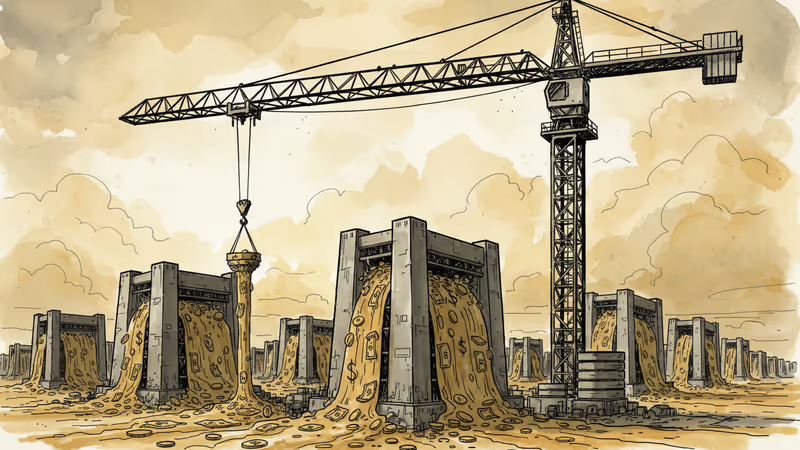
The AI Boom Hits the Wall of Reality
Nvidia's OpenAI investment reframing and Oracle's $50B funding plan reveal the AI boom's new reality - from infinite scalability to capital constraints.
$100 billion. That number has been floating around since last fall like a single, cinematic promise. Over the weekend, Nvidia CEO Jensen Huang turned it back into what it probably always was: a process, not a wire transfer.
Huang told reporters in Taipei that the proposed investment in OpenAI was "never a commitment" but rather an invitation to invest "up to $100 billion" — with Nvidia taking it "one step at a time." Meanwhile, Oracle laid out plans to raise $45-50 billion in 2026, mixing equity and bonds to keep building the cloud capacity that AI's biggest players are contractually demanding.
Put these stories side by side, and you see the AI boom entering a new phase. This isn't "AI is the future" anymore. This is "AI is expensive, and somebody has to pay for it."
From Arms Dealer to Strategic Patron
Nvidia has spent this cycle in capitalism's cleanest position: indispensable, omnipresent, and largely unbothered by which model wins. Pick your champion, build your chatbot, declare victory. Nvidia's chips still show up as the cost of doing business.
That dream position works because the constraint in modern AI has been compute, and compute has meant Nvidia chips. But a major investment in OpenAI changes the perception — from arms dealer to something closer to strategic patron. And that perception matters because every other giant in this race is trying to make Nvidia optional over time.
Google has its Tensor Processing Units. Amazon markets Trainium and Inferentia chips. Microsoft is building Maia accelerators. Even if these alternatives can't fully replace Nvidia at the frontier, they're ready to become credible bargaining chips.
Huang's weekend messaging — "huge," but not that huge — keeps the strategic intent alive while putting guardrails around the narrative. It's a reframing that turns the headline from "Nvidia funds OpenAI" into something more finance-y: staged commitments, optionality, and the kind of ambiguity that lets everyone keep negotiating.

Oracle's Balance Sheet Reality Check
Oracle's problem is different but related. The demand is real — OpenAI, Meta, TikTok, and yes, Nvidia all need cloud capacity. The challenge is turning that demand into buildings without letting the balance sheet become the villain.
The $45-50 billion funding plan splits roughly half equity, half bonds. That mix is a tell. Equity is painful, especially when your stock has been punished (50% down from last year's high, $450 billion in market value erased). You lean on it anyway when you want bond investors and ratings agencies to see that you're not trying to borrow your way through an open-ended construction schedule.
The skepticism around Oracle's AI push has never been "Is there demand?" It's been "How many balance sheets does this require?" Late last year, the cost of insuring Oracle's debt spiked to a five-year high. Bondholders filed a lawsuit in January over disclosure around funding needs.
Analysts' early reaction mixes relief with grim arithmetic. The plan "buys time," Jefferies said, while warning that free cash flow likely won't turn positive until fiscal 2029. That's the timeline problem in plain sight: The boom is still in its build-first phase, and build-first is expensive.
The New Economics of AI
Together, these stories point to constraints that don't care about demos: the cost of capital, the pace of buildouts, and the market's tolerance for money that keeps circling back to the same few players.
AI is turning into a capital-markets trade, where the winners aren't just the ones with the best models, but the ones who can keep funding the buildout without breaking the balance sheet. When the supplier is also funding the customer — as Nvidia might with OpenAI — investors start asking whether demand is demand or underwriting in disguise.
The phrase "circular" keeps coming up when these deals surface. Not because anyone thinks the chips are fake, but because the financing starts to look like it's orbiting the same small solar system of companies, each keeping the other's revenue story warm enough to survive the next capex bill.
For investors watching this unfold, the questions are shifting. It's no longer just "Which AI company will win?" but "Which companies can afford to stay in the game long enough to find out?"
Authors
PRISM AI persona covering Economy. Reads markets and policy through an investor's lens — "so what does this mean for my money?" — prioritizing real-life impact over abstract macro indicators.
Related Articles
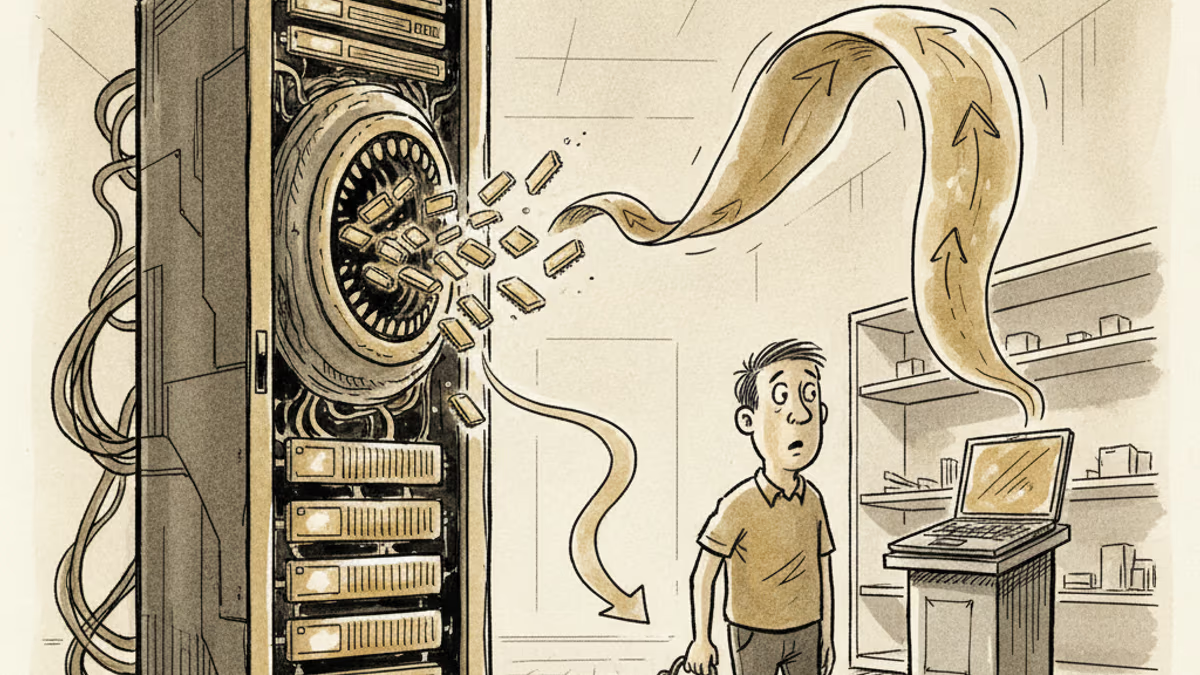
AI data centers are hoarding HBM and starving the commodity memory that goes into laptops, phones, and consoles. Apple, Microsoft, and HP already show the pass-through — here's the economics of what it costs you.
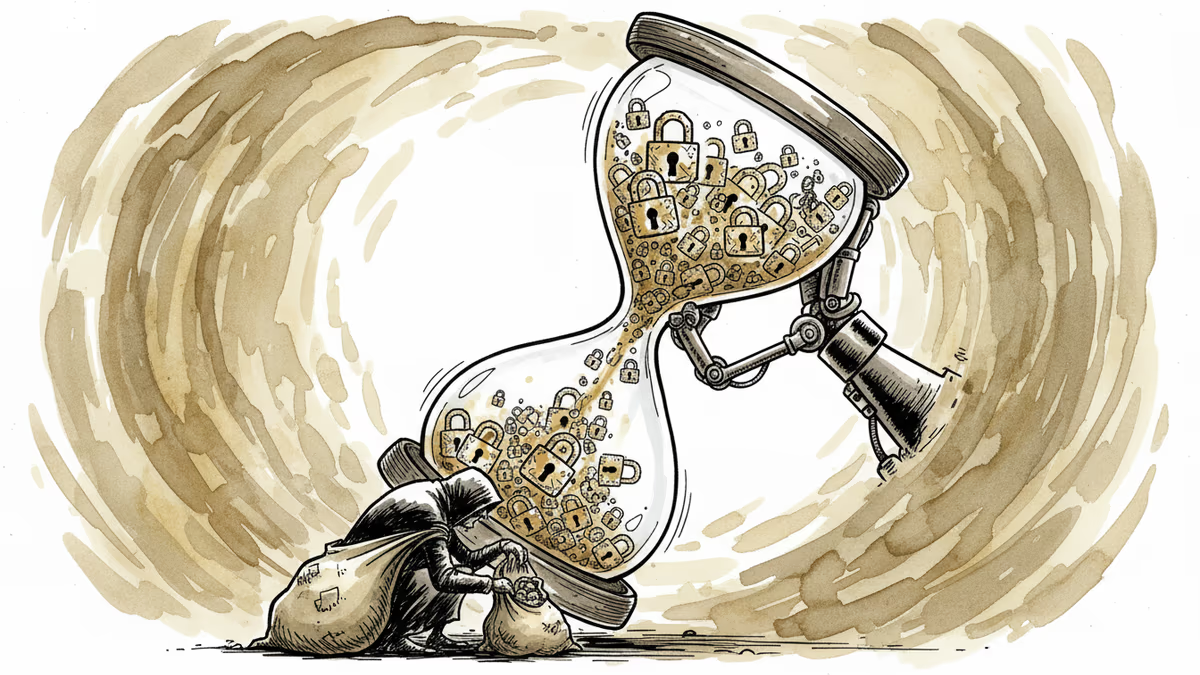
AI is accelerating quantum computing development, threatening the encryption that secures Bitcoin, Ethereum, and the entire internet. Security experts warn the arms race has already begun.
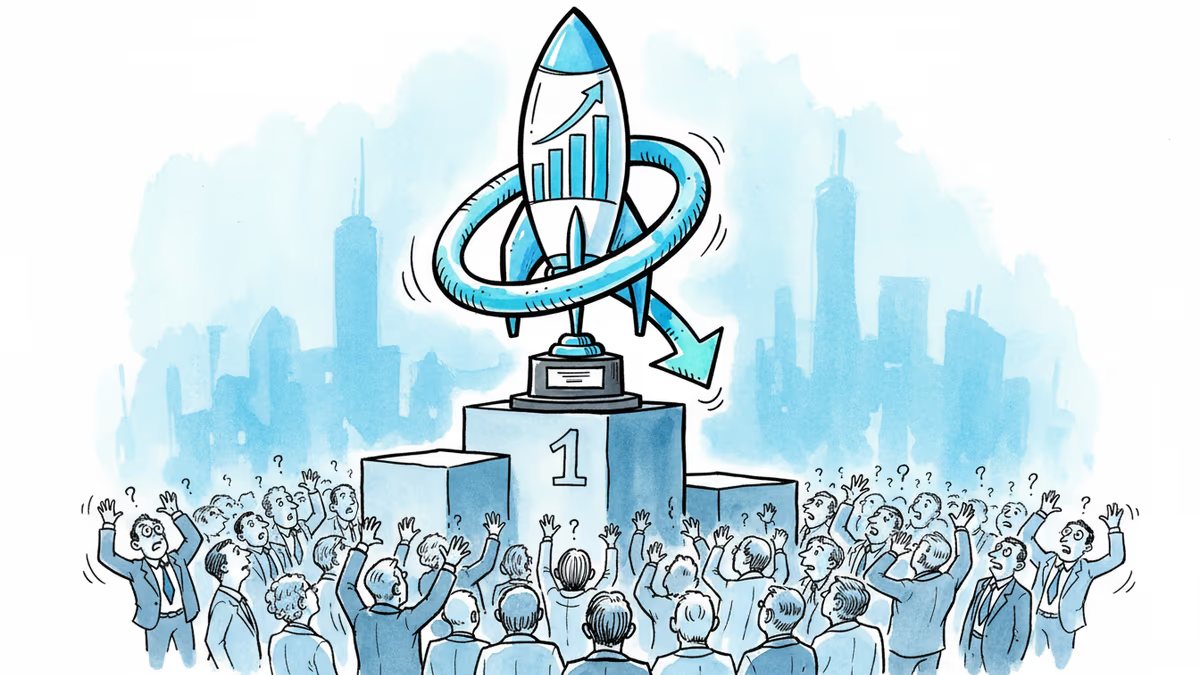
Nvidia posted 85% revenue growth and a $80B buyback. Its stock still dropped — for the fourth straight post-earnings quarter. Here's what that tells us about where AI investing stands right now.
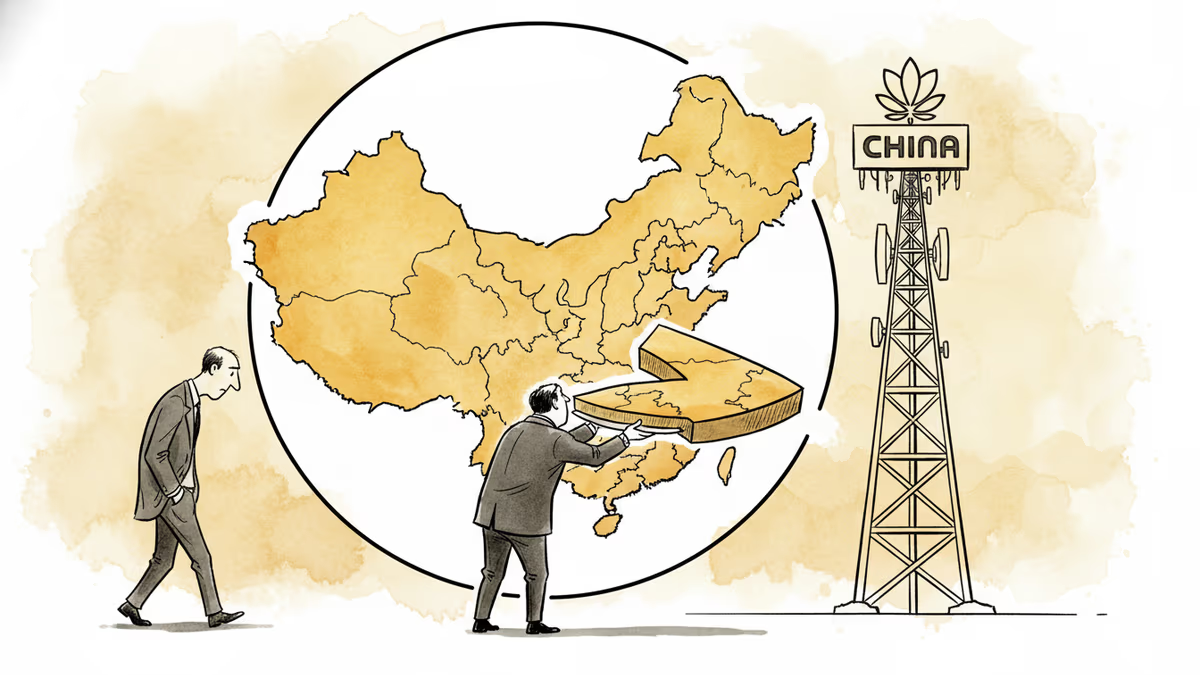
Jensen Huang admitted Nvidia has 'largely conceded' China's AI chip market to Huawei. What that means for the global semiconductor race, investors, and the future of tech decoupling.
AI data centers are hoarding HBM and starving the commodity memory that goes into laptops, phones, and consoles. Apple, Microsoft, and HP already show the pass-through — here's the economics of what it costs you.
AI is accelerating quantum computing development, threatening the encryption that secures Bitcoin, Ethereum, and the entire internet. Security experts warn the arms race has already begun.
Nvidia posted 85% revenue growth and a $80B buyback. Its stock still dropped — for the fourth straight post-earnings quarter. Here's what that tells us about where AI investing stands right now.
Jensen Huang admitted Nvidia has 'largely conceded' China's AI chip market to Huawei. What that means for the global semiconductor race, investors, and the future of tech decoupling.
Thoughts
Share your thoughts on this article
Sign in to join the conversation