

Nvidia H200 China Export 2026: Jensen Huang Eyes $50 Billion Annual Market
At CES 2026, Nvidia CEO Jensen Huang announced the resumption of H200 AI chip exports to China. Discover how this $50 billion opportunity and the 25% U.S. tax policy will impact the tech industry.
A $50 billion market is back on the table. Nvidia CEO Jensen Huang just signaled a massive return to China, noting that customer demand for the H200 AI chip remains "very high" despite long-standing trade tensions.
Nvidia H200 China Export 2026 Status and Strategy
Speaking at a press conference during CES 2026 in Las Vegas on January 6, 2026, Huang confirmed that the company has "fired up" its supply chain. The U.S. government recently indicated it would approve the export of H200 chips, and Nvidia is currently finalizing license details. This move follows a proposal by President Donald Trump in December to allow exports provided that 25% of those sales are paid to the U.S. treasury.

Unlike previous iterations modified for the Chinese market, the H200 for export has not been intentionally slowed down to meet restrictions. Although it remains one or two generations behind Nvidia's latest flagship hardware, its unthrottled performance makes it a critical asset for Chinese tech firms developing domestic AI models.
Revenue Potential and Regulatory Outlook
The potential revenue is staggering. Huang previously estimated the Chinese market could be worth $50 billion annually—none of which is currently baked into the company's existing $500 billion two-year forecast. While the U.S. has signaled a green light, Chinese import approval remains a quiet variable. Huang stated he isn't expecting a formal declaration from Beijing, noting that purchase orders will serve as the primary indicator of regulatory status.
Authors
Related Articles
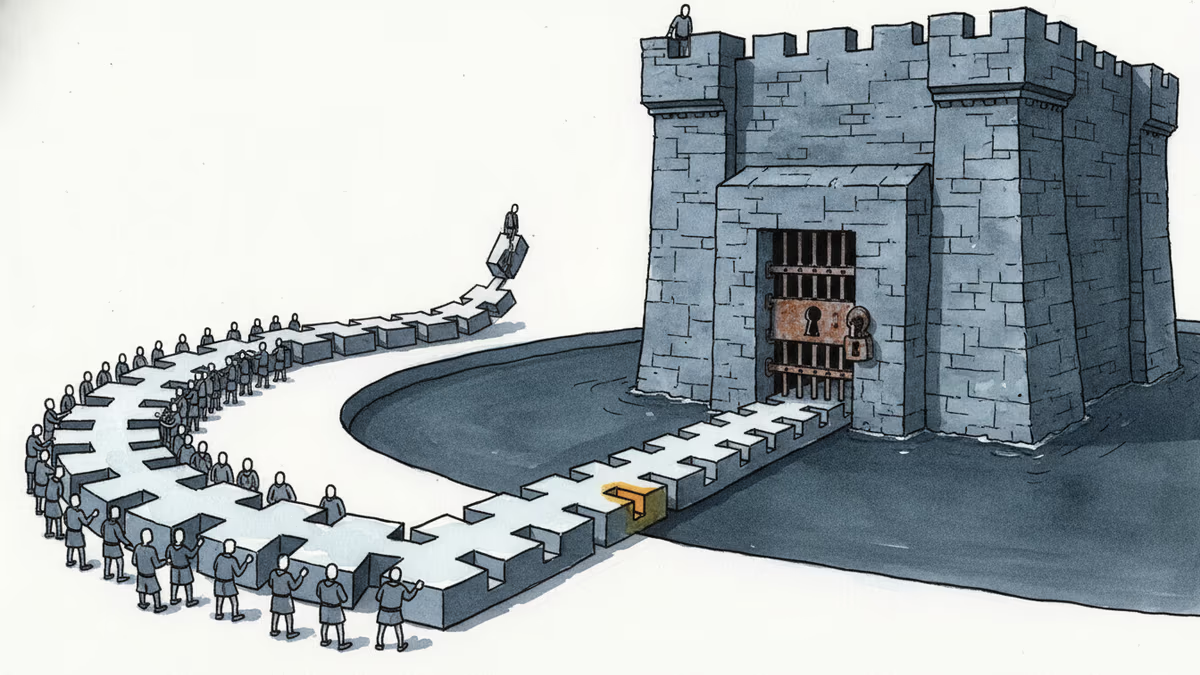
Nvidia shipped roughly a billion RISC-V cores in 2024, then announced it would run CUDA on the open standard. We break down how royalty-free instruction sets and open software stacks are trying to route around CUDA's lock-in. Part 2 of the Semiconductor Sovereignty series.
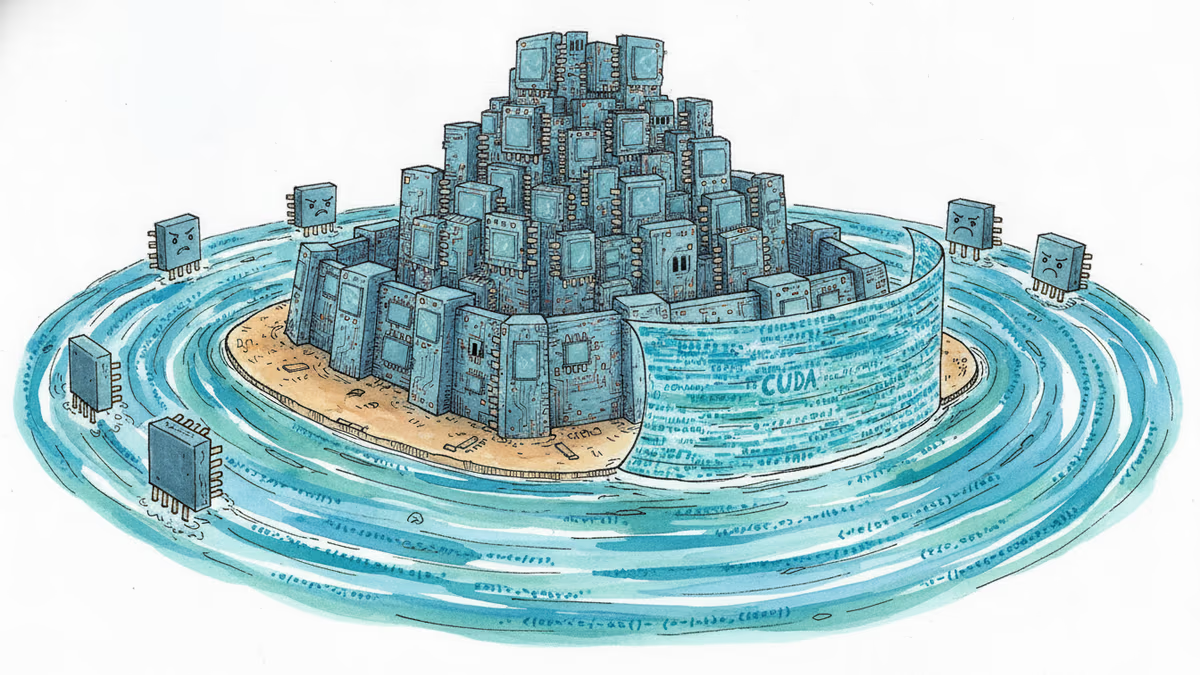
AMD's MI325X matches or beats Nvidia on memory and bandwidth — yet Nvidia's 86-92% share holds. The real moat is CUDA, 20 years in the making. Part 1 of 4.
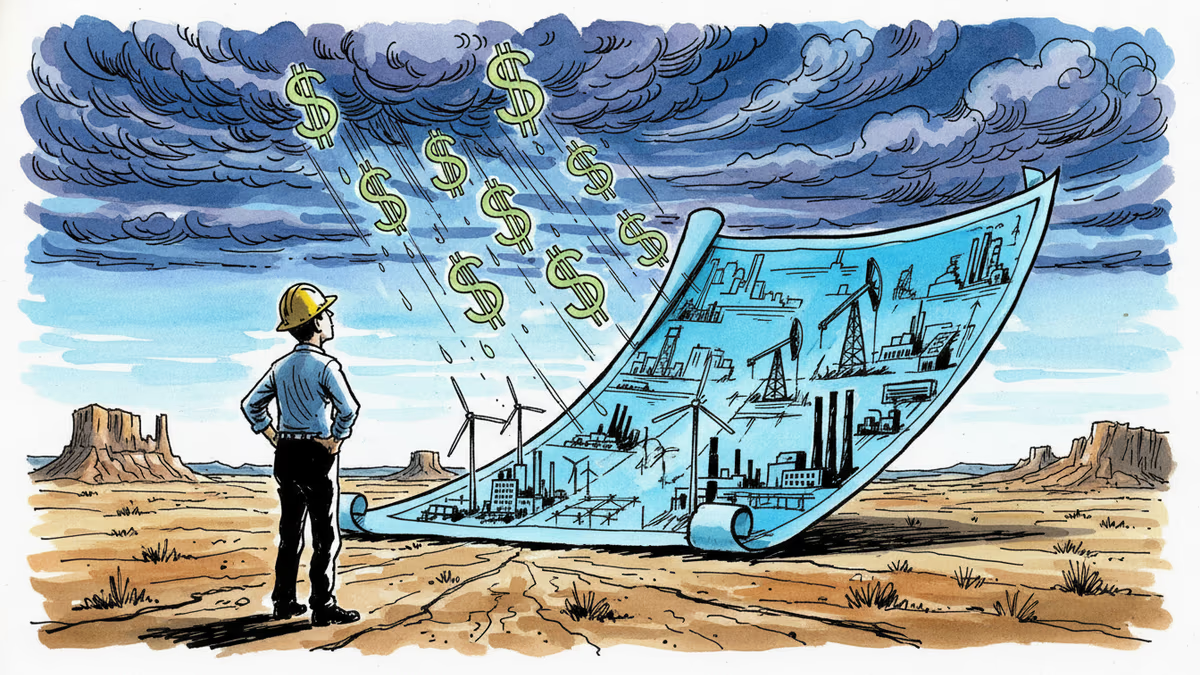
SpaceX plans to invest at least $55 billion in a Texas AI chip factory called Terafab, with total costs potentially reaching $119 billion. We break down what's real, what's at stake, and who wins or loses.
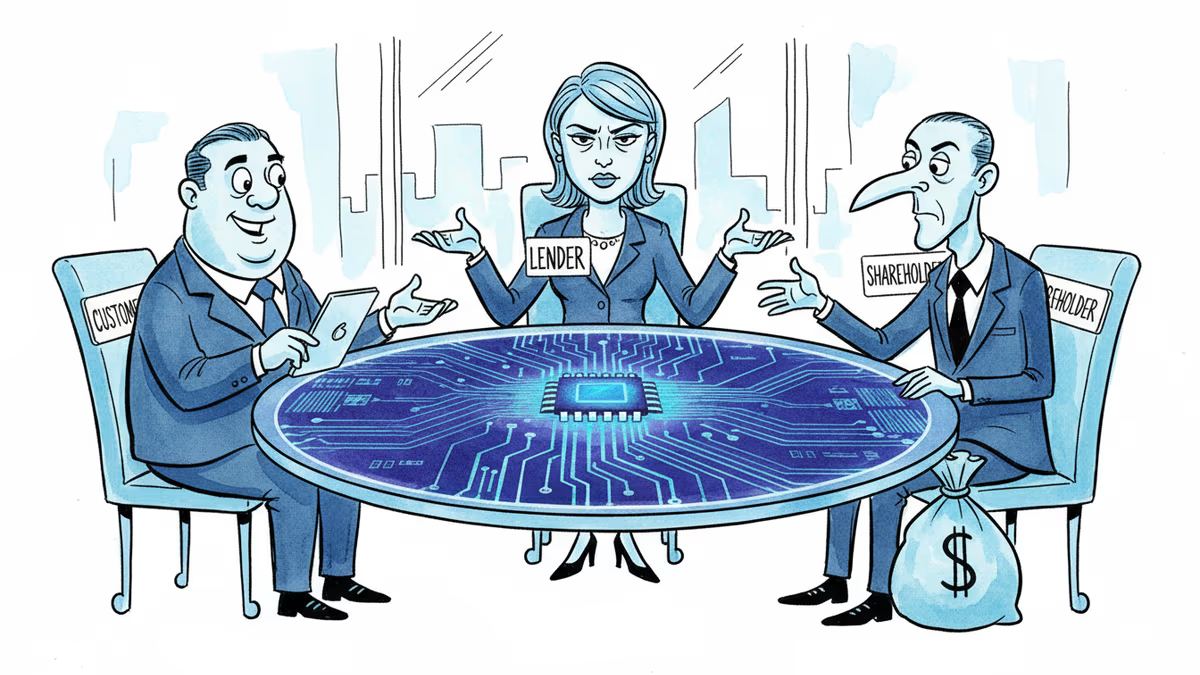
Cerebras Systems is targeting a $26.6B valuation in what could be 2026's largest tech IPO. But the real story is how deeply OpenAI is embedded in its capital structure—as customer, lender, and potential shareholder.
Nvidia shipped roughly a billion RISC-V cores in 2024, then announced it would run CUDA on the open standard. We break down how royalty-free instruction sets and open software stacks are trying to route around CUDA's lock-in. Part 2 of the Semiconductor Sovereignty series.
AMD's MI325X matches or beats Nvidia on memory and bandwidth — yet Nvidia's 86-92% share holds. The real moat is CUDA, 20 years in the making. Part 1 of 4.
SpaceX plans to invest at least $55 billion in a Texas AI chip factory called Terafab, with total costs potentially reaching $119 billion. We break down what's real, what's at stake, and who wins or loses.
Cerebras Systems is targeting a $26.6B valuation in what could be 2026's largest tech IPO. But the real story is how deeply OpenAI is embedded in its capital structure—as customer, lender, and potential shareholder.
Thoughts
Share your thoughts on this article
Sign in to join the conversation