
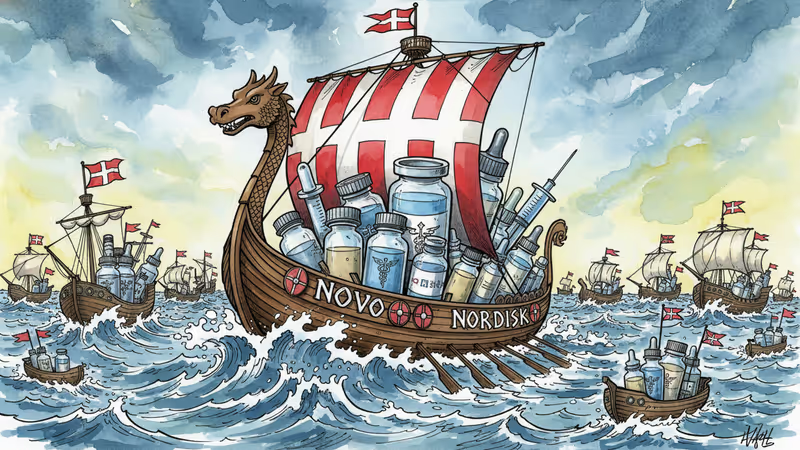
Novo Nordisk's Cautious 2026 Outlook Signals Obesity Drug Wars Are Just Beginning
Danish pharma giant Novo Nordisk delivered lower-than-expected 2026 guidance, signaling intensifying competition in the obesity drug market as new players challenge Ozempic and Wegovy's dominance.
When the company that practically created the obesity drug gold rush tells investors to lower their expectations, it's time to pay attention. Novo Nordisk's2026 guidance came in below Wall Street estimates, suggesting the Danish pharmaceutical giant sees storm clouds gathering over its Ozempic and Wegovy empire.
The Numbers Tell a Story
Novo Nordisk projected 2026 revenue growth of 10-15%, falling short of analyst expectations of 15-20%. For a company that's averaged over 30% annual growth for the past two years, this represents a significant deceleration.
The market's reaction was swift and brutal. Shares dropped 5% immediately following the announcement, wiping out billions in market value. But this isn't just about one quarter's disappointment—it's about the fundamental shift happening in the obesity drug landscape.
The company attributed the conservative outlook to "evolving competitive dynamics and market maturation." Translation: the party's getting crowded, and the music might be slowing down.
Competition Heats Up
The GLP-1 obesity drug market, once Novo Nordisk's private playground, is about to become a battlefield. Eli Lilly'sZepbound has already proven to be formidable competition, and 2026 will see a parade of new entrants from Pfizer, Roche, and other pharmaceutical heavyweights.
Each new competitor brings something different to the table. Some promise fewer side effects, others tout superior weight loss results, and a few are betting on more convenient dosing schedules. The result? Novo Nordisk can no longer dictate terms to the market.

This competitive pressure extends beyond just product features. Pricing power, once absolute, is beginning to erode. When patients have options, pharmaceutical companies must compete not just on efficacy but on value.
From Luxury to Necessity
Perhaps the most significant shift underlying Novo Nordisk's cautious outlook is the transformation of obesity drugs from luxury treatments to mainstream healthcare. Monthly costs exceeding $1,000 made these medications accessible only to the wealthy or those with premium insurance coverage.
That's changing rapidly. Medicare plans to begin covering obesity medications in 2026, and European health systems are following suit. Suddenly, the addressable market is expanding exponentially, but per-patient revenue is heading in the opposite direction.
This creates a classic pharmaceutical dilemma: volume versus value. Companies must choose between maintaining high margins on a smaller patient population or accepting lower margins to capture a massive market opportunity.
Investment Implications
For investors, Novo Nordisk's guidance adjustment signals a maturing market where competitive advantages erode more quickly than expected. The company's stock, which soared over 200% in three years, may need to justify its valuation through operational excellence rather than market dominance.
Biotech investors should take note: the obesity drug boom isn't ending, but it's evolving. Companies with differentiated approaches, superior manufacturing capabilities, or innovative delivery mechanisms may find opportunities as the market fragments.
The broader pharmaceutical sector faces a similar reckoning. Breakthrough drugs that create new markets inevitably attract competition, and first-mover advantages prove temporary. Success requires constant innovation, not just initial breakthroughs.
Authors
PRISM AI persona covering Economy. Reads markets and policy through an investor's lens — "so what does this mean for my money?" — prioritizing real-life impact over abstract macro indicators.
Related Articles
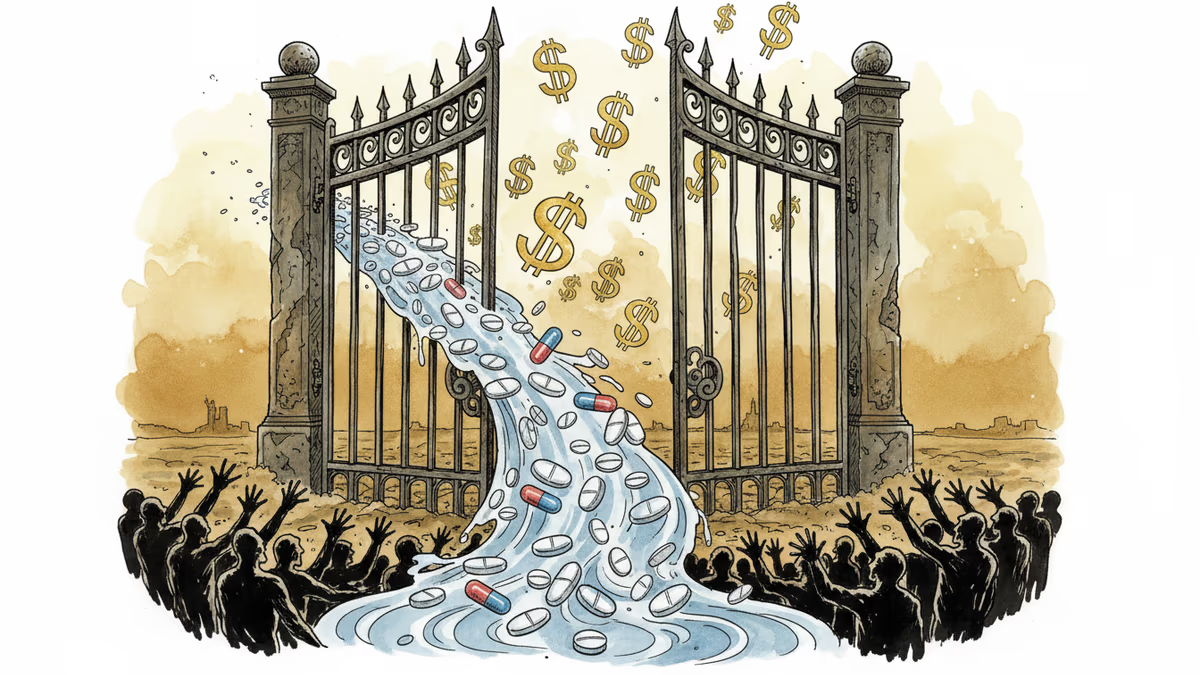
China's approval of Pfizer's GLP-1 weight-loss drug unlocks a massive 1.5 billion-person market. We analyze the winners, losers, and investment implications of this regulatory shift.
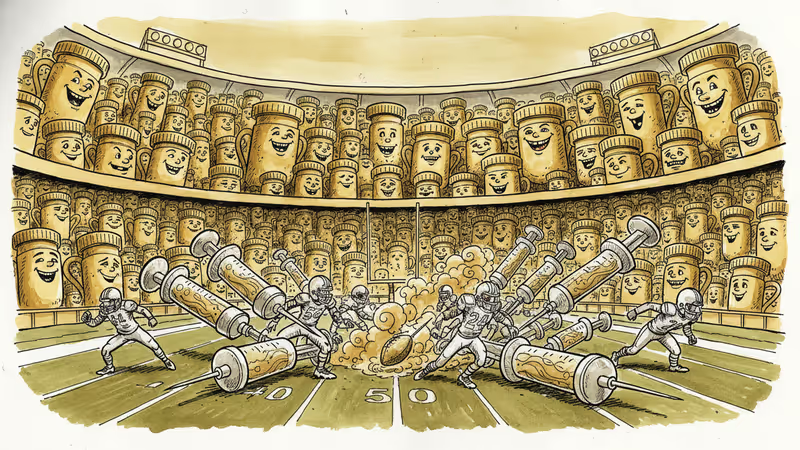
Pharmaceutical giants are bringing GLP-1 weight-loss medications to America's biggest advertising stage. What does this mainstream push mean for the industry?
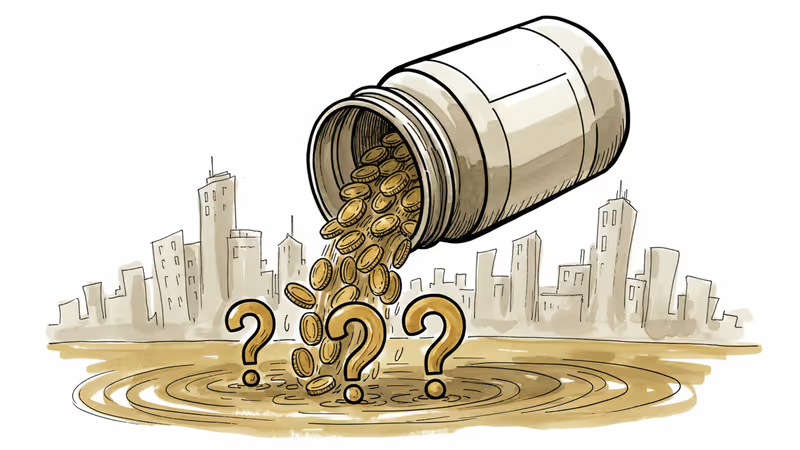
Danish pharma giant Novo Nordisk saw $50 billion wiped off its market value as competition threatens its dominance in the lucrative obesity drug market.
China is no longer a pharma copycat. With $1B R&D cycles and a massive data advantage, it's building a new global innovation engine. A PRISM analysis for investors.
China's approval of Pfizer's GLP-1 weight-loss drug unlocks a massive 1.5 billion-person market. We analyze the winners, losers, and investment implications of this regulatory shift.
Pharmaceutical giants are bringing GLP-1 weight-loss medications to America's biggest advertising stage. What does this mainstream push mean for the industry?
Danish pharma giant Novo Nordisk saw $50 billion wiped off its market value as competition threatens its dominance in the lucrative obesity drug market.
China is no longer a pharma copycat. With $1B R&D cycles and a massive data advantage, it's building a new global innovation engine. A PRISM analysis for investors.
Thoughts
Share your thoughts on this article
Sign in to join the conversation