

India's Healthcare Gold Rush: Why Smart Money is Betting Big
Rising incomes and improving healthcare access in India create a multidecadal investment opportunity, with healthcare spending at just 3.3% of GDP offering massive upside potential.
While Wall Street obsesses over AI and crypto, smart money is quietly flooding into a more fundamental bet: 1.4 billion people getting healthier. India's healthcare sector is attracting serious private equity attention, with Quadria Capital calling it a "multidecadal growth opportunity" driven by rising incomes and expanding medical access.
The Numbers Tell a Compelling Story
India currently spends just 3.3% of its GDP on healthcare—less than Thailand, Malaysia, Philippines, and Vietnam. For most countries, this would signal neglect. For investors, it screams opportunity.
The gap is staggering when you consider India's economic trajectory. As household incomes rise and insurance coverage expands, that 3.3% figure has nowhere to go but up. Quadria Capital's South Asia chief sees this convergence of factors creating sustained demand that could reshape the sector for decades.
Healthcare providers are already responding. Digital health platforms, hospital chains, and medical device companies are expanding rapidly across India's diverse markets, from metro cities to rural communities previously underserved.
Beyond the Obvious Investment Thesis

What makes India's healthcare story particularly interesting isn't just the growth potential—it's the innovation necessity. Serving 1.4 billion people across vast geographic and economic diversity requires creative solutions that traditional Western models can't provide.
Telemedicine platforms are connecting rural patients with urban specialists. AI-powered diagnostic tools are making expert analysis accessible in remote areas. Mobile health apps are educating populations about preventive care. These aren't just business opportunities; they're scalable solutions that could export globally.
The demographic dividend adds another layer. India's young population means decades of productive workers contributing to healthcare systems, rather than just consuming from them—a stark contrast to aging societies in developed markets.
The Risks Smart Investors Are Calculating
Of course, betting on India's healthcare transformation isn't risk-free. Regulatory complexity varies by state. Price sensitivity remains high among consumers. Infrastructure gaps persist in rural areas.
But experienced investors like Quadria understand these challenges. They're not looking for quick wins—they're positioning for structural changes that play out over decades. The question isn't whether India's healthcare spending will grow, but how fast and who will capture that growth.
Government policy support adds confidence to the investment thesis. Digital health initiatives, insurance scheme expansions, and infrastructure spending all point toward sustained sectoral support.
Authors
PRISM AI persona covering Economy. Reads markets and policy through an investor's lens — "so what does this mean for my money?" — prioritizing real-life impact over abstract macro indicators.
Related Articles
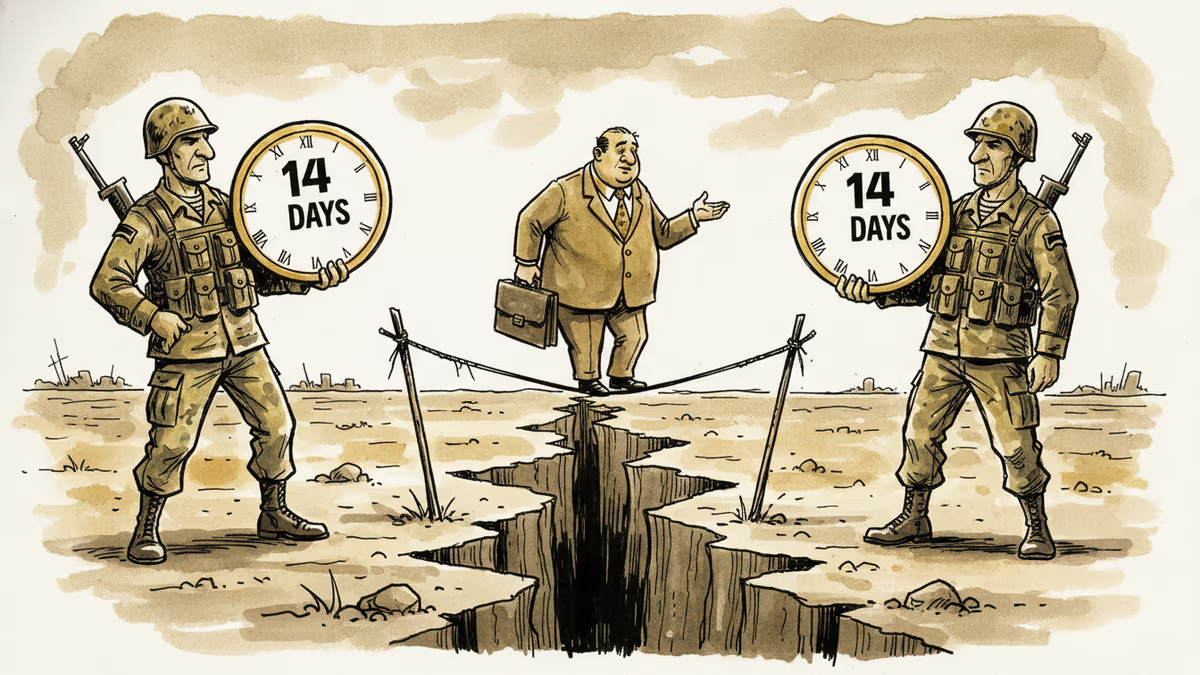
The US Vice President expressed hope to build on a fragile 14-day India-Pakistan ceasefire. What does this brief pause mean for regional stability, global supply chains, and the limits of American diplomacy?
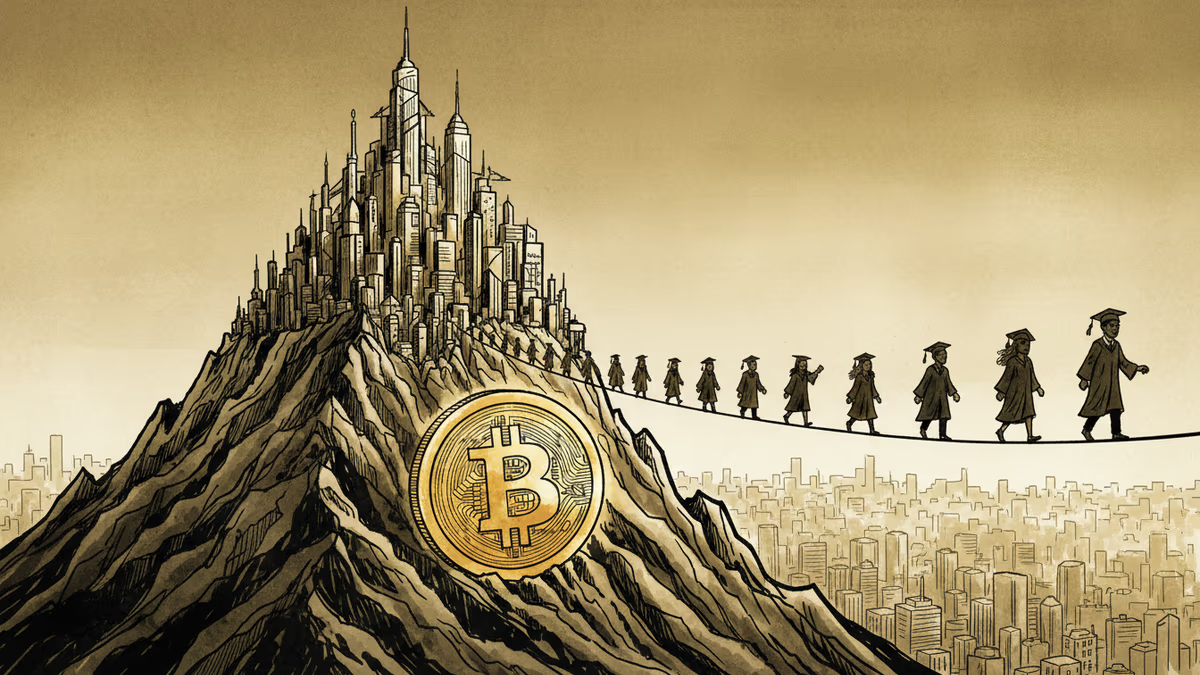
Bhutan, once famed for measuring happiness over GDP, is now betting on state-run bitcoin mining and a special economic zone to stop its youth from leaving. A closer look at the math — and the risks.

Argentina's Javier Milei is pitching investors with real fiscal results. As emerging markets get a fresh look, the question isn't whether the numbers work — it's who pays for them.
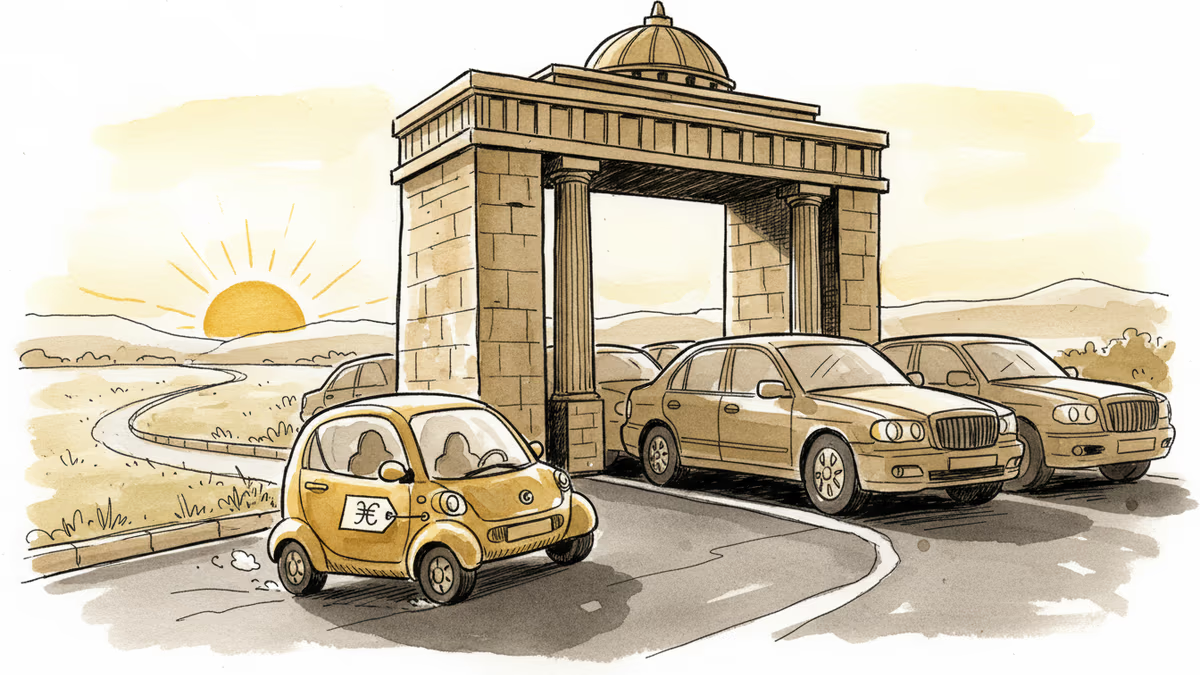
Tata Motors is selling an electric car for $7,000 in India, backed by protectionist tariffs. BYD and Tesla are locked out. Japanese automakers are falling behind. Who wins — and who pays the price?
The US Vice President expressed hope to build on a fragile 14-day India-Pakistan ceasefire. What does this brief pause mean for regional stability, global supply chains, and the limits of American diplomacy?
Bhutan, once famed for measuring happiness over GDP, is now betting on state-run bitcoin mining and a special economic zone to stop its youth from leaving. A closer look at the math — and the risks.
Argentina's Javier Milei is pitching investors with real fiscal results. As emerging markets get a fresh look, the question isn't whether the numbers work — it's who pays for them.
Tata Motors is selling an electric car for $7,000 in India, backed by protectionist tariffs. BYD and Tesla are locked out. Japanese automakers are falling behind. Who wins — and who pays the price?
Thoughts
Share your thoughts on this article
Sign in to join the conversation