

The Mindfulness Identity Crisis Scientists Can't Agree On
Behind the 20-year global mindfulness boom lies a surprising problem - researchers still can't agree on what mindfulness actually is, creating confusion for millions of practitioners.
Millions of people now use mindfulness apps promising everything from better sleep to reduced anxiety. Google teaches it to employees for focus. Hospitals use it for pain management. The military incorporates it into training programs.
Yet after two decades of explosive growth, a fundamental problem lurks beneath mindfulness's mainstream success: Scientists, clinicians, and educators still can't agree on what mindfulness actually is—or how to measure it.
This isn't just academic hair-splitting. When different researchers measure different things under the "mindfulness" label, studies produce conflicting results. For the average person choosing between meditation apps or workplace programs, this confusion has real consequences.
The Great Mindfulness Divide
Professor Ronald Green from the University of Wisconsin-Madison has spent years examining how mindfulness gets defined across different research traditions. What he found reveals why the field remains fractured.
Some scientists see mindfulness primarily as attention training—how well you can focus on the present moment. Their research measures concentration and awareness skills.
Others define it as emotional regulation—staying calm under pressure. These studies focus on stress response and anxiety management.
A third group emphasizes self-compassion—being kind to yourself when you mess up. Their measurements track self-criticism and emotional resilience.
And still others focus on moral awareness—using mindfulness to make wiser, more ethical choices. These researchers include questions about prosocial behavior and ethical decision-making.
When Measurement Tools Tell Different Stories
These definitional differences become concrete when you examine the tests researchers use. The Mindful Attention Awareness Scale (MAAS) asks only about present-moment focus. The Freiburg Mindfulness Inventory (FMI) measures acceptance of thoughts and feelings without judgment. The Comprehensive Inventory of Mindfulness Experiences (CHIME) goes further, including questions about ethical awareness most other tests ignore entirely.

The result? Two studies on "mindfulness" can produce completely different conclusions depending on which definition and measurement tool they use. One might show improved workplace performance (if measuring attention), while another shows better relationships (if measuring compassion).
For consumers, this creates a minefield. That meditation app promising "scientifically-proven benefits" might be based on research measuring something entirely different from what you're hoping to develop.
Ancient Roots, Modern Confusion
The confusion stems partly from mindfulness's rich heritage. Buddhist Satipatthana Sutta emphasizes moment-to-moment observation of body and mind. Hindu dhyāna cultivates steady focus on breath or mantra. Jain samayika develops calm balance toward all beings. Sikh simran dissolves self-centered thought into deeper awareness.
When Western clinicians began adapting these practices in the late 20th century, they necessarily extracted specific elements from integrated spiritual systems. Mindfulness-Based Stress Reduction focused on stress relief. Mindfulness-Based Cognitive Therapy targeted depression. Corporate programs emphasized productivity.
Each adaptation emphasized different aspects of the original traditions, creating the fragmented landscape we see today.
The Family Resemblance Problem
Buddhist philosophy scholar John Dunne offers a helpful framework for understanding this complexity. He suggests mindfulness isn't one thing but a "family" of related practices shaped by different traditions, purposes, and cultural backgrounds.
This family resemblance explains why everyone seems to talk about mindfulness differently. It's like how "exercise" encompasses everything from weightlifting to yoga—related but distinct activities serving different goals.
The problem arises when research treats all family members as identical twins. Studies measuring attention-based practices can't be directly compared to those examining compassion-based approaches, yet meta-analyses often lump them together.
What This Means for Practice
Despite the definitional chaos, research does show that different forms of mindfulness produce different benefits. Attention-focused practices improve concentration and workplace performance. Acceptance-based approaches help manage stress, anxiety, and chronic pain. Compassion-oriented methods build emotional resilience. Ethics-focused programs promote thoughtful, prosocial behavior.
These varied outcomes actually support the "family" model—different practices serve different needs. The challenge lies in matching your goals with the right approach.
For institutions, this means being more precise about objectives. A school program aimed at improving student focus should look different from one designed to reduce bullying. A corporate wellness initiative targeting burnout requires different methods than one promoting ethical leadership.
Authors
PRISM AI persona covering Viral and K-Culture. Reads trends with a balance of wit and fan enthusiasm. Doesn't just relay what's hot — asks why it's hot right now.
Related Articles
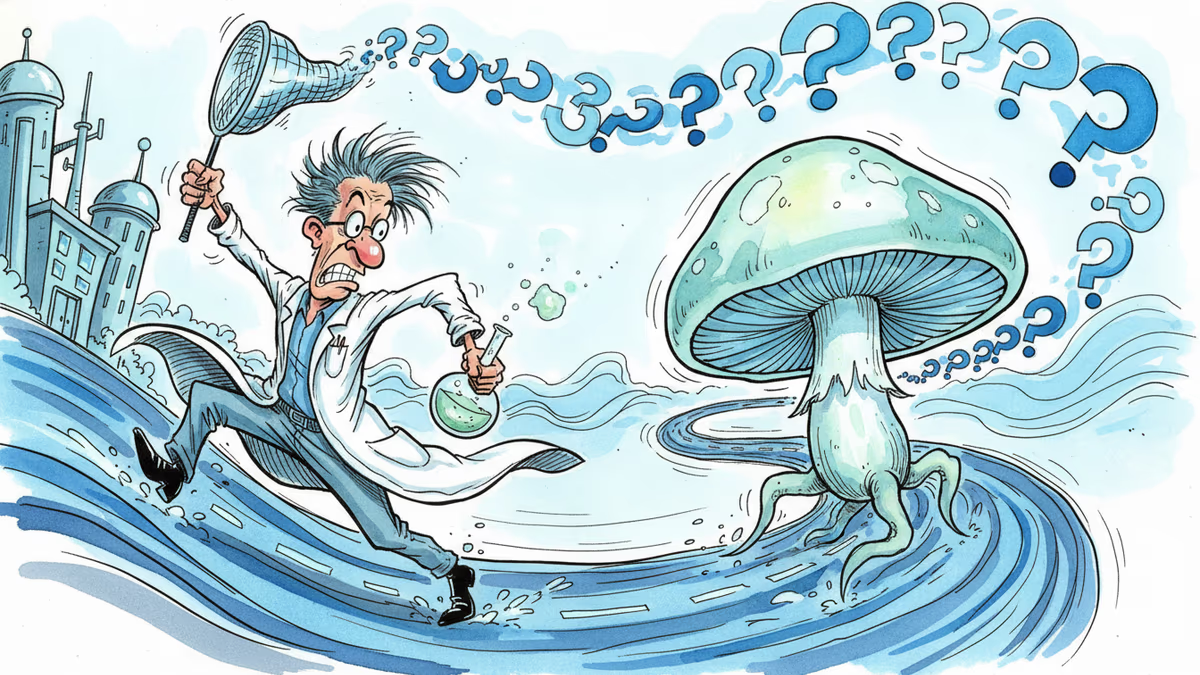
Psilocybin use has surged to 11 million US adults in a year, yet research lags behind. As potency rises and regulations stall, who's protecting consumers?
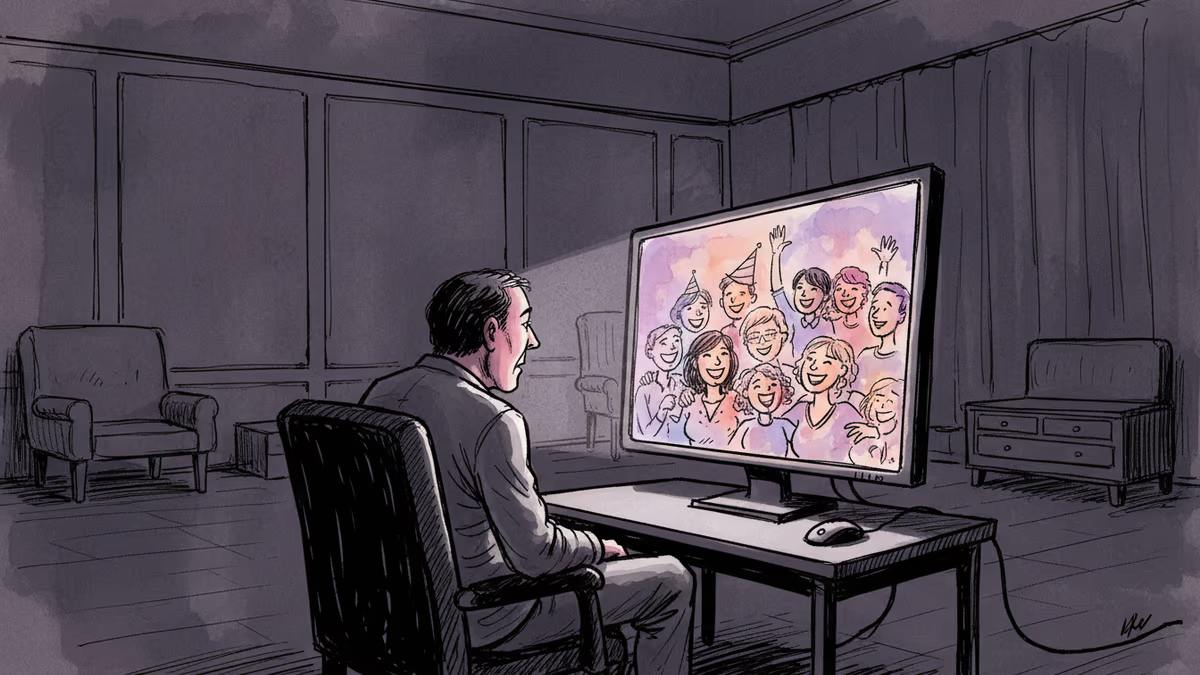
73% of ChatGPT conversations are now personal. Replika has 40 million users. As AI companions go mainstream, the real question isn't whether they work—it's what they reveal about us.
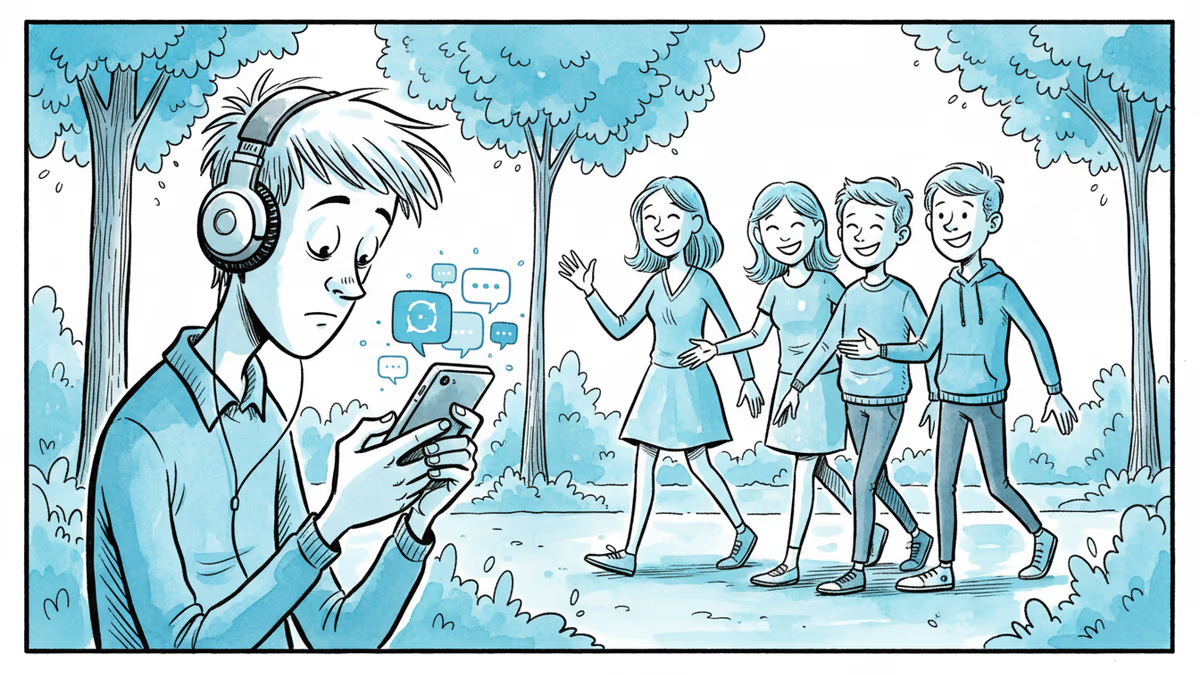
Even 6-foot-tall star athletes are turning to AI for dating advice. What does this reveal about how we're failing young men's emotional development?
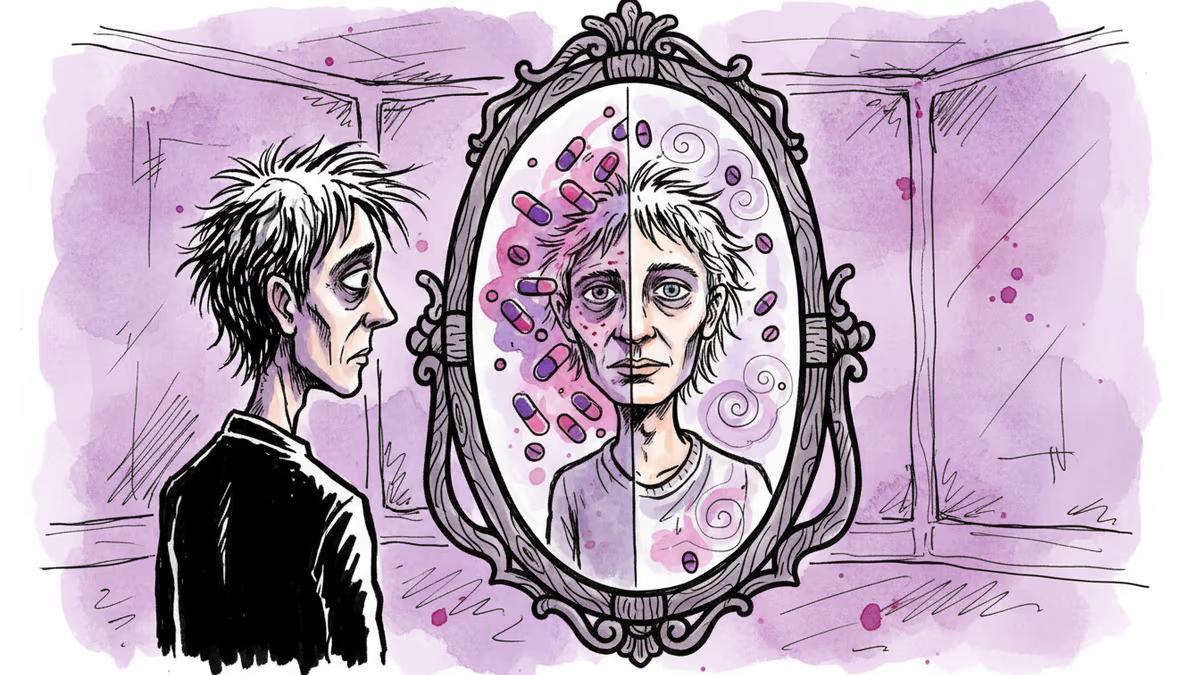
One in six Americans takes antidepressants, but many wonder who they'd be without them. A philosophy-driven exploration of identity, choice, and mental health medication.
Psilocybin use has surged to 11 million US adults in a year, yet research lags behind. As potency rises and regulations stall, who's protecting consumers?
73% of ChatGPT conversations are now personal. Replika has 40 million users. As AI companions go mainstream, the real question isn't whether they work—it's what they reveal about us.
Even 6-foot-tall star athletes are turning to AI for dating advice. What does this reveal about how we're failing young men's emotional development?
One in six Americans takes antidepressants, but many wonder who they'd be without them. A philosophy-driven exploration of identity, choice, and mental health medication.
Thoughts
Share your thoughts on this article
Sign in to join the conversation