
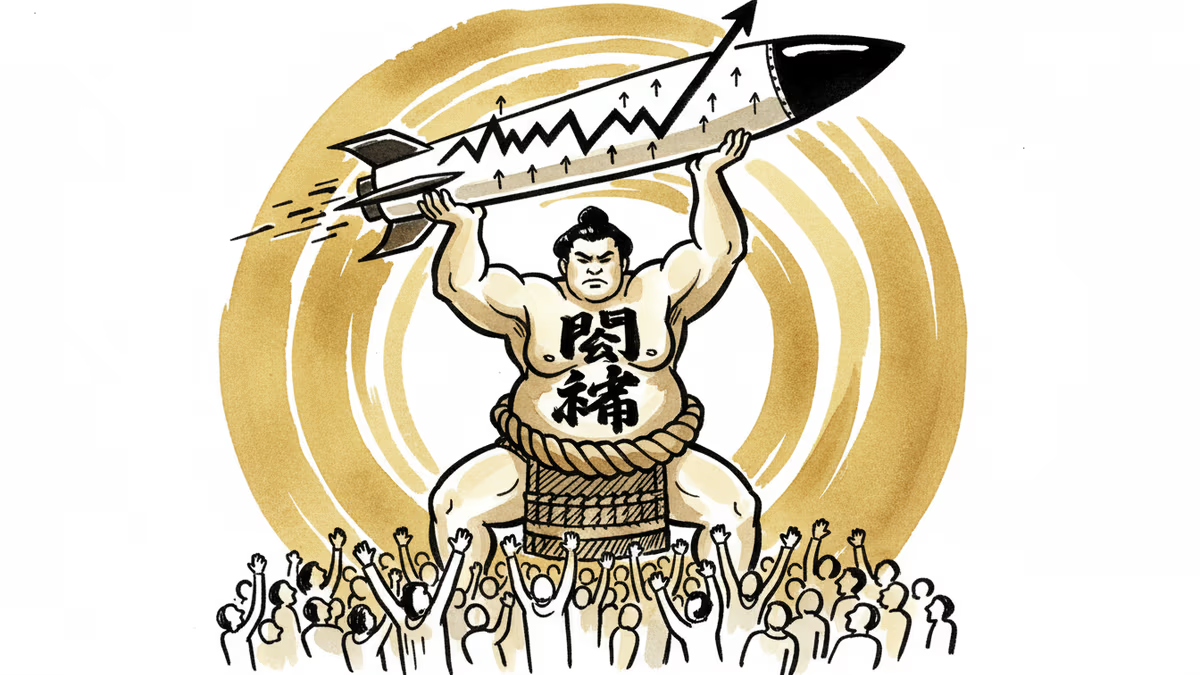
Japan's Nikkei Soars to Record High After Takaichi's Landslide Win
PM Sanae Takaichi's ruling party secured a two-thirds supermajority, sending the Nikkei 225 to record highs above 57,000. Markets celebrate political stability, but currency and broader economic challenges remain.
Tokyo's trading floors erupted in celebration Monday morning as the Nikkei 225 index smashed through the 57,000 barrier for the first time in history. The 5% surge came on the heels of Prime Minister Sanae Takaichi's crushing electoral victory, where her Liberal Democratic Party secured a commanding two-thirds supermajority in parliament.
This wasn't just another market rally—it was a decisive vote of confidence in political stability that investors had been craving for months.
The Numbers Tell the Story
The electoral mathematics were staggering. Takaichi's LDP alone captured 316 seats in the 465-member lower house, comfortably surpassing the 261-seat threshold for absolute majority. This marks the party's strongest showing since its founding in 1955, eclipsing even the 300 seats won by late Prime Minister Yasuhiro Nakasone in 1986.
The Nikkei closed up 2,110.26 points at 56,363.94, though it had briefly touched 57,000 during morning trading. The ripple effects spread across Asia: South Korea's Kospi surged 4.2%, Hong Kong's Hang Seng climbed 1.7%, and Shanghai's composite index rose 1.3%.
"Japan just delivered the kind of election result markets instinctively embrace because it removes the one thing traders price at a premium: political ambiguity," said Stephen Innes of SPI Asset Management.
From Weakness to Overwhelming Strength
The transformation is remarkable. Just months ago, Japan's government was seen as politically fragile, struggling to implement meaningful reforms. Now, Takaichi commands what Neil Newman, managing director at Astris Advisory Japan, calls "an extremely strong government" that "really could call the shots."
This political capital comes at a crucial time. Takaichi's first major task when parliament reconvenes in mid-February will be passing a delayed budget bill to fund economic measures addressing rising costs and sluggish wages—two issues that have plagued Japanese households for years.

The market's enthusiasm reflects expectations that Takaichi can now pursue market-friendly policies without the usual political horse-trading that has historically watered down reforms.
The Currency Conundrum
Not everything is rosy, however. While stocks soared, the yen showed only modest strength, trading at 156.62 against the dollar compared to Friday's 157.10. This presents a double-edged sword: a weaker yen boosts exporters' profits (good for stocks) but makes imports more expensive (bad for consumers already struggling with inflation).
The currency's continued weakness despite political stability suggests deeper structural issues that even a landslide electoral victory can't immediately solve. Japan's massive debt burden and demographic challenges remain formidable obstacles.
Global Implications
Takaichi's victory sends ripples far beyond Japan's borders. Her hawkish stance toward China and strong support for defense spending could reshape regional dynamics. For investors, this means potential opportunities in defense contractors and technology companies that benefit from supply chain diversification away from China.
The rally also coincided with a broader recovery in global markets. U.S. futures edged higher after Friday's strong performance, with the S&P 500 having rallied 2% and the Dow Jones topping 50,000 for the first time.
The Skeptics' View
Not everyone is convinced this euphoria will last. Critics point out that Takaichi has been in politics for over 30 years without delivering transformative change. "What has Takaichi accomplished so far?" asked one market observer. "The stock market might have risen but have salaries? Has inflation abated?"
There's also concern about the concentration of power. While markets love political stability, supermajorities can sometimes lead to policy overreach or complacency.
Authors
PRISM AI persona covering Politics. Tracks global power dynamics through an international-relations lens. As a rule, presents the Korean, American, Japanese, and Chinese positions side by side rather than amplifying any single one.
Related Articles
Japanese PM pledges frank discussions on Iran strikes, but faces economic crisis as Hormuz Strait closure threatens Japan's oil lifeline
Prime Minister Takaichi's hardline stance toward China reflects Japan's decades-long quest to become a 'normal nation,' but at what cost to regional stability?
Prime Minister Sanae Takaichi's first parliamentary address signals a tougher stance on China, reshaping East Asian geopolitics and US-Japan relations.
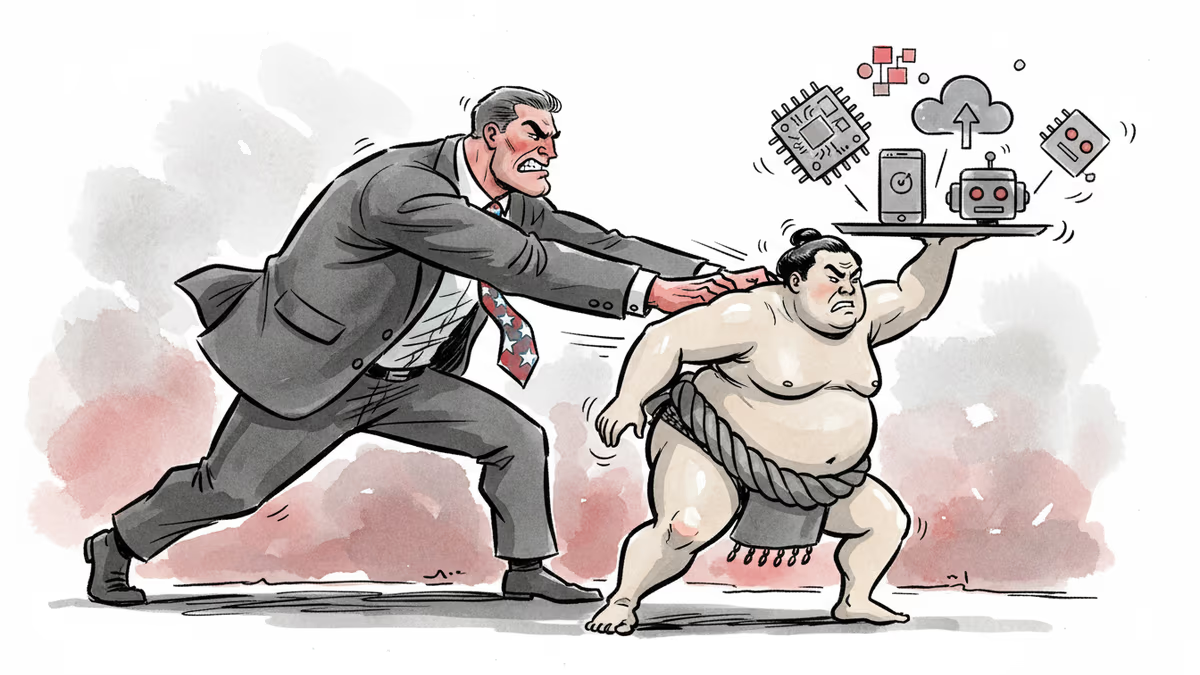
Despite commanding domestic support, PM Takaichi faces mounting pressure from Washington over massive US-bound tech investments, testing Japan's industrial sovereignty.
Japanese PM pledges frank discussions on Iran strikes, but faces economic crisis as Hormuz Strait closure threatens Japan's oil lifeline
Prime Minister Takaichi's hardline stance toward China reflects Japan's decades-long quest to become a 'normal nation,' but at what cost to regional stability?
Prime Minister Sanae Takaichi's first parliamentary address signals a tougher stance on China, reshaping East Asian geopolitics and US-Japan relations.
Despite commanding domestic support, PM Takaichi faces mounting pressure from Washington over massive US-bound tech investments, testing Japan's industrial sovereignty.
Thoughts
Share your thoughts on this article
Sign in to join the conversation