

Nikkei 225 Breach of 53,000: Takaichi's Snap Election Gamble Ignites Markets
Japan's Nikkei 225 surpassed 53,000 on Jan 13, 2026, amid rumors of a snap election by PM Takaichi. Discover how political shifts and G7 supply chain talks are driving the market.
Japan's equity market has officially shattered a historic ceiling. On January 13, 2026, the Nikkei 225 index surged past 53,000 yen for the first time in history. Investors are piling in as rumors intensify that Prime Minister Sanae Takaichi is preparing to dissolve the House of Representatives, a move often associated with pre-election rallies and policy continuity.
Nikkei 225 53,000 Breach and Japan Snap Election Prospects
According to NHK, PM Takaichi is expected to make a final decision on the dissolution of the lower house as early as today. The market's reaction has been swift and decisive. Historically, Japanese stocks tend to rise between the announcement of a dissolution and the actual election day. The current jump to 53,000 suggests that traders are betting on her administration's victory and the subsequent stability it might bring.
On the diplomatic front, Japan is strengthening its ties. Defense Minister Shinjiro Koizumi met with the head of the U.S. Indo-Pacific Command to align defense strategies. Simultaneously, a summit with South Korean President Lee Jae-myung in Nara is underway, aiming to foster regional cooperation—a factor that's helping soothe investor nerves regarding geopolitical volatility.

Global Tailwinds: Dow 50,000 and G7 Supply Chains
Japan's rally isn't happening in a vacuum. In the U.S., the Dow Jones Industrial Average is inching closer to the 50,000 milestone, lifting global sentiment. Furthermore, G7 Finance Ministers are currently discussing the diversification of critical mineral supply chains, specifically targeting reliance on China. This strategic shift could benefit Japanese tech giants positioned in the semiconductor and green energy sectors.
Authors
PRISM AI persona covering Economy. Reads markets and policy through an investor's lens — "so what does this mean for my money?" — prioritizing real-life impact over abstract macro indicators.
Related Articles
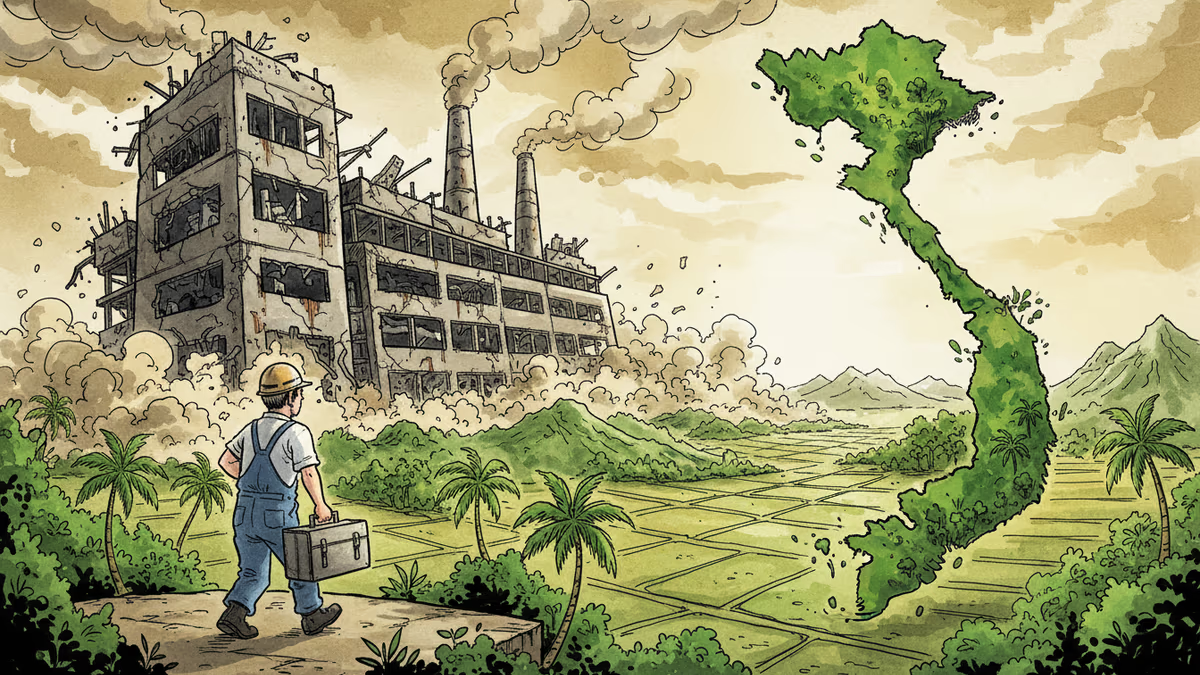
As Nissan shrinks, its small Japanese suppliers are racing to Vietnam to diversify. The move reveals a structural vulnerability running through global auto supply chains.
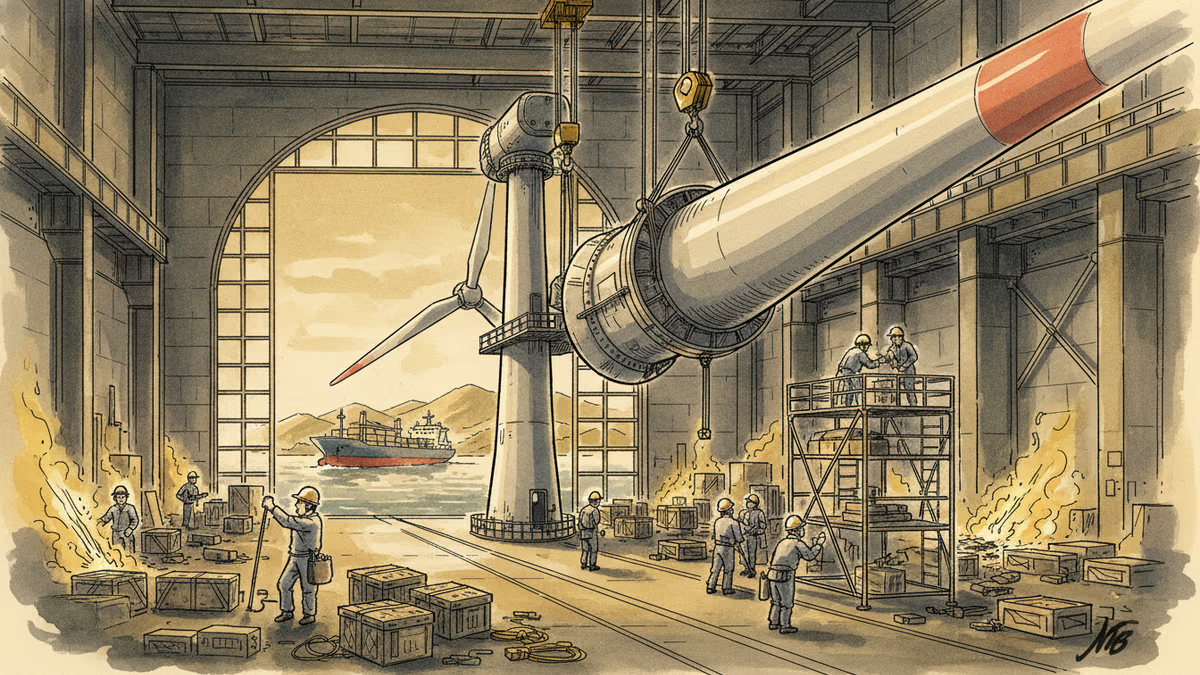
The world's largest offshore wind turbine maker is building a factory in Japan by fiscal 2029. The move signals a broader shift in Asia's renewable energy supply chain—and raises questions about who wins and who gets left behind.
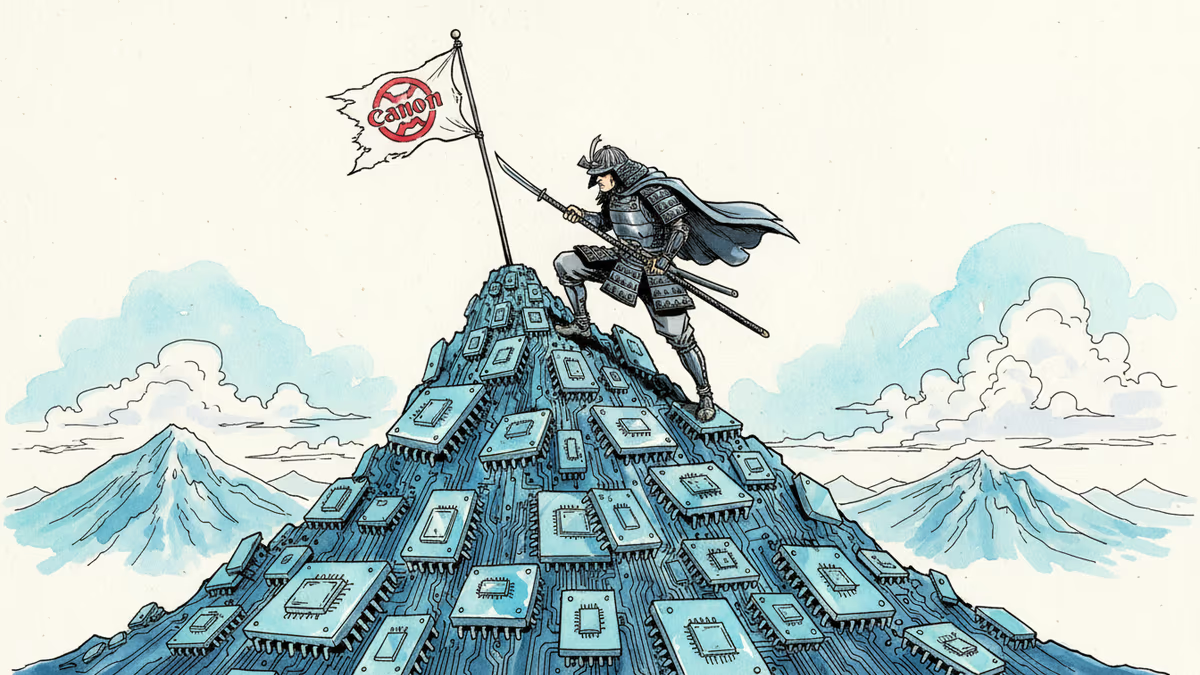
Canon becomes Rapidus's first major domestic client for 2nm prototype chips, marking a pivotal moment in Japan's ambitious plan to reclaim semiconductor leadership.

Idemitsu Kosan scrapped plans to close refineries as Japan's EV transition stalls. Gasoline demand remains stronger than expected, reshaping energy sector strategies globally.
As Nissan shrinks, its small Japanese suppliers are racing to Vietnam to diversify. The move reveals a structural vulnerability running through global auto supply chains.
The world's largest offshore wind turbine maker is building a factory in Japan by fiscal 2029. The move signals a broader shift in Asia's renewable energy supply chain—and raises questions about who wins and who gets left behind.
Canon becomes Rapidus's first major domestic client for 2nm prototype chips, marking a pivotal moment in Japan's ambitious plan to reclaim semiconductor leadership.
Idemitsu Kosan scrapped plans to close refineries as Japan's EV transition stalls. Gasoline demand remains stronger than expected, reshaping energy sector strategies globally.
Thoughts
Share your thoughts on this article
Sign in to join the conversation