

NIH Research Grant Ideological Settlement 2025: Science Reclaims Its Independence
The ACLU and NIH have settled a lawsuit over grant applications rejected on ideological grounds. This 2025 settlement ensures that scientific research is judged by peers, not politicians.
Politics just lost its grip on the laboratory. On Monday, the ACLU announced a landmark settlement with the federal government, ending a years-long battle over grant applications rejected under ideologically charged policies. The deal forces the National Institutes of Health (NIH) to restart reviews for research projects that were once deemed 'unfavorable' by the Trump administration.
The 2025 NIH Research Grant Ideological Settlement Details
The dispute traces back to a policy that blocked funding for research categories such as climate change, DEI (diversity, equity, and inclusion), and gender ideology. This selective vetting led to the cancellation of critical studies ranging from prostate cancer incidence in African Americans to pandemic preparedness. The Supreme Court ultimately upheld that these rejections were 'arbitrary and capricious,' violating the Administrative Procedure Act.

While the settlement doesn't guarantee immediate funding, it ensures these applications will undergo the standard peer review process. Scientists will now have their work evaluated by subject matter experts rather than political appointees. For the research community, it's a vital step toward decoupling scientific funding from partisan agendas.
Why Peer Review Matters
By restoring the peer review mechanism, the settlement reinforces the principle that scientific merit should be the sole arbiter of federal funding. Organizations representing medical researchers argue that this agreement creates a necessary shield against future attempts to censor or suppress research that doesn't align with a sitting administration's world view.
Authors
Related Articles
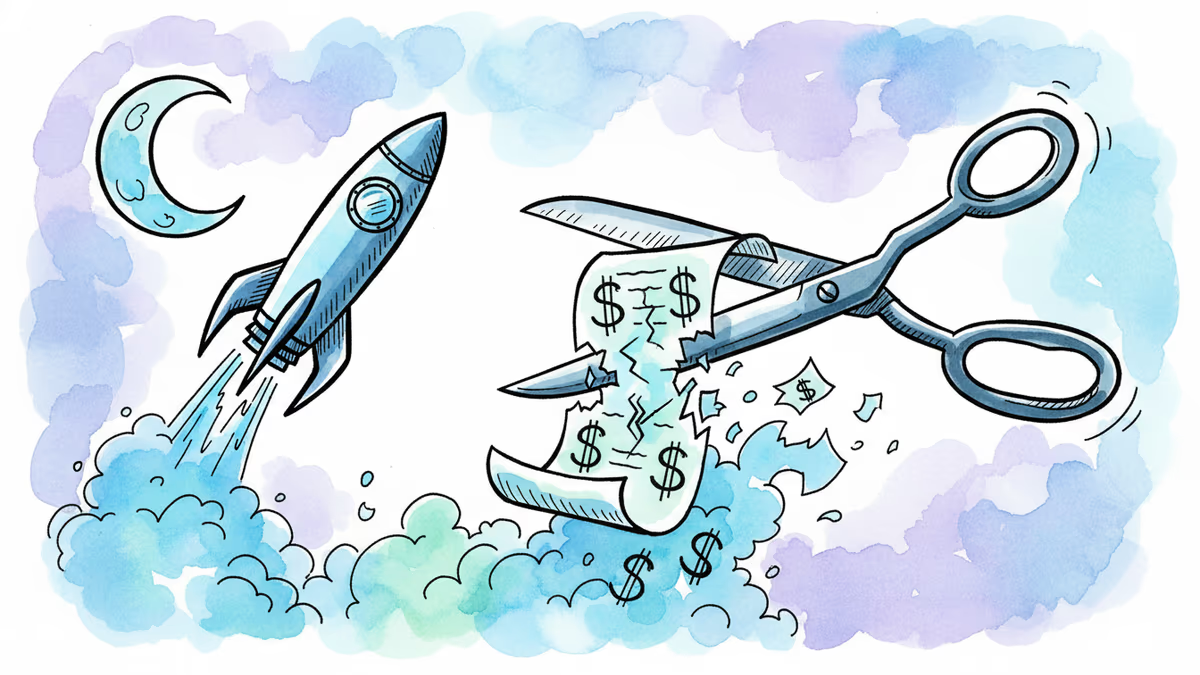
Two days after launching the first crewed lunar mission in over 50 years, the Trump administration proposed cutting NASA's budget by 23%. What does this mean for the future of space exploration?
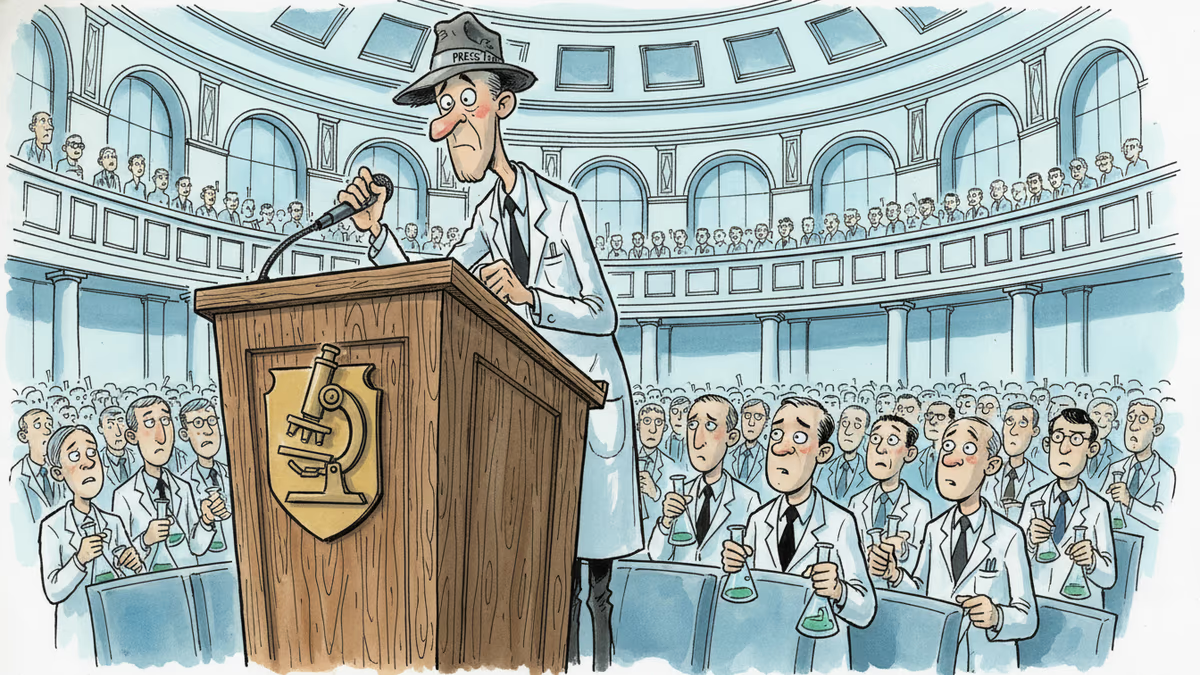
The NIH just announced a 'Scientific Freedom Lectures' series. The first speaker isn't a scientist. He's a journalist known for fringe COVID and climate views. What does that tell us?
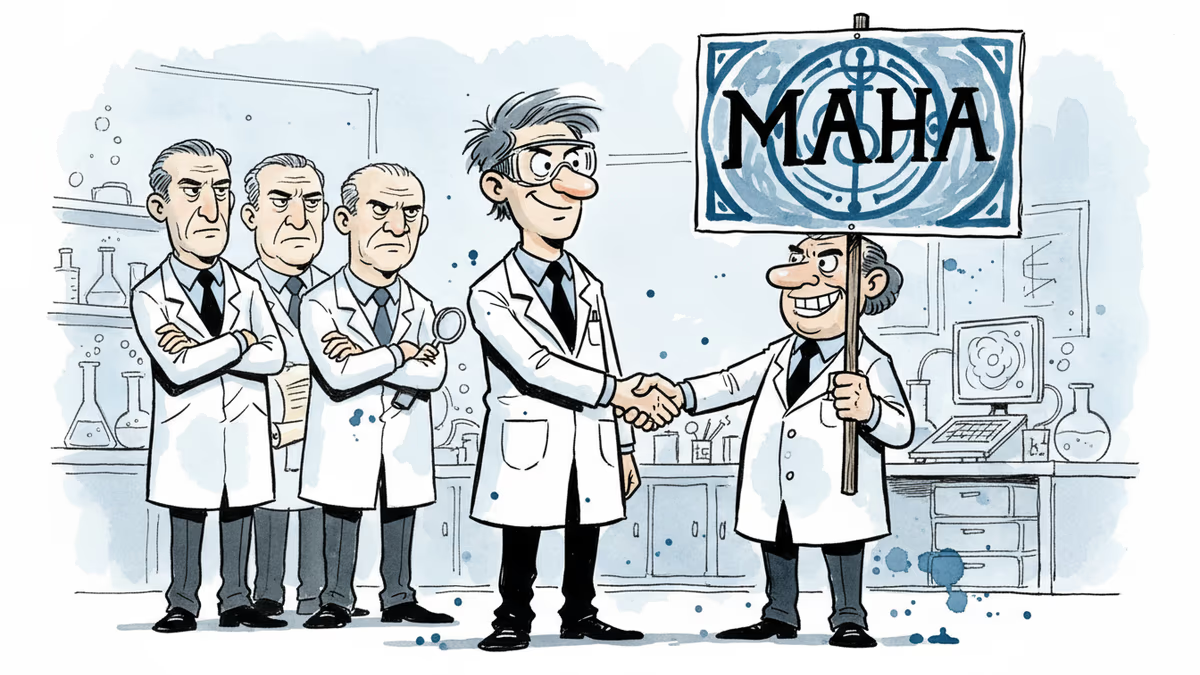
NIH Director Jay Bhattacharya received a standing ovation at the MAHA Institute. An unexpected alliance between scientists and anti-science advocates has begun. What does this mean?

An appeals court has blocked an attempt to cap university research indirect costs at 15%. Learn how the university research indirect cost funding ruling protects labs.
Two days after launching the first crewed lunar mission in over 50 years, the Trump administration proposed cutting NASA's budget by 23%. What does this mean for the future of space exploration?
The NIH just announced a 'Scientific Freedom Lectures' series. The first speaker isn't a scientist. He's a journalist known for fringe COVID and climate views. What does that tell us?
NIH Director Jay Bhattacharya received a standing ovation at the MAHA Institute. An unexpected alliance between scientists and anti-science advocates has begun. What does this mean?
An appeals court has blocked an attempt to cap university research indirect costs at 15%. Learn how the university research indirect cost funding ruling protects labs.
Thoughts
Share your thoughts on this article
Sign in to join the conversation