
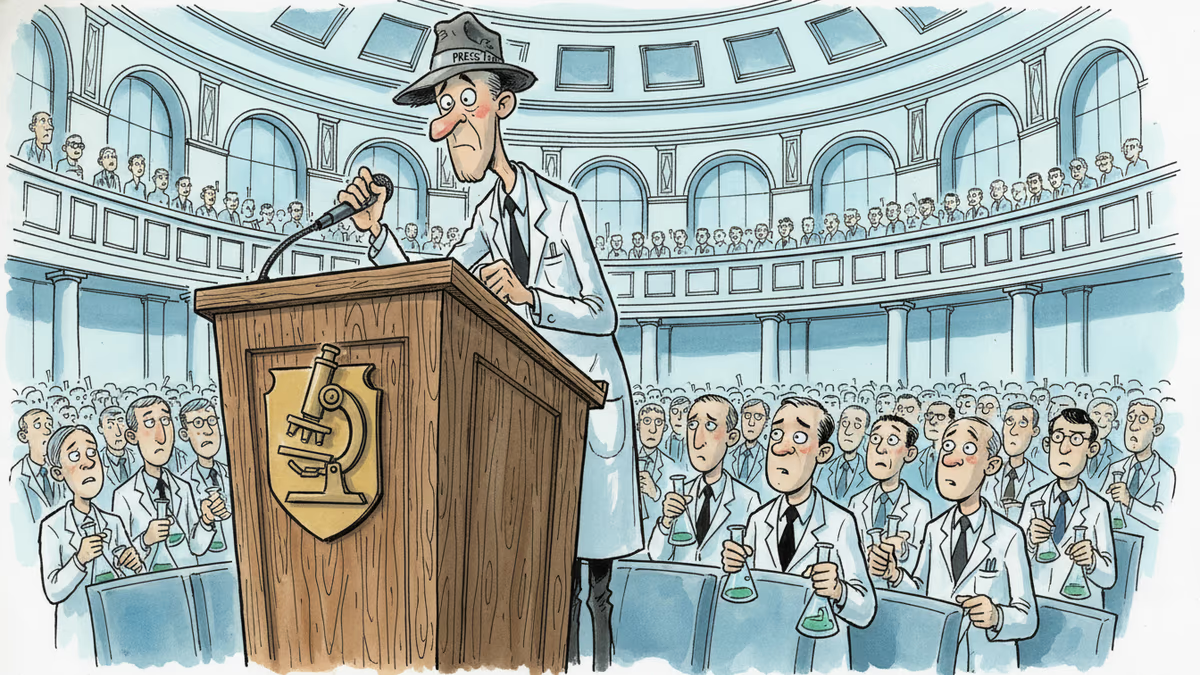
NIH's 'Scientific Freedom' Lecture Has a Journalist, Not a Scientist
The NIH just announced a 'Scientific Freedom Lectures' series. The first speaker isn't a scientist. He's a journalist known for fringe COVID and climate views. What does that tell us?
The United States' top biomedical research agency just launched a lecture series called "Scientific Freedom." The first speaker has no scientific credentials.
On Tuesday, the National Institutes of Health announced its new "Scientific Freedom Lectures" series, with the inaugural talk set for March 20. The NIH distributes roughly $45 billion annually in research funding, making it arguably the single most influential institution in global biomedical science. When it puts a name on a podium, the world pays attention.
So the choice of the first speaker matters enormously.
Who's Actually Taking the Stage
The speaker is a former journalist—not a researcher, not a clinician, not a public health official. He is best known for promoting fringe positions on COVID-19 and expressing skepticism about climate science, both well outside the scientific mainstream.
The topic: the possibility that SARS-CoV-2 leaked accidentally from a laboratory.
The lab-leak hypothesis has been politically charged since early 2020. Some U.S. intelligence agencies, including the FBI and the Department of Energy, have assessed it as the more likely origin—though with varying levels of confidence. Others, including the CIA, remain undecided. The WHO and a majority of virologists continue to view natural zoonotic spillover as the more evidence-supported explanation. Crucially, no direct scientific evidence has emerged to confirm a lab origin. It remains a hypothesis, not a finding.
Inviting a non-scientist to deliver the opening lecture of a "scientific freedom" series—on a topic that is politically loaded but evidentially unresolved—is a choice that demands scrutiny.
The Director's Grievance, Institutionalized
To understand why this is happening, you need to understand Jay Bhattacharya, the current NIH director.

Bhattacharya is a Stanford physician-economist who became a polarizing figure during the pandemic as one of the principal authors of the Great Barrington Declaration in October 2020. The declaration argued for "focused protection"—shield the elderly and immunocompromised, but let COVID-19 spread freely through the rest of the population to achieve natural herd immunity.
Public health officials pushed back hard. Their concerns were concrete: hospital systems would be overwhelmed, mortality among healthy adults—while lower than among the elderly—would still be substantial at scale, and the long-term consequences of mass infection (what we now call long COVID) were unknown. The declaration was widely criticized within epidemiology and public health circles.
Bhattacharya believes he was unfairly censored and silenced for those views. That grievance is now institutional policy. "Scientific freedom" is his banner, and the lecture series is one vehicle for it.
The Legitimate Tension—and Where It Breaks Down
Here's where the story gets genuinely complicated, because Bhattacharya isn't entirely wrong about the underlying problem.
Scientific institutions have suppressed inconvenient findings before. Barry Marshall was laughed out of gastroenterology conferences before winning the Nobel Prize for proving that ulcers are caused by bacteria, not stress. Peer review has its own social pressures, funding incentives, and ideological blind spots. The critique that mainstream science can become self-reinforcing and resistant to challenge is not fringe—it's a legitimate concern in the philosophy of science.
But there's a critical difference between protecting heterodox ideas that have evidence behind them and platforming claims that lack evidence under the banner of "freedom." The NIH isn't a debate club. It's a public institution that shapes research priorities, funds studies, and influences clinical guidelines. What it elevates carries institutional weight.
When the director's personal experience of feeling censored becomes the organizing principle of a $45 billion agency, the question isn't whether scientific freedom matters—it clearly does—but whether this particular exercise of it serves science or serves a political narrative.
How Different Stakeholders Are Reading This
Researchers inside NIH are watching carefully. Several scientists have already left or been pushed out under the new administration's restructuring. For those who remain, the message embedded in this speaker choice is legible: the definition of "legitimate science" is shifting.
Public health advocates see a pattern. They argue that rehabilitating lab-leak speculation and Great Barrington-style thinking isn't about freedom—it's about retroactively validating pandemic-era decisions that most epidemiologists believe cost lives.
Civil libertarians and heterodox thinkers, meanwhile, would argue that the discomfort of established scientists is precisely the point. If the NIH only ever amplifies consensus, it becomes a megaphone for incumbents, not a driver of discovery.
Policymakers and legislators who fund NIH face a harder question: when a scientific agency's credibility is perceived to be compromised, does that make it easier or harder to act on its future recommendations?
Authors
Related Articles
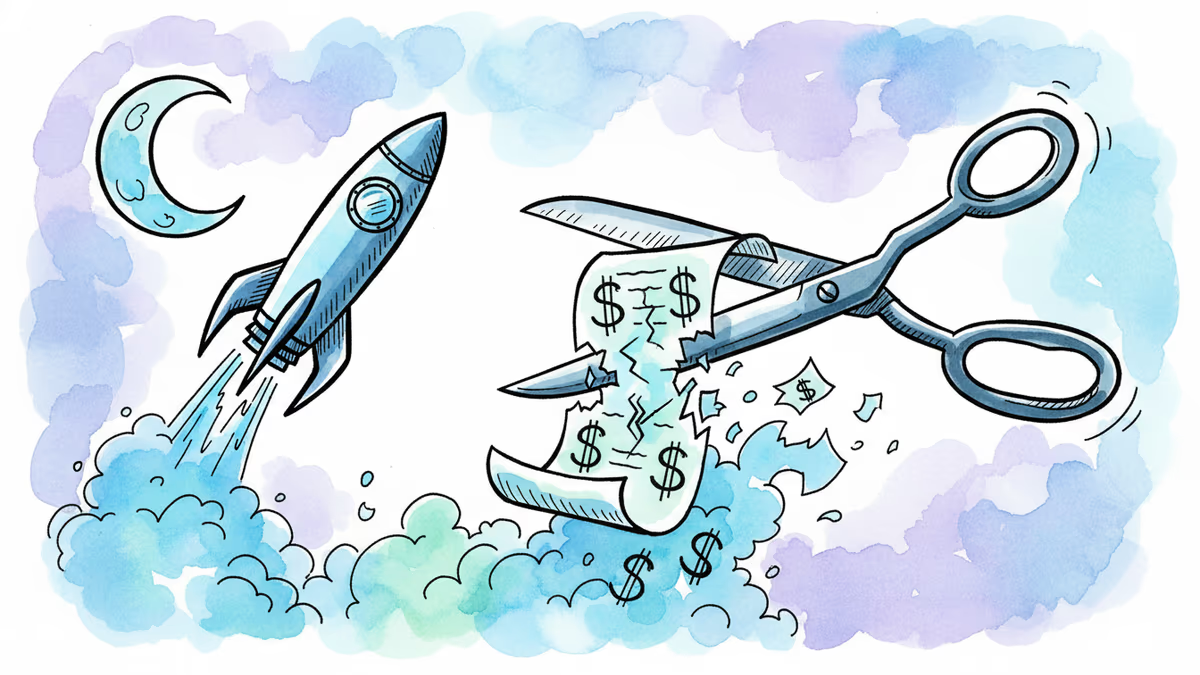
Two days after launching the first crewed lunar mission in over 50 years, the Trump administration proposed cutting NASA's budget by 23%. What does this mean for the future of space exploration?
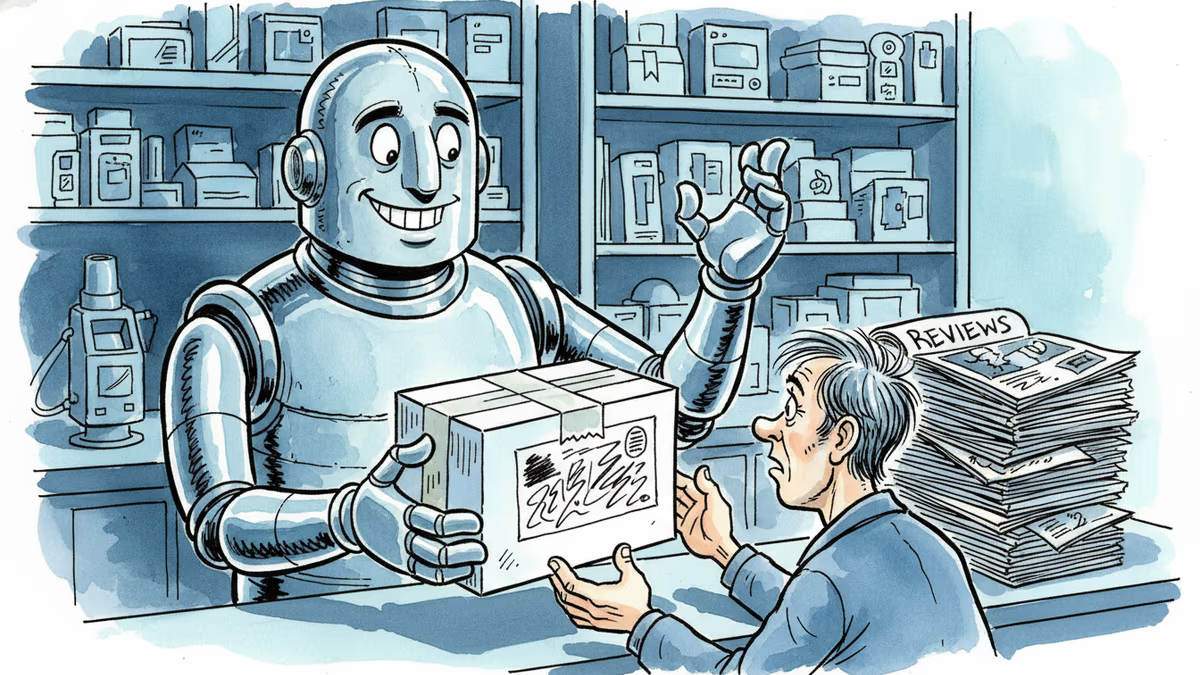
OpenAI's revamped shopping assistant in ChatGPT confidently recommended products WIRED never reviewed—raising urgent questions about AI reliability in consumer decisions.
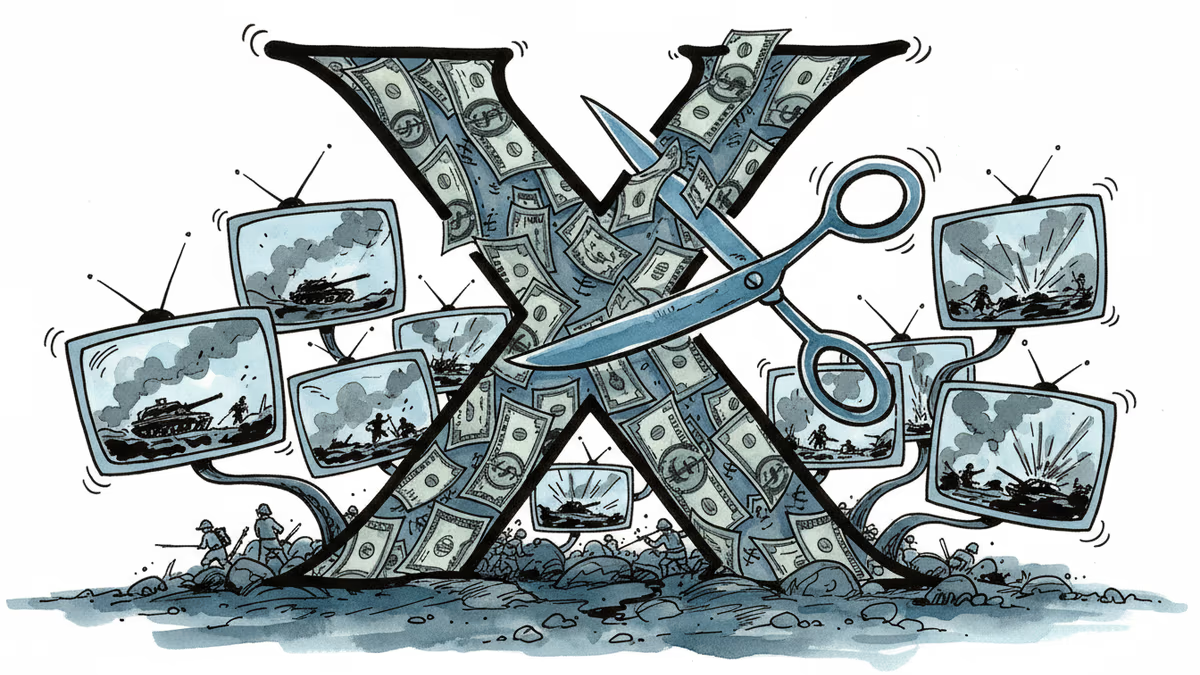
X targets war-related AI videos with revenue penalties. As platforms police AI content, who decides what's real in the creator economy?
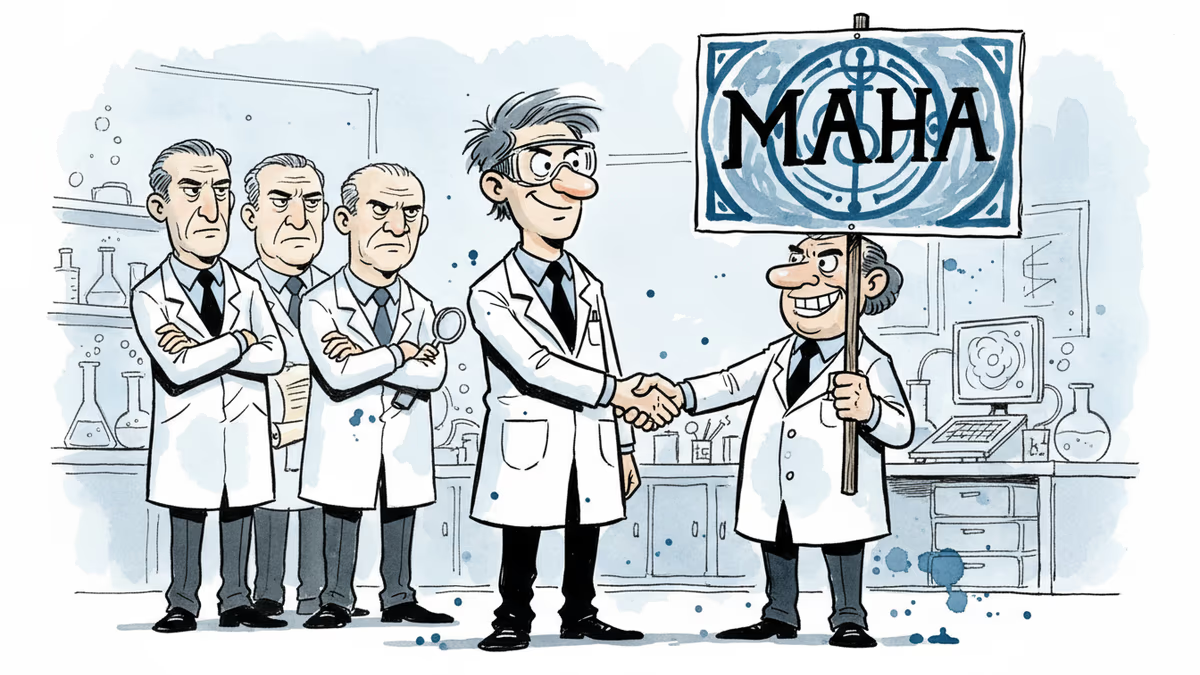
NIH Director Jay Bhattacharya received a standing ovation at the MAHA Institute. An unexpected alliance between scientists and anti-science advocates has begun. What does this mean?
Two days after launching the first crewed lunar mission in over 50 years, the Trump administration proposed cutting NASA's budget by 23%. What does this mean for the future of space exploration?
OpenAI's revamped shopping assistant in ChatGPT confidently recommended products WIRED never reviewed—raising urgent questions about AI reliability in consumer decisions.
X targets war-related AI videos with revenue penalties. As platforms police AI content, who decides what's real in the creator economy?
NIH Director Jay Bhattacharya received a standing ovation at the MAHA Institute. An unexpected alliance between scientists and anti-science advocates has begun. What does this mean?
Thoughts
Share your thoughts on this article
Sign in to join the conversation